Tamarind


Under Chef Karunesh Khanna, the kitchen runs a region-spanning menu that balances tandoor technique with classical Indian depth. Open daily from noon, it is a reliable address for polished subcontinental cooking in a composed, professional dining room.
Pearl is the En Primeur Club membership app — saves, bookings, and concierge access live there. Same editors, same standards.
- Address
- 20 Queen St, London W1J 5PR, United Kingdom
- Phone
- +44 20 7629 3561
- Website
- tamarindrestaurant.com
- Directions
- Get directions
 Saves & bookings on Pearl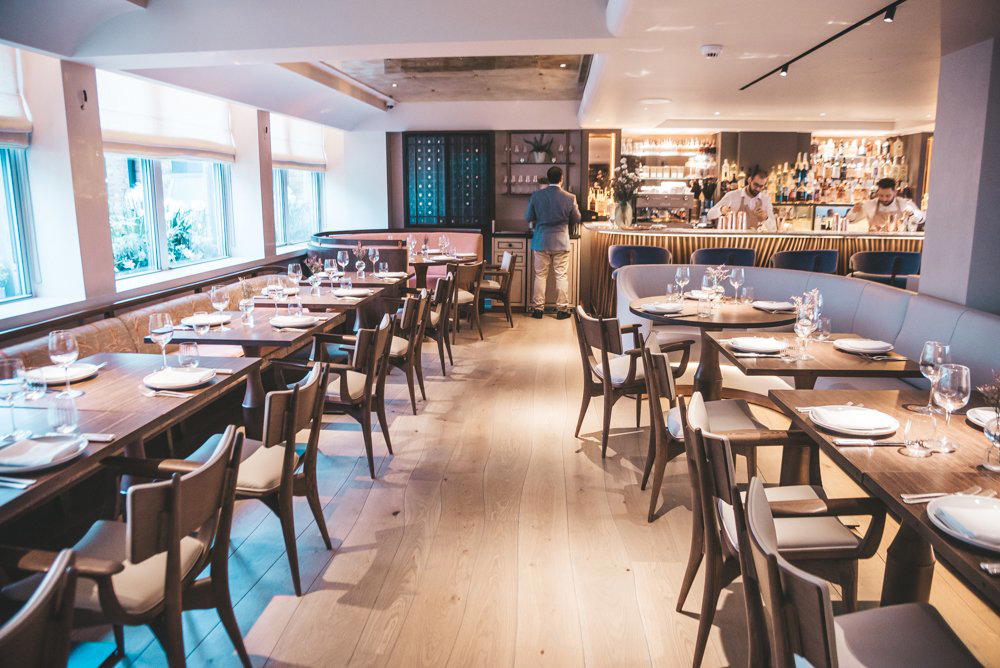
Indian Fine Dining in London: Where Tamarind Sits in the Conversation
London's Indian fine dining scene has expanded considerably since the early 2000s, when a handful of Mayfair addresses were doing the work of repositioning subcontinental cooking from the high street to the white-tablecloth tier. That repositioning is now complete. The question today is which addresses, and at what price point, are earning their place. Tamarind at 20 Queen Street, W1, is a Modern Indian Fine Dining restaurant in Mayfair, London, led by chef Karunesh Khanna. enprimeurclub.com/restaurants/amaya-london-restaurant">Amaya, Benares, and Trishna.
The Michelin Plate is a signal worth reading carefully. It does not carry the weight of a star, but in the context of Indian cuisine in London it confirms technical seriousness, a kitchen running at consistent quality, and a dining room that meets the inspector's baseline for the full experience. Across a comparable set that includes several starred and plate-holding addresses, Tamarind occupies a position where the cooking is authoritative without the premium that attaches to the starred tier.
The Bread Basket as a Measure of Indian Cooking
Few things reveal more about an Indian kitchen's range and precision than its bread service. Indian cuisine carries among the more structurally diverse bread traditions of any culinary culture: naan and its regional variants blistered in the tandoor; paratha layered and pan-cooked; roti made from whole wheat and finished dry; dosa, the fermented rice-and-lentil crêpe from the south; puri, puffed and fried; the richer malai naan enriched with cream and butter. Each of these reflects a distinct regional grammar, a different set of fermentation, heat, and hydration decisions that a kitchen has to understand and execute correctly.
At Tamarind, the malai naan has been singled out in public commentary as a marker of kitchen quality: a bread that requires the right fat-to-dough balance and a tandoor running at temperature to produce the correct exterior char with an interior that stays soft. Getting that right night after night is a process discipline, not an accident. For a dining room at the £££ level, the bread basket is also a practical test of the kitchen's claim to region-spanning Indian cooking. A menu that draws on multiple regional traditions needs to back that claim in its breads as well as its curries and tandoor work.
Indian fine dining in London has moved most deliberately in the last decade toward menus that signal a wider regional literacy. The leading addresses in the city now treat bread as a point of distinction rather than an accompaniment, and in that context, a well-executed malai naan is shorthand for a kitchen that understands what it is doing.
The Kitchen and the Menu
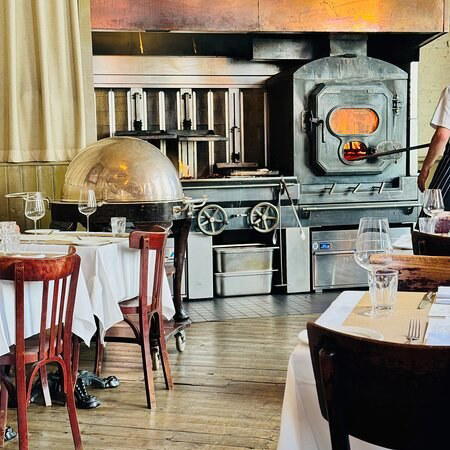
Chef Karunesh Khanna leads the kitchen at Tamarind. The menu, as described in available commentary, is structured around tandoor technique and regional breadth: smoky prawns from the tandoor, fragrant chana pindi rooted in the Punjabi tradition, and the kind of cooking that positions Indian cuisine as a serious technical discipline rather than a comfort-food category. The open kitchen format signals transparency about that process, which aligns with the direction the broader Indian fine dining tier has taken as it has sought to close the credibility gap with European fine dining formats.
At the £££ price point, Tamarind sits below the ££££ level occupied by the top end of London's fine dining market, where addresses like L'Enclume in Cartmel, Moor Hall in Aughton, and The Fat Duck in Bray operate, as well as London's own ££££ tier. For Indian cuisine specifically, the £££ bracket represents a deliberate positioning: technically serious, formally served, but accessible to a wider range of diners than the tasting-menu-only format demands.
For context on how Indian fine dining translates elsewhere, Trèsind Studio in Dubai offers a useful comparison point, as does Opheem in Birmingham within the UK.
Mayfair as a Setting for Indian Fine Dining
The choice to operate in Mayfair is an important statement. Queen Street W1 places Tamarind in one of London's most expensive and competitive dining postcodes, where the surrounding offer runs from Modern European to French classical and where the baseline expectation for service, room quality, and wine programme is set by restaurants at stronger examples from the global ranking. For an Indian kitchen to hold ground in this postcode at consistent four-star public ratings is a substantive claim.
Indian fine dining in Mayfair has historically had to work against a perception problem: the assumption that the cuisine belongs in a different price and prestige tier than the European formats that dominate the neighbourhood. The addresses that have held on in this part of the city have done so by running kitchens and dining rooms that do not make concessions on the things that Mayfair diners measure: precision of service, room atmosphere, and consistent technical execution.
Restaurants like Ambassadors Clubhouse and Babur represent different parts of the London Indian dining spectrum, from neighbourhood to destination, which illustrates how wide the category has become in this city. Tamarind's position is specifically within the Mayfair fine dining tier, which is a narrower and more pressurised slot.
Planning Your Visit
Tamarind is open Monday through Saturday from noon to 10:15 pm, and Sunday from noon to 9:15 pm, giving it one of the longer operational windows in its comparable set and making lunch bookings a realistic option on any day of the week. The address is 20 Queen Street, London W1J 5PR, in the heart of Mayfair, well-served by Green Park and Bond Street stations.
For those building a broader London itinerary around serious dining, the full picture is available through our full London restaurants guide, our full London hotels guide, our full London bars guide, our full London wineries guide, and our full London experiences guide. For those extending into the wider UK restaurant circuit, key addresses include Gidleigh Park in Chagford, Hand and Flowers in Marlow, and Le Manoir aux Quat' Saisons in Great Milton.
Quick reference: Tamarind, 20 Queen St, London W1J 5PR. Price range: £££. Google: 4.3 (1,319 reviews).
What Do Regulars Order at Tamarind?
Public commentary and review records point consistently to the tandoor section of the menu as the anchor of a meal at Tamarind, with smoky prawns from the tandoor among the more frequently cited dishes. The malai naan draws particular attention as a bread worth ordering on its own terms, not merely as an accompaniment. Chana pindi, a Punjabi chickpea preparation, appears as a recurring reference point in the category of vegetable and pulse dishes. The pattern across regular visitor accounts suggests that the kitchen's strength lies in its tandoor technique and in the regional specificity of its supporting dishes, rather than in a single signature plate that defines the entire experience. For first-time visitors, anchoring the meal in the tandoor section and ordering the malai naan alongside gives the clearest read on what the kitchen does with precision.
Cost Snapshot
Comparable venues nearby, for context on price, style, and recognition.
| Venue | Cuisine | Price | Awards |
|---|---|---|---|
| TamarindThis venue — the venue you are viewing | Mayfair, Modern Indian Fine Dining | $$$$ | Michelin Plate |
| Brigadiers | Cheapside, Modern Indian Barbecue | $$$ | Michelin Plate |
| Mayha | Marylebone, Modern Japanese Omakase | $$$$ | Michelin Plate |
| River Restaurant by Gordon Ramsay | Strand, Modern British Seafood | $$$$ | Michelin Plate |
| Dishoom | Nine Elms, Bombay Irani Café | $$ | Not listed |
| Darjeeling Express | Soho, Authentic Bengali Home Cooking | $$$ | Michelin Plate |
Recognition history
Dated appearances from independent guides and award organizations, with the underlying list record or original source where available.
Michelin Plate
Michelin
Opinionated About Dining Casual in Europe Recommended
Opinionated About Dining
Michelin Plate
Michelin
Michelin Plate
Michelin
Continue exploring
More in London
Restaurants in London
Browse all →
Bars in London
Browse all →
Hotels in London
Browse all →



At a Glance
- Elegant
- Sophisticated
- Modern
- Date Night
- Business Dinner
- Special Occasion
- Open Kitchen
- Extensive Wine List
- Craft Cocktails
Current opening hours
- Monday
- 12–2:30 PM, 5:30–10:15 PM
- Tuesday
- 12–2:30 PM, 5:30–10:15 PM
- Wednesday
- 12–2:30 PM, 5:30–10:15 PM
- Thursday
- 12–2:30 PM, 5:30–10:15 PM
- Friday
- 12–2:30 PM, 5:30–10:15 PM
- Saturday
- 12–2:30 PM, 5:30–10:15 PM
- Sunday
- 12–2:30 PM, 5:30–9:15 PM
Hours can change for holidays and private events. Last verified .
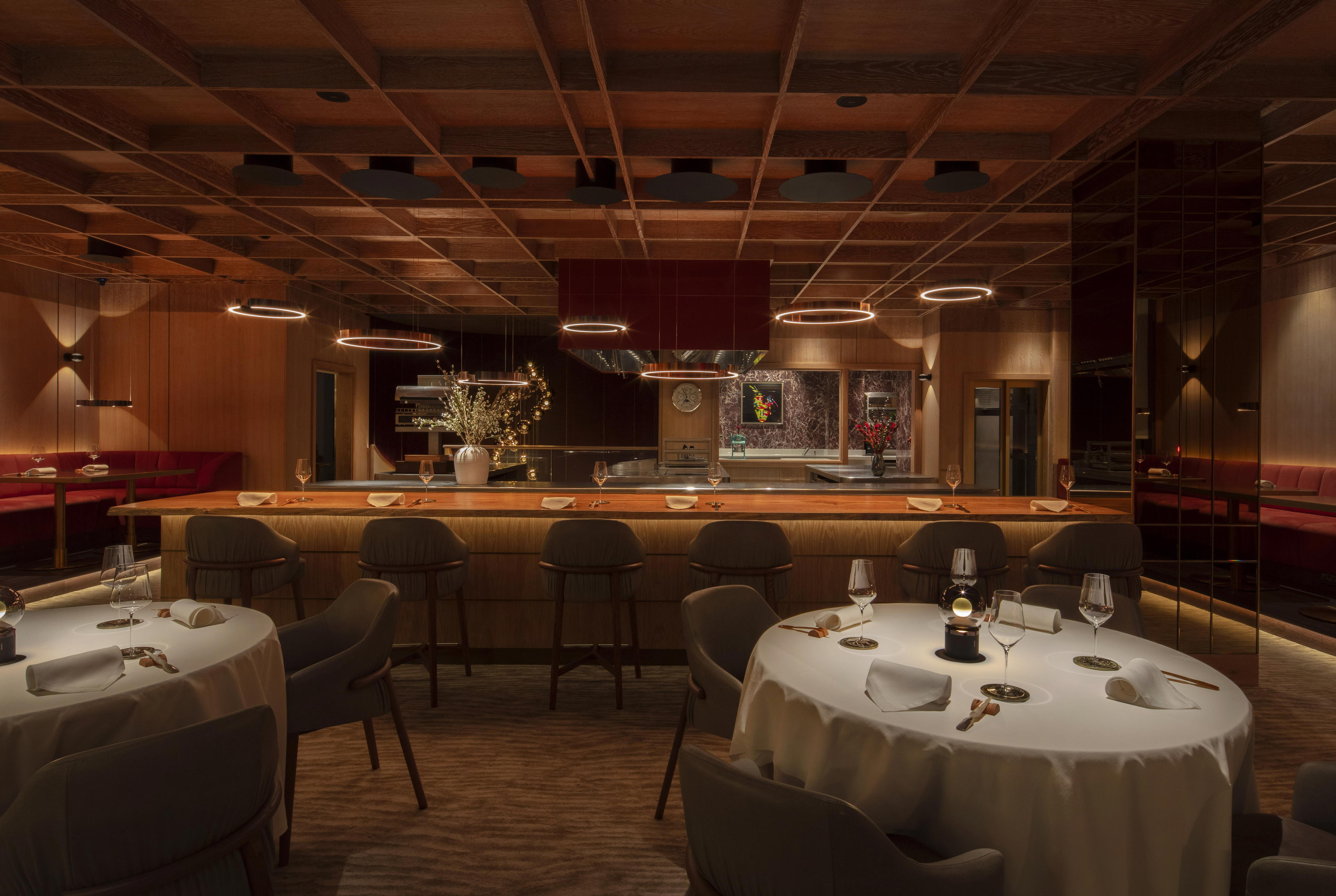
Lavish and contemporary basement dining room with visible tandoor and open kitchen, warm and elegant atmosphere.