
Tabelog 100 #21
Our verdict
TAKUMA places Hachioji ramen in Tokyo’s serious conversation without the Ginza price logic. The 12-seat counter near Keio Hachioji, selected for Tabelog Ramen TOKYO “Tabelog 100” in 2022, 2024, and 2025, is built for repeat eating rather than spectacle: low spend, no reservations, and a compact format that rewards timing.

Pearl is the En Primeur Club membership app, where members save venues, book tables and use the concierge.
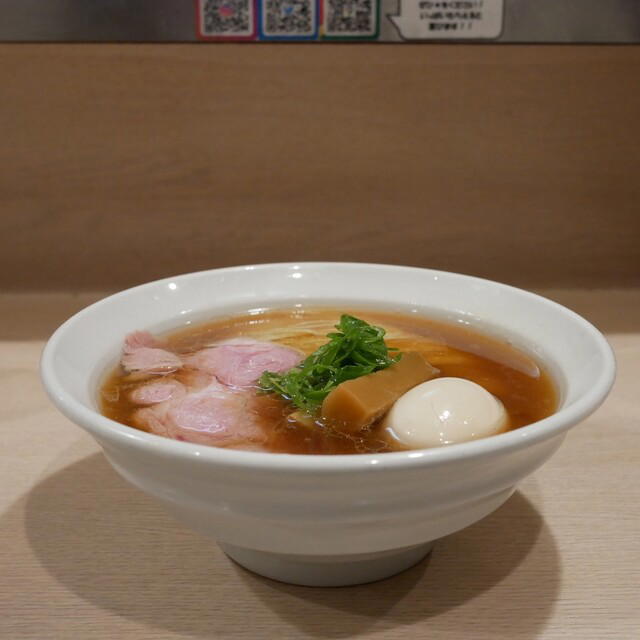
Approaching a ramen spot in Tokyo feels different from crossing a hotel lobby or joining a high-end omakase queue. The cues are quieter: station traffic, office workers, and the expectation that a bowl must justify the wait without ceremony. TAKUMA belongs to that world: modest prices, ramen focus, and recognition in the 2025 Tabelog Hyakumeiten data, with a Tabelog score of 3.79.
That combination explains the practical diner’s logic. Tokyo ramen loyalty is built less on luxury signals than on repeatability, speed, and a bowl that still holds attention after novelty fades. Tokyo’s breadth also changes the audience. This is not destination-dining theatre. It is the kind of place where an acclaimed ramen stop still has to work as an everyday habit.
Tokyo ramen culture, seen from a compact counter
Tokyo’s ramen map is too often reduced to its most obvious central dining routes, but the city’s broader everyday food culture has its own pull. It is commuter Tokyo, local Tokyo, and serious noodle territory at once. The city supports ramen places where value is part of the format. TAKUMA’s listed spend sits low, with dinner and lunch shown as - JPY 999, placing it near budget peers such as Isoya, Tantan, Honkaku Teuchi Udon Arata, and Boule Beurre Boulangerie on price, while Niboshi Iwashi Ramen En Hachioji honten offers another ramen comparison within the allowed Tokyo set.
The casual format matters. In Tokyo ramen, pace, turnover, and the relationship between kitchen and guest shape the meal as much as décor does. Focused rooms keep service disciplined: little space for lingering, which helps the category. Diners read the room quickly, eat with focus, and move on for the next person. For travellers used to reservations as proof of importance, this is a useful correction: some serious Tokyo food culture is built around immediacy and repetition, not advance access.
The 2025 Tabelog Hyakumeiten recognition gives TAKUMA a public credential without changing the ramen grammar. The recognition is category-specific and city-specific, more meaningful here than a broad dining accolade. In Tokyo’s crowded ramen field, a score of 3.79 and inclusion in that data point toward consistency rather than a single burst of attention.
The regulars' test: value, repetition, and no unnecessary theatre
Most persuasive Tokyo ramen rooms do not ask to be admired before the bowl arrives. They ask whether the guest would return on an ordinary weekday. TAKUMA’s practical structure answers plainly through the essentials that are actually listed: ramen, low stated spend, and a score that suggests broad approval. These details define the experience as much as any discussion of broth or noodles, because they tell the diner what kind of exchange is taking place.
For loyal customers, the appeal is likely not a secret order or elaborate progression. It is confidence that a low-cost bowl can sit beside more famous Tokyo dining stops. The better reading is contextual: Tokyo’s noodle culture is local, iterative, and disciplined, with technique judged in rooms that may never look polished from outside.
This is where price becomes editorially interesting. A Tokyo visitor can spend heavily on sushi, kaiseki, or French tasting menus and still miss how the city eats repeatedly. A ramen venue listed at - JPY 999 for lunch and dinner works under harsher constraints: ingredient cost, pace, and daily consistency show immediately. Recognition at that level is not a luxury badge; it proves the room competes in a format where diners return because the arithmetic keeps making sense.
How to fold it into a Tokyo food day
Tokyo rewards deliberate planning. TAKUMA may not be the most efficient add-on to every shopping-led itinerary, but it suits travellers already exploring ramen-focused routes that treat movement across the city as part of the education. Because restaurant details can change, avoid building the day around a late arrival without checking current information first.
TAKUMA also suits broader Tokyo comparison. Tokyo dining often divides into reservation-led rooms and casual places with strong local followings. For a different register within the city, EP Club’s Tokyo restaurant pages include other Tokyo dining rooms across casual, specialist, and focused formats. For the wider city edit, use Our full Tokyo restaurants guide, with parallel planning through Our full Tokyo hotels guide, Our full Tokyo bars guide, Our full Tokyo wineries guide, and Our full Tokyo experiences guide.
For readers building a Japan-wide casual dining map, the same value-and-format lens travels beyond Tokyo: modest eating shifts by city, by price point, and by the expectations around speed, repetition, and local loyalty. Japanese dining habits abroad offer another angle, but TAKUMA’s case is firmly a Tokyo one: a ramen room whose appeal rests on everyday usefulness as much as on outside recognition.
The editorial case for TAKUMA is not that it replaces Tokyo’s central dining rooms. It corrects the itinerary. A city serious about food should include at least one ramen stop where acclaim, low spend, and everyday repetition meet without ceremony. Tokyo supplies that lesson cleanly.
Frequently asked questions
What's the vibe at TAKUMA?
TAKUMA is a ramen spot in Tokyo. The setup is focused and practical, with the kind of low-key rhythm that suits repeat local dining rather than destination-dining theatre.
How much does it cost to eat at TAKUMA?
Pricing at TAKUMA is listed as - JPY 999 - JPY 999.
How do I find TAKUMA?
Tokyo.
Is TAKUMA reservation-only?
The provided data does not establish TAKUMA as reservation-only. Treat it as a Tokyo ramen stop where current operating details should be checked before going.
What is TAKUMA known for?
TAKUMA is known for ramen and for recognition in the 2025 Tabelog Hyakumeiten data. That recognition, paired with a Tabelog score of 3.79, gives it clear credibility in Tokyo’s ramen scene.
Is TAKUMA good for vegetarians?
TAKUMA is a ramen shop in Tokyo. The provided data does not list a vegetarian menu, so vegetarians should check current menu details before visiting.
Credentials Lens
Comparable venues at the same tier for side-by-side context.
| Venue | Cuisine | Price | Awards | Notes |
|---|---|---|---|---|
| TAKUMAThis venue (the venue you are viewing) | Tokyo Ramen Counter | $1–10 | Tabelog 100 #21 | Not listed |
| Ganso Stamina Manten Ramen Suzuki | Stamina-style ramen & soba | $10–20 | Tabelog 100 #5 | Mitaka |
| Anya | Japanese Wagashi Shop | Not listed | Tabelog 100 #10 | Setagaya |
| Ishida Ya | Traditional Sushi & Japanese Cuisine | $10–20 | Tabelog 100 #3 | Itabashi |
| E-chan Shokudo | Early-morning Tokyo ramen counter | $10–20 | Tabelog 100 #63 | Meguro |
| Gekko Sabou | Japanese jazz kissaten & coffee shop | Not listed | Tabelog 100 #100 | Shibuya |
Recognition history
Dated appearances from independent guides and award organizations, with the underlying list record or original source where available.
Tabelog 100 #21 · No. 21
Tabelog · Tabelog 100 - Ramen - TOKYO - 2025
Continue exploring
More in Tokyo
Restaurants in Tokyo
All restaurants in Tokyo →


Bars in Tokyo
All bars in Tokyo →

Hotels in Tokyo
All hotels in Tokyo →


Wineries in Tokyo
Browse all →
Details
- Cozy
- Solo
- Casual Hangout
- After Work
- Late Night
- Standalone
- A La Carte
- Counter Dining
A compact, non‑smoking ramen shop with just 12 counter seats near Keio Hachioji Station, creating a casual but focused atmosphere centered on the bowl rather than décor; often busy at lunch and dinner with a typical lively ramen‑shop buzz.