Tacos Indiana
On a stretch of South Indiana Street in East Los Angeles, Tacos Indiana operates within a taqueria tradition that prizes simplicity, repetition, and neighborhood accountability over spectacle. The address places it squarely in a part of the city where Mexican street food culture remains largely intact and community-driven, rather than audience-facing.
Pearl is the En Primeur Club membership app — saves, bookings, and concierge access live there. Same editors, same standards.
- Address
- 1057 S Indiana St, Los Angeles, CA 90023
- Phone
- +1 323 427 5176
- Website
- tacosindianaca.com
- Directions
- Get directions
 Saves & bookings on Pearl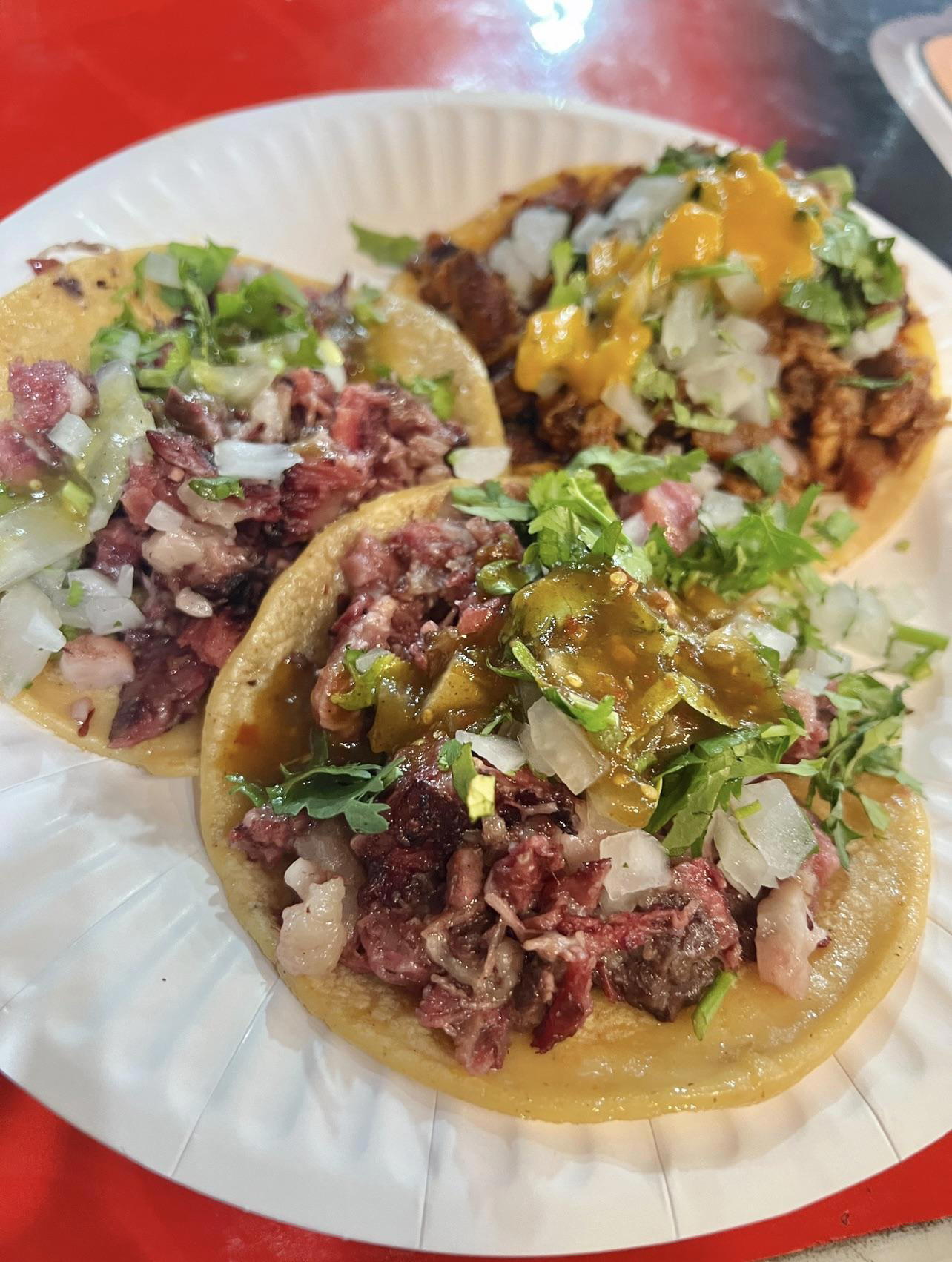
East Los Angeles and the Taqueria That Stays Put
There is a particular kind of taqueria that Los Angeles does better than almost any other American city: the kind that has no website, no reservation system, and no interest in the approval of anyone who does not already know it exists. South Indiana Street, running through the eastern edge of Los Angeles near the 90023 zip code, sits in a corridor where this model of operation is not nostalgic — it is simply the norm. Tacos Indiana, addressed at 1057 S Indiana St, belongs to that tradition. It is not positioning itself against the tasting-menu circuit that includes venues like Kato, Hayato, or Somni. It occupies a different axis entirely — one where the accountability runs to the surrounding block, not to a national awards body.
That accountability has environmental implications that are worth taking seriously. The taqueria format, at its most functional, generates remarkably little waste relative to its output. In a city where the fine-dining sector has produced considerable conversation about sustainability, from the farm-direct sourcing models at Single Thread Farm in Healdsburg to the hyperlocal ingredient discipline at Blue Hill at Stone Barns in Tarrytown, the neighborhood taqueria represents a different and older form of the same logic. It wastes less by design, not by intention.
The Sustainability Argument for Street-Format Cooking
The broader shift in American restaurant culture toward environmental consciousness has concentrated in a particular price tier. The venues that receive awards and editorial attention for their sourcing practices, places like Smyth in Chicago, Addison in San Diego, or Frasca Food and Wine in Boulder, operate at price points where those commitments can be communicated, priced in, and marketed. The taqueria operates under no such framework, yet the structural reality is similar: small menus mean focused purchasing, focused purchasing means less surplus, and proximity to the communities that supply and consume the food means the supply chain is shorter by default.
In East Los Angeles, the concentration of Mexican-American communities has historically meant that the ingredients used in street-format cooking reflect regional Mexican sourcing traditions: dried chiles, corn masa, and slow-cooked proteins that use the full animal rather than selected cuts. This is not sustainability as a positioning choice, it is sustainability as inherited culinary logic, developed over generations of cooking in conditions where waste was not an option. Compared to the ethical-sourcing frameworks being built from scratch at newer fine-dining venues, the taqueria model has decades of practice behind it.
For context, this approach contrasts interestingly with how upscale American restaurants have had to construct sustainability credentials deliberately. The French Laundry in Napa, Le Bernardin in New York City, and The Inn at Little Washington each operate kitchen gardens or dedicated sourcing partnerships that require significant resource investment to maintain. The East LA taqueria achieves a functionally comparable result at a fraction of the infrastructure cost, through format constraints that were never designed with sustainability in mind but arrive at it anyway.
Where Tacos Indiana Sits in the Los Angeles Mexican Food Conversation
Los Angeles has a layered Mexican food culture that does not resolve into a single tier. At one end, venues like Osteria Mozza and Providence represent the city's fine-dining ambition, drawing national and international comparison with institutions like Atomix in New York City or Lazy Bear in San Francisco. At another, the market-stall and taqueria format functions as the city's actual daily food culture, the layer that most residents interact with most often. Holbox, operating in the Mercado La Paloma at the $$ price tier, represents the middle position: a Mexican seafood operation with enough editorial recognition to bridge the two worlds. Tacos Indiana does not occupy that middle position, it operates closer to the street end of the spectrum, in a neighborhood where the audience is local rather than destination-driven.
That positioning is worth understanding before visiting. This is not a venue that has been discovered, packaged, and placed on a list of recommended stops for the first-time Los Angeles visitor. It functions as part of the daily infrastructure of its neighborhood, which means the experience is shaped by that context. See our full Los Angeles restaurants guide for a broader orientation across price tiers and neighborhoods before deciding where Tacos Indiana fits into a specific itinerary.
The Format and What It Implies
A taqueria at this address, in this zip code, operates on a model that is familiar to anyone who has spent time eating in East Los Angeles or in comparable neighborhoods in Mexico City, Guadalajara, or Oaxaca. The format is built around speed, repetition, and volume. A limited menu of proteins, typically one or two slow-cooked options anchoring the offering, is served on corn or flour tortillas with standard condiment accompaniment. Pricing reflects the neighborhood, not the presentation. The transaction is fast, the food is hot, and the crowd is local.
This format has no equivalent in the tasting-menu segment. Atelier Moessmer Norbert Niederkofler in Brunico and comparable European fine-dining operations have built entire editorial narratives around the idea that simplicity and locality equal sustainability. The taqueria demonstrates the same equation at street level, without the editorial apparatus. For visitors approaching Los Angeles from the fine-dining side, via Emeril's in New Orleans or comparable southern US institutions, the taqueria format can initially read as informal to the point of invisibility. It is not invisible. It is operating on a different register.
Know Before You Go
- Address: 1057 S Indiana St, Los Angeles, CA 90023
- Neighborhood: East Los Angeles, near the 90023 zip code corridor
- Format: Street-style taqueria; walk-up or counter service expected
- Reservations: No booking infrastructure on record; walk-in format
- Phone / Website: Not on public record
- Hours: Not confirmed; verify locally before visiting
- Price tier: Street pricing; cash is advisable at venues of this format in this neighborhood
- Getting there: East Los Angeles is accessible from downtown LA via the 60 freeway or surface streets; street parking is the standard option in this corridor
Continue exploring
More in Los Angeles
Restaurants in Los Angeles
Browse all →
Bars in Los Angeles
Browse all →

Hotels in Los Angeles
Browse all →


Wineries in Los Angeles
Browse all →
At a Glance
- Casual Hangout
Current opening hours
- Monday
- 4 PM–1 AM
- Tuesday
- 4 PM–1 AM
- Wednesday
- 4 PM–1 AM
- Thursday
- 4 PM–1 AM
- Friday
- 4 PM–1 AM
- Saturday
- 4 PM–1 AM
- Sunday
- 5 PM–1 AM
Hours can change for holidays and private events. Last verified .
Casual street food atmosphere.
Know Before You Go
- Getting there
- 1057 S Indiana St, Los Angeles, CA 90023