Tacos Don Cuco
LA Taco Best Tacos in LA #50
Our verdict
Tacos Don Cuco is an East Los Angeles institution credited with pioneering Tijuana-style tacos in the city and introducing birria de lengua to LA diners. The stand at 752 S Fetterly Ave in East LA draws on smoky adobada, carne asada, and house-made salsa voladora, with the vampiro con chorizo standing as its most recognized preparation. For anyone tracking the lineage of LA's taco culture, this address is a primary source.

Pearl is the En Primeur Club membership app, where members save venues, book tables and use the concierge.

The menu
What to order
- Adobada taco
- Birria de lengua
- Vampiro with chorizo
- Asada taco
The East LA Address That Defined a Style
Los Angeles has more taco formats competing for attention than any other American city, but the question of which stands actually shaped the city's vocabulary is a shorter list. East Los Angeles, specifically the corridor around Fetterly Avenue, has been one of the defining precincts for that history. Tacos Don Cuco's claim inside that history is specific and documented: it is credited as the operation that brought Tijuana-style tacos to LA and, more precisely, as the first to serve birria de lengua in the city. Those are not marketing claims easily made at every corner stand. They represent a measurable contribution to what LA taco culture became.
The significance of the Tijuana-style format is worth establishing. Tijuana tacos, distinct from the Jalisco or Mexico City traditions that dominate other parts of the LA market, lean on char and smoke from the trompo or the grill, on fat-crisped tortillas, and on accompaniments that arrive as part of the experience rather than as an afterthought. The adobada, marinated in dried chiles and achiote, develops its character on the trompo over hours. The carne asada depends on cut, heat management, and timing in ways that separate practiced operations from imitations. Don Cuco built its reputation on doing both correctly, and the birria de lengua addition extended that credibility into a preparation that few competitors were attempting at the time.
The Vampiro and the Salsa Voladora
Reputation in the taco world is ultimately built on individual preparations, and the vampiro con chorizo is the preparation most associated with Don Cuco in the critical record. The vampiro format, for those unfamiliar, involves a tortilla crisped directly on the comal until it develops structural rigidity, then loaded so that the contrast between the crackling shell and the filling is part of the intended experience. Paired with chorizo, which brings its own fat and spice to the build, the preparation reads as deliberately composed rather than assembled. The real guacamole accompaniment, made from avocado rather than a diluted commercial product, signals the same attention to ingredient quality that defines the broader operation.
The signature salsa voladora is a detail worth noting for first-time visitors. House salsas at long-standing East LA stands tend to encode institutional knowledge, developed and adjusted over years to match the specific proteins and char levels of the kitchen. The salsa voladora's name, loosely translated as "flying salsa," has accumulated its own reputation as a condiment that complements rather than overwhelms the primary flavors of the taco. It is the kind of detail that separates a stand built on consistency from one operating on novelty.
East LA's Taco Culture in Context
East Los Angeles has historically occupied a different position in the city's food conversation than the westside neighborhoods that attract the bulk of national food media attention. The operations here, including Don Cuco, were not building their reputations through press cycles or award nominations in the way that a tasting-menu restaurant might. The recognition came through community use, through the regulars who returned over years, and through the eventual acknowledgment by food writers and critics that East LA's taco tradition was substantively different from, and in many ways more technically rigorous than, what was being served elsewhere in the city.
Kato, Hayato, Providence, Somni, and Osteria Mozza represent the LA dining tier that competes for Michelin recognition and national editorial coverage. Don Cuco's authority operates on a different axis entirely: the credibility of a specific regional style executed at a level that influenced what came after it. Those are not comparable forms of recognition, but both are genuine, and for the reader whose interest is in the full picture of what LA eating actually looks like, both matter. For a broader view of the city's dining range, our full Los Angeles restaurants guide covers the spectrum from counter service to tasting menu.
The broader LA food scene also has significant reference points beyond taco culture. Fine dining visitors often cross-reference Le Bernardin in New York City, Alinea in Chicago, or The French Laundry in Napa as benchmarks for serious restaurant travel. At the other end of the format spectrum, places like Don Cuco represent the kind of institutional taco knowledge that those restaurants rarely replicate. For visitors building an LA itinerary around food, the argument for including both tiers is strong. Our Los Angeles hotels guide, bars guide, wineries guide, and experiences guide can help fill out the broader trip. Comparably food-driven cities like San Francisco, where Lazy Bear occupies a similar position of earned community recognition, or New Orleans, home to Emeril's, offer useful reference points for how local food history gets codified into a city's dining identity. New York's Atomix, Single Thread Farm in Healdsburg, and 8 1/2 Otto e Mezzo Bombana in Hong Kong all illustrate how technical seriousness manifests across formats and price points.
Planning Your Visit
Tacos Don Cuco operates out of 752 S Fetterly Ave in East Los Angeles, CA 90022, a neighborhood that rewards visitors who arrive with some geographic context. East LA is not a single commercial strip but a residential and commercial zone where the leading operations are embedded in the community rather than positioned for passing tourist traffic. Coming from the westside, the drive runs east along the 10 freeway, and the address sits in a part of East LA that has been producing serious taco culture for decades. Walk-in service is the expected format at this type of operation.
Quick reference: 752 S Fetterly Ave, East Los Angeles, CA 90022. Walk-ins only. No reservations required.
Frequently asked questions
What dish is Tacos Don Cuco famous for?
The vampiro con chorizo is the preparation most consistently cited in the critical record around Don Cuco. Beyond that signature, the stand is credited with being the first in Los Angeles to serve birria de lengua, and its smoky adobada and carne asada are the preparations that established its Tijuana-style reputation over time. All are served with real guacamole and the house salsa voladora.
What do critics highlight about Tacos Don Cuco?
The critical recognition around Don Cuco centers on two claims: that it pioneered Tijuana-style tacos in Los Angeles, and that it introduced birria de lengua to the city's taco culture. These are contributions to a culinary tradition rather than awards in a formal institutional sense. Food writers covering East LA's taco scene consistently place Don Cuco in the category of operations that shaped what the city's taco vocabulary became, rather than operations that simply participate in it.
What is the atmosphere like at Tacos Don Cuco?
Don Cuco is an East LA taco stand, which means the atmosphere is defined by the operation itself rather than by designed hospitality. At this price point and in this part of Los Angeles, the experience is direct: you order, you watch the preparation, and you eat. The neighborhood context is residential East LA, which has its own character distinct from the more heavily trafficked dining corridors of the westside. The draw is the food and the history of the place, not ambient design or service choreography.
Is Tacos Don Cuco okay with children?
East LA taco stands are generally well-suited to families. The format is casual, the prices are accessible, and the food is approachable for younger diners. Don Cuco specifically operates in a community-facing context where family visits are consistent with the character of the place. There is no formal age policy noted in available information.
Do they take walk-ins at Tacos Don Cuco?
Yes. Taco stands operating in the East LA tradition do not operate on a reservation model. Don Cuco is a walk-in operation, and queuing, when it occurs, is part of the experience.
Quick Comparison
| Venue | Cuisine | Price | Awards | Notes |
|---|---|---|---|---|
| Tacos Don CucoThis venue (the venue you are viewing) | Tijuana-Style Tacos | $10–20 | LA Taco Best Tacos in LA #50 | Not listed |
| Kato | Modern Taiwanese Fine Dining | $300–500 | 2 Michelin Stars · World's 50 Best #49 | New Taiwanese, Asian |
| Hayato | Traditional Japanese Kaiseki | $300–500 | 2 Michelin Stars · La Liste Top Restaurants | Japanese |
| Vespertine | Avant-Garde Tasting Menu | $200–300 | 2 Michelin Stars · La Liste Top Restaurants | Progressive, Contemporary |
| Camphor | Modern French with Southeast Asian influences | $150–200 | Michelin Plate · World Best Burgers World's 101 Best Burgers #15 | French-Asian, French |
| Gwen | Contemporary American Steakhouse | $50–100 | Michelin Plate · Wine Spectator Best of Award of Excellence | New American, Steakhouse |
Recognition history
Dated appearances from independent guides and award organizations, with the underlying list record or original source where available.
LA Taco Best Tacos in LA #50
LA Taco
Continue exploring
More in Los Angeles
Restaurants in Los Angeles
All restaurants in Los Angeles →
Bars in Los Angeles
All bars in Los Angeles →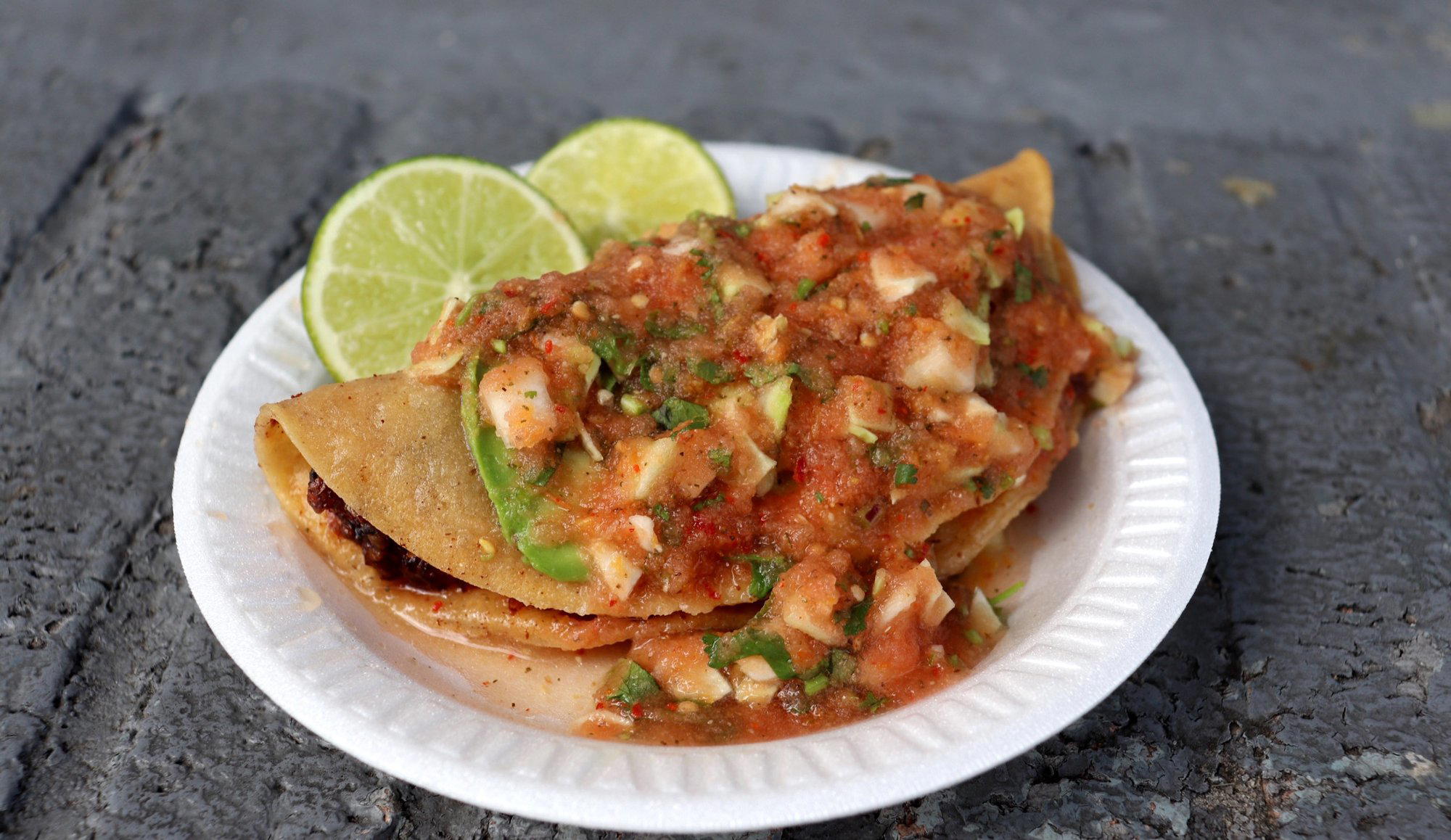
Hotels in Los Angeles
All hotels in Los Angeles →


Wineries in Los Angeles
All wineries in Los Angeles →
Details
- Lively
- Rustic
- Energetic
- Casual Hangout
- Late Night
- Open Kitchen
- A La Carte
Current opening hours
- Monday
- 5–11:30 PM
- Tuesday
- 5:30–11:30 PM
- Wednesday
- 5–11:30 PM
- Thursday
- 5:30–11:30 PM
- Friday
- 5–11:30 PM
- Saturday
- 5–11:30 PM
- Sunday
- 5–11:30 PM
Hours can change for holidays and private events. Hours as of .
Casual outdoor taco stand under a tent with charcoal grill smoke, conversational energy, and fast-paced street food atmosphere.