
Michelin Bib Gourmand
Our verdict
In Alicante's Benalúa district, Tabula Rasa has held the Michelin Bib Gourmand in both 2024 and 2025, recognising its daily-changing menu built around seasonal produce, no freezers, and no vacuum packs. Rice dishes and fideuás anchor the menu, with combinations such as rice with pork ribs and vegetables reflecting the province's agricultural and coastal traditions. At the €€ price point, it represents one of the more credible expressions of honest Alicante cooking.

Pearl is the En Primeur Club membership app, where members save venues, book tables and use the concierge.
Benalúa and the Case for Neighbourhood Cooking
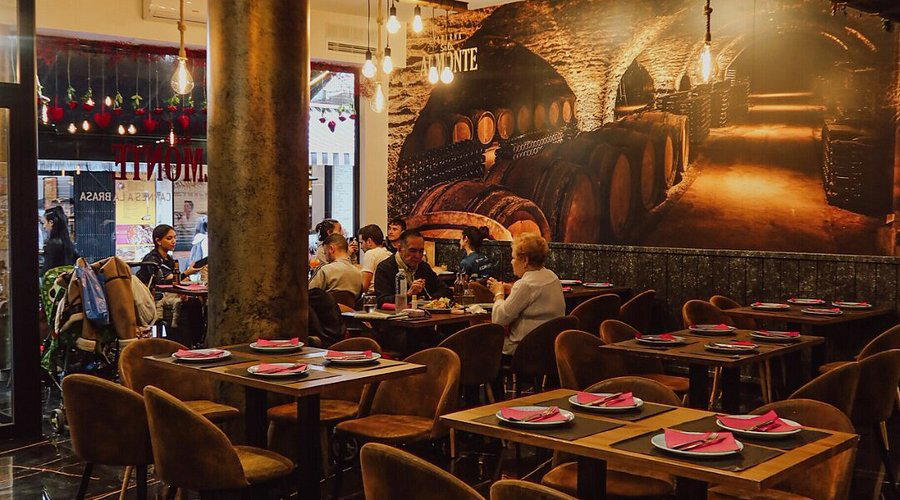
Alicante's dining conversation tends to orbit the waterfront and the casco histórico, where tourist footfall and prime real estate drive a different kind of offer. Benalúa sits slightly apart from that circuit, a residential district of wide streets and maintained 19th-century fabric, and it is in neighbourhoods like this that the more considered expressions of local cooking tend to survive. Tabula Rasa occupies a position on Calle Alberola where the façade fits the district's character: kept up, unshowy, the kind of front that signals the kitchen is where the effort goes. Inside, the atmosphere is calm and traditional, the antithesis of the high-concept interiors that have spread across Spain's premium dining tier over the past decade.
The Michelin Bib Gourmand, awarded in both 2024 and 2025, is the relevant benchmark here. The Bib category rewards value-conscious cooking where quality and price align, and it sits in a different register from the star system: the question is not whether technique reaches a transcendent level, but whether the kitchen delivers honest, well-executed food at a price that reflects the neighbourhood it serves. Two consecutive Bib years at Tabula Rasa confirm the consistency of that offer.
A Kitchen That Does Not Use Freezers
Across the European restaurant industry, sustainability has fractured into two distinct approaches. The first is the performative kind: certified suppliers listed on menus, carbon-neutral credentials in the press material, a visual story of foraging and provenance. The second is more structural, harder to communicate, and in practice more demanding: simply refusing the operational shortcuts that industrial supply chains make easy. No freezers. No vacuum packs. These are not aesthetic choices; they are logistical commitments that require daily relationships with suppliers and a menu that bends to what is actually available.
Tabula Rasa sits in that second category. The kitchen under Head Chef Rafael Molina operates without freezers or vacuum packs, which forces the menu to change almost daily. This is not a selling point in the conventional sense. It creates friction, a diner cannot plan a visit around a specific dish, but it also produces cooking that reflects the actual season, the actual market, the actual catch. In a province where agricultural output (artichoke, tomato, citrus, almonds) and coastal access (red prawns from Santa Pola, sea bass from the Costa Blanca) are genuinely distinctive, a daily-market approach has material consequence on what lands on the plate.
This approach connects Tabula Rasa to a longer tradition of Spanish market kitchens, where the menu is understood to be a record of what was available that day rather than a fixed contract with the diner.
Rice, Fideuá, and the Alicante Table
The rice dish is the organising principle of Alicante's culinary identity in a way that distinguishes it even from Valencia, forty minutes north. Valencian paella is the better-known export, but the Alicante province has its own rice traditions: the socarrat-focused arroz a banda, the thicker caldero of the fishing communities, and the inland combinations that pair rice with game, vegetables, and cured meats. Fideuá, the same structural logic as rice, but with short pasta noodles, originated just up the coast and is claimed, with some competition, by the province.
At Tabula Rasa, rice dishes and fideuás take the central position on the menu, and they shift with the market. The documented combination of rice with pork ribs and vegetables reflects the inland Alicante tradition rather than the coastal one, a reminder that the province's cooking is not simply seafood and citrus, but a more complex interplay of mountain, plain, and coast. In a city where tourist demand often flattens the local offer toward the most legible version of itself, a kitchen that holds its ground on the inland traditions is doing something worth noting.
For context on how this sits within the wider Alicante scene: Maestral and Manero represent different points on the local spectrum, while Baeza & Rufete and Alba operate at the higher technical register of the city's contemporary offer. Celeste y Don Carlos provides another modern-cuisine reference point. Tabula Rasa is not competing with that tier; it is occupying a different position entirely, one where the Bib Gourmand's value-and-quality axis is the operative standard.
The broader Spanish context is worth establishing briefly. The restaurants that have defined Spain's international reputation over the past two decades, Arzak in San Sebastián, DiverXO in Madrid, El Celler de Can Roca in Girona, Quique Dacosta in Dénia, Azurmendi in Larrabetzu, and Aponiente in El Puerto de Santa María, operate at a level of technical and conceptual complexity that has little bearing on what a neighbourhood market kitchen is trying to do. The comparison that holds more relevance is with Bib-tier regional kitchens in other parts of the country: Auga in Gijón, for instance, or Auberge Grand'Maison in Mûr-de-Bretagne across the border in Brittany, where the same logic of seasonal honesty and local identity drives the offer.
Planning a Visit
Tabula Rasa is at C. Alberola, 57, in the Benalúa district of Alicante, a ten-minute walk from the central area, in a residential neighbourhood that sees very little tourist traffic. The €€ price point places it in the accessible mid-range of the city, comparable in cost to the tapas bar tier but with a full sit-down format and a daily-changing single menu. Because the menu shifts almost daily based on market availability, there is no fixed card to preview: the approach requires arriving without a specific dish in mind and trusting the kitchen's reading of the season.
For a fuller picture of dining, accommodation, and other options in the city, see our full Alacant restaurants guide, our full Alacant hotels guide, our full Alacant bars guide, our full Alacant wineries guide, and our full Alacant experiences guide.
Frequently asked questions
How do I find Tabula Rasa?
Tabula Rasa is located at C. Alberola, 57, 03007 Alicante, Spain, Alacant.
A small set of peers for context, based on recorded venue fields.
| Venue | Cuisine | Price | Awards | Notes |
|---|---|---|---|---|
| Tabula RasaThis venue (the venue you are viewing) | Modern Spanish Tasting Menu | $50–100 | Michelin Bib Gourmand | Not listed |
| Baeza & Rufete | Modern Mediterranean Fine Dining | $100–150 | 1 Michelin Star · Macarfi 7 Food Rating | Modern Cuisine |
| El Portal Taberna & Wines | Modern Spanish Tapas & Gourmet Gastro-Bar | $50–100 | Michelin Plate · Guía Repsol 1 Sol | Tapas Bar |
| La Taberna del Gourmet | Modern Spanish Tapas | $50–100 | Michelin Plate · Guía Repsol 1 Sol | Gastrobar-Seafood, Regional Cuisine |
| Nou Manolín | Modern Valencian Seafood | $50–100 | Michelin Plate · Macarfi 8.5 Food Rating | Spanish, Farm to table |
| Piripi | Traditional Spanish Seafood Tapas | $50–100 | Michelin Plate · Guía Repsol 1 Sol | Rice Dishes |
Recognition history
Dated appearances from independent guides and award organizations, with the underlying list record or original source where available.
Michelin Bib Gourmand
Michelin
Full recognition history (3 entries)
Michelin Bib Gourmand
Michelin
Michelin Bib Gourmand
Michelin
Continue exploring
More in Alicante
Restaurants in Alicante
All restaurants in Alicante →

Bars in Alicante
All bars in Alicante →
Details
- Cozy
- Intimate
- Classic
- Date Night
- Special Occasion
- Open Kitchen
- Extensive Wine List
- Local Sourcing
- Tasting Menu
- Small Plates
- Vegetarian Friendly
- Allergy Accommodating
Current opening hours
- Monday
- Closed
- Tuesday
- Closed
- Wednesday
- 2–3:30 PM
- Thursday
- 2–3:30 PM
- Friday
- 2–3:30 PM, 9–10:30 PM
- Saturday
- 2–3:30 PM, 9–10:30 PM
- Sunday
- 2–3:30 PM
Hours can change for holidays and private events. Hours as of .
Tranquil and traditional interior with peaceful, cozy, and understated atmosphere.