
Michelin Plate
Our verdict
Manero occupies a faithfully recreated traditional grocery store space in central Alacant, serving tapas, Iberian ham, salted fish, and high-quality tinned products at mid-range prices. A 2025 Michelin Plate holder, it sits at the accessible end of the city's serious food scene, with a format that blurs the line between eating in and taking home.

Pearl is the En Primeur Club membership app, where members save venues, book tables and use the concierge.
The menu
What to order
- King crab
- Steak tartare
- Patatas bravas
- Veal cheeks
A Shop That Feeds You: The Colmado Format in Alacant
The traditional Spanish colmado, or provisions store, is one of the Iberian peninsula's most enduring food formats: shelves of tinned products, cured hams suspended overhead, salted fish stacked in ceramic trays, and a counter where eating and shopping occupy the same unhurried transaction. In Alacant, a city that has spent the past two decades building a serious dining scene anchored by rice dishes, salt-cod preparations, and the region's Denominación de Origen wines, Manero has arrived at this format not as nostalgia but as editorial stance. The interior on Calle Médico Manero Mollà replicates the sensory logic of an old provisions merchant: products on display are also products on the plate, and the line between retail shelf and kitchen pass dissolves deliberately.
This matters in context. Alacant's mid-range dining tier, priced at roughly the same level as Manero's two-euro-sign bracket, tends to split between direct tapas bars and rice-focused restaurants in the Piripi mould. Manero inserts a different proposition: a grocery-store aesthetic that frames quality tinned and cured product as the main event rather than as a supporting act to fresh cookery. The format has precedent elsewhere in Spain, particularly in the pintxos culture of the Basque Country and in Madrid's premium delicatessen-restaurants, but in Alacant it occupies a specific gap.
Reading the Room: What the Space Is Actually Doing
The interior design at Manero is doing substantive work. Where a conventional tapas bar uses the kitchen as the focal point, a colmado-format space uses the product itself, positioning tins, jars, and cured items as both décor and menu. Visitors arriving at C. Médico Manero Mollà, 7 encounter a space that reads as a provisions shop before it reads as a restaurant. Wooden shelving, labelled product lines, and the visual weight of hanging Iberian hams create an atmosphere in which the act of choosing what to eat is already underway before a menu arrives.
This kind of interior logic has become increasingly deliberate in Spanish food culture. In cities where premium dining is concentrated at the higher end of the price scale, the colmado format offers a way to signal seriousness about product quality without the formality of a tasting menu room. The shelving and display function as a transparency mechanism: what you see is what you eat, and the sourcing is implicit in the label. For the city's visitors coming from hotel stays in the old quarter or exploring Alacant beyond its Mediterranean waterfront, the space offers an orientation in regional product culture that a conventional restaurant does not.
Across Spain, the grocery-store restaurant has proven durable precisely because it resolves the tension between the desire for casual eating and the expectation of quality product. Auberge Grand'Maison, Traditional Cuisine in Mûr-de-Bretagne and Auga, Traditional Cuisine in Gijón each demonstrate, in different national registers, how traditional cuisine formats gain credibility by making their sourcing visible. Manero's design applies the same logic through Spanish regional product.
What Is on the Plate, and Why It Matters
The menu at Manero reads across categories that define the best of the Levantine and broader Iberian pantry: Iberian ham, salted dishes (salt-cod preparations and salt-cured fish), delicate tapas, high-quality tinned seafood, and fresh shellfish. In the context of Alacant's food culture, these are not incidental categories. The region sits at the intersection of the Spanish interior's cured meat tradition and the Mediterranean coast's salt-preservation heritage. Mojama, the salt-dried tuna loin that is perhaps the most distinctively Alicantine of all cured products, belongs to the same tradition as the Italian bottarga, and represents centuries of coastal salt-fish culture.
Tinned seafood in Spain has undergone significant critical reappraisal over the past decade. What was once considered supermarket product now commands serious attention at the higher end of the market, with single-origin conservas from Galicia, the Basque Country, and the Valencian Community appearing on the tables of serious restaurants across the country. Manero's format, which reportedly offers products packaged for take-away alongside eat-in service, sits in the middle of this shift: it is simultaneously a place to eat well and a place to source well.
For visitors exploring the wider Alacant dining scene, this positions Manero at a different angle from the city's other Michelin-recognised operations. Baeza & Rufete (Modern Cuisine) operates in the creative tasting-menu register, while Maestral and Tabula Rasa each represent distinct contemporary cooking approaches. Manero's Michelin Plate recognition for 2025 places it inside the same quality framework as those venues while occupying an entirely different format and price tier. Alba (Contemporary) and Celeste y Don Carlos (Modern Cuisine) complete the picture of a mid-to-upper tier dining city with genuine range. Compared to destinations like Quique Dacosta in Dénia or the three-star registers of Arzak in San Sebastián, DiverXO in Madrid, El Celler de Can Roca in Girona, Azurmendi in Larrabetzu, and Aponiente in El Puerto de Santa María, Manero represents the accessible-formal end of Spain's structured food culture rather than its speculative avant-garde.
Planning a Visit
Manero sits in central Alacant at C. Médico Manero Mollà, 7, 03001, within walking distance of the old town and the main hotel zone. The two-euro-sign price range positions it as a mid-range proposition by Spanish standards, making it a practical choice for a serious lunch or early dinner without the advance planning that Alacant's higher-end tasting-menu rooms require. Given the format, which combines eat-in tapas service with retail product available for take-away, a visit rewards unhurried browsing as much as purposeful eating.
For a fuller picture of where to eat, stay, drink, and explore in the city, see our full Alacant restaurants guide, our full Alacant hotels guide, our full Alacant bars guide, our full Alacant wineries guide, and our full Alacant experiences guide.
Frequently asked questions
What's the vibe at Manero?
Manero occupies a central Alacant address and operates in the recreated format of a traditional Spanish grocery store, with product displays, hanging hams, and shelved conservas shaping the room as much as the seating does. The atmosphere is informal by design but grounded in serious product sourcing. Priced in the mid-range tier for the city and holding a 2025 Michelin Plate, it sits comfortably in Alacant's quality food scene without the formality of a white-tablecloth room.
What do regulars order at Manero?
The venue's Michelin recognition and public-record description point consistently to Iberian hams, salted fish preparations, delicate tapas, and high-quality tinned seafood as the core of the offer. The tinned and cured categories align with Spanish conservas culture at its most product-focused, and the salt-dish preparations connect directly to the Levantine coast's salt-preservation heritage. Many items are also available packaged for take-away, which suggests regulars use the visit as both a meal and a sourcing stop.
A quick peer list to put this venue’s basics in context.
| Venue | Cuisine | Price | Awards | Notes |
|---|---|---|---|---|
| ManeroThis venue (the venue you are viewing) | Gourmet Spanish Tapas | Not listed | Michelin Plate | Not listed |
| Baeza & Rufete | Modern Mediterranean Fine Dining | $100–150 | 1 Michelin Star · Macarfi 7 Food Rating | Modern Cuisine |
| El Portal Taberna & Wines | Modern Spanish Tapas & Gourmet Gastro-Bar | $50–100 | Michelin Plate · Guía Repsol 1 Sol | Tapas Bar |
| La Taberna del Gourmet | Modern Spanish Tapas | $50–100 | Michelin Plate · Guía Repsol 1 Sol | Gastrobar-Seafood, Regional Cuisine |
| Nou Manolín | Modern Valencian Seafood | $50–100 | Michelin Plate · Macarfi 8.5 Food Rating | Spanish, Farm to table |
| Piripi | Traditional Spanish Seafood Tapas | $50–100 | Michelin Plate · Guía Repsol 1 Sol | Rice Dishes |
Recognition history
Dated appearances from independent guides and award organizations, with the underlying list record or original source where available.
Michelin Plate
Michelin
Full recognition history (3 entries)
Michelin Plate
Michelin
Michelin Plate
Michelin
Continue exploring
More in Alicante
Restaurants in Alicante
All restaurants in Alicante →
Bars in Alicante
All bars in Alicante →
Hotels in Alicante
All hotels in Alicante →

Details
- Cozy
- Elegant
- Lively
- Date Night
- Casual Hangout
- Open Kitchen
- Extensive Wine List
- Local Sourcing
- Small Plates
- A La Carte
- Wine
- Vegetarian Friendly
Current opening hours
- Monday
- 1 PM–1 AM
- Tuesday
- 1 PM–1 AM
- Wednesday
- 1 PM–1 AM
- Thursday
- 1 PM–1 AM
- Friday
- 1 PM–2 AM
- Saturday
- 1 PM–2 AM
- Sunday
- 1 PM–1 AM
Hours can change for holidays and private events. Hours as of .
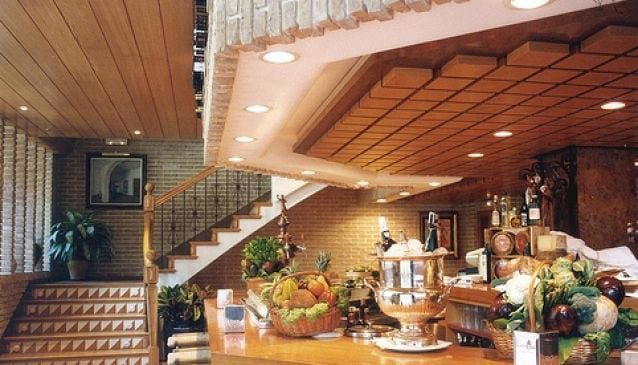
Cozy yet elegant lounge-like interior with warm wood accents, decorative tile floors, and a lively, inviting atmosphere.