Table 3


Opened in June 2024 on Avenue de la Côte d'Emeraude, Table 3 marks chef Fayçal Bettioui's return to Casablanca after training at New York's Per Se and a decade-long career across the US and Germany. The restaurant applies French technique and Japanese restraint to Moroccan ingredients, positioning itself at the intersection of rigorous classical training and deeply local sourcing in a city still defining its fine-dining identity.
Pearl is the En Primeur Club membership app — saves, bookings, and concierge access live there. Same editors, same standards.
- Address
- 4 Av. de la Côte d'Emeraude, Casablanca, Morocco
- Phone
- +212 6 68 84 60 84
- Website
- table3.ma
- Directions
- Get directions
 Saves & bookings on Pearl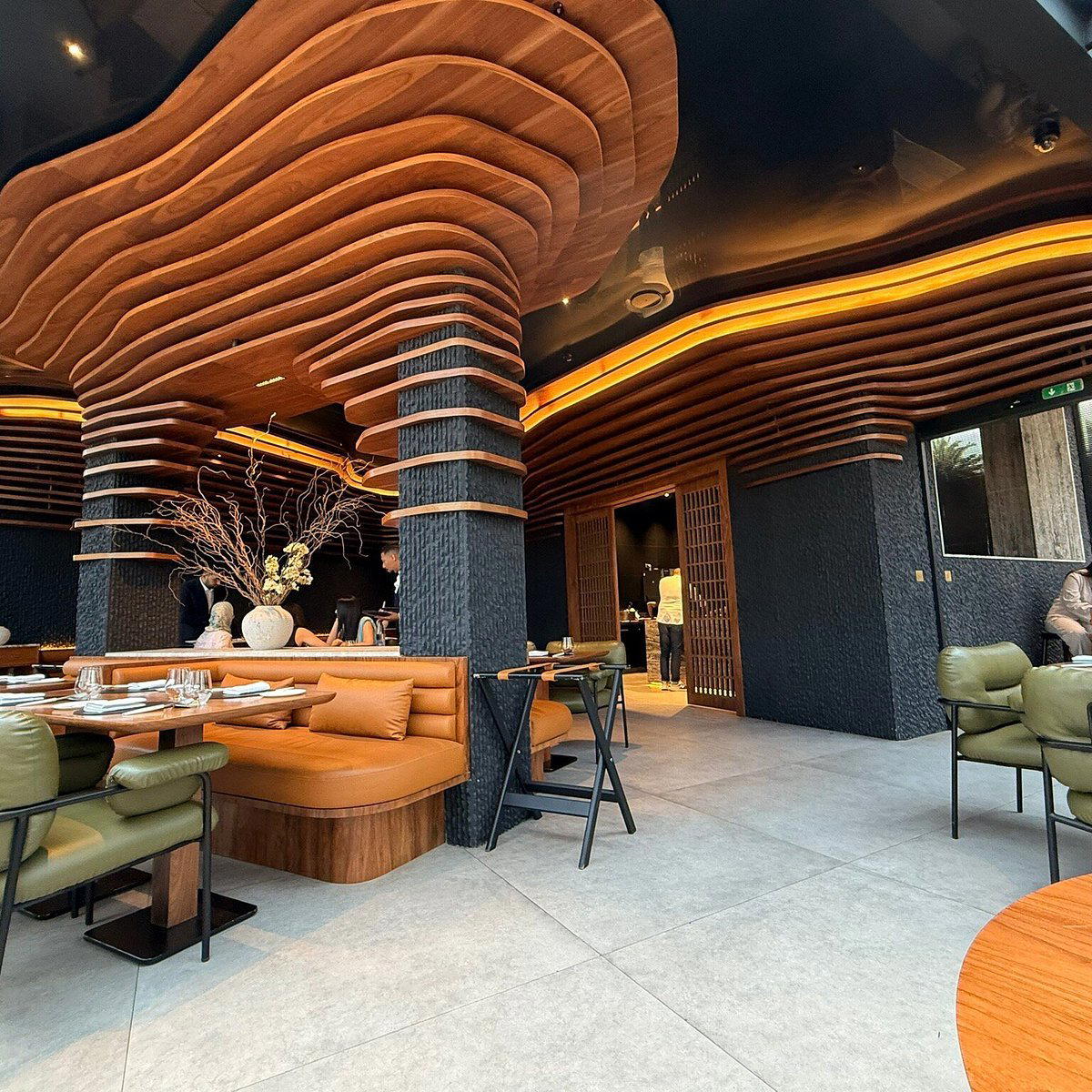
A New Address on the Atlantic Side of Casablanca
Avenue de la Côte d'Emeraude runs close to where Casablanca's residential quarters meet the waterfront, a stretch that carries none of the downtown bustle of Boulevard Mohammed V and none of the corporate hotel formality of the Twin Center district. It is the kind of address that rewards knowing it exists. Table 3 arrived here in June 2024, occupying a position in a neighbourhood that is quietly accumulating serious dining rather than spectacle. Walking up to the entrance, the surrounding low-rise architecture and relative calm set an expectation: this is a restaurant that expects you to pay attention, not one competing for your gaze from a terrace.
Casablanca's fine-dining scene has historically operated in two registers: the grand hotel dining room, anchored by institutions like Hôtel Le Doge and the broader Moroccan French category that Iloli also occupies, and the monument-scale luxury of addresses such as La Grande Table Marocaine at Royal Mansour Casablanca. Table 3 does not belong to either register. It represents a third configuration: the chef-driven independent, where the kitchen logic and the sourcing philosophy take precedence over the grandeur of the room or the prestige of the hotel group behind it.
The Culinary Framework: Three Traditions, One Plate
The restaurant's working method draws on a specific and demanding combination of influences. French classical technique provides the structural vocabulary: precise saucing, controlled heat application, the kind of discipline instilled at the very best of the American tasting-menu format. Chef Fayçal Bettioui trained at Per Se in New York, Thomas Keller's flagship, which sits in the same upper tier of American fine dining as places like Atomix and Emeril's in New Orleans. That kind of training is not common in Morocco, and its influence is legible in the kitchen's standards rather than in any menu flourish.
The Japanese dimension is less about ingredient lists than about philosophy: reduction, negative space, the understanding that restraint is itself a technique. In a cuisine tradition as layered and assertive as Moroccan cooking, applying that principle is a genuine editorial act. The preserved lemons, argan oil, ras el hanout, and heritage grains of the Moroccan pantry are not simplified here; they are isolated and clarified. The result positions Table 3 within a broader global conversation about what it means to cook national ingredients through an international technical lens, a conversation also taking place at restaurants like Gayza in Fès and +61 in Marrakesh, though each from a different angle.
Bettioui's decade abroad included his restaurant Zur Krone in Germany, where the discipline of cooking for Central European audiences who expect both precision and coherence on the plate likely sharpened a sensibility that Moroccan cooking can sometimes reward more loosely. That international loop, Per Se to Germany to Casablanca, is the credentialing arc that gives the Table 3 project its authority, not as biography but as proof of method.
Casablanca as a Dining City: Where Table 3 Fits
Morocco's culinary recognition internationally has tended to centre on Marrakech, Fès, and Essaouira, cities where the medina context and the riad aesthetic have driven high-end hospitality development. Addresses like Heure Bleue Palais in Essaouira and Le Petit Cornichon in Marrakech have built their identities partly through the architecture and atmosphere of their settings. Casablanca, by contrast, is a working commercial capital. It does not trade on romantic atmosphere in the same way, and its restaurant culture has historically been more transactional than destination-driven.
That is changing. The city's upper-income residential base and its position as Morocco's financial hub create demand for serious dining that does not require a riad courtyard to justify the price point. Table 3 opened into that gap. It is the kind of restaurant that a Casablanca resident with exposure to international fine dining recognizes immediately as calibrated to a standard they have encountered elsewhere, whether in New York, Paris, or Tokyo, but executed with local material. That is a harder proposition to sustain than importing a concept wholesale, and it is also a more interesting one. For comparison, L'Oliveraie in El Hajeb and Château Roslane in Icr Iqaddar each represent the Morocco-rooted fine-dining impulse in a regional context; Table 3 applies comparable seriousness to the country's largest urban market.
The Chinese restaurant Le Jasmine occupies a different tier of Casablanca dining entirely, illustrating just how wide the city's range has become. Table 3 operates at the upper end of that range, in a space where technique and sourcing are the primary currency.
Planning a Visit
Table 3 is located at 4 Avenue de la Côte d'Emeraude in Casablanca. Given that the restaurant opened in June 2024 and occupies a specific niche in the city's dining market, booking ahead is advisable, particularly for evening sittings and weekend service. The restaurant's format, a chef-driven independent with international training at its core, tends to attract a mix of Casablanca's professional class and visitors to the city with a specific interest in where Moroccan cooking is heading technically. It does not appear in the grand hotel circuit, which means it requires a degree of deliberate navigation. Casablanca's taxi and ride-hailing infrastructure makes reaching the Côte d'Emeraude address direct from the city centre or the main hotel districts. For broader orientation across Casablanca's dining, drinking, and hospitality options, the EP Club guides cover restaurants, hotels, bars, wineries, and experiences across the city.
Where the Accolades Land
| Venue | Cuisine | Awards |
|---|---|---|
| Table 3This venue — the venue you are viewing | This venue | Not listed |
| La Grande Table Marocaine - Royal Mansour Casablanca | Moroccan Fine | Moroccan Fine |
| Le Jasmine | Chinese | Chinese |
| Hôtel Le Doge | Moroccan French | Moroccan French |
| Iloli | Moroccan French | Moroccan French |
Recognition history
Dated appearances from independent guides and award organizations, with the underlying list record or original source where available.
World's 50 Best MENA's Best Restaurants #11
World's 50 Best
The Best Chef One Knife
The Best Chef
Continue exploring
More in Casablanca
Restaurants in Casablanca
Browse all →
Bars in Casablanca
Browse all →
At a Glance
- Intimate
- Modern
- Elegant
- Minimalist
- Cozy
- Date Night
- Special Occasion
- Open Kitchen
- Extensive Wine List
- Local Sourcing
- Farm To Table
Current opening hours
- Monday
- 7:30–11 PM
- Tuesday
- 12:30–3 PM, 7:30–11 PM
- Wednesday
- 12:30–3 PM, 7:30–11 PM
- Thursday
- 12:30–3 PM, 7:30–11 PM
- Friday
- 12:30–3 PM, 7:30–11 PM
- Saturday
- 12:30–3:30 PM, 7:30–11 PM
- Sunday
- Closed
Hours can change for holidays and private events. Last verified .
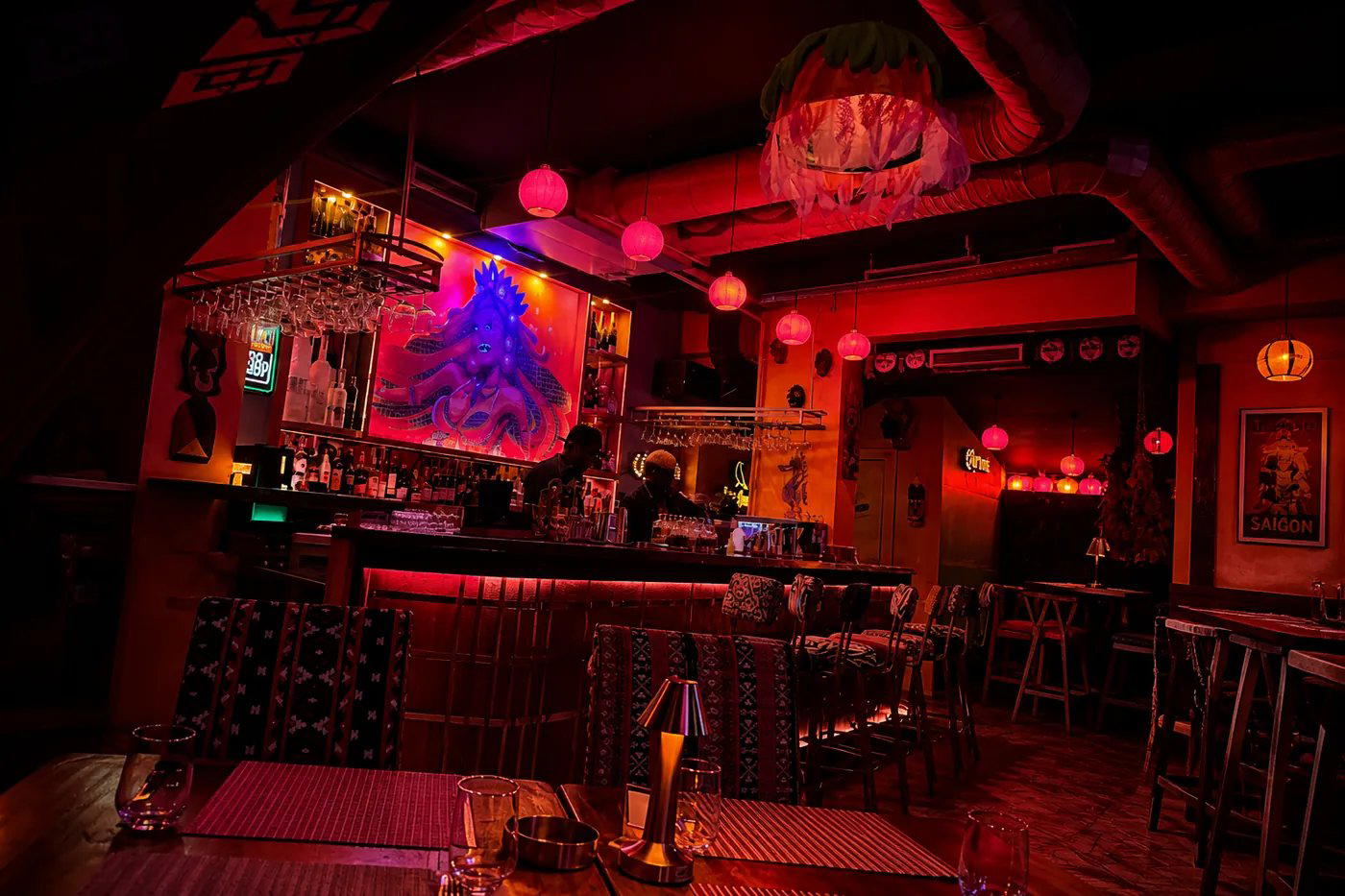
Dimly lit with black concrete walls and slatted wood ceilings, creating a quiet, personal, warm 'coming home' atmosphere centered around the open kitchen.
Know Before You Go
- Getting there
- 4 Av. de la Côte d'Emeraude, Casablanca, Morocco