Sushi Zushi
Our verdict
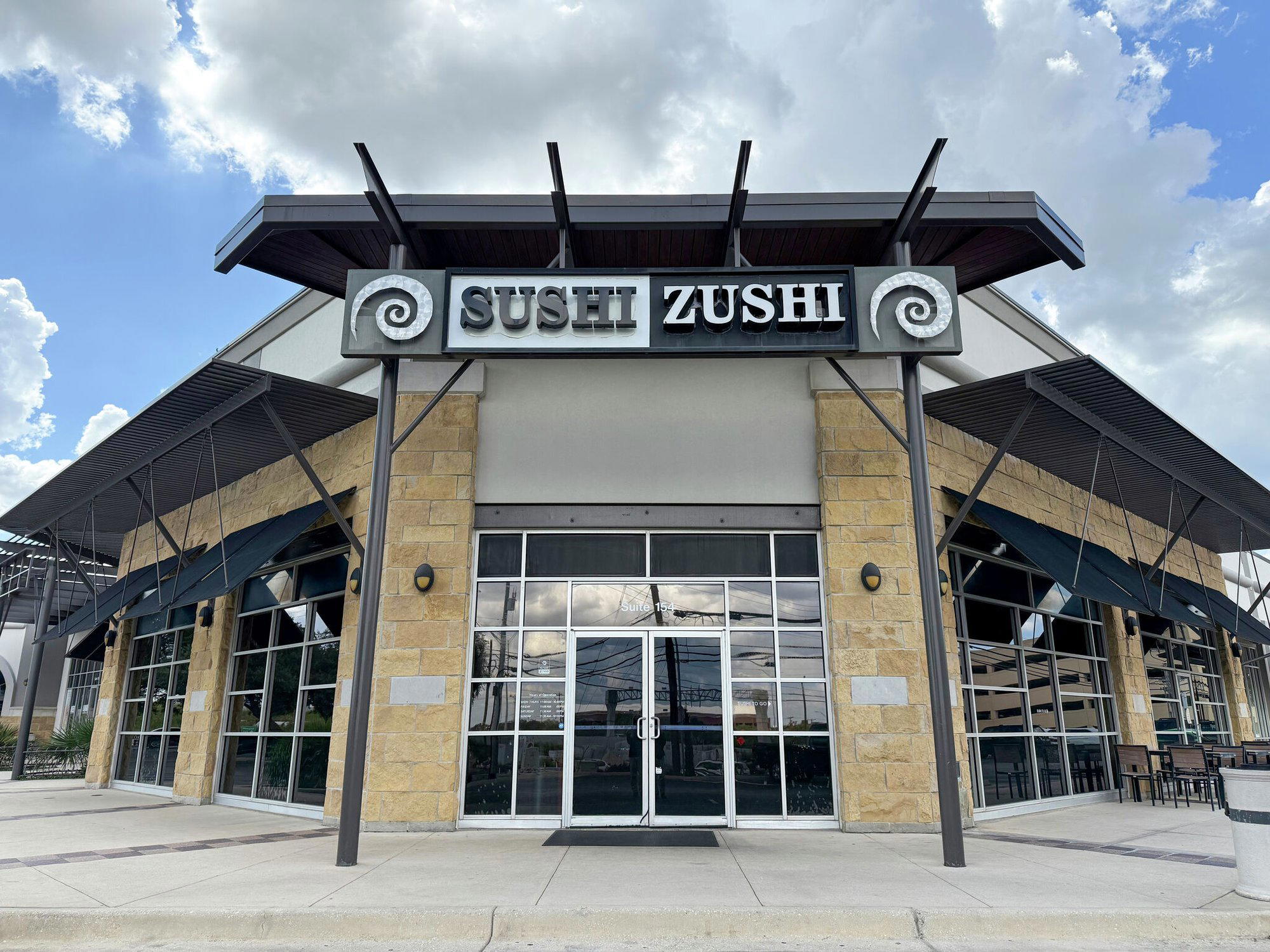
Sushi Zushi occupies a stretch of I-10 in San Antonio's northwest corridor, where the city's appetite for Japanese-American dining formats has grown steadily alongside suburban expansion. The restaurant sits within a dining scene that increasingly rewards accessibility and consistency over ceremony, making it a practical reference point for sushi in a city better known for its barbecue and Tex-Mex traditions.

Pearl is the En Primeur Club membership app — saves, bookings, and concierge access live there. Same editors, same standards.
- Address
- 9867 I-10, San Antonio, TX 78230
- Phone
- (210) 691-3332
- Hours
- Daily 11 AM–10 PM
- Website
- sushizushi.com
- Directions
- Get directions
- Booking
- Book on OpenTable
The menu
What to order
- San Antonio Roll
- Tuna Tower
- Stone Oak Roll
San Antonio's Northwest Corridor and the Case for Japanese-American Dining
The stretch of I-10 west of Loop 410 tells a particular story about how San Antonio has grown. What was once a transitional zone of strip malls and chain anchors has, over the past two decades, accumulated a layer of independent and semi-independent dining that serves the city's expanding northwest residential base. Sushi Zushi operates within this corridor, at 9867 I-10, where the surrounding commercial density means foot traffic arrives less by walk and more by deliberate decision. In a city where the conversation around dining tends to concentrate on the Riverwalk or the Pearl District, the northwest strip functions as a counterweight: higher volume, lower theatre, and a clientele that prioritises proximity and reliability over destination dining rituals.
That context matters when placing Japanese-American sushi restaurants in San Antonio's broader picture. The city does not have the omakase density of Houston or Dallas, where counter-format sushi with Michelin-adjacent credentials has taken hold. San Antonio's sushi scene operates closer to the accessible middle: restaurants where rolls outnumber nigiri on order volume, where the format is casual-to-mid, and where the comparison set is not Atomix in New York City or the kaiseki-influenced counters of the coasts but rather the workable neighbourhood Japanese restaurant that can handle a table of six on a Tuesday. Sushi Zushi sits in that register.
Where I-10 Fits in San Antonio's Dining Geography
San Antonio's dining geography is not one city but several. The Pearl District hosts the most self-consciously ambitious cooking in town, including Mixtli, which runs a tasting-menu format built around regional Mexican cuisine, and Isidore, which approaches Texan cooking with more editorial intent than most. Elsewhere, 2M Smokehouse anchors the city's serious barbecue conversation on the southeast side, and 1Watson represents the hotel-dining tier that has expanded alongside downtown redevelopment. The 410 Diner holds a different position entirely: the kind of all-hours American diner format that the northwest corridor also supports in volume.
Sushi Zushi's I-10 address places it in a zone that is neither the city's most ambitious nor its most casual. The surrounding area runs toward mid-tier retail and family dining, which shapes who comes and what they expect. This is sushi as neighbourhood utility rather than occasion dining, which is a legitimate and underserved category in most American mid-sized cities. The relevant comparison is not The French Laundry in Napa or Le Bernardin in New York City, but the question of whether a city of San Antonio's size and demographic mix can sustain consistent, accessible Japanese-American dining across multiple neighbourhoods rather than concentrating it in a single prestige pocket.
The Format of Accessible Sushi in a Tex-Mex City
Texas cities have a complicated relationship with Japanese cuisine. Houston built a credible omakase tier relatively quickly, and Dallas has followed. San Antonio, with a culinary identity anchored by its proximity to the border and the dominance of Tex-Mex and barbecue as cultural touchstones, has been slower to develop the kind of Japanese dining infrastructure that would support high-investment counter formats. Restaurants like those in our full San Antonio restaurants guide reflect a city that is expanding its range but doing so unevenly across neighbourhoods and cuisine types.
The Japanese-American roll format that Sushi Zushi represents is, in many respects, the format that made sushi commercially viable in American cities that lacked the population density or Japanese-American community infrastructure to support traditional formats. Cities across the South and Southwest built their sushi habits on maki-heavy menus, tempura shrimp rolls, and spicy tuna constructions long before nigiri became the prestige order. That foundation still drives volume in most mid-tier markets, and San Antonio is no exception. The more technically demanding formats available at destination restaurants like Providence in Los Angeles or the farm-integrated precision of Single Thread Farm in Healdsburg occupy a different tier of expectation and infrastructure entirely.
What the Northwest Corridor Expects
Dining rooms along I-10's northwest stretch in San Antonio serve a specific social function. They are where groups gather after school events and where couples land on low-ceremony weeknights. The premium in this context is not on discovery or provocation but on execution and dependability. A restaurant that can deliver consistent rolls, a functional sake list, and a dining room that absorbs noise without becoming oppressive is meeting the actual need of its location. That is a harder brief than it sounds, and it is the brief that Japanese-American restaurants in suburban American corridors have been answering since the format expanded nationally in the 1990s and 2000s.
For readers whose reference points run toward the ambitious end of American dining, whether that is the agricultural sourcing philosophy at Blue Hill at Stone Barns in Tarrytown, the tasting-menu architecture of Alinea in Chicago, or the Cajun-influenced fine dining of Emeril's in New Orleans, the I-10 corridor is a different register. That is not a criticism. It is a description of what the neighbourhood is and what it asks of its restaurants. The highest-commitment dining in any city exists in relationship to the mid-tier and neighbourhood-level restaurants around it, and those layers are what make a dining culture functional rather than merely aspirational.
Readers planning a San Antonio trip around dining ambition would look first at the Pearl District cluster and the south-side barbecue corridor. Those planning around convenience, or with itineraries that include the northwest suburbs, will find that Sushi Zushi holds a position that serves its location honestly. That is a reasonable thing for a restaurant to do, and in a city still filling out its dining geography, it is not a small contribution. See how it compares to more formal formats at restaurants like Addison in San Diego or the Inn-format fine dining of The Inn at Little Washington to calibrate where on the spectrum any given dining decision lands.
Know Before You Go
Frequently asked questions
How do I find Sushi Zushi?
Sushi Zushi is located at 9867 I-10, San Antonio, TX 78230, San Antonio.
How does Sushi Zushi compare to other Japanese restaurants in San Antonio?
San Antonio's Japanese dining scene is less developed than Houston's or Dallas's, making the I-10 northwest location at 9867 San Antonio, TX 78230 one of the more accessible options in that part of the city. No Michelin stars or 50 Best recognition is listed which places it outside the fine-dining tier but within the practical range for regular neighbourhood use. For diners in the Loop 410 vicinity, it fills a gap that the Pearl District's more ambitious restaurants do not.
What dish is Sushi Zushi famous for?
The restaurant sits in San Antonio's northwest corridor, where Japanese-American formats typically anchor around rolls, nigiri, and fusion-leaning plates that travel well with group dining. Check directly with the restaurant for current menu specifics.
Should I book Sushi Zushi in advance?
Restaurants along this northwest corridor frequently see high weekend demand from families and groups, so calling ahead is practical.
What's the standout thing about Sushi Zushi?
Sushi Zushi occupies a specific position in San Antonio's dining geography: it brings a Japanese-American sushi format to the I-10 northwest corridor, a stretch of the city that skews heavily toward Tex-Mex and casual chain dining. That positioning gives it a distinct role in the neighbourhood's restaurant mix.
Can Sushi Zushi adjust for dietary needs?
No specific dietary accommodation policy is documented for this location at 9867 I-10, San Antonio, TX 78230.
Does Sushi Zushi justify its prices?
San Antonio's northwest corridor generally supports mid-range pricing structures, and Japanese-American sushi restaurants in this market position tend to fall below the omakase tier found in Houston or Dallas. Contact the restaurant for current menu pricing.
Peers in This Market
Comparable venues nearby, for context on price, style, and recognition.
| Venue | Cuisine | Price | Notes |
|---|---|---|---|
| Sushi ZushiThis venue — the venue you are viewing | Japanese Sushi Fusion | $30–50 | Not listed |
| Sake Cafe | Japanese Sushi Bar & Grill | $20–30 | Stone Oak-Sonterra |
| Pam's Patio Kitchen | Eclectic American Cafe with Thai & Seafood | $20–30 | Northwest Side |
| Primero Cantina | Tex-Mex Cantina | $20–30 | Northwest Side |
| Jingu House | Japanese Food with a Mexican Twist | $10–20 | University Hill |
| Golden Wok | Traditional Chinese Dim Sum | $20–30 | Northwest |