Sake Cafe
Our verdict
Sake Cafe occupies a strip-mall address on Blanco Road in north San Antonio, placing it squarely in the residential dining corridor that has quietly built a following for Japanese and Asian-influenced menus away from the tourist pull of the River Walk. The format suits neighborhood regulars as much as destination diners seeking Japanese cooking at a distance from downtown San Antonio's more celebrated restaurant row.

Pearl is the En Primeur Club membership app — saves, bookings, and concierge access live there. Same editors, same standards.
- Address
- 19179 Blanco Rd #101, San Antonio, TX 78258
- Phone
- (210) 408-6388
- Hours
- Mon–Thu 11 AM–9:30 PMFri 11 AM–10 PMSat 12–10 PMSun 12–9 PM
- Website
- sakesushisa.com
- Directions
- Get directions
- Booking
- Book on the venue's website
The menu
What to order
- San Antonio Roll
- Hawaiian Heaven
- Scandinavian Roll
North San Antonio's Appetite for Japanese Dining
San Antonio's dining geography splits roughly into two zones: the dense, visitor-facing corridor of the River Walk and downtown, where venues like Boudro's on the Riverwalk and the Tex-Mex stalwarts compete for foot traffic, and the sprawling residential north, where strip-mall addresses and neighborhood loyalty tend to define success. Sake Cafe at 19179 Blanco Road sits firmly in the second category. That address — Suite 101 in a commercial center off Blanco Road, in the 78258 zip code — places it among the communities of Stone Oak and Hollywood Park, where the clientele is local, repeat, and largely indifferent to downtown's tourism rhythms.
Japanese restaurants in this northern corridor have found a durable audience precisely because the format travels well into residential contexts. A sushi and sake-focused menu does not require the theater of an omakase counter or the destination framing of a high-profile chef to sustain itself; the cuisine's inherent structure, built around clean ingredient logic and varied preparation methods, gives diners enough range to return across occasions.
For comparison with the wider San Antonio dining scene, our full San Antonio restaurants guide maps the full range from River Walk institutions to these quieter neighborhood addresses.
Reading the Menu: What the Structure Signals
Japanese restaurant menus in the American market have, over the past two decades, split into recognizable archetypes. At one end sit the hyper-focused omakase formats, where a single counter and a single tasting sequence define everything. At the other end, the broad-menu Japanese-American restaurant offers sushi rolls alongside cooked appetizers, noodle dishes, and kitchen specials, a format built for tables of mixed preferences rather than a solo diner with a specific agenda.
Sake Cafe's format, as its name implies, falls into the latter category, with sake service integrated as a genuine menu consideration rather than an afterthought. This matters because sake programming, even at a modest neighborhood level, signals something about how a kitchen approaches Japanese ingredients. A menu designed to sit alongside a sake list tends to emphasize cleaner flavors and subtler seasoning, since sake's umami character competes differently with food than wine or beer does. The implication for diners is that the kitchen is likely calibrated toward texture and delicacy over the bolder, heavily sauced preparations that dominate casual Japanese-American dining.
This approach places Sake Cafe in a different competitive set than, say, a sushi chain or a pan-Asian restaurant. It is not reaching toward the capital-I intensity of formats like Atomix in New York City, which represents the tasting-menu pole of Korean fine dining, nor the rigorous sourcing disciplines of a farm-anchored program like Blue Hill at Stone Barns in Tarrytown. It is, instead, a neighborhood Japanese restaurant with a specific beverage identity, a format that succeeds through consistency and range rather than through conceptual ambition.
San Antonio Japanese Dining in Context
San Antonio is not a city typically associated with Japanese food culture in the way that Houston or Austin have developed more visible Japanese dining communities. The city's culinary identity leans toward its deep Mexican-American and Tex-Mex heritage, as demonstrated by venues like Mixtli, which applies a high-concept tasting-menu format to regional Mexican cuisine, and the more casual Mexican-influenced options citywide. Against that backdrop, Japanese restaurants occupy a smaller but committed niche, serving diners who want a clean break from the dominant flavor profiles of the local dining scene.
The north San Antonio residential market has supported that niche partly because the demographics of Stone Oak and the surrounding zip codes skew toward professional households with consistent disposable income and an appetite for variety. A neighborhood Japanese restaurant here is not an exotic outlier; it is a category that fills a clear gap in a residential dining ecosystem that also includes European bistro formats, upscale American cooking, and the occasional independently owned barbecue destination.
Across the city, the more celebrated end of the dining spectrum is represented by venues like Isidore, which applies a Texan fine-dining sensibility to local ingredients, and 1Watson. On the more casual end, 2M Smokehouse holds a strong reputation in the barbecue category, and 410 Diner anchors the diner format. Sake Cafe sits in none of those categories, occupying instead the mid-market neighborhood Japanese slot that those other venues leave open.
Nationally, the full range of what Japanese and Asian-influenced dining can look like is illustrated by the distance between a venue like Le Bernardin in New York City, where classical French technique meets seafood at the highest formal register, and a neighborhood sushi restaurant serving a Blanco Road strip mall. Both serve fish; the difference is in the entire apparatus around the product. Understanding that range helps calibrate expectations for what a venue like Sake Cafe is built to deliver and for whom.
Positioning Within the Wider Dining World
For diners whose reference points include the tasting-menu intensity of Alinea in Chicago, the seafood precision of Providence in Los Angeles, the farm-to-table rigor of Single Thread Farm in Healdsburg, the California institution of The French Laundry in Napa, the Southern hospitality of Emeril's in New Orleans, the Virginia country house grandeur of The Inn at Little Washington, the San Francisco collaborative format of Lazy Bear, the Spanish-influenced San Diego dining of Addison, or the Italian precision of 8 1/2 Otto e Mezzo Bombana in Hong Kong, a neighborhood Japanese restaurant in north San Antonio is operating in an entirely different register. That is not a criticism. Neighborhood dining serves a function that destination dining cannot: it shows up on a Tuesday, accommodates a table of four with different appetites, and does not require a reservation made three months in advance.
Know Before You Go
- Address: 19179 Blanco Rd #101, San Antonio, TX 78258
- Hours: Confirm directly; north-side neighborhood restaurants in this format typically observe standard lunch and dinner service with reduced midweek hours
- Booking: No booking platform listed, walk-in or direct contact recommended
- Parking: Strip-mall setting means on-site surface parking is available
- Price range: Not listed; comparable north San Antonio neighborhood Japanese restaurants typically fall in the $15–$35 per person range before drinks
Frequently asked questions
How do I find Sake Cafe?
Sake Cafe is located at 19179 Blanco Rd #101, San Antonio, TX 78258, San Antonio.
Is Sake Cafe in San Antonio a good option for a group dinner?
Sake Cafe's address in a strip-mall retail suite at 19179 Blanco Rd #101 is typical of north San Antonio neighborhood Japanese restaurants, which generally offer table configurations suited to small groups of four to six. The format is consistent with casual, shareable Japanese dining rather than a tasting-menu or counter-only setup.
Should I book Sake Cafe in advance?
No online booking platform is currently listed for Sake Cafe's Blanco Road location, which points toward a walk-in or call-ahead approach. In the residential north San Antonio corridor around 78258, Japanese spots with a neighborhood following tend to fill quickly on Friday and Saturday evenings. Arriving before peak dinner service or calling the restaurant directly is the safest approach.
Cost and Credentials
Comparable venues nearby, for context on price, style, and recognition.
| Venue | Cuisine | Price | Notes |
|---|---|---|---|
| Sake CafeThis venue — the venue you are viewing | Japanese Sushi Bar & Grill | $20–30 | Not listed |
| Primero Cantina | Tex-Mex Cantina | $20–30 | Northwest Side, Tex-Mex Cantina |
| Battalion | Modern Italian | $30–50 | Convention Center District, Modern Italian |
| Pasha Mediterranean Grill | Mediterranean & Greek Grill | $20–30 | Northwest, Mediterranean & Greek Grill |
| Albi's Vite Leon Springs | Authentic Italian | $20–30 | Leon Springs, Authentic Italian |
| Tiu Steppi's Osteria | Neighborhood Italian Osteria | $20–30 | Northwest, Neighborhood Italian Osteria |
Continue exploring
More in San Antonio
Restaurants in San Antonio
Browse all →
Bars in San Antonio
Browse all →
Hotels in San Antonio
Browse all →
Details
- Casual
- Cozy
- Casual Hangout
- Family
- Open Kitchen
- Sake Program
- A La Carte
- Sake
Current opening hours
- Monday
- 11 AM–9:30 PM
- Tuesday
- 11 AM–9:30 PM
- Wednesday
- 11 AM–9:30 PM
- Thursday
- 11 AM–9:30 PM
- Friday
- 11 AM–10 PM
- Saturday
- 12–10 PM
- Sunday
- 12–9 PM
Hours can change for holidays and private events. Last verified .
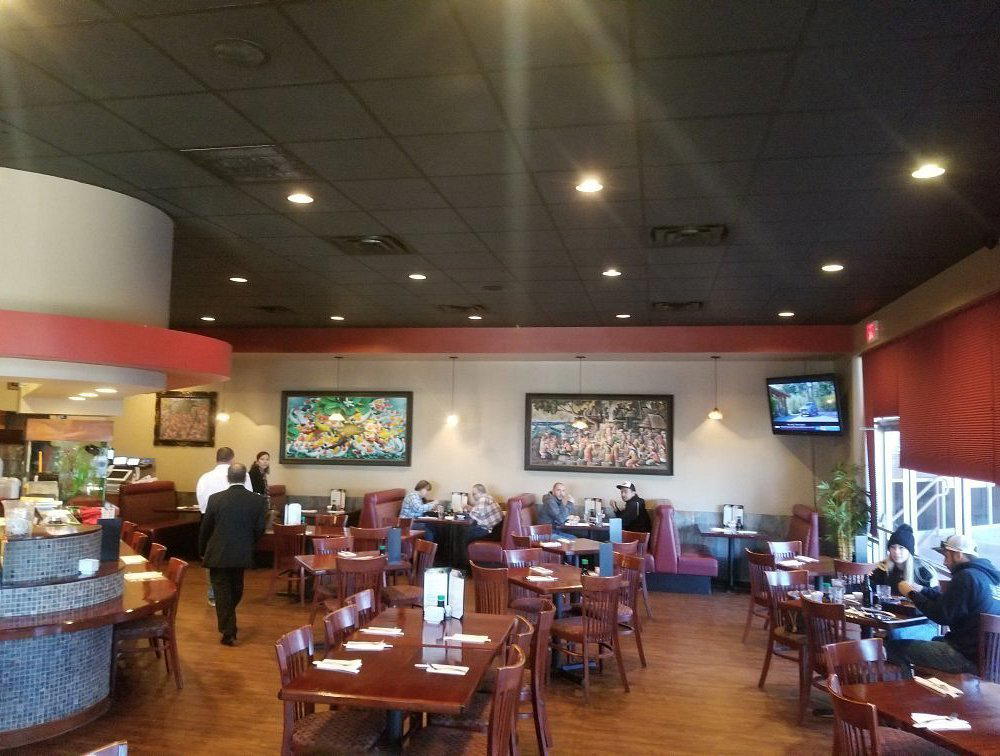
Relaxed and welcoming atmosphere with friendly staff and an open sushi bar.