Isidore




Isidore in San Antonio presents Progressive American dining rooted in Texas terroir. Must-try plates include the milk-made yuba stuffed with fresh cheese, a seared Texas Wagyu steak, and mesquite-bean butter served with house bread. The kitchen transforms local foraged ingredients into refined tasting plates, balancing rugged flavors with polished technique. Opened August 2024 and named a top U.S. eatery by the New York Times, Isidore pairs Texas-only wine selections with inventive cocktails. Expect warm oak interiors, attentive service, and flavors that reveal the state’s wild bounty in surprising, luxurious ways—perfect for special evenings in the Pearl District or an elevated weekend dinner.
Pearl is the En Primeur Club membership app — saves, bookings, and concierge access live there. Same editors, same standards.
- Address
- 221 Newell Ave, San Antonio, TX 78215
- Phone
- (210) 756-7359
- Website
- isidoresatx.com
- Directions
- Get directions
 Saves & bookings on Pearl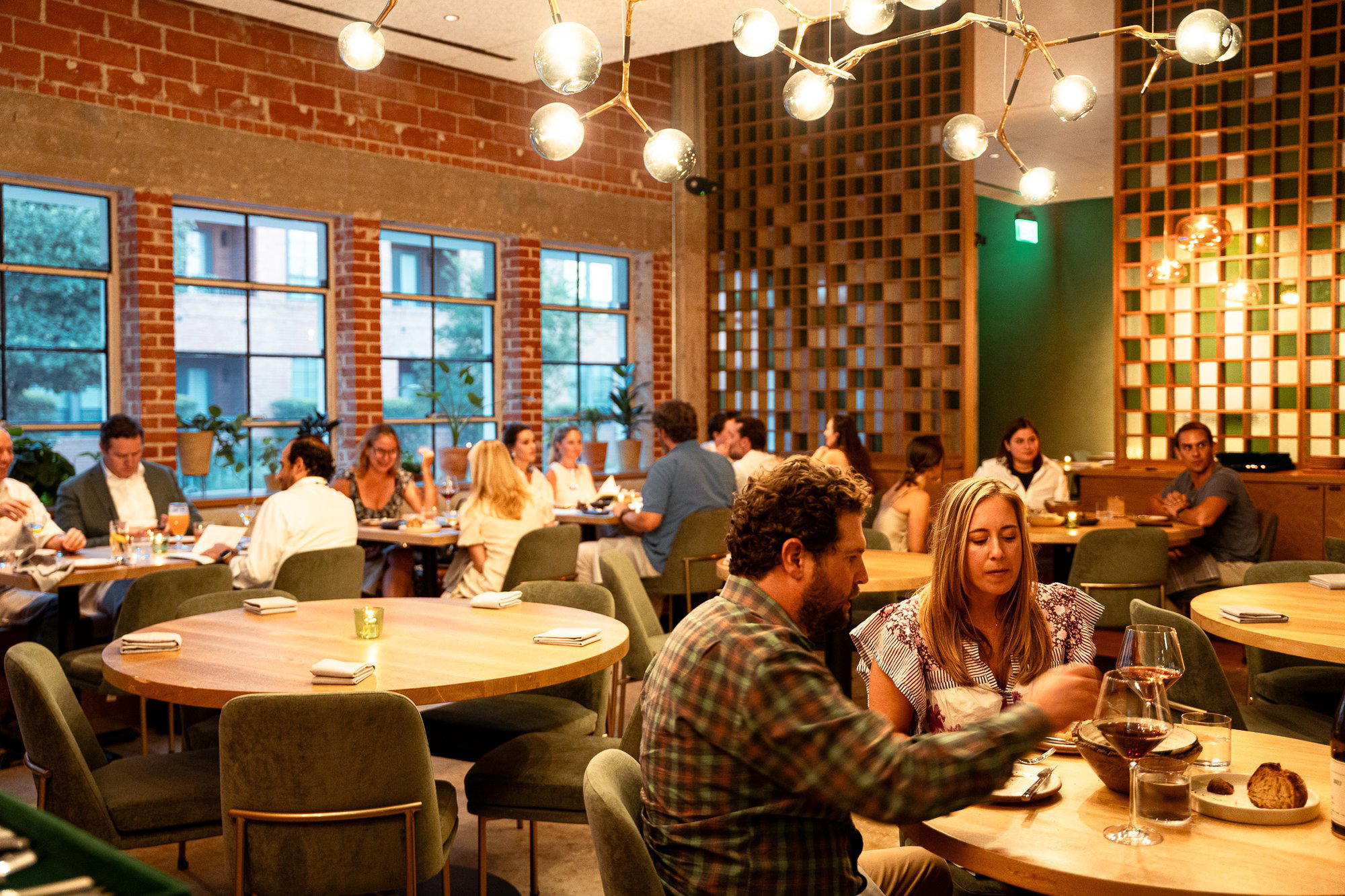
Foraging With a Michelin Star: Isidore and the New Texas Fine Dining
From the outside, 221 Newell Ave reads like any well-appointed hotel lobby conversion: clean lines, soft light, the kind of space that signals money without advertising it. Step inside Isidore and that impression holds for about thirty seconds, until the food arrives and makes clear that the kitchen operates on entirely different terms than the room suggests. The contrast is part of the point. This is a restaurant that presents Texas terroir in formal dress, and the tension between polish and wildness is precisely where the cooking lives.
Isidore opened in August 2024 and earned a Michelin star in 2025, making it one of the fastest kitchens in recent San Antonio memory to move from debut to critical recognition. That timeline matters not as biography but as market signal: the city's dining infrastructure now supports the kind of sustained sourcing, technique, and investment that Michelin reviewers require before they commit a star. San Antonio's fine dining tier has deepened, and Isidore is among the clearest evidence of that shift. In the same city where Mixtli holds its own Michelin star through a rigorously regional Mexican format, the question is no longer whether the city can support serious cooking, but how many distinct idioms it can sustain at that level.
Wild Sourcing, Formal Execution
The cooking at Isidore belongs to a category that American fine dining has been building toward for the better part of a decade: forager-driven tasting menus that treat the surrounding region as larder first, tradition second. The approach puts Isidore in a peer conversation with places like Lazy Bear in San Francisco and Single Thread Farm in Healdsburg, where the sourcing radius shapes the menu more than any single culinary lineage. What distinguishes the Texas version is the specific strangeness of the ingredients: mesquite beans cooked down to a syrup and whipped with butter into a sweet condiment; Wagyu from Texas cattle bred for intermuscular fat; yuba made from milk sourced at a nearby farm, stuffed with fresh cheese, finished in cream, arriving at the table looking like ethereal ravioli.
That last dish is the one critics have circled. It demonstrates something technically demanding: taking an ingredient with East Asian associations, stripping it of any imported context, and rebuilding it from local dairy into something entirely of this place. The mesquite preparation shows the same instinct in a different register. Mesquite has been part of Texas food culture for generations, mostly as smoke. Cooking the beans down to a syrup is not a reinvention of tradition so much as a decision to look at a familiar plant from a different angle. That is the kitchen's recurring gesture: the Texas pantry, approached as though for the first time.
Chef Ian Lanphear built the concept through pop-ups rooted in foraged food before taking it to a fixed address. That trajectory is worth noting not for the personal narrative it implies, but because it produced a kitchen with a clear practice before it had a permanent room. Pop-up formats force an economy of technique and a flexibility with supply that translates well to forager-driven fine dining, where the sourcing is inherently irregular. The result is a menu that reads as deliberately composed rather than opportunistically assembled.
Where Isidore Sits in San Antonio's Dining Tier
San Antonio's restaurant scene has historically been anchored by two strong traditions that rarely intersect: barbecue, represented at the serious end by places like 2M Smokehouse and Barbecue Station, and Tex-Mex and Mexican cooking with deep local roots. The fine dining tier has grown alongside these, with properties like Boudro's on the Riverwalk representing an earlier generation of upscale Texas bistro and Cullum's Attaboy operating at the refined French end. Isidore operates in a different lane from all of them: it is not a regional cuisine restaurant, not a steakhouse with premium ingredients, and not a European-trained kitchen applying classical structure to local product. It is something closer to a research kitchen that happens to serve dinner, using Texas as both subject and material.
The closest reference points are restaurants where the sourcing philosophy is the concept rather than a supporting element: Alinea in Chicago for the commitment to a singular cooking vision within a tasting format, The French Laundry in Napa for the proposition that a meal can be a complete intellectual and sensory event, or Atomix in New York City for using cultural specificity as structural logic rather than decoration. Isidore is not competing with those kitchens on prestige or history. It is operating in the same register of intent, with Texas as its organizing principle.
The 2025 Esquire recognition for leading martinis in America adds a dimension that matters independently. Cocktail programs at starred restaurants often function as obligatory accessories; an Esquire citation in that specific category suggests Isidore's bar operation has been developed with the same discipline as the kitchen. For a restaurant opened in August 2024, holding both a Michelin star and a named cocktail award within its first year signals a program built to a high standard across multiple fronts. Comparisons to long-established programs at places like Le Bernardin in New York City or Emeril's in New Orleans are premature, but the early evidence is that Isidore intends to be taken seriously on every element of the experience, not just the plate.
Planning Your Visit
A Michelin star earned in the first year of operation, at a restaurant with a fixed address since only August 2024, creates a booking situation that rewards early planning. Demand at this tier in San Antonio has increased with the city's critical profile, and forager-driven tasting menus by nature limit covers. Reservations should be secured well in advance, particularly for weekend sittings; the kitchen's sourcing model also means the menu evolves with what the season and landscape make available, so repeat visits are unlikely to replicate each other exactly. Isidore is located at 221 Newell Ave in San Antonio's 78215 zip code. For a full map of the city's dining and hospitality options, see our full San Antonio restaurants guide, along with our guides to San Antonio hotels, bars, wineries, and experiences. For another starred Michelin reference point in the city, Mixtli operates on a comparably serious regional premise and is worth booking alongside Isidore for a two-night dining itinerary. Internationally, 8 1/2 Otto e Mezzo Bombana in Hong Kong offers a useful comparison point for how a singular culinary philosophy translates into consistent starred recognition across years.
| Venue | Cuisine | Price | Awards |
|---|---|---|---|
| IsidoreThis venue — the venue you are viewing | Texan | Isidore is an adventure in foraging dressed in fancy attire. The restaurant may look like a hotel lobby, but the food is as wild and unfettered as the Texas terroir it comes from. The chef Ian Lanphear, known for hosting pop-ups rooted in foraged food, isn’t just interested in showing off the bounty of the state, but also presenting it in surprising ways. Mesquite beans are cooked down to a syrup and whipped with butter to make a sweet condiment that dazzles whatever it touches (including the bread, which is excellent). The Wagyu steak, from Texas cows prized for their intermuscular fat, is as sumptuous as you’d expect. But the real prize is an elegant dish of yuba made of milk from a nearby farm that’s stuffed with fresh cheese and cooked in cream, it looks like ethereal ravioli and tastes like heaven. Opened: August 2024; Michelin 1 Star (2025); Esquire Best Martinis in America (2025) | This venue |
| Leche de Tigre | French, Peruvian | $$ | French, Peruvian, $$ |
| Mixtli | Mexican | $$$$ | Michelin 1 Star |
| Boudro’s on the Riverwalk | Texas Bistro | Texas Bistro | Not listed |
| Cullum's Attaboy | French | $$ | French, $$ |
| Ladino | Mediterranean Cuisine | $$ | Mediterranean Cuisine, $$ |
Recognition history
Dated appearances from independent guides and award organizations, with the underlying list record or original source where available.
Wine Spectator Award of Excellence
Wine Spectator
Esquire Best Martinis in America
Esquire
Michelin 1 Star
Michelin
New York Times America's Best Restaurants
New York Times
Continue exploring
More in San Antonio
Restaurants in San Antonio
Browse all →
Bars in San Antonio
Browse all →
Hotels in San Antonio
Browse all →

Wineries in San Antonio
Browse all →
At a Glance
- Rustic
- Elegant
- Intimate
- Sophisticated
- Special Occasion
- Date Night
- Celebration
- Open Kitchen
- Extensive Wine List
- Farm To Table
- Local Sourcing
Current opening hours
- Monday
- Closed
- Tuesday
- 5–10 PM
- Wednesday
- 5–10 PM
- Thursday
- 5–10 PM
- Friday
- 5–10 PM
- Saturday
- 5–10 PM
- Sunday
- 5–10 PM
Hours can change for holidays and private events. Last verified .
Rustic-chic dining room with wooden tabletops, polished concrete floors, branch-like chandeliers, open kitchen, and live-fire hearth creating an energetic yet intimate atmosphere.
Know Before You Go
- Getting there
- 221 Newell Ave, San Antonio, TX 78215