
1 Michelin Star
Our verdict
Sushi Oya operates from Kagurazaka, one of Tokyo's few neighbourhoods where French and Japanese culinary traditions have coexisted for decades.

Pearl is the En Primeur Club membership app, where members save venues, book tables and use the concierge.
The menu
What to order
- Steamed abalone
- Tuna trio (akami, chutoro, otoro)
- Kohada (gizzard shad)
- Sumiika (ink squid)
Kagurazaka and the Counter Sushi That Grows There
Kagurazaka has occupied an unusual position in Tokyo's dining geography since the Meiji era, when French settlers and Japanese merchants shared the same narrow stone lanes. That cross-cultural history produced a neighbourhood that resists easy categorisation: traditional ryotei sit beside French bistros, and the clientele tends toward the literary and artistic rather than the finance or fashion crowds that populate Ginza and Roppongi counters. It is, by Tokyo standards, an intimate district, and that character shapes the kind of sushi counter it supports.
Sushi Oya occupies the third floor of the Kagurazaka Centre Building ANNEX on Fukuromachi, a short walk from the main cobblestoned slope of the neighbourhood. The location is deliberate in what it signals: this is not a destination positioned against the trophy counters of Ginza, where Sushi Kanesaka and Harutaka operate at the apex of the Edomae canon, nor does it align with the accessible mid-tier. It sits in the space between, technically ambitious, residentially anchored, and drawing a crowd that expects seriousness without the Ginza premium.
A Chef Who Chose the Tradition
The broader story of Tokyo sushi in the past decade includes an expanding cohort of practitioners who came to the craft from outside the conventional apprenticeship pipeline. Chefs born overseas, or trained later in life, have introduced perspectives that classical training alone would not produce, and Sushi Oya's chef belongs to that cohort. Having been raised abroad, the chef turned to sushi as a deliberate engagement with Japanese cultural tradition. That biographical context matters less as personal narrative and more as explanation for why this counter's technique reads as chosen rather than inherited: every decision carries the self-consciousness of someone who studied the form closely before executing it.
That orientation is visible in the menu structure. The progression through the omakase follows classical Edomae logic, appetisers first, then sushi pieces moving from lighter, more delicate profiles to bolder, fattier toppings, but the specific constructions reach past convention. Squid glazed with salt water mixed with white birch sap, and conger eel finished with an herbal liquor reduction, are not the moves of a chef simply replicating a received tradition. They represent tested departures, the kind that work only when the foundational technique is already settled.
Rice as a Variable, Not a Constant
Among Tokyo's serious counters, the treatment of shari, the seasoned rice, functions as one of the clearest markers of a chef's philosophy. The use of both white-vinegar and red-vinegar rice at Sushi Oya, matched to specific toppings, places this counter within a school that treats rice as an active variable rather than a neutral base. Red-vinegar rice, made with akazu, carries more depth and a slight iron-forward tang; it pairs differently against fatty tuna than white-vinegar rice would. Applying both within a single omakase requires consistency and calibration, and it is a detail that rewards the attentive diner who tracks the progression across pieces.
The appetiser section reinforces this attention to classical grounding. Simmered monkfish liver and steamed abalone are standard offerings in the repertoire here, not experimental provocations, but technically demanding preparations that serve as the opening frame through which the rest of the meal is read. Monkfish liver done well is rich without opacity; abalone steamed correctly has texture that neither yields too easily nor resists. These are the benchmarks.
How Kagurazaka Positions This Counter Among Tokyo's Sushi Tiers
Tokyo sushi operates across distinct tiers, and geography is one of the clearest sorting mechanisms. Ginza concentrates the highest-profile omakase, Sukiyabashi Jiro Roppongiten in Roppongi Hills, Edomae Sushi Hanabusa in the traditional mould, while outer residential neighbourhoods tend to host either neighbourhood standbys or, occasionally, ambitious counters that prioritise craft over address prestige. Hiroo Ishizaka in the quieter Hiroo district offers a comparable template: a serious counter in a non-trophy postcode, recognised by Michelin without occupying the starred tier.
The price range sits at ¥¥¥¥, matching the premium omakase bracket in general terms, though the Kagurazaka address means this is not Ginza pricing.
For comparison, the sushi counter format has exported with varying success across Asia. Sushi Shikon in Hong Kong and Shoukouwa in Singapore both operate Michelin-starred omakase programs outside Japan, demonstrating that the form travels when the fundamentals are intact. What neither can replicate is the ambient specificity of a neighbourhood like Kagurazaka, the stone lanes, the proximity to traditional machiya architecture, the sense of being inside a Tokyo that pre-dates the postwar rebuild in some of its details.
What the Neighbourhood Asks of a Counter Here
Kagurazaka rewards counters that are curious rather than merely precise. The neighbourhood's French culinary inheritance, there is still a functioning French school in the area, and several French-run bistros operate within a few hundred metres, creates an ambient expectation that technique can cross traditions. The white birch sap glaze on squid would not feel like a provocation in this context; it would feel like a natural extension of the neighbourhood's long habit of productive cultural mixing.
That is the editorial context that matters most for understanding what Sushi Oya is doing. This is not a counter defined by lineage to a famous master, as Ginza's top-tier addresses often are. It is a counter defined by its location's particular character and by the chef's deliberate construction of a practice that draws on classical Edomae structure while extending it toward materials and flavour combinations that the tradition did not previously include. In a city with as many serious sushi counters as Tokyo, that distinction of approach is what earns sustained recognition over consecutive Michelin cycles.
For readers planning broader Japan itineraries, EP Club covers comparable ambition at HAJIME in Osaka, Gion Sasaki in Kyoto, akordu in Nara, Goh in Fukuoka, 1000 in Yokohama, and 6 in Okinawa. Our guides to Tokyo restaurants, Tokyo hotels, Tokyo bars, Tokyo wineries, and Tokyo experiences cover the full city in detail.
Planning Your Visit
Sushi Oya is located on the third floor of the Kagurazaka Centre Building ANNEX at 3-6 Fukuromachi, Shinjuku City, Tokyo. The ¥¥¥¥ pricing places it in the premium omakase range. Booking in advance is advisable given the small, loyal audience the counter appears to serve.
What do people recommend at Sushi Oya?
Based on the documented menu structure, the counter's most discussed elements are the progressive sushi sequence using both white-vinegar and red-vinegar rice matched to individual toppings, the appetiser tier anchored by simmered monkfish liver and steamed abalone, and the more experimental pieces: squid glazed with salt water and white birch sap, and conger eel paired with an herbal liquor reduction. These last two have been cited in Michelin documentation as representative of the counter's direction in modern sushi. The overall format is omakase, so the full progression, rather than individual dishes, is the intended experience.
Frequently asked questions
What part of town is Sushi Oya in?
Sushi Oya is located at Japan, 〒162-0828 Tokyo, Shinjuku City, Fukuromachi, 3−6 神楽坂センタービル ANNEX3階, Tokyo.
What's the price range at Sushi Oya?
Pricing at Sushi Oya is listed as ¥¥¥¥.
Is Sushi Oya Michelin-listed?
Sushi Oya has received recognition including: Having been born and raised overseas, the chef chose the path of the sushi artisan out of a desire to work in a field that involves Japan’s traditions and culture. Among the appetisers, standard items include simmered monkfish liver and ste….
What do people recommend at Sushi Oya?
The counter's most discussed elements are its dual-shari approach, white-vinegar and red-vinegar rice assigned to toppings by flavour weight, and the progressive sequence that moves from subtle to bold. Standout items from the documented menu include squid glazed with salt water mixed with white birch sap and conger eel finished with an herbal liquor reduction, both of which reflect the chef's interest in pushing sushi beyond its conventional boundaries. Among the appetisers, simmered monkfish liver and steamed abalone appear as established fixtures. The counter holds a Michelin Plate for 2024 and 2025, which aligns with its positioning in the upper tier of Kagurazaka dining at the ¥¥¥¥ price level.
Who is the chef or culinary lead at Sushi Oya?
The chef associated with Sushi Oya is Sushi Oya Not Found.
Comparable Spots, Quickly
A quick peer check to anchor this venue’s price and recognition.
| Venue | Cuisine | Price | Awards | Notes |
|---|---|---|---|---|
| Sushi OyaThis venue (the venue you are viewing) | Modern Edomae Omakase | $300–500 | 1 Michelin Star | Not listed |
| Harutaka | Edo-Style Omakase Sushi | $200–300 | 3 Michelin Stars · World's 50 Best #76 | Sushi |
| RyuGin | Modern Kaiseki | $500+ | 3 Michelin Stars · World's 50 Best #41 | Kaiseki, Japanese |
| L'Effervescence | Modern French with Japanese Influences | $200–300 | 3 Michelin Stars · World's 50 Best #69 | French |
| HOMMAGE | Modern French with Japanese Influences | $150–200 | 2 Michelin Stars · World's 50 Best #78 | Innovtive French, French |
| MAZ | Innovative Peruvian-Japanese Fusion | $150–200 | 2 Michelin Stars · World's 50 Best #28 | Innovative |
Recognition history
Dated appearances from independent guides and award organizations, with the underlying list record or original source where available.
Michelin 1 Star
Michelin
Full recognition history (3 entries)
Michelin Plate
Michelin
Michelin Plate
Michelin
Continue exploring
More in Tokyo
Restaurants in Tokyo
All restaurants in Tokyo →


Bars in Tokyo
All bars in Tokyo →



Details
- Elegant
- Intimate
- Quiet
- Sophisticated
- Special Occasion
- Date Night
- Business Dinner
- Chefs Counter
- Open Kitchen
- Private Dining
- Sake Program
- Sommelier Led
- Local Sourcing
- Sustainable Seafood
- Garden
- Omakase
- Counter Dining
- Sake
- Wine
- Allergy Accommodating
Current opening hours
- Monday
- 6–11 PM
- Tuesday
- 6–11 PM
- Wednesday
- 6–11 PM
- Thursday
- 6–11 PM
- Friday
- 6–11 PM
- Saturday
- 6–11 PM
- Sunday
- Closed
Hours can change for holidays and private events. Hours as of .
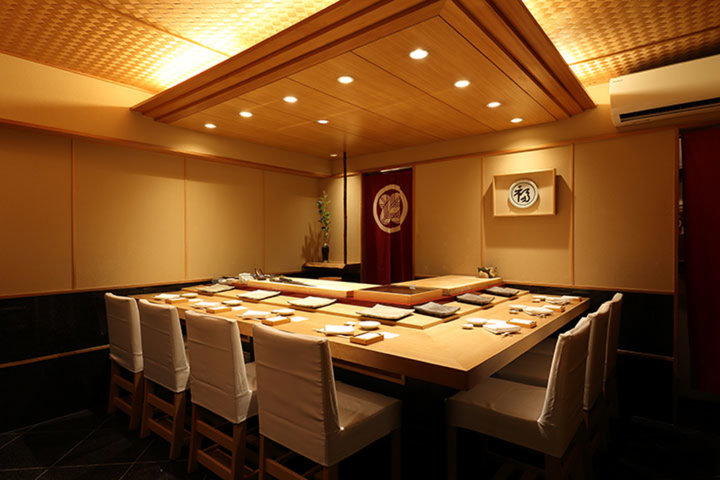
Serene and refined with minimalist design; seven-seat main counter made from 150-year-old Nara cypress with a small rock garden backdrop; warm, welcoming service from chef; hand-drawn calligraphy entrance marking; tableware featuring wabi-sabi aesthetics.