


Michelin Plate · Tabelog 100 #58
Our verdict
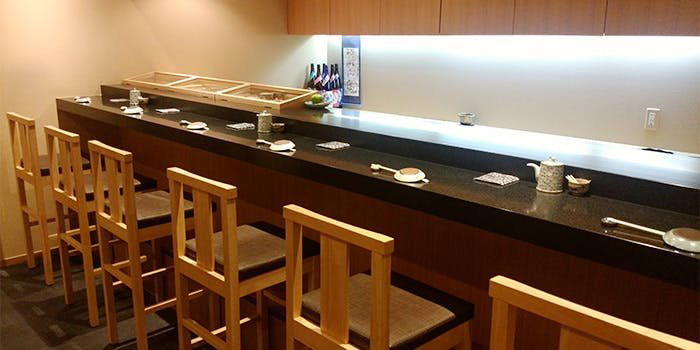
Sushi Taichi occupies a second-floor counter in Ginza 6-chome, where Chef Taichi Ishikawa runs an old-school edomae operation that earns Michelin Plate recognition and consecutive Opinionated About Dining rankings. The format here resists the dual-seating omakase template that has become standard across Ginza, favouring a more flexible, personal rhythm that the restaurant's growing list of regulars clearly prefer.

Pearl is the En Primeur Club membership app, where members save venues, book tables and use the concierge.
Ginza's Omakase Divide and Where Sushi Taichi Sits
Over the past decade, Ginza has become the most concentrated zone for high-end sushi in the world. Counters such as Sushi Kanesaka and Harutaka operate at the upper end of the market, with ¥¥¥¥ price points and formats built around two time-limited sittings per service. That structure has come to define how most people picture a serious Ginza sushi counter. But a parallel tradition has always existed here: the itamae-centric shop where the chef knows the regulars, paces the meal to the room, and draws its authority from craft continuity rather than scarcity marketing.
Sushi Taichi, on the second floor of a building at 6 Chome-4-13 in Ginza, belongs to that second tradition. It prices at ¥¥¥, placing it below the ¥¥¥¥ tier occupied by counters like Sukiyabashi Jiro Roppongiten, and its format reflects an older model of sushi hospitality that the Michelin Guide has flagged with a Plate designation (2024), while Opinionated About Dining has tracked its ascent from a Recommended listing in 2023 to a ranked position of #383 in Japan in 2024 and #436 in 2025.
Edo Aesthetics as a Critical Statement
The Michelin commentary on Sushi Taichi is specific enough to be useful: the shop displays a noren curtain above the counter and woodblock prints depicting Edo-era street stalls on the walls. These are not incidental decoration. In Tokyo's sushi culture, the Edo aesthetic carries a deliberate signal. Edomae sushi, the style that developed in 19th-century Tokyo, built on quick-cured, vinegar-seasoned, and lightly aged fish served over rice seasoned with red vinegar, has its visual and philosophical roots in that street-stall tradition. A counter that invokes it openly is making a claim about lineage and values.
That claim is becoming less common, not more. As Ginza's sushi market has globalised, many counters have moved toward a sleek, minimalist aesthetic designed partly for international clientele. The Edo-inflected interior at Sushi Taichi reads as a counterargument to that trend, and the Michelin Plate recognition suggests the argument has been heard. For a broader look at how Tokyo's sushi counters position themselves aesthetically and technically, Edomae Sushi Hanabusa offers a useful parallel within the edomae tradition.
Format: What the Restaurant Actually Does Differently
The structural difference between Sushi Taichi and most of its Ginza peers is worth examining directly. The dominant format across Tokyo's serious sushi counters is now the omakase-only, dual-seating model: two services per evening, fixed menus, tightly timed. This structure serves the restaurant's logistics and maximises revenue per seat. It also, critics have noted, changes the energy of the meal. The experience becomes more performance than conversation.
Sushi Taichi operates outside that template. The Michelin text explicitly contrasts it with restaurants offering "two time-limited seatings, serving only omakase set meals," framing Taichi as a counter that preserves the older rhythm: the owner-chef working the room, knowing the regulars, adjusting to the pace of the table. This format is what the Michelin Plate designation is actually rewarding. It is not the tier below a star; it is recognition of a distinct mode of operation that the guide considers worth acknowledging.
For comparison, Hiroo Ishizaka represents a different neighbourhood interpretation of Japanese culinary tradition, and the contrast between Tokyo's various district styles is part of what makes the city's dining scene worth mapping carefully. See our full Tokyo restaurants guide for broader orientation.
Critical Reception and Ranking Trajectory
The Opinionated About Dining (OAD) rankings provide a useful longitudinal view. Sushi Taichi entered OAD's Japan list as a Recommended entry in 2023, moved to #383 in 2024, and then shifted to #436 in 2025. The movement between 2024 and 2025 is a slight numerical decline in rank but not necessarily in esteem: OAD lists expand annually as more venues are added, and a ranking in the 400s across all of Japan's restaurants across all categories represents continued recognition in a competitive field.
The Michelin Plate, awarded in 2024, operates as a separate signal. It confirms that Sushi Taichi has been visited and assessed by Michelin inspectors and found to meet the guide's standard for quality cooking. In the context of Ginza's sushi scene, where Michelin stars are distributed across a small number of counters at the top of the market, a Plate designation at the ¥¥¥ tier carries practical meaning: it identifies a counter that delivers against inspection criteria at a price point accessible to a wider range of diners.
Together, the OAD rankings and Michelin Plate form a consistent critical consensus. The restaurant is not operating in the shadow of its more decorated neighbours; it is building a distinct reputation within a specific category of old-school sushi hospitality.
Tokyo Sushi in Context: Regional Comparisons
Tokyo's sushi culture is dense enough that useful comparisons extend beyond the city. Sushi's export to other Asian markets has produced serious counters that draw directly on Tokyo training. Sushi Shikon in Hong Kong and Shoukouwa in Singapore represent that internationalisation of the form, where Tokyo-trained chefs operate within the edomae tradition outside Japan.
Within Japan, the culinary geography extends well beyond Tokyo. HAJIME in Osaka and Gion Sasaki in Kyoto operate in distinct regional traditions; akordu in Nara and Goh in Fukuoka show how Japanese fine dining has developed its own regional identities. Closer to Tokyo, 1000 in Yokohama and 6 in Okinawa round out the national picture. For visitors building a Japan itinerary around food, the variety across these cities is substantial.
Planning a Visit
Sushi Taichi operates Tuesday through Saturday, with a lunch service from noon to 2:30 pm and an evening service from 6 to 10:30 pm. Monday and Sunday are closed. The restaurant is located on the second floor at 6 Chome-4-13, Ginza, Chuo City, Tokyo. The ¥¥¥ price point places it below the top tier of Ginza sushi but within the range that serious visitors should consider when building a Tokyo dining schedule that spans the city's different sushi registers.
For broader planning, EP Club's Tokyo guides cover the full range of the city's dining, drinking, and hospitality: our full Tokyo hotels guide, our full Tokyo bars guide, our full Tokyo wineries guide, and our full Tokyo experiences guide.
Quick reference: Sushi Taichi, Ginza 6-chome, Tokyo. Tue-Sat, lunch and dinner. Closed Mon/Sun. ¥¥¥. Michelin Plate 2024. OAD Leading Restaurants Japan #436 (2025).
Frequently asked questions
Does Sushi Taichi have a Michelin star or similar recognition?
Sushi Taichi has received recognition including: This restaurant loves the chic style of Edo culture and values the human touch. Many sushi shops these days offer two time-limited seatings, serving only omakase set meals. However, Sushi Taichi shows the mettle of an old-fashioned sushi ch….
What dish is Sushi Taichi famous for?
Neither Michelin nor Opinionated About Dining has cited a single signature dish by name. Both sources focus on the counter's Edo-style format and Taichi Ishikawa's approach to traditional nigiri craft, positioning the experience around old-school technique rather than a marquee item. OAD ranked Sushi Taichi #383 in Japan in 2024, and the Michelin commentary centres on cultural philosophy rather than any specific preparation.
How much does it cost to eat at Sushi Taichi?
Pricing at Sushi Taichi is listed as ¥¥¥.
What are the operating hours at Sushi Taichi?
Hours at Sushi Taichi: Hours: Monday Closed Tuesday 12–2:30 pm, 6–10:30 pm Wednesday 12–2:30 pm, 6–10:30 pm Thursday 12–2:30 pm, 6–10:30 pm Friday 12–2:30 pm, 6–10:30 pm Saturday 12–2:30 pm, 6–10:30 pm Sunday Closed.
What's the address for Sushi Taichi?
Sushi Taichi is located at Japan, 〒104-0061 Tokyo, Chuo City, Ginza, 6 Chome−4−13 浅黄ビル 2階, Tokyo.
Is Sushi Taichi chef-led?
The chef associated with Sushi Taichi is Taichi Ishikawa.
In Context: Similar Options
| Venue | Cuisine | Price | Awards | Notes |
|---|---|---|---|---|
| Sushi TaichiThis venue (the venue you are viewing) | Traditional Edomae Sushi Omakase | $50–100 | Michelin Plate · Tabelog 100 #58 | Not listed |
| Harutaka | Edo-Style Omakase Sushi | $200–300 | 3 Michelin Stars · World's 50 Best #76 | Sushi |
| RyuGin | Modern Kaiseki | $500+ | 3 Michelin Stars · World's 50 Best #41 | Kaiseki, Japanese |
| L'Effervescence | Modern French with Japanese Influences | $200–300 | 3 Michelin Stars · World's 50 Best #69 | French |
| HOMMAGE | Modern French with Japanese Influences | $150–200 | 2 Michelin Stars · World's 50 Best #78 | Innovtive French, French |
| MAZ | Innovative Peruvian-Japanese Fusion | $150–200 | 2 Michelin Stars · World's 50 Best #28 | Innovative |
Recognition history
Dated appearances from independent guides and award organizations, with the underlying list record or original source where available.
Michelin Plate
Michelin
Opinionated About Dining Top Restaurants in Japan Recommended
Opinionated About Dining
Tabelog 100 #58 · No. 58
Tabelog · Tabelog 100 - Sushi - TOKYO - 2025
Full recognition history (8 entries)
Michelin Plate
Michelin
Opinionated About Dining Top Restaurants in Japan Ranked #436
Opinionated About Dining
Michelin Plate
Michelin
Opinionated About Dining Top Restaurants in Japan Ranked #383
Opinionated About Dining
Opinionated About Dining Top Restaurants in Japan Recommended
Opinionated About Dining
Continue exploring
More in Tokyo
Restaurants in Tokyo
All restaurants in Tokyo →
Bars in Tokyo
All bars in Tokyo →
Details
- Intimate
- Classic
- Cozy
- Date Night
- Solo
- Special Occasion
- Chefs Counter
- Open Kitchen
- Sake Program
- Omakase
- Counter Dining
- Sake
Current opening hours
- Monday
- Closed
- Tuesday
- 12–2:30 PM, 6–10:30 PM
- Wednesday
- 12–2:30 PM, 6–10:30 PM
- Thursday
- 12–2:30 PM, 6–10:30 PM
- Friday
- 12–2:30 PM, 6–10:30 PM
- Saturday
- 12–2:30 PM, 6–10:30 PM
- Sunday
- Closed
Hours can change for holidays and private events. Hours as of .
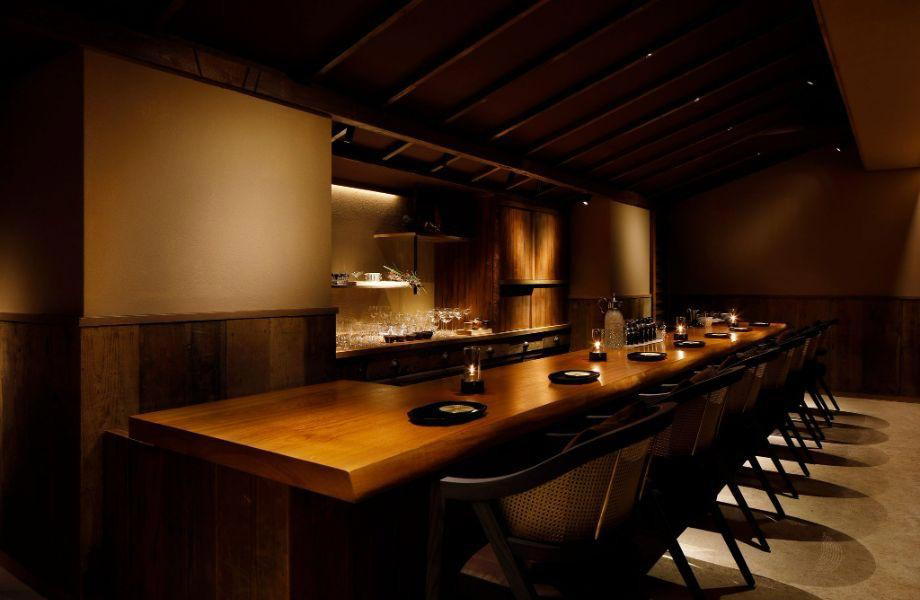
Old-school Edo-style sushi shop with woodblock print walls, shop curtain above the counter, natural light slither, and an intimate L-shaped counter fostering a laid-back local vibe.