Stone Korean Kitchen
Stone Korean Kitchen occupies a prime position inside the Embarcadero Center complex, placing Korean cuisine at the heart of San Francisco's Financial District dining corridor. The restaurant sits within a city that has increasingly treated Korean cooking as a serious category rather than a peripheral one, drawing comparisons to the ingredient-focused ethos that defines the Bay Area's broader culinary conversation. Practical for a business lunch, the kitchen's sourcing choices anchor it to a regional tradition that reaches well beyond the office tower setting.
Pearl is the En Primeur Club membership app — saves, bookings, and concierge access live there. Same editors, same standards.
- Address
- 4 Embarcadero Ctr, San Francisco, CA 94111
- Phone
- (415) 839-4070
- Website
- stonekoreankitchen.com
- Directions
- Get directions
 Saves & bookings on Pearl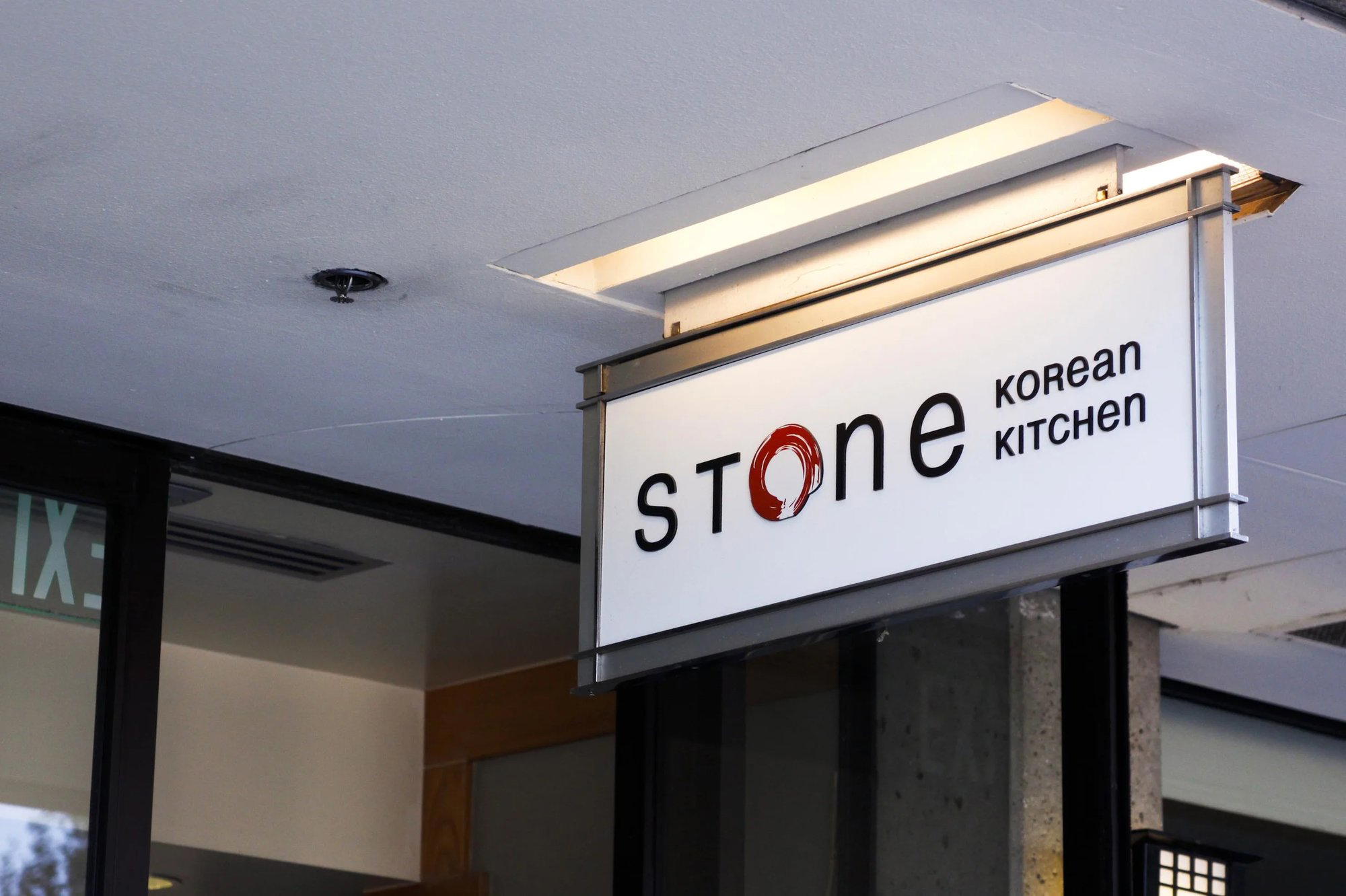
Korean Cooking at the Embarcadero: Where Sourcing Meets the Financial District
San Francisco's Financial District has never been the city's most adventurous dining territory. The Embarcadero Center complex, a cluster of tower-level retail and restaurant space that feeds the lunch and after-work crowds of the adjacent office blocks, tends to operate on pragmatic terms: high footfall, reliable formats, and menus calibrated for business-meal comfort. What makes Korean cuisine interesting in this context is the degree to which its foundational ingredients, fermented, aged, and seasonally adjusted, resist the flattening that tends to happen when a cuisine enters a corporate dining environment. Stone Korean Kitchen, situated at 4 Embarcadero Center, San Francisco, is a casual Modern Korean Comfort Food restaurant with a recommended reservation policy and an average price of about $25 per person. It occupies that tension directly.
Korean cooking is, at its structural core, a sourcing-dependent cuisine. The depth of a doenjang, the funk of a well-aged kimchi, the char of a properly marinated galbi: none of these land correctly if the underlying ingredients are generic. Across the United States, Korean restaurants have split into two broad camps over the past decade. The first follows a mass-market path, standardizing ferments and sourcing commodity proteins to hit accessible price points. The second, represented most precisely in cities like New York by venues such as Atomix, treats ingredient provenance as the organizing principle of the entire menu. San Francisco, with its proximity to Northern California's agricultural infrastructure, is a city where the second approach has real logistical grounding.
The Bay Area Ingredient Argument
No American city makes the sourcing argument more credibly than San Francisco. The restaurants that have defined the city's culinary reputation over the past two decades, from Saison and its wood-fire-and-foraging approach to Lazy Bear's progressive American format, have built their menus around the specific agricultural output of the region. That tradition extends north to Single Thread Farm in Healdsburg, where the farm and the restaurant operate as a single integrated system, and has influenced how even mid-tier venues in the city think about where their proteins and produce arrive from. Blue Hill at Stone Barns in Tarrytown represents a comparable model on the East Coast: a restaurant whose identity is inseparable from its agricultural source.
Korean cuisine applied to this regional ethos is a compelling proposition. The peninsula's cooking has always been shaped by preservation and seasonality: vegetables fermented in autumn to last through winter, seafood dried and salted along coastal regions, grains and legumes processed into pastes that improve with months of aging. When those traditions meet Northern California's year-round growing season and its density of specialty producers, the resulting menu should, in theory, read as both authentically Korean and distinctly Californian. Whether that synthesis is fully realized at Stone Korean Kitchen is a question the kitchen's sourcing choices and menu execution will ultimately answer.
Where This Fits in San Francisco's Korean Dining Picture
San Francisco's Korean restaurant scene is smaller and less geographically concentrated than those of Los Angeles or New York. The Koreatown infrastructure that structures those cities' Korean dining corridors doesn't have a direct equivalent here, which means Korean restaurants in San Francisco tend to exist as individual propositions rather than as participants in a dense competitive cluster. That isolation can be a liability, reducing the comparison points available to a diner trying to calibrate quality. It can also be an opportunity: a Korean kitchen in the Financial District with serious sourcing commitments occupies a category with few direct competitors in its immediate geography.
For context on what high-end Korean cooking looks like at the national level, Atomix in New York remains the reference point, operating at a price tier and ingredient specificity that has earned it sustained critical attention. San Francisco's leading end runs through venues like Benu, where chef Corey Lee's French-Chinese format draws on Asian ingredient traditions with the precision of a three-Michelin-star kitchen, and Atelier Crenn, where sourcing and seasonal narrative are central to the menu's identity. Quince similarly anchors its Italian-leaning menu in Northern California produce. These are the kitchens that set the sourcing benchmark in this city.
Nationally, the conversation about ingredient-led cooking spans from The French Laundry in Napa and Le Bernardin in New York City to Alinea in Chicago and Providence in Los Angeles. Venues like Addison in San Diego, Bacchanalia in Atlanta, Emeril's in New Orleans, and The Inn at Little Washington each demonstrate that serious kitchen sourcing is not a coastal-metropolitan monopoly. Korean cuisine, with its built-in emphasis on fermentation timelines and seasonal preservation, fits naturally into this broader national discourse about what a kitchen's relationship to its ingredients actually means. For broader San Francisco context across all categories, our full San Francisco restaurants guide maps the city's dining tiers in detail. For those tracking Korean fine dining internationally, 8½ Otto e Mezzo Bombana in Hong Kong demonstrates how Asian culinary traditions perform at the highest award levels in a comparable financial-district setting.
Planning Your Visit
Stone Korean Kitchen is located at 4 Embarcadero Center, San Francisco, CA 94111, within the Embarcadero Center retail and dining complex at the eastern edge of the Financial District. The restaurant is positioned for lunch and early-evening traffic, with hours limited to weekday lunch and dinner service.
Recognition, Side-by-Side
Comparable venues nearby, for context on price, style, and recognition.
| Venue | Cuisine | Price | Notes |
|---|---|---|---|
| Stone Korean KitchenThis venue — the venue you are viewing | Modern Korean Comfort Food | $$ | Not listed |
| Namu Stonepot | Modern Asian American with Korean Focus | $$ | Mission |
| HRD Smokin' Grill | Korean-Asian Fusion BBQ | $$ | North Beach |
| Surisan | Modern Korean Fusion | $$ | North Beach |
| Um. Ma | Korean | $$ | Inner Sunset |
| Wonmi Korean Restaurant | Authentic Korean Comfort Food | $$ | Richmond District |
Continue exploring
More in San Francisco
Restaurants in San Francisco
Browse all →
Bars in San Francisco
Browse all →
Hotels in San Francisco
Browse all →

At a Glance
- Casual
- Cozy
- Modern
- Business Dinner
- Casual Hangout
- Open Kitchen
- Local Sourcing
- Street Scene
Current opening hours
- Monday
- 11:30 AM–2:30 PM, 4:30–7:30 PM
- Tuesday
- 11:30 AM–2:30 PM, 4:30–7:30 PM
- Wednesday
- 11:30 AM–2:30 PM, 4:30–7:30 PM
- Thursday
- 11:30 AM–2:30 PM, 4:30–7:30 PM
- Friday
- 11:30 AM–2:30 PM
- Saturday
- Closed
- Sunday
- Closed
Hours can change for holidays and private events. Last verified .
Casual and inviting atmosphere with fresh, home-style Korean cooking.