Skip to Main Content
Authentic Korean Comfort Food
← Collection
San Francisco, United States

Wonmi Korean Restaurant

Dress CodeCasual
ServiceCasual
NoiseConversational
CapacitySmall

Wonmi Korean Restaurant on Fillmore Street sits in a San Francisco corridor that has seen Korean dining shift from utilitarian banchan halls to a more considered register. The restaurant occupies the Fillmore-Geary stretch, a block that positions it within the Western Addition's evolving food identity, placing it in a different conversation than the city's heavily awarded tasting-menu circuit.

Pearl is the En Primeur Club membership app — saves, bookings, and concierge access live there. Same editors, same standards.

Plan your visit on PearlPlan Your Visit
Address
1545 Fillmore St (btwn Geary & O'Farrell), San Francisco, CA 94115
Wonmi Korean Restaurant restaurant in San Francisco, United States
About

Fillmore Street and the Shifting Register of Korean Dining in San Francisco

Fillmore Street between Geary and O'Farrell has never been a single-cuisine block. Over the past two decades it has absorbed jazz-bar lineage, Japanese izakaya culture, and a rotating cast of neighbourhood restaurants that respond to the Western Addition's demographic and economic shifts. Korean dining in San Francisco has followed a parallel trajectory: the city's Korean restaurants were long concentrated in the Richmond District and in strip-mall formats further south, where the operational model prioritized volume and the tabletop grill above all else. That model still dominates the category by headcount. But a smaller, quieter shift has been underway, with Korean kitchens moving into mixed-use neighbourhood corridors, moderating format scale, and finding audiences outside the traditional Korean-American dining circuit. Wonmi Korean Restaurant is a casual, walk-in-friendly Korean restaurant on Fillmore Street in San Francisco's Western Addition, with an address at 1545 Fillmore St (btwn Geary & O'Farrell).

A Neighbourhood in Transition

The Western Addition's food identity has never been fixed. The Fillmore corridor that once anchored African-American cultural life in San Francisco has cycled through redevelopment pressures, displacement, and gradual recomposition. What remains is a block-by-block mix: mid-range Japanese spots, specialty coffee, wine bars with small plates, and a handful of destination restaurants that draw from across the city. Korean food arriving here is not the same proposition as Korean food arriving in the Richmond, where the context is already established and the customer base walks through the door with a formed set of expectations. On Fillmore, a Korean restaurant has to work harder to locate itself, and that pressure tends to produce either a conservative appeal to familiarity or a more deliberate editorial stance on what Korean cooking can look like outside its traditional delivery formats. The evolution of Korean dining in San Francisco has generally moved in that second direction, with operators making conscious choices about what to keep and what to shed as the cuisine crosses neighbourhood lines.

The Evolution of Korean Cooking in This City

Korean cuisine's positioning in American fine dining has changed materially over the past decade. At the national level, Atomix in New York City has demonstrated that Korean culinary vocabulary can operate at the highest formal tier, holding multiple Michelin stars and placing Korean ingredients and technique in conversation with the kind of tasting-menu ambition more commonly associated with French or Japanese kitchens. That development has had a downstream effect on how Korean restaurants at every price point think about presentation, sourcing language, and the degree to which fermentation, aging, and regional Korean specificity become front-of-house talking points rather than background process. San Francisco, a city whose fine-dining circuit includes institutions like Benu, Atelier Crenn, Lazy Bear, Quince, and Saison at the top of the tasting-menu hierarchy, has a dining public that is fluent in format and increasingly attentive to sourcing signals across all cuisine categories. That context shapes the room a Korean restaurant like Wonmi operates in, even if the formats are not directly comparable.

That is a more demanding position than it appears, because it requires the kitchen to deliver on both comfort register and culinary credibility simultaneously.

Format and What It Signals

San Francisco's Korean restaurants have historically split between two formats: the full KBBQ operation with exhaust hoods above every table and a menu built around communal grilling, and the smaller Korean-American hybrid spot that runs bibimbap and jjigae alongside more accessible rice and noodle formats. A third format has been gaining ground: the neighbourhood Korean restaurant that takes banchan seriously as a system of preserved and fermented side dishes rather than a commodity giveaway, and that treats proteins and soups with the same attention to time and temperature that the city's Japanese restaurants apply to their own staple preparations.

The Fillmore-Geary address gives Wonmi a specific logistical character. That dual audience profile creates a different pressure than a restaurant in a purely destination-dining zone, and it tends to reward consistency over theatre.

Korean Cuisine in the Wider American Fine-Dining Conversation

To understand what a Korean restaurant on Fillmore Street is working within, it helps to map the wider American fine-dining moment. The French Laundry in Napa and Single Thread Farm in Healdsburg represent the Northern California apex of the formal tasting-menu format, operating at a price tier and booking lead time that places them in a separate category from neighbourhood dining. Further out, Le Bernardin in New York City, Alinea in Chicago, and Providence in Los Angeles anchor regional fine-dining identities built on European technique with local sourcing. Korean cuisine has entered that national conversation from a different angle: through fermentation depth, vegetable complexity, and a protein vocabulary that does not map neatly onto French or Japanese reference points. That distinctiveness is an asset for Korean restaurants willing to lean into it rather than smooth it toward familiar American comfort categories. Operations like Blue Hill at Stone Barns in Tarrytown, Addison in San Diego, Bacchanalia in Atlanta, and The Inn at Little Washington in Washington each demonstrate how regional specificity and culinary conviction can define a restaurant's identity at a national level. For Korean restaurants in San Francisco, the equivalent move is to claim the fermentation and regional specificity of Korean cooking as a differentiator, not a footnote. Emeril's in New Orleans and 8½ Otto e Mezzo Bombana in Hong Kong offer parallel examples of cuisines that have been carried into new registers by operators willing to take the cooking seriously on its own terms.

Planning a Visit

Wonmi Korean Restaurant is located at 1545 Fillmore Street, between Geary and O'Farrell in the Western Addition. The Fillmore corridor is accessible by the 38 Geary bus line, one of the city's most frequent Muni routes, and street parking on Fillmore is available though competitive during evening service hours.

Signature Dishes
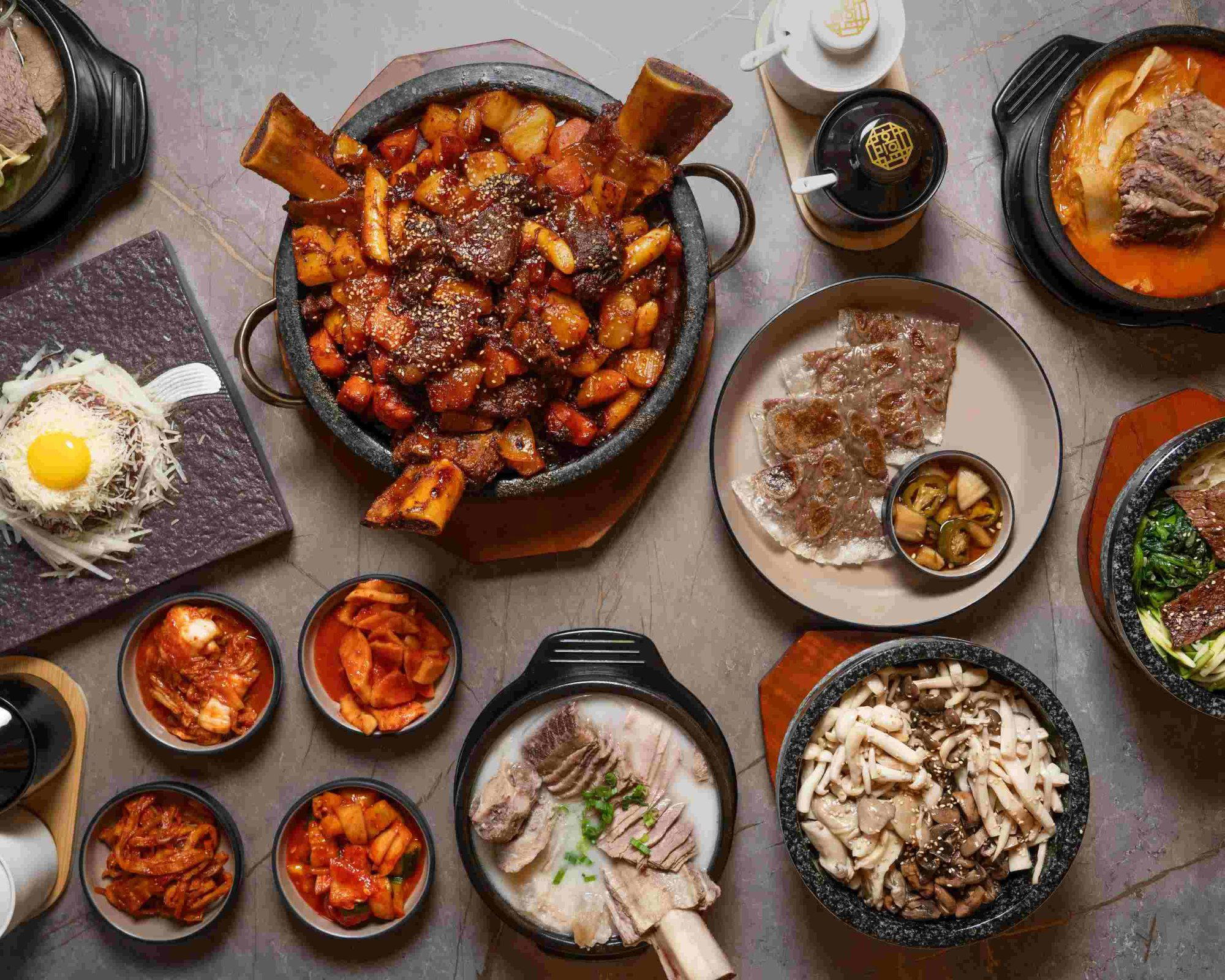
갈비찜 (Braised Short Ribs)설렁탕 (Beef Bone Soup)갈비탕 (Short Rib Soup)
Frequently asked questions

A Lean Comparison

Comparable venues nearby, for context on price, style, and recognition.

At a Glance
Vibe
  • Cozy
Best For
  • Family
  • Casual Hangout
Dress CodeCasual
Noise LevelConversational
CapacitySmall
Service StyleCasual
Meal PacingStandard
Signature Dishes
갈비찜 (Braised Short Ribs)설렁탕 (Beef Bone Soup)갈비탕 (Short Rib Soup)