Our verdict
Spizz Restaurant on Augsburger Strasse sits within Dresden's emerging Blasewitz dining corridor, where a quieter residential register contrasts with the Altstadt's more tourist-facing addresses. The restaurant occupies a position in the city's mid-to-upper dining tier, drawing locals who prioritise neighbourhood comfort over destination theatre. For visitors willing to step outside the historic centre, it offers a different read on how Dresden eats.

Pearl is the En Primeur Club membership app, where members save venues, book tables and use the concierge.
The menu
What to order
- Steak Tartare
- Monkfish Medallion
- Beef Carpaccio
- Rhubarb Panna Cotta
Dresden's Residential Dining Belt and Where Spizz Fits
Dresden's restaurant culture divides more clearly than most German cities of comparable size. The Altstadt and Neustadt attract the headline addresses and the tourist-facing trade, while the residential stretches along the Elbe's eastern bank, particularly around Blasewitz and Striesen, sustain a different kind of dining economy: slower-paced, locally anchored, and less concerned with the approval of visiting critics. Augsburger Strasse 49, where Spizz Restaurant sits, belongs to that second register. The address places it at some remove from the Semperoper crowds and closer to the rhythms of a neighbourhood that fills its tables with returning guests rather than first-time visitors working through a short-list.
That distinction matters when you're calibrating expectations. Dresden's most formally recognised restaurants, among them elements and Genuss-Atelier, operate in a different competitive tier, one defined by tasting menus, sourcing transparency, and the kind of front-of-house choreography that signals ambition beyond the city's borders. Spizz operates outside that orbit. Its Blasewitz location is less a statement about what it is trying to become and more an indication of what it already serves: a local constituency that values proximity and familiarity over occasion dining.
Approaching the Address: What the Setting Communicates
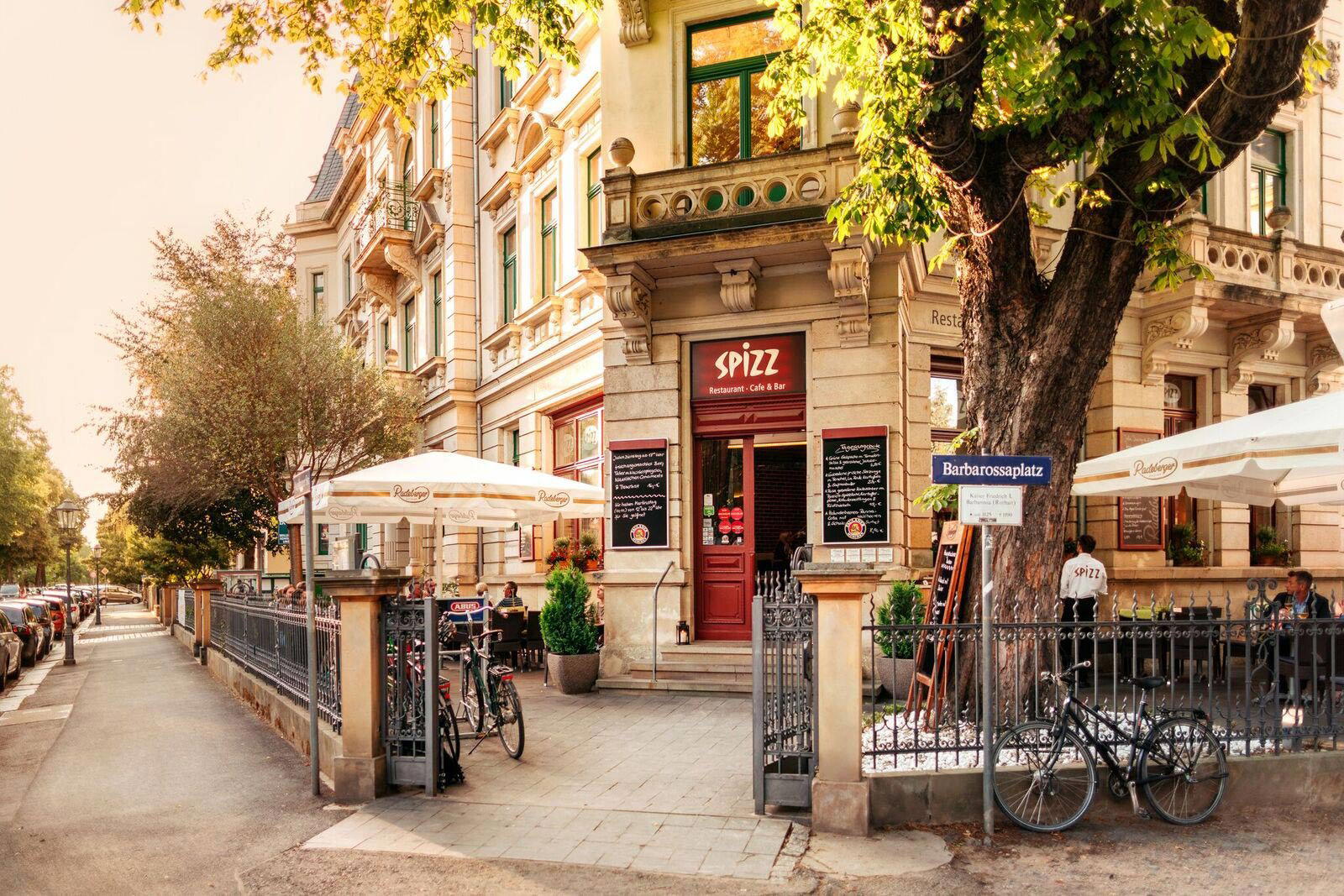
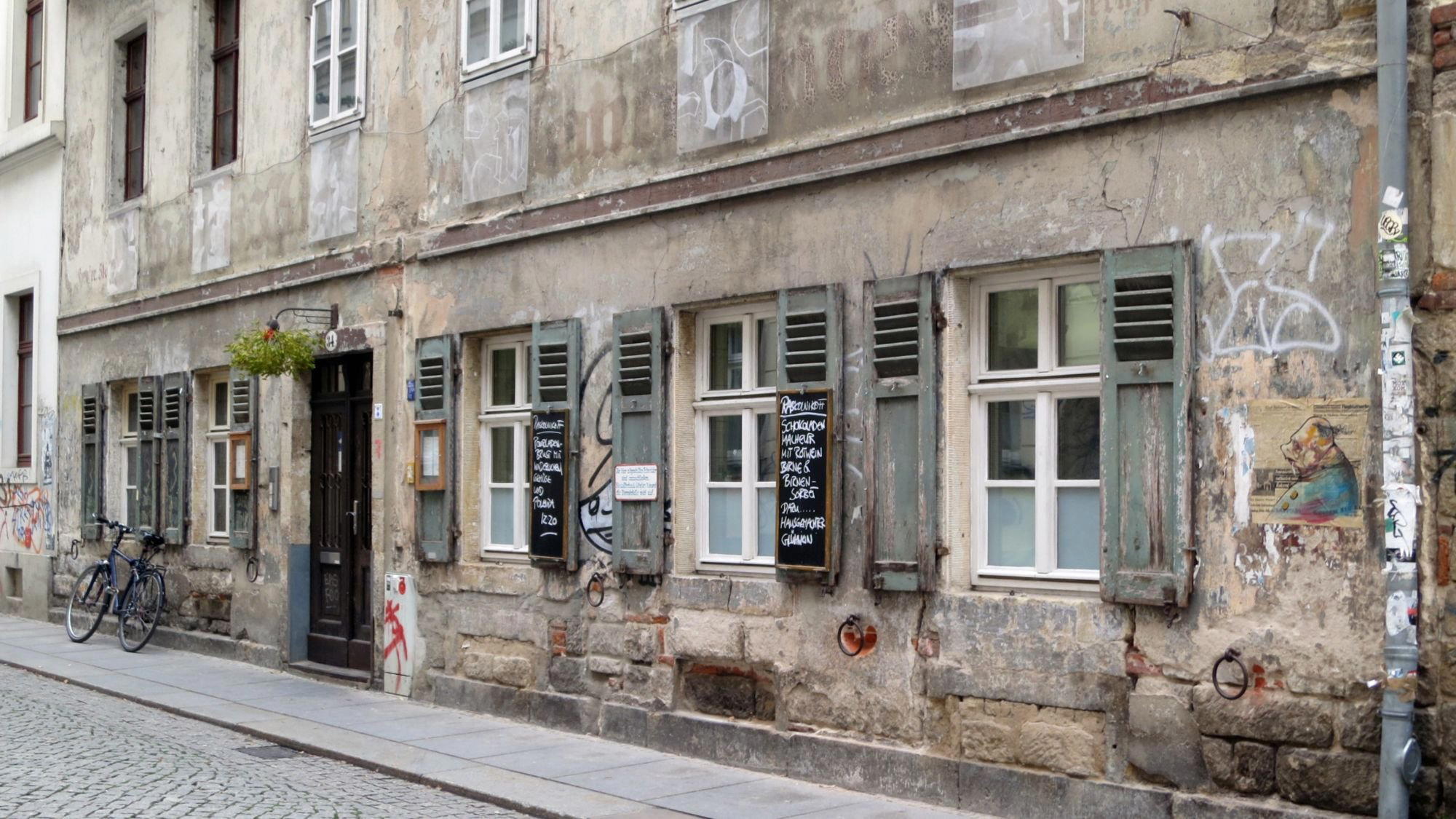
Arriving on Augsburger Strasse from the direction of the Elbe, the shift from civic grandeur to residential quiet is immediate. The street runs through a part of Dresden that survived the 1945 bombing more completely than the centre, and its late-nineteenth-century building stock gives the approach a solidity that the reconstructed Altstadt, for all its ambition, cannot fully replicate. Buildings here have the worn-in texture of continuous occupation rather than the smoothed-out quality of careful restoration. A restaurant embedded in this fabric inherits something of that character by proximity, whether or not it acknowledges it.
This is the atmospheric register that defines neighbourhood dining in Dresden's eastern residential quarters more broadly. The sound profile is different from the Neustadt's bar-heavy streets: quieter, more conversational, shaped by foot traffic that is going somewhere specific rather than browsing. For a visitor, arriving here requires a small navigational commitment that filters out the incidental. The people at the tables around you have, in most cases, made a considered choice to be there.
Dresden's Dining Tier Structure and Spizz's Position
Understanding where Spizz sits requires a brief account of how Dresden's dining tiers are currently arranged. At the upper end, a handful of addresses compete on technique and sourcing at a level that positions them in conversation with restaurants elsewhere in Saxony and beyond. Heiderand and the more carnivore-focused [m]eatery each occupy distinct corners of that upper-middle bracket. Further up, Bülow Palais represents the German fine-dining tradition in its more formal mode, with the historic property adding a layer of institutional weight that neighbourhood restaurants cannot replicate.
Spizz does not compete in those tiers in terms of format or apparent positioning. Its Blasewitz address and the absence of any formal award recognition place it in a category of restaurant that Germany's cities depend on but that rarely receives systematic critical attention: the sustained neighbourhood address that builds reputation through repetition and reliability rather than through a single compelling proposition. Across Germany's mid-size cities, from Freiburg to Erfurt, these restaurants constitute the tissue of local dining culture even as the critical apparatus focuses elsewhere. For the broader context of what high-level German cooking looks like nationally, the reference points run from Aqua in Wolfsburg and JAN in Munich to Schwarzwaldstube in Baiersbronn and Vendôme in Bergisch Gladbach, none of which share a competitive set with Spizz but all of which define the broader national context within which any Dresden restaurant operates.
What Draws Visitors to This Part of the City
The eastern residential quarters of Dresden offer a version of the city that most itineraries skip. Blasewitz and its surrounding streets were favoured by Dresden's prosperous bourgeoisie in the late imperial period, and the built environment reflects that: large villas, mature trees, a pace of life that does not orient itself around visitor schedules. Dining in this area means participating in that slower rhythm, which, depending on your expectations, is either the point or a source of friction.
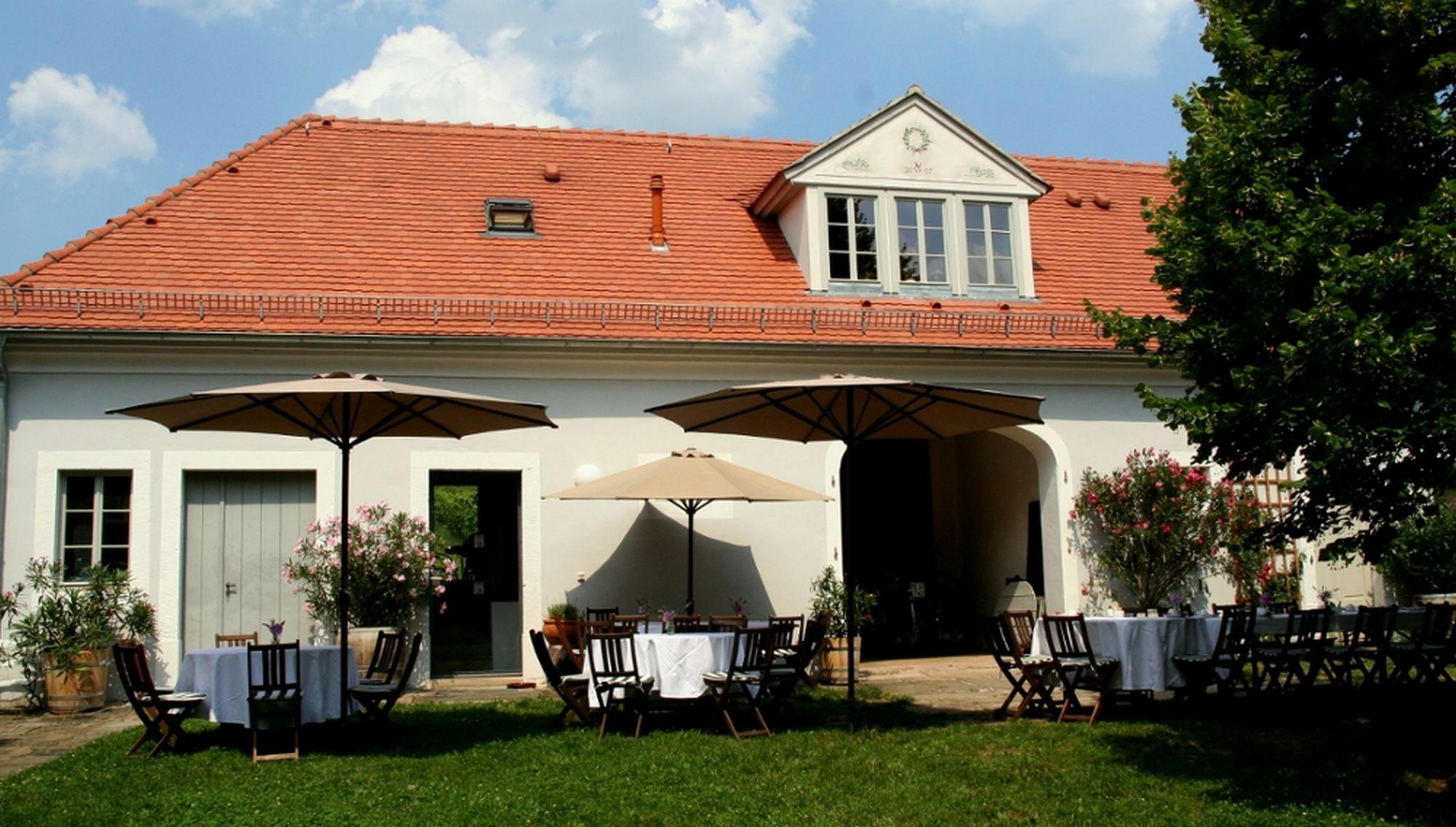
Seasonally, this neighbourhood reads differently across the year. Spring and early summer bring a particular quality to the Elbe-adjacent streets, with outdoor seating extending the dining experience into the surrounding streetscape in a way that the more compressed Altstadt venues cannot easily offer. That seasonal dimension, the shift from interior dining to a more permeable relationship with the surrounding street, is worth factoring into when you choose to visit. Winter evenings have their own argument: the residential quiet amplifies the sense of a warm interior as a specific destination rather than a waypoint.
Planning a Visit: Practical Notes
Dresden is reachable by rail from Berlin in approximately two hours, making it a realistic day trip from the capital, though the eastern residential neighbourhoods reward an overnight stay. Augsburger Strasse 49 is most conveniently accessed by tram from the Altstadt, with several lines running through the Blasewitz area. For visitors building a broader Dresden dining itinerary, the full Dresden restaurants guide maps the city's dining options across price points and neighbourhood contexts.
Given the absence of publicly available booking details for Spizz, approaching the restaurant directly in person or checking current availability through local platforms is the recommended route. Neighbourhood restaurants in Dresden's residential belt tend not to carry the advance booking lead times of the city's formally recognised fine-dining addresses, though weekend evenings at locally established restaurants can fill earlier than visitors accustomed to larger cities might expect.
Those planning a broader sweep of German fine dining around a Dresden visit have a range of reference points to consider. ES:SENZ in Grassau, Victor's Fine Dining by Christian Bau in Perl, Waldhotel Sonnora in Dreis, Restaurant Haerlin in Hamburg, and Schanz in Piesport each represent different expressions of the German kitchen at the level where sourcing, technique, and service converge. For those whose itinerary extends internationally, Le Bernardin in New York City, Atomix in New York City, and CODA Dessert Dining in Berlin offer additional calibration points across different culinary registers.
Frequently asked questions
What is the atmosphere like at Spizz Restaurant?
Spizz sits on Augsburger Strasse in Dresden's eastern residential quarter, a part of the city that operates at a noticeably different pace from the Altstadt. The setting communicates a neighbourhood dining room rather than a destination address, drawing a largely local crowd rather than hotel guests or day-trippers. Expect a lower noise level and a more unhurried service rhythm than you would find in the centre.
Where do I go for Spizz Restaurant?
Spizz Restaurant is located at Augsburger Str. 49, 01309 Dresden, Germany, Dresden.
Is Spizz Restaurant a good option for dining in Dresden outside the main tourist areas?
Spizz is located at Augsburger Strasse 49 in Dresden's eastern residential belt, a district that most visitor itineraries bypass in favour of the Altstadt and Neustadt. For travellers who want a meal in a working residential neighbourhood rather than a tourist-facing dining room, the address puts you in the Blasewitz quarter, which retains much of its pre-war villa character. No chef profile or awards record is publicly attached to Spizz, which is consistent with a locally oriented, low-profile operation rather than a destination restaurant.
What's the signature dish at Spizz Restaurant?
The focus appears to be on consistent, unfussy cooking suited to a regular local clientele rather than a destination tasting format. Contacting the restaurant directly at their Augsburger Strasse address will give the clearest current picture.
How far ahead should I plan for Spizz Restaurant?
Dresden's residential dining addresses, including those along Augsburger Strasse in Blasewitz, do not typically carry the advance booking pressure of the city's Altstadt or upper-tier Neustadt restaurants. For weekend evenings, a few days' notice is a reasonable working assumption for a table. If travelling from Berlin, where the rail journey runs to approximately two hours, building in a same-week booking is generally sufficient.
What has Spizz Restaurant built its reputation on?
Spizz's positioning on Augsburger Strasse places it within a cluster of neighbourhood restaurants that serve the residential eastern quarters of Dresden rather than the tourist circuit. Addresses in this part of the city tend to build local standing through consistency and value relative to their Altstadt counterparts, rather than through awards or press profiles. No Michelin recognition or equivalent distinction is currently recorded for Spizz.
Can Spizz Restaurant handle vegetarian requests?
German neighbourhood restaurants in cities like Dresden have broadly expanded plant-based options over the past decade, but confirming specific provisions at the Augsburger Strasse address requires direct contact with the venue ahead of your visit.
Comparable Venues
Comparable venues nearby, for context on price, style, and recognition.
| Venue | Cuisine | Price | Awards | Notes |
|---|---|---|---|---|
| Spizz RestaurantThis venue (the venue you are viewing) | Mediterranean Fine Dining | $30–50 | Not listed | Not listed |
| VEN | Modern European | $30–50 | Michelin Plate | Innere Altstadt |
| Restaurant finesse | Modern Mediterranean Fine Dining | $50–100 | Michelin Plate | Dresden Old Town |
| Feine Kost | Modern-Creative International Fine Dining | Not listed | Michelin Plate | Neustadt |
| Bülow Palais | Modern French Fine Dining | $150–200 | Relais Chateaux Award | Dresden Neustadt |
| Daniel | German-Mediterranean Fine Dining | $50–100 | Not listed | Altstadt |
Continue exploring
More in Dresden
Restaurants in Dresden
All restaurants in Dresden →
Bars in Dresden
All bars in Dresden →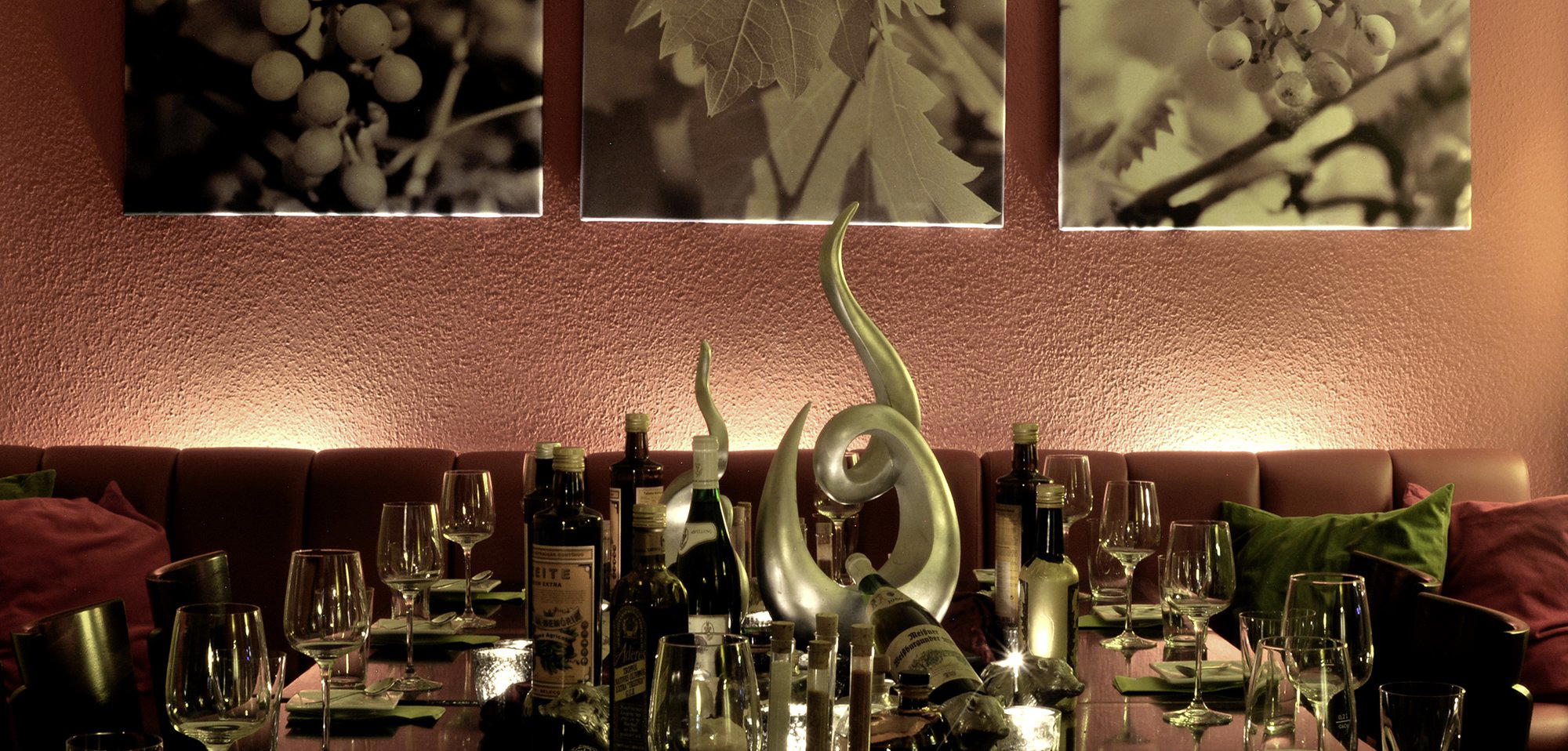

Details
- Cozy
- Romantic
- Elegant
- Sophisticated
- Date Night
- Business Dinner
- Celebration
- Special Occasion
- Terrace
- Garden
- Extensive Wine List
- Beer Program
- A La Carte
- Set Menu
- Wine
- Beer
- Vegetarian Friendly
Current opening hours
- Monday
- Closed
- Tuesday
- 12–11 PM
- Wednesday
- 12–11 PM
- Thursday
- 12–11 PM
- Friday
- 12–11 PM
- Saturday
- 12–11 PM
- Sunday
- Closed
Hours can change for holidays and private events. Hours as of .
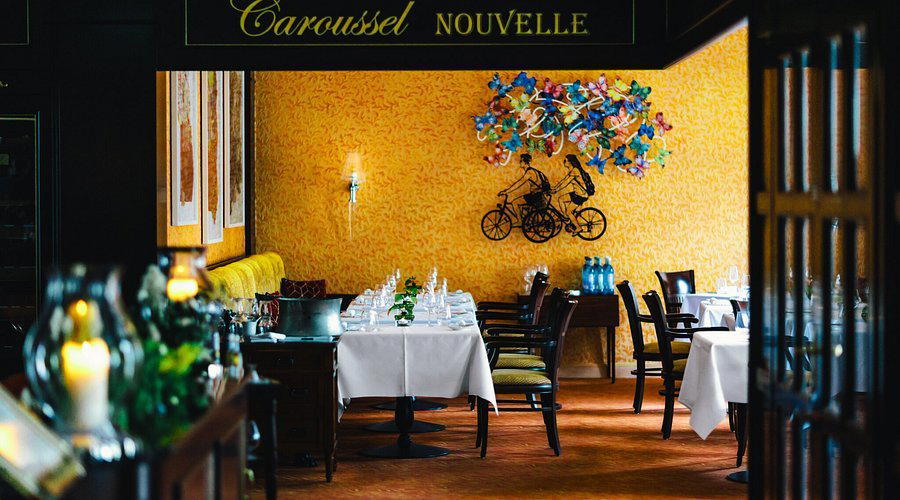
Stylishly designed interior with a fireplace and cozy atmosphere; green terrace with comfortable seating for warmer months; relaxed but smart setting with attentive service.