Soul Flavorscape of India
Our verdict
Soul Flavorscape of India brings regional Indian cooking to Glenwood Avenue, one of Raleigh's most active dining corridors. The kitchen draws a loyal local following that returns not for novelty but for consistency across a menu rooted in subcontinent tradition. It sits within a Raleigh dining scene that has steadily expanded its range of South Asian options over the past decade.

Pearl is the En Primeur Club membership app — saves, bookings, and concierge access live there. Same editors, same standards.
- Address
- 301 Glenwood Ave #190, Raleigh, NC 27603
- Phone
- (919) 900-7231
- Hours
- Mon ClosedTue–Thu 11 AM–9:30 PMFri 11 AM–11 PMSat 12–11 PMSun 12–9:30 PM
- Website
- soulflavorscapeofindia.com
- Directions
- Get directions
- Booking
- Book on OpenTable
The menu
What to order
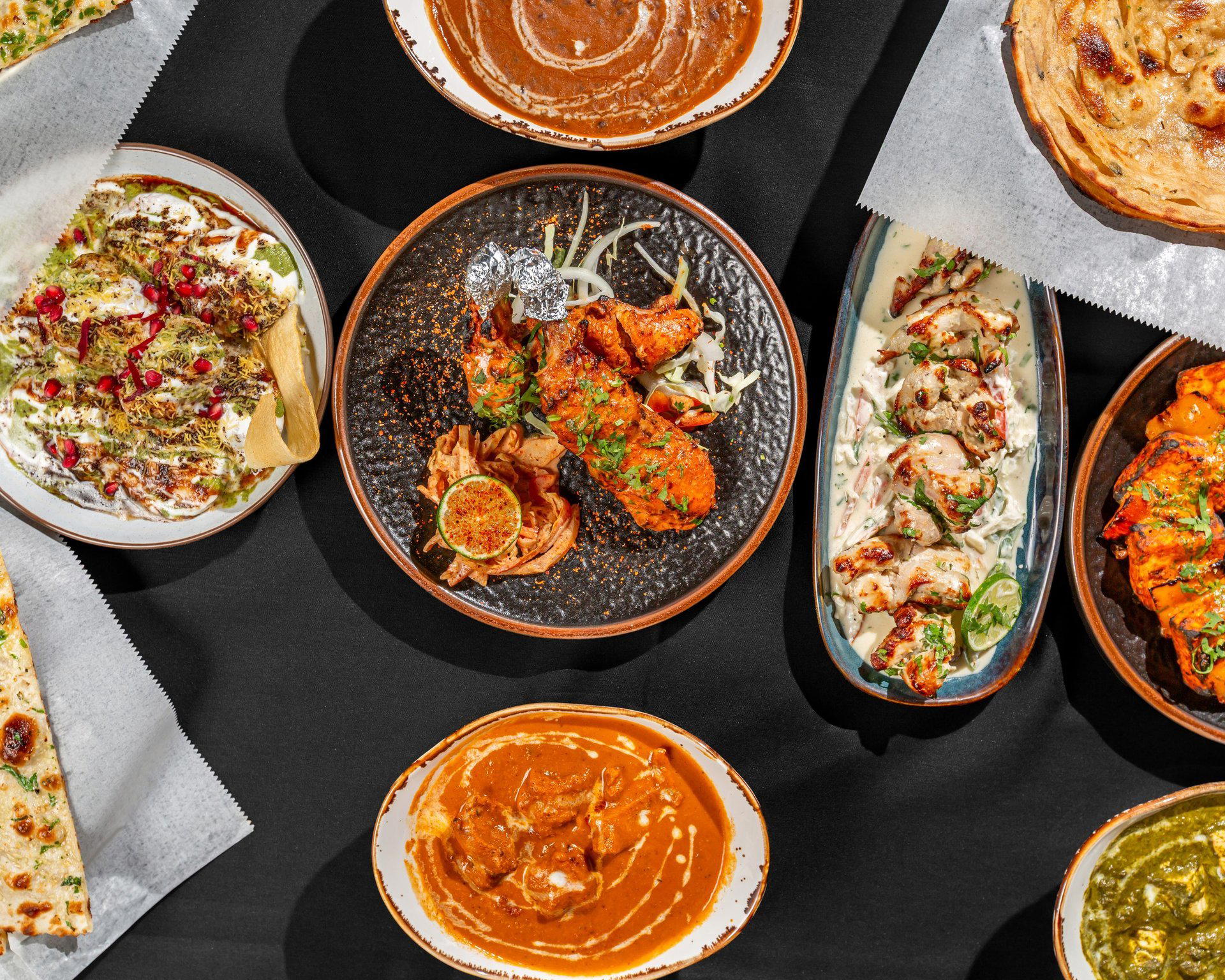
- Butter Chicken
- Paneer Tikka
- Biryani
- Samosas
- Tandoori Salmon
Glenwood Avenue and the Indian Dining Gap
Raleigh's restaurant corridor along Glenwood Avenue has, over the past decade, become the city's most reliable stretch for dining diversity, from Spanish wine bars like Barcelona Wine Bar Raleigh to Mediterranean-Indian fusion at Ajja. What the strip has historically underserved is the full register of regional Indian cooking, the kind of kitchen that moves past the tikka masala shorthand and treats the subcontinent's breadth of culinary tradition as the actual subject. Soul Flavorscape of India, at 301 Glenwood Ave, occupies that gap.
The name itself signals intent. "Flavorscape" suggests a wider geographic and spice range than the typical suburban Indian restaurant formula: dal, naan, a rotating set of northern curries calibrated for a broadly American palate. Regulars, returning on a schedule that suggests genuine attachment rather than occasion dining, have shaped the restaurant's reputation in Raleigh's South Asian food conversation.
What the Regulars Are Actually Ordering
The pattern among loyal customers at restaurants with this kind of following tends to be revealing. They are not ordering from the front of the menu or starting with the dishes most likely to appear in a photograph. They have, over many visits, worked toward the preparations that require the most kitchen confidence: slow-braised meats, properly tempered spice bases, the lentil dishes that expose whether a cook knows how to build depth across a long cook time rather than front-load heat.
Indian regional cooking at its most serious, whether you are tracking the coastal seafood traditions of Kerala, the tandoor culture of Punjab, or the vegetable-forward grammar of Gujarat, demands an understanding of spice sequencing that has no real shortcut. The whole spices bloomed in oil at the start of a dish are doing fundamentally different work than the ground spices folded in later. Restaurants that get this right earn a different category of loyalty than those offering reliably pleasant, structurally safe versions of familiar dishes.
Soul Flavorscape's regulars appear to have decided the kitchen is in the first category. That judgment, built across repeat visits, carries useful information. Raleigh's broader dining scene, anchored by Southern-focused kitchens like Poole's Downtown Diner and Crawford and Sons, and by New American programs at Death and Taxes, does not offer many direct comparators for this style of cooking.
Raleigh's South Asian Dining Context
North Carolina's Research Triangle has seen its South Asian population grow steadily since the 1990s, tracking the expansion of the technology and pharmaceutical sectors around Raleigh, Durham, and Chapel Hill. That demographic shift has shaped the region's restaurant supply. Breweries and farm-to-table kitchens got there first, but Indian and South Asian restaurants have multiplied in the corridor over the past fifteen years, with quality rising alongside the base of diners who know the difference between a shortcut and the real thing.
Soul Flavorscape sits within that trajectory. It is not operating in the context of a New York or Chicago South Asian dining scene, where restaurants like Atomix have redefined what it means to present a regional Asian cuisine at the highest formal level, but it is operating in a Raleigh market that now expects more than it did.
The comparison point worth keeping in mind is not the local Italian programs at Anthony's La Piazza or Anthony's La Piazza Prime, nor the Bengali-inflected modern Indian cooking at Azitra across the broader Triangle area. The comparison is whether Soul Flavorscape is doing what its regulars believe it is doing: cooking from a position of knowledge rather than accommodation.
The Broader Frame: Regional Indian Cooking in American Cities
American cities have been slowly recalibrating their relationship with Indian cuisine since roughly 2015, when a wave of chef-driven Indian restaurants began appearing in New York, Chicago, and San Francisco, kitchens that treated the cuisine's regional specificity as a point of distinction rather than a liability. That shift happened in parallel with similar movements in Korean and Japanese cooking, where restaurants like Atomix demonstrated that precision and regional authenticity could coexist with formal ambition.
The trickle-down effect of that shift reached mid-size American cities later and less completely. Raleigh has benefited from it partly, but the full range of regional Indian cooking, the fish curries of the Malabar coast, the Chettinad spice profiles, the Parsi hybrid dishes of Mumbai, remains underrepresented in most American markets outside the largest coastal cities. A restaurant that genuinely works within that range, rather than defaulting to the northern Indian greatest-hits format, is filling a real and demonstrable gap in most American cities.
For readers who track what serious Indian cooking looks like when the resources and formal context are maximal, the reference point is not found in Raleigh. It is in kitchens like Le Bernardin in New York, where technical precision and ingredient sourcing are structural commitments, or in the farm-connected ethos of Blue Hill at Stone Barns in Tarrytown, or the format discipline at Lazy Bear in San Francisco. Those kitchens are not Indian restaurants, but they represent the benchmark for what it looks like when a regional cuisine is treated as serious subject matter rather than a category to be managed. The relevant question for Soul Flavorscape is where on that continuum it genuinely sits, and the answer is at the more serious end of what its local market offers.
Planning a Visit
Soul Flavorscape of India is located at 301 Glenwood Ave #190, in the suite-level section of one of Raleigh's most active dining addresses. Reservations are recommended, and weekday visits may be easier than weekend evenings. The dress code is smart casual. For diners arriving from outside Raleigh, the corridor is accessible by rideshare from downtown hotels and walkable from several central neighborhoods.
Frequently asked questions
What's the address for Soul Flavorscape of India?
Soul Flavorscape of India is located at 301 Glenwood Ave #190, Raleigh, NC 27603, Raleigh.
Does Soul Flavorscape of India focus on a particular region of Indian cooking, or is the menu pan-Indian?
The venue's name and editorial framing both point toward a cooking approach rooted in regional specificity rather than the pan-Indian format common to most American Indian restaurants. Raleigh's Research Triangle corridor has a South Asian community large enough to support genuinely regional menus, and Soul Flavorscape of India at 301 Glenwood Ave appears positioned to serve that appetite rather than defaulting to a greatest-hits format. For confirmation of which regional traditions the kitchen prioritises, the restaurant is the definitive source.
What's the signature dish at Soul Flavorscape of India?
What the body content makes clear is that loyal regulars tend to order away from the front of the menu, suggesting the kitchen's strengths lie in less obvious regional preparations rather than standard curry-house staples.
How hard is it to get a table at Soul Flavorscape of India?
Given its position in the suite-level section of 301 Glenwood Ave, one of Raleigh's busiest dining addresses, walk-in availability will vary considerably by day and time.
What's the standout thing about Soul Flavorscape of India?
Its placement on Glenwood Avenue puts it inside Raleigh's most concentrated dining corridor at a moment when the Research Triangle's growing South Asian population has created genuine demand for cooking that goes beyond generic subcontinental menus. The restaurant operates in a city where chef-driven Indian dining has historically been underrepresented relative to the local demographic, which gives a venue focused on regional depth a clear point of difference.
Is Soul Flavorscape of India allergy-friendly?
Traditional Indian cooking varies considerably in its use of dairy, nuts, and gluten depending on the regional style being prepared, so guests with specific dietary requirements should contact the restaurant at 301 Glenwood Ave #190 in Raleigh before visiting.
Cost and Credentials
Comparable venues nearby, for context on price, style, and recognition.
| Venue | Cuisine | Price | Notes |
|---|---|---|---|
| Soul Flavorscape of IndiaThis venue — the venue you are viewing | Modern North Indian | $20–30 | Not listed |
| Masala House | Authentic North Indian & Himalayan | $20–30 | Northclift, Authentic North Indian & Himalayan |
| The Farmer's Indian Restaurant | Farm-to-Table North Indian | $30–50 | Village of Fox Run, Farm-to-Table North Indian |
| Simply Crepes - Oberlin | French Canadian Crepes | $10–20 | Turners Alley, French Canadian Crepes |
| Waraji Japanese Restaurant | Authentic Japanese Sushi & Sake Bar | $30–50 | Sendero, Authentic Japanese Sushi & Sake Bar |
| Marian Cocktails & Kitchen | Plant-Based Gastropub | $20–30 | North Boylan, Plant-Based Gastropub |