
Song holds a 2025 Michelin star for its Ningbo cuisine in Hangzhou's Hubin commercial district, placing it among the city's most closely watched fine-dining addresses. Chef Jeremy Critchfield leads a kitchen focused on the coastal tradition of Ningbo, a cuisine historically underrepresented at Zhejiang's recognised dining tier. The address on Youdian Road puts it within reach of West Lake and the broader Shangcheng dining corridor.
 Discover on Pearl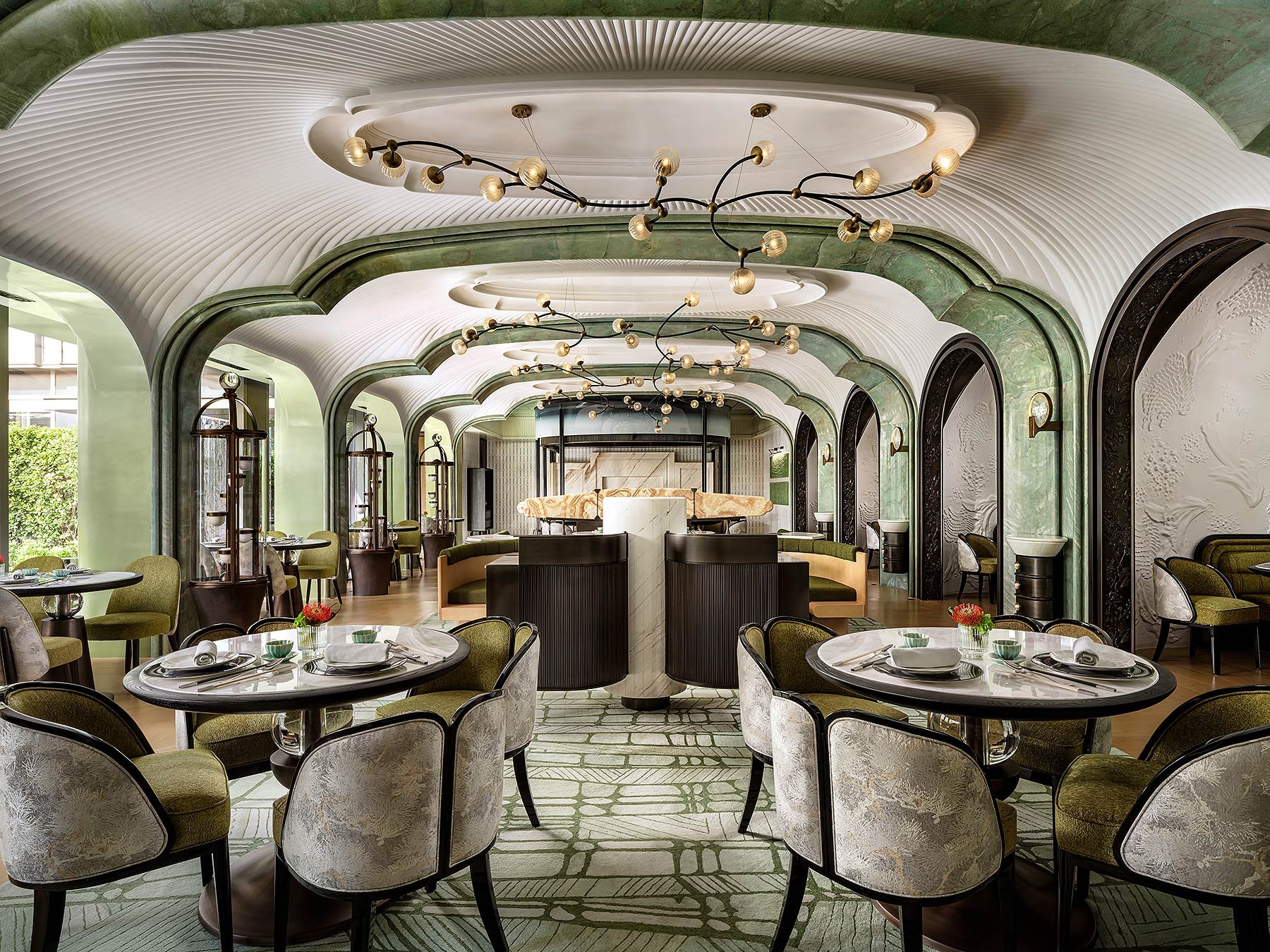
A Coastal Cuisine Earns Its Place at Hangzhou's Fine-Dining Table
The Hubin commercial district, pressed against the eastern edge of West Lake, has long been Hangzhou's most competitive dining zone. Zhejiang cuisine restaurants compete for recognition alongside international formats here, and the area's restaurant density is high enough that a Michelin star carries genuine competitive weight. It was in this context that Song, on Youdian Road, received its first Michelin star in the 2025 guide, distinguishing itself not through the region's dominant Hangzhou culinary tradition but through Ningbo cuisine, a coastal style from the northeastern corner of Zhejiang province.
That distinction matters more than it might initially appear. Hangzhou's recognised fine-dining tier has historically been anchored in the freshwater and mountain produce of the Hangzhou tradition itself: West Lake carp, Longjing tea-smoked preparations, vinegar-braised dishes built around local vegetables and river fish. Ningbo cuisine, by contrast, draws from the sea. Salt, fermentation, and preserved seafood are central to its character, and the cuisine has a reputation among food scholars for being one of the more uncompromising regional styles in eastern China, meaning it rewards familiarity rather than offering the immediate accessibility of, say, a Cantonese banquet format. For a Ningbo-focused kitchen to earn Michelin recognition in Hangzhou rather than in Ningbo itself is a signal worth reading carefully.
The shortlist, unlocked.
Hard-to-book tables, cellar releases, and concierge-planned trips.
Get Exclusive Access →Where Ningbo Cuisine Sits in the Zhejiang Dining Tradition
Zhejiang's cuisine is technically a single regional category within Chinese culinary classification, but in practice it contains several distinct sub-traditions that rarely overlap on a single menu. The Hangzhou style, centred on Hangzhou, prioritises sweetness and freshness. The Shaoxing style adds fermented wine and preserved meats. Ningbo occupies a third position: a fishing port tradition built on brine, dried seafood, and fermentation techniques that predate modern refrigeration and still define the cuisine's profile today.
At the recognised fine-dining level across mainland China, Ningbo cuisine is sparsely represented compared to the Cantonese or Shanghai formats that dominate the Michelin and Black Pearl award rankings. Yong Fu in Hong Kong and Yong Fu (Huangpu) in Shanghai are among the higher-profile addresses working in this tradition outside the city of Ningbo itself, and both carry Michelin recognition. Song's 2025 star adds Hangzhou to that short list of cities where Ningbo cuisine has reached the awards tier, placing it in a peer set that is defined less by geography than by a shared commitment to a cuisine that most fine-dining operators have historically avoided for its complexity and its relatively narrow audience.
For comparison, Hangzhou's other Michelin-recognised addresses tend to work in broader Zhejiang or innovative Chinese formats. Jiang Nan Yu Ge, Xun Wei Jiang Nan, and Ru Yuan represent the established Zhejiang fine-dining tier, with Ru Yuan operating at the ¥¥¥¥ price point and the latter two at ¥¥¥, the same bracket as Song. Guiyu (Xihu) offers another reference point within Zhejiang cuisine. Song's ¥¥¥ pricing puts it in direct comparison with those addresses, though the specific cuisine type marks it as operating in a different competitive sub-set.
Jeremy Critchfield and the Question of Non-Chinese Chefs in Regional Cuisine
Song's chef, Jeremy Critchfield, is noteworthy in the context of Chinese regional fine dining, where the Michelin-starred tier is overwhelmingly led by Chinese chefs working in their native culinary traditions. A non-Chinese chef earning a Michelin star in a regional Chinese format in mainland China is a rare enough occurrence to draw attention to the broader question of how fine-dining Ningbo cuisine is being interpreted and for whom.
The presence of a Western-named chef at the pass does not, in itself, indicate any departure from tradition. There is precedent across Asian culinary cities for non-native chefs achieving critical recognition in regional formats after sustained immersion, and Michelin's mainland China guides have generally rewarded technical rigour and ingredient quality above chef nationality. What is relevant here is that the 2025 star was awarded to a kitchen working in Ningbo cuisine, in Hangzhou, under a non-Chinese chef, which positions Song differently within its peer group than a straightforwardly heritage-led address would be.
For broader comparisons across Chinese fine dining at the Michelin level, addresses such as Xin Rong Ji in Beijing, Xin Rong Ji in Chengdu, 102 House in Shanghai, Chef Tam's Seasons in Macau, Imperial Treasure Fine Chinese Cuisine in Guangzhou, and Dai Yuet Heen in Nanjing illustrate how tightly the recognised tier across mainland China and adjacent cities is oriented around specific regional or Cantonese traditions led by specialists in those traditions. Song occupies a distinct position within that broader picture.
The 2025 Michelin Star: What the Award Signals
Michelin's mainland China guide has been expanding its coverage and its willingness to award stars to cuisine types beyond Cantonese and Shanghai formats, and the 2025 edition's recognition of Song reflects that broader trend. A single star, in Michelin's own criteria, denotes a restaurant worth a stop on your journey, and the guide's language around Chinese regional cuisines has become increasingly precise in identifying the sub-tradition a kitchen is working in rather than applying generic Zhejiang or Chinese labels.
For Song, the 2025 award is a first star, which in the mainland China guide carries considerable practical significance: it typically accelerates reservation demand and places the restaurant in itineraries that previously would not have included it. Addresses receiving first stars in competitive urban dining markets generally see meaningful changes in booking lead times within the first year of recognition, and Song's location in the Hubin commercial district, already a destination area for visitors arriving specifically for West Lake access, gives it a natural audience that most new starred addresses do not have.
Within Hangzhou's recognised dining tier, Song now sits alongside Ambré Ciel, which operates in an innovative format at ¥¥¥¥, offering a sense of where the city's fine-dining spectrum currently sits. See our full Hangzhou restaurants guide for a complete map of the recognised tier.
Planning Your Visit
Know Before You Go
- Address: 2 Youdian Road, Hubin Commercial District, Shangcheng District, Hangzhou, Zhejiang 310001
- Cuisine: Ningbo
- Price range: ¥¥¥
- Awards: Michelin 1 Star (2025)
- Chef: Jeremy Critchfield
- Booking: Contact details not available at time of publication; reservation is advised given the 2025 Michelin star recognition
- Area context: Hubin commercial district, walking distance from West Lake's eastern shore
Hangzhou is well-served by high-speed rail from Shanghai (approximately 45 minutes on the G-train network), making Song accessible as part of a broader Yangtze Delta itinerary that might also include Ningbo itself for those tracing the cuisine back to its source. For accommodation context, see our full Hangzhou hotels guide. For other ways to spend time in the city, our Hangzhou bars guide, Hangzhou wineries guide, and Hangzhou experiences guide cover the broader picture.
2 Youdian Rd, 湖滨商圈 Shangcheng District, Hangzhou, Zhejiang, China, 310001
+86 571 8707 6159
Cuisine-First Comparison
A short peer set to help you calibrate price, style, and recognition.
| Venue | Cuisine | Awards | Notes |
|---|---|---|---|
| Song | Ningbo | Michelin 1 Star | This venue |
| Xin Rong Ji | Taizhou Cuisine, Taizhou | Michelin 1 Star | Taizhou Cuisine, Taizhou, ¥¥¥ |
| 28 Hubin Road | Zhejiang | Zhejiang, ¥¥¥ | |
| Ru Yuan | Zhejiang | Michelin 2 Star | Zhejiang, ¥¥¥¥ |
| L'éclat 19 | French Contemporary | Michelin 1 Star | French Contemporary, ¥¥¥¥ |
| Wild Yeast | Chinese Contemporary | Michelin 1 Star | Chinese Contemporary, ¥¥¥¥ |
Need a table?
Our members enjoy priority alerts and concierge-led booking support for the world's most difficult tables.
Get Exclusive AccessThe shortlist, unlocked.
Hard-to-book tables, cellar releases, and concierge-planned trips.
Get Exclusive Access →