
Tabelog 100 #23
Our verdict
Koriyama’s soba culture rewards restraint: buckwheat, broth, timing, and a room built for lunch rather than ceremony. Soba Kiri Anazawa sits in that regional lane with Tabelog 100 Soba EAST selections in 2022, 2024, and 2025, placing a modest house-style restaurant inside a serious conversation about eastern Japan’s noodle craft.

Pearl is the En Primeur Club membership app — saves, bookings, and concierge access live there. Same editors, same standards.
- Address
- 37-13 Shizukamachi, Koriyama, Fukushima 963-0203, Japan
- Phone
- +81 24-954-6363
- Hours
- Mon 11 AM–2:30 PMTue ClosedWed–Sun 11 AM–2:30 PM
- Website
- sobakiri-anazawa.jp
- Directions
- Get directions
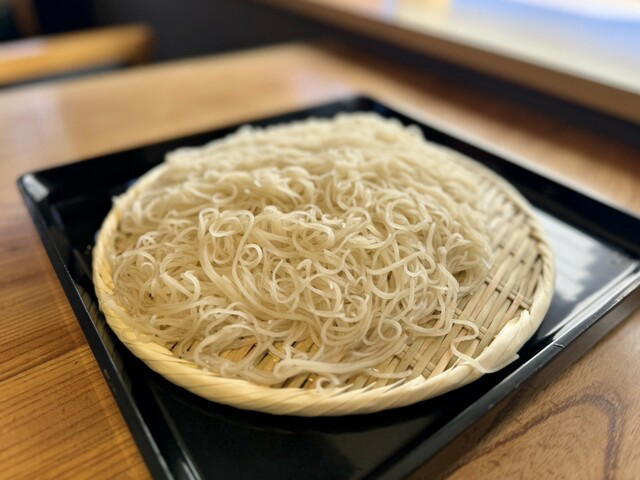
Approaching a soba restaurant in Koriyama changes the register before the meal begins. The city is not selling the theatre of a metropolitan counter; it is closer to the older rhythm of a daytime noodle shop, where the room, the pace, and the menu are built around buckwheat rather than spectacle. That matters in Fukushima, where soba is less a trend than a durable craft, tied to rural grain culture, cold winters, and the appetite for food that can be precise without becoming precious.
Soba Kiri Anazawa belongs to that category. Its recognition through the 2025 Tabelog Hyakumeiten soba listing gives the restaurant a clear trust signal, but the more useful point is what the listing says about Koriyama itself. Serious soba in Japan is not confined to Tokyo’s reservation economy. It often lives in regional rooms where lunch service, focused menus, and narrow specialization do more to define the experience than imported luxury cues.
Fukushima soba, judged by grain rather than theatre
Soba asks for a different kind of attention from sushi, kaiseki, ramen, or wagyu. The cooking is compressed into a small number of variables: the buckwheat, the cut, the boil, the rinse, the dipping broth, and the final soba-yu that folds the meal back into the pot water. There is little space to hide behind garnish. That is why a strong soba shop can feel severe to diners expecting a long tasting sequence, and deeply satisfying to those who understand how much craft sits inside a short lunch.
Koriyama’s dining map supports that range. A traveler using Our full Koriyama restaurants guide will see how the city balances everyday formats with specialist rooms: ramen at Harukiya Kooriyama bunten, meat-led dining at Jin Tei, casual bakery culture at Ootomo Pan Ten, and other local Japanese cooking in Koriyama. In that spread, soba plays the role of discipline: less about abundance, more about proportion.
The comparison also explains the price tier. Soba Kiri Anazawa sits inside the JPY 1,000 to JPY 1,999 bracket while carrying a specialist signal through its 2025 Tabelog Hyakumeiten soba recognition. That combination is common in Japan’s noodle culture: technical cooking does not always announce itself through high spend.
A compact room built for the soba-shop rhythm
The format is part of the argument. The restaurant reads as a focused soba stop rather than a broad destination dining room, with the meal centered on buckwheat rather than ceremony. The useful way to read the setup is through restraint: a specialist local role, direct pacing, and a short-form meal that suits diners who want the craft to sit at the center.
That restraint is why the restaurant reads well for travelers who want a grounded Koriyama meal between broader plans in Fukushima. It is not the same decision as a long dinner or a hotel-led dining experience. Pairing lunch here with the city’s other practical layers, from Our full Koriyama hotels guide to Our full Koriyama bars guide, makes sense for visitors treating Koriyama as more than a rail stop. The wider planning grid also includes Our full Koriyama wineries guide and Our full Koriyama experiences guide, which is useful because regional Japan rewards travelers who think in half-days rather than isolated meals.
Japanese dining culture is full of formats that look simple from outside and become demanding once judged on their own terms. Sukiyaki, tuna and charcoal cooking, curry, and onigiri can all work that way when the form is taken seriously. For that broader reference point, compare the genre discipline behind other specialist dining rooms in Japan and abroad. Soba belongs in that same family of Japanese specializations: narrow, repeatable, and unforgiving when handled casually.
How to place it in a Koriyama itinerary
The decision is strongest for diners who value regional craft over breadth. Soba Kiri Anazawa is not trying to solve every dining need in Koriyama; it answers one question well: where does buckwheat carry the meal? The Tabelog score of 3.71 and the 2025 Tabelog Hyakumeiten soba recognition give measurable support, while the Koriyama setting keeps the experience close to the local idiom. For a visitor, that is the appeal: a specialist lunch that explains something about Fukushima’s food culture without requiring a grand occasion.
It also fits a wider East Asia and Japanese-diaspora reading of casual precision. Minimal formats can travel, change, and retain their discipline, as seen across compact cafes, noodle shops, sake bars, and rice-ball counters. The lesson is not that these venues are interchangeable. It is that serious eating often hides in compact formats, where repetition, sourcing, and timing matter more than ornament.
For Koriyama, the practical verdict is clear without turning the meal into a pilgrimage. Choose it when the day calls for soba as the main event, not as a side note; pair it with other Koriyama stops if time allows; and read the award history as a sign of consistency within Japan’s soba field. The restaurant makes the strongest case for travelers who want Fukushima to taste like itself: grain, broth, restraint, and a room scaled to the work.
Frequently asked questions
What are Soba Kiri Anazawa's hours?
Current hours for Soba Kiri Anazawa should be checked directly with the restaurant before visiting.
What's the pricing like at Soba Kiri Anazawa?
Pricing at Soba Kiri Anazawa is listed as JPY 1,000 - JPY 1,999.
Where do I go for Soba Kiri Anazawa?
Koriyama.
What is Soba Kiri Anazawa known for?
Soba Kiri Anazawa is known for soba in Koriyama and was selected for the 2025 Tabelog Hyakumeiten soba listing.
Booking and Cost Snapshot
Nearby venues at a similar price tier for orientation.
| Venue | Cuisine | Price | Awards | Notes |
|---|---|---|---|---|
| Soba Kiri AnazawaThis venue — the venue you are viewing | Traditional Japanese soba noodle shop | $10–20 | Tabelog 100 #23 | Not listed |
| Jin Tei | Tonkatsu and Japanese yoshoku cafeteria | $10–20 | Tabelog 100 #30 | Tsurumidan, Koriyama, Tonkatsu and Japanese yoshoku cafeteria |
| Harukiya Kooriyama bunten | Classic Tokyo-style ramen (chuka soba) | $10–20 | Tabelog 100 #98 | Kuwano, Classic Tokyo-style ramen (chuka soba) |
| Soba Saizen Ryusenbo | Traditional Japanese soba | $20–30 | Tabelog 100 #75 | .null, Traditional Japanese soba |
| Ootomo Pan Ten | Japanese neighborhood bakery and sandwich shop | $1–10 | Tabelog 100 #51 | Koriyama, Japanese neighborhood bakery and sandwich shop |
| Munakata Ya | Yakitori & Chicken Dishes | $30–50 | Tabelog 100 #89 | Ekimae, Yakitori & Chicken Dishes |
Recognition history
Dated appearances from independent guides and award organizations, with the underlying list record or original source where available.
Tabelog 100 #23 · No. 23
Tabelog · Tabelog 100 - Soba - EAST - 2025
Details
- Quiet
- Cozy
- Classic
- Solo
- Casual Hangout
- After Work
- Family
- Standalone
- Local Sourcing
- A La Carte
Current opening hours
- Monday
- 11 AM–2:30 PM
- Tuesday
- Closed
- Wednesday
- 11 AM–2:30 PM
- Thursday
- 11 AM–2:30 PM
- Friday
- 11 AM–2:30 PM
- Saturday
- 11 AM–2:30 PM
- Sunday
- 11 AM–2:30 PM
Hours can change for holidays and private events. Last verified .
Calm, non‑smoking soba shop atmosphere with a focus on comfort and relaxation, simple classic decor, and attention to cleanliness and ventilation measures.