
Tabelog 100 #30
Our verdict
Jin Tei places Koriyama’s everyday dining culture in sharp focus: cafeteria, yoshoku, and tonkatsu traditions handled with enough consistency to earn Tabelog 100 recognition across diner and tonkatsu categories. The appeal is not ceremony; it is the disciplined, small-room grammar of Japanese shokudo dining, where rice, cutlets, Western-style comfort dishes, and local regularity matter more than spectacle.

Pearl is the En Primeur Club membership app — saves, bookings, and concierge access live there. Same editors, same standards.
- Address
- 3 Chome-5-2 Tsurumidan, Koriyama, Fukushima 963-8861, Japan
- Phone
- +81 24-923-0032
- Hours
- Mon–Tue 11:30 AM–2:30 PM, 5–9 PMWed 11:30 AM–2 PM, 5–8:15 PMThu–Sat 11:30 AM–2:30 PM, 5–9 PMSun Closed
- Website
- tabelog.com
- Directions
- Get directions
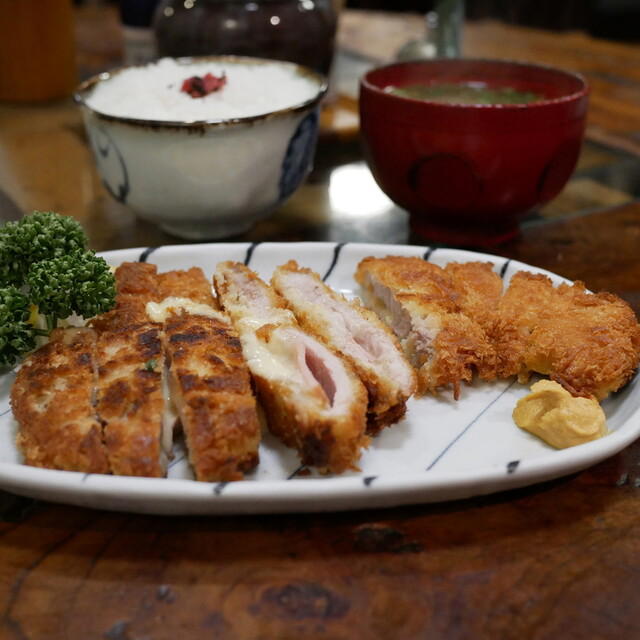
The menu
What to order
- Tonkatsu set meal
- Tenderloin katsu
- Assorted fried cutlets
Approach Jin Tei and the signal is domestic rather than theatrical: a Koriyama restaurant framed less as a stage-managed tasting format than as an everyday place to eat. That matters. Japan’s shokudo tradition lives in places that treat a meal as daily infrastructure, where food can be quick, filling, and precise without borrowing the language of luxury dining.
Jin Tei belongs to that category, but with a sharper reputation than the ordinary neighbourhood cafeteria. Its listing across cafeteria, yoshoku, and tonkatsu places it at a particular intersection in Japanese eating culture: the Western-influenced kitchen, the fried-cutlet specialist, and the everyday set-meal room. Koriyama is not Tokyo, and that difference is part of the point. In regional cities, the serious dining map is often drawn through ramen shops, soba rooms, bakeries, family-run set-meal counters, and pork-cutlet houses rather than reservation-led fine dining.
Koriyama shokudo culture, seen through tonkatsu and yoshoku
Yoshoku is often misread as a novelty category by visitors. In Japan, it is closer to a domestic canon: Western-derived dishes absorbed into local habits, served with rice, soup, cabbage, sauces, and a rhythm that feels closer to a family table than a European dining room. Tonkatsu sits inside that orbit while also operating as its own specialty tradition, judged on frying technique, portion logic, and how the meal holds together as a set.
That is why Jin Tei’s Tabelog Hyakumeiten recognition is useful evidence rather than decoration. The restaurant is listed in the 2026 selection with a Tabelog score of 3.71 and a price band of JPY 1,000 - JPY 1,999. Those details say more than a generic award badge would: they place the restaurant within Japan’s competitive shokudo and cutlet culture, where consistency and everyday usefulness carry weight.
The local comparison set also clarifies the city. Harukiya Kooriyama bunten points toward Koriyama’s ramen habits, Soba Saizen Ryusenbo toward buckwheat craftsmanship, and Ootomo Pan Ten toward the bakery side of daily food culture. Genji and other Koriyama dining rooms help round out a city where the strongest meals are not always announced by formal dining signals. For the wider map, Our full Koriyama restaurants guide is the better starting point than a narrow hunt for ceremony.
A straightforward format with national-category recognition
The restaurant’s format is part of its editorial relevance. An everyday shokudo changes the nature of a meal: service feels practical, pacing matters, and the kitchen’s margin for inconsistency is narrow. In a large urban dining room, a diner can disappear into the system. In a regional restaurant like this, the format exposes more of the meal, from timing to portion discipline to the way regulars use the room.
Jin Tei also sits outside many of the concierge-friendly assumptions that international travellers often bring to Japan. The more useful confirmed details are simpler: it is a Koriyama cafeteria, yoshoku, and tonkatsu restaurant listed at JPY 1,000 - JPY 1,999, with lunch budget also shown in that same range. That places it firmly in the practical grammar of regional dining rather than in the language of special-occasion luxury.
For visitors building a fuller Koriyama stay, the meal fits into a broader city pattern rather than a single-venue pilgrimage. Our full Koriyama hotels guide, Our full Koriyama bars guide, Our full Koriyama wineries guide, and Our full Koriyama experiences guide give the practical frame around a city whose appeal is cumulative: regional food, ordinary neighbourhoods, and meals that reward attention without requiring a formal itinerary.
How to read Jin Tei within Japan's everyday dining canon
The useful comparison is not with luxury kaiseki or Tokyo counter dining. It is with the Japanese restaurants that turn repetition into reputation. A shokudo can be humble in price and format while still being exacting in execution. The same is true across the country, from regional set-meal rooms to specialist counters and everyday kitchens focused on a clear repertoire.
That frame also explains why outside comparisons should be handled carefully. Restaurants in other Japanese cities may work through beef dishes, charcoal cooking, curry, coffee, or international cooking translated through Japanese urban habits, but those are different culinary lanes. Jin Tei is best read through Koriyama’s own casual dining field, where cafeteria, yoshoku, and tonkatsu categories can carry serious local meaning without needing the signals of formal dining.
Abroad, the same fascination with Japanese everyday formats often gets reframed through sake bars, rice specialists, and other carefully packaged versions of daily food. Koriyama’s version is less curated for an international audience. Jin Tei’s value lies in that difference: it gives the traveller a serious example of Japanese everyday dining, recognized in its category, without turning the meal into a performance.
Frequently asked questions
What price level is Jin Tei?
Pricing at Jin Tei is listed as JPY 1,000 - JPY 1,999.
What's Jin Tei's location?
Koriyama.
What are the opening hours for Jin Tei?
Specific opening hours for Jin Tei are not provided in the available details.
What makes Jin Tei worth seeking out?
Jin Tei is listed in the 2026 Tabelog Hyakumeiten selection with a score of 3.71. Its Koriyama setting, cafeteria-style identity, yoshoku and tonkatsu categories, and JPY 1,000 - JPY 1,999 price range make it an everyday restaurant with category-level recognition.
Is Jin Tei allergy-friendly?
The available details identify Jin Tei as a cafeteria, yoshoku, and tonkatsu restaurant in Koriyama, but they do not list a formal allergy menu or allergen protocol. Guests with specific needs should plan around that general format.
Cost Snapshot
Nearby venues at a similar price tier for orientation.
| Venue | Cuisine | Price | Awards | Notes |
|---|---|---|---|---|
| Jin TeiThis venue — the venue you are viewing | Tonkatsu and Japanese yoshoku cafeteria | $10–20 | Tabelog 100 #30 | Not listed |
| Munakata Ya | Yakitori & Chicken Dishes | $30–50 | Tabelog 100 #89 | Ekimae, Yakitori & Chicken Dishes |
| Soba Saizen Ryusenbo | Traditional Japanese soba | $20–30 | Tabelog 100 #75 | .null, Traditional Japanese soba |
| Harukiya Kooriyama bunten | Classic Tokyo-style ramen (chuka soba) | $10–20 | Tabelog 100 #98 | Kuwano, Classic Tokyo-style ramen (chuka soba) |
| Ootomo Pan Ten | Japanese neighborhood bakery and sandwich shop | $1–10 | Tabelog 100 #51 | Koriyama, Japanese neighborhood bakery and sandwich shop |
| Sushi Kappou Gyomon | Traditional Sushi Kappou | $150–200 | Tabelog 100 #49 | Ekimae, Traditional Sushi Kappou |
Recognition history
Dated appearances from independent guides and award organizations, with the underlying list record or original source where available.
Tabelog 100 #30 · No. 30
Tabelog · Tabelog 100 - Diner - 2026

Details
- Cozy
- Classic
- Intimate
- Solo
- Family
- Casual Hangout
- Group Dining
- Standalone
- A La Carte
- Set Menu
- Counter Dining
- Sake
- Beer
- Pescatarian Friendly
Current opening hours
- Monday
- 11:30 AM–2:30 PM, 5–9 PM
- Tuesday
- 11:30 AM–2:30 PM, 5–9 PM
- Wednesday
- 11:30 AM–2 PM, 5–8:15 PM
- Thursday
- 11:30 AM–2:30 PM, 5–9 PM
- Friday
- 11:30 AM–2:30 PM, 5–9 PM
- Saturday
- 11:30 AM–2:30 PM, 5–9 PM
- Sunday
- Closed
Hours can change for holidays and private events. Last verified .