Our verdict
On a quiet street in the 14th arrondissement, Slow operates at the pace its name suggests: unhurried, deliberate, and shaped by the rituals of the meal rather than the demands of a full dining room. The address at 4 Rue Danville places it in one of Paris's more residential quarters, away from the concentrated foot traffic of the grands boulevards. It is a venue that rewards attention over appetite.

Pearl is the En Primeur Club membership app, where members save venues, book tables and use the concierge.
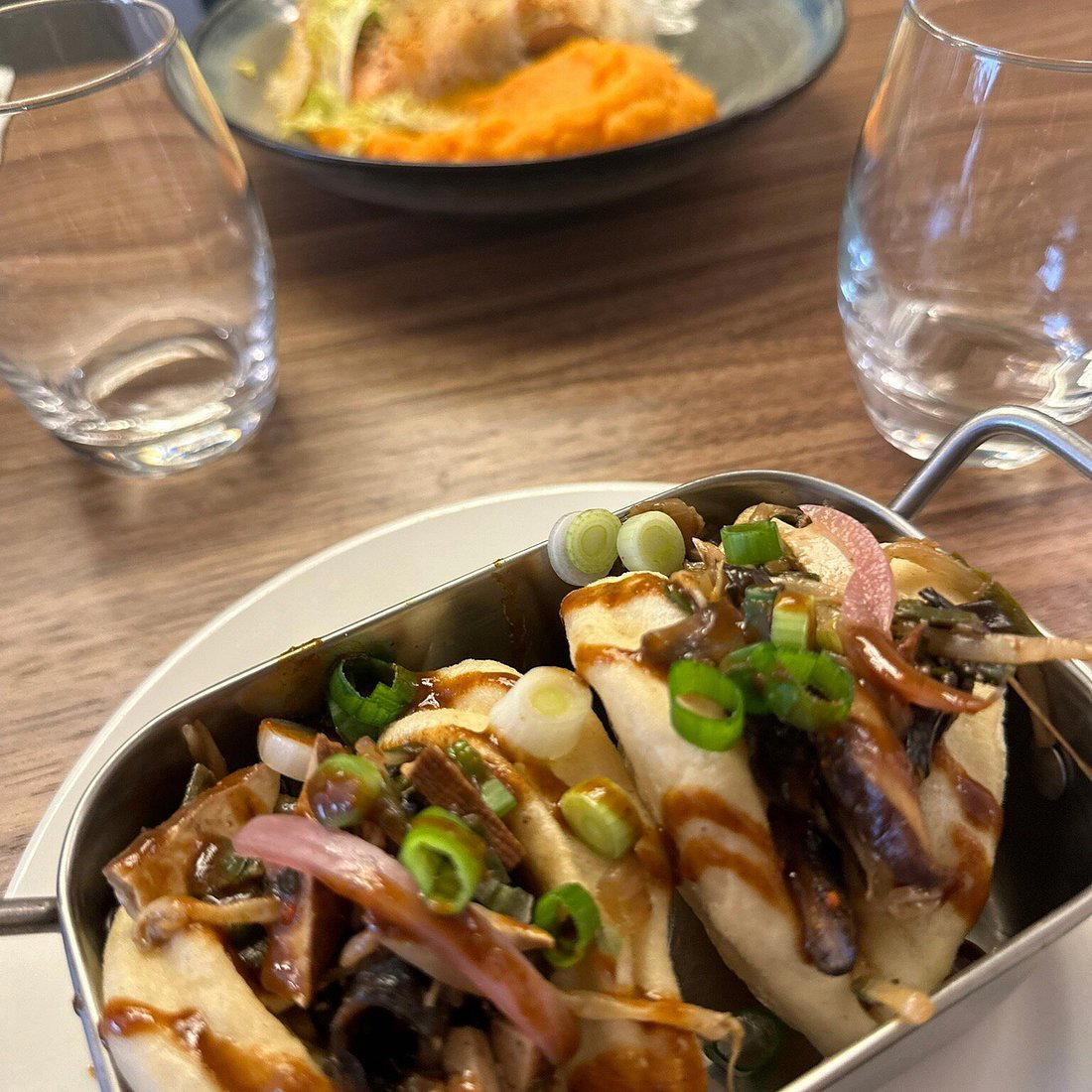
The menu
What to order
- Brioches à la Pékinoise
- Karaage de Brocolis
- Tartare à la Thaï
The 14th and the Art of Slowing Down
Paris's 14th arrondissement has long occupied a different register from the dining circuits of the 6th or the 8th. The neighbourhood around Rue Danville sits south of Montparnasse, its streets residential rather than touristic, its restaurants shaped by repeat local custom rather than reservation-board churn. In this context, a restaurant named Slow is not a provocation but a statement of intent: the meal here is structured around pacing, not performance.
That positioning matters in a city where the debate between classical formality and contemporary informality is never quite settled. At the top of the Paris market, restaurants like Alléno Paris au Pavillon Ledoyen, Le Cinq at the Four Seasons George V, and L'Ambroisie operate with the full apparatus of palace-hotel or place-des-Vosges formality. Further down the hierarchy, the city's neighbourhood dining rooms write their own rules. Slow, at 4 Rue Danville, belongs to this second world: quieter in its ambitions, but no less serious in its execution of the meal as a ritual rather than a transaction.
The Ritual Frame: How a Meal at Slow Is Meant to Work
The name Slow functions as a structuring principle. French neighbourhood dining has always had its own tempo, distinct from the brasserie lunch-and-out model and from the paced ceremonies of Michelin-starred rooms. The mid-tier Paris restaurant at its finest creates a third register: long enough that the wine has time to open, short enough that the evening retains spontaneity. The dining ritual at this kind of address depends on a willingness to follow the kitchen's lead rather than compress the experience into a set window.
Across France, the restaurants that sustain this model most effectively tend to operate with a short, rotating menu, a kitchen brigade small enough that the food carries a consistent point of view, and a front-of-house that reads the table rather than working through a scripted cadence. Bras in Laguiole and Auberge de l'Ill in Illhaeusern represent the formal end of that tradition, where the meal is a coordinated ceremony with decades of institutional memory behind it. Slow, in its 14th-arrondissement register, translates a version of that intent to a smaller, more personal scale.
The 14th Arrondissement as Dining Context
Understanding where Slow sits geographically is part of understanding what it is. The 14th arrondissement is not a dining destination in the sense that the Marais or Saint-Germain are. It draws from its own population first. That means the room at a restaurant like this one is more likely to be filled with Parisians on a regular Thursday than with visitors consulting a shortlist. The competitive set is local: bistros, small contemporary rooms, and the occasional wine-focused address that has built its following over years of consistent service.
This is the same residential gravity that gives the neighbourhood its character. The restaurant at 4 Rue Danville operates within that ecosystem rather than against it. For the visitor, that dynamic is an asset: the experience is calibrated for an audience that returns, not one that needs to be impressed in a single sitting.
France Beyond Paris: The Tradition This Fits
The slow-dining ethos has deep roots in French provincial cooking, where the meal is understood as the main event of the day rather than a prelude to something else. Flocons de Sel in Megève, Mirazur in Menton, and Troisgros in Ouches all carry that provincial unhurriedness in their DNA, even as they operate at the highest level of contemporary French cooking. Paul Bocuse's Auberge du Pont de Collonges near Lyon has institutionalised it over generations.
The neighbourhood Paris restaurant draws on the same tradition at a different scale. The ritual of the meal as described by French food culture, amuse-bouches as a settling-in device, bread as a pacing tool, the cheese course as a deliberate deceleration before dessert, is not a luxury-tier invention. It is a democratic one, practiced as readily in a 20-cover room in the 14th as in a palace dining room in the 8th. Slow's name, in this light, reads less as a concept and more as an alignment with a cultural default that the faster-paced dining world has made it necessary to declare explicitly.
How Slow Compares in the Paris Context
Contemporary Paris dining has fractured into a wide range of registers. At one end, Kei and Arpège represent the city's appetite for high-technique, ingredient-led cooking with Michelin recognition to match. At the other, a generation of natural-wine bistros has made speed and informality its signature. Slow occupies a position between those poles: serious without being ceremonial, deliberate without being stiff. For a fuller picture of where it sits in the city's dining hierarchy, our full Paris restaurants guide maps the range across neighbourhoods and price points.
Internationally, the slow-dining model has found expression in rooms like Atomix in New York, where pacing is architectural, and Le Bernardin, where the tempo of service is as deliberate as the cooking. In the French regional sphere, Assiette Champenoise in Reims, Au Crocodile in Strasbourg, Auberge du Vieux Puits in Fontjoncouse, and AM par Alexandre Mazzia in Marseille each, in their own way, make the case that the quality of attention paid to the meal matters as much as the technique applied to its components. Slow, at its 14th-arrondissement address, makes that case at a more accessible register.
Planning Your Visit
Address: 4 Rue Danville, 75014 Paris, France. Getting there: The 14th arrondissement is accessible via the Mouton-Duvernet or Alésia metro stops on Line 4. Timing: A mid-week dinner allows the room to operate at its natural pace without the compression of a Saturday-night full house. Note:
Frequently asked questions
What's the address for Slow?
Slow is located at 4 Rue Danville, 75014 Paris, France, Paris.
Is Slow a good option for a dinner in Paris that avoids the tourist-heavy arrondissements?
The 14th arrondissement, where Slow sits at 4 Rue Danville, is a residential quarter with no major landmark traffic, meaning the room is likely to skew toward neighbourhood regulars rather than visitors following a guidebook circuit. That dynamic shapes the atmosphere more than any design choice: the 14th operates at its own pace, distinct from the performative energy of dining rooms in the 8th or Saint-Germain. For a dinner that functions like a local evening out rather than a set-piece occasion, the address is well-positioned.
What dish is Slow famous for?
The venue's name and position in the 14th arrondissement point toward a kitchen oriented around deliberate, time-respecting cooking rather than high-turnover plates, but confirmed signature dishes remain undocumented. Check directly with the restaurant for the current menu.
Can I walk in to Slow?
Walk-in availability at a small Paris neighbourhood restaurant like Slow depends on the night and cover count. The 14th arrondissement draws a loyal local clientele rather than passing tourist traffic, which means tables can fill early on weekday evenings. Calling ahead is the safer approach, though the neighbourhood's unhurried character means mid-week walk-ins carry less risk than at restaurants in the 6th or Marais.
What's the standout thing about Slow?
The name is its sharpest statement of intent. In a Paris dining scene where the gap between high-ceremony tasting menus and rapid-turnover bistros has widened considerably, a restaurant at 4 Rue Danville in the 14th that positions itself around pace is making a pointed choice. That positioning aligns with the arrondissement's character: a residential, non-showcase neighbourhood where the meal is the point, not the backdrop.
Is Slow allergy-friendly?
Smaller neighbourhood restaurants in Paris's 14th arrondissement often handle dietary requirements more flexibly than larger operations, since kitchens tend to be owner-run with shorter supply chains. check the venue's official channels at 4 Rue Danville before your visit to confirm what adjustments are possible.
Cuisine Context
Comparable venues nearby, for context on price, style, and recognition.
| Venue | Cuisine | Price | Notes |
|---|---|---|---|
| SlowThis venue (the venue you are viewing) | French-Asian Fusion | $30–50 | Not listed |
| 116 | Japanese-French Fusion Izakaya | $30–50 | Passy |
| Kong | Franco-Japanese Fusion | $50–100 | 1st arrondissement (Saint-Germain-l'Auxerrois) |
| Mokonuts | French-Lebanese-Japanese Fusion Café | $30–50 | 11th arrondissement (Sainte-Marguerite) |
| Central Chapelle | Multi‑chef street‑food & bar hub | Not listed | La Chapelle / Paris 18e |
| RAMEN WANG | Japanese-Chinese Fusion Ramen | $20–30 | 14th arrondissement |

Continue exploring
More in Paris
Restaurants in Paris
All restaurants in Paris →
Bars in Paris
All bars in Paris →
Details
- Cozy
- Modern
- Intimate
- Date Night
- Casual Hangout
- Open Kitchen
- Beer Program
- A La Carte
- Wine
- Beer
- Vegetarian Friendly
- Vegan Options
- Gluten Free Options
Current opening hours
- Monday
- Closed
- Tuesday
- 12–3 PM, 7–10:30 PM
- Wednesday
- 12–3 PM, 7–10:30 PM
- Thursday
- 12–3 PM, 7–10:30 PM
- Friday
- 12–3 PM, 7–11 PM
- Saturday
- 12–3:30 PM, 7–11 PM
- Sunday
- 12–3:30 PM, 7–10 PM
Hours can change for holidays and private events. Hours as of .
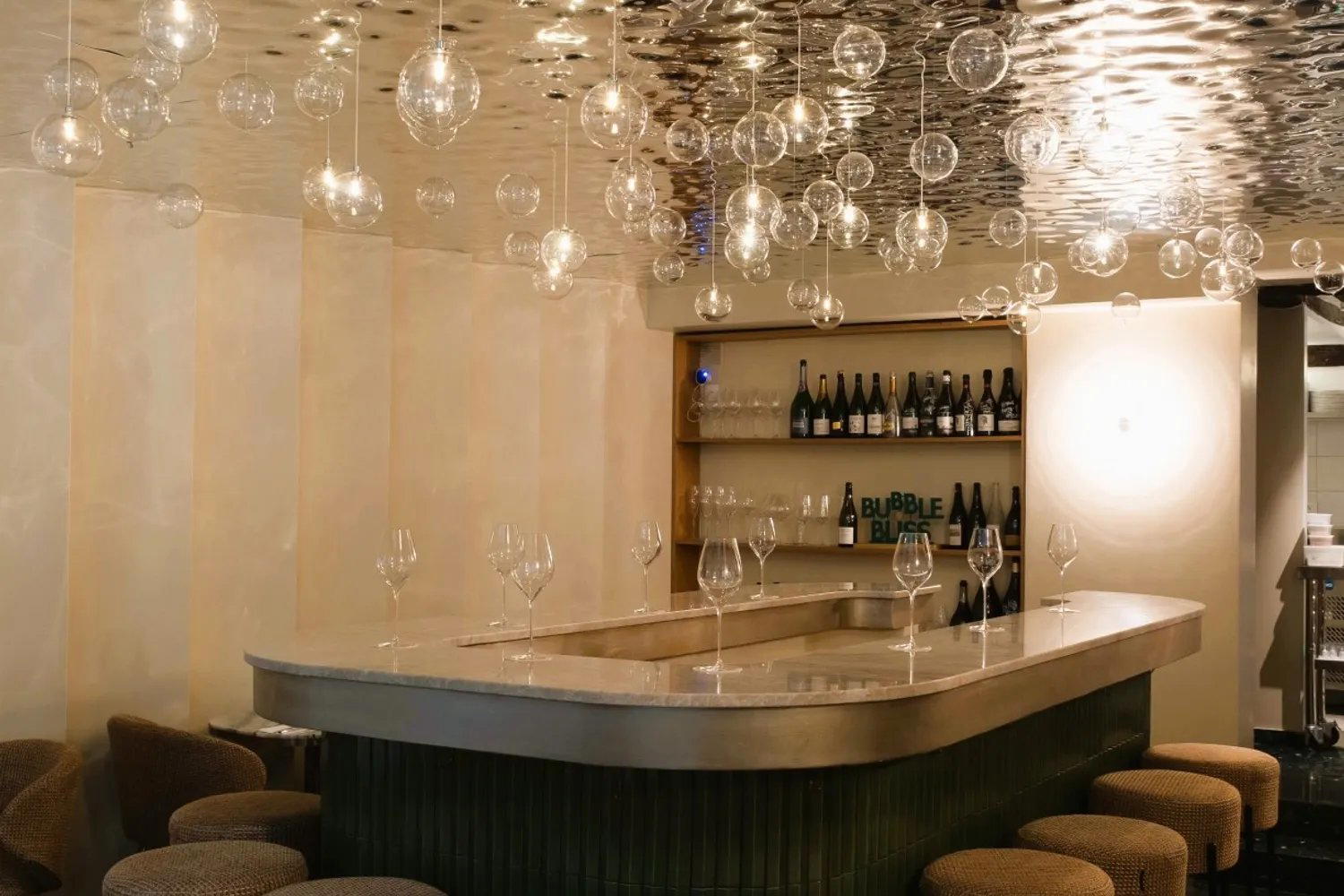
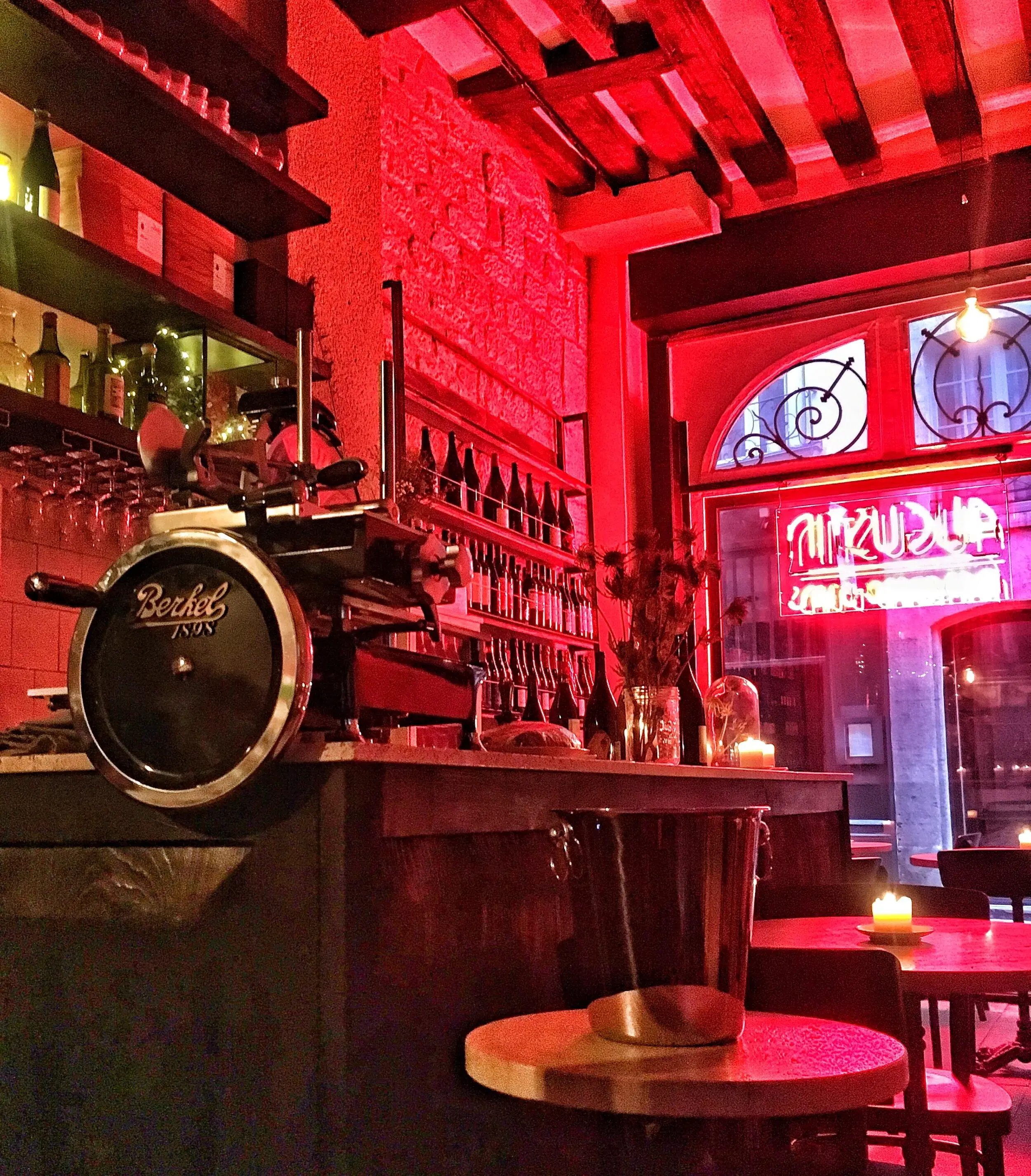
Warm and cozy atmosphere with a focus on passionate, original gourmet experiences.