Shinta Mani Wild
Our verdict
Shinta Mani Wild sits deep in the Cardamom Mountains of Kampong Seila, operating as a tented camp where the surrounding rainforest determines the rhythm of every meal. The property belongs to a category of conservation-linked stays where sourcing from the ecosystem is not a marketing position but a structural constraint. For travellers prepared to commit to the journey, the experience connects dining to landscape more directly than almost any comparable property in Southeast Asia.

Pearl is the En Primeur Club membership app, where members save venues, book tables and use the concierge.
The menu
What to order
- Fish Amok
- Beef Lok Lak
- Pouk Village Krek Soup
- Tonle Sap Lake Sanday Butter Catfish Soup
- Kampot Pepper Stir-fry
Where the Forest Sets the Menu
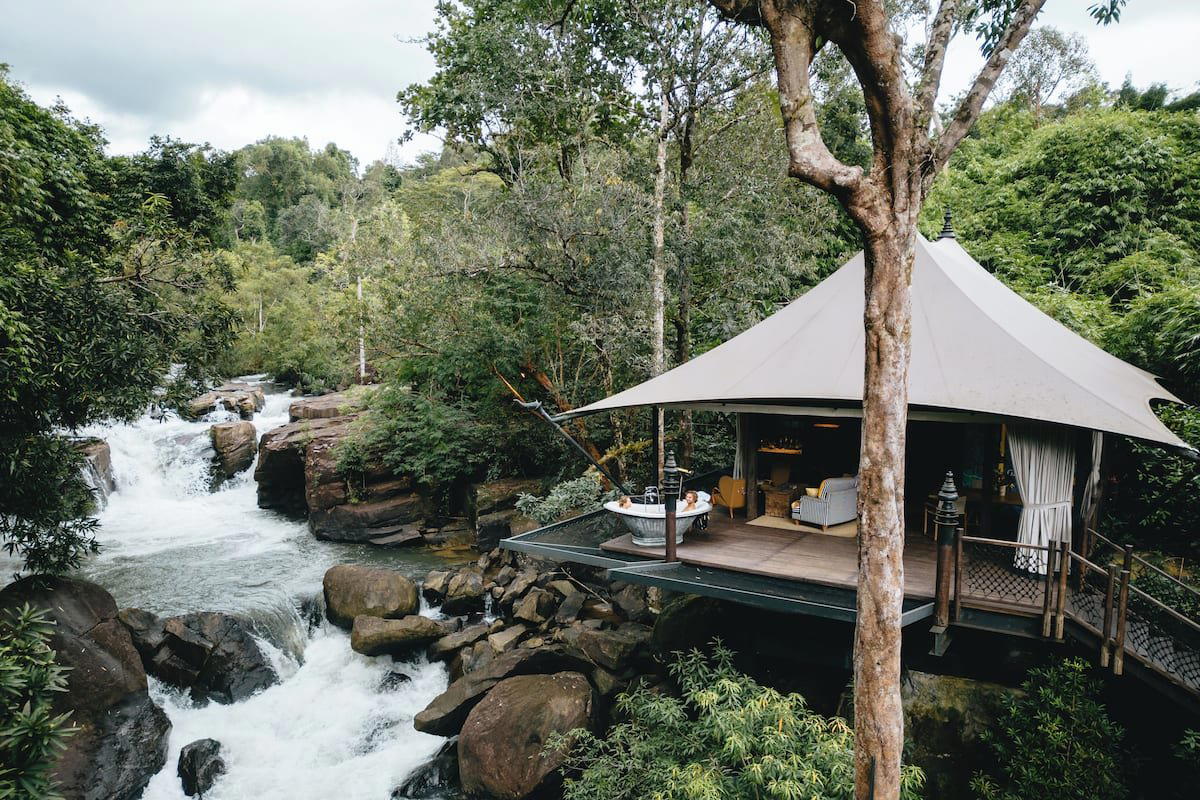
The Cardamom Mountains in southwestern Cambodia represent one of the last contiguous lowland rainforest blocks in Southeast Asia. What arrives on the table at Shinta Mani Wild is shaped less by a chef's quarterly menu revisions than by what that forest and its surrounding communities produce on any given week. This is not farm-to-table as a branding exercise, it is a structural reality imposed by geography. The camp sits hours from a conventional supply chain, which means the kitchen operates within tight ecological constraints that most urban restaurants can only approximate through sourcing agreements.
That distance from conventional infrastructure is worth understanding before arrival. Kampong Seila is not a dining destination you reach by taxi from a city centre. The approach involves travel through Koh Kong province, and the camp itself is accessible partly by zipline across a river gorge, a detail that immediately signals the property's operating logic: it has been deliberately placed at the edge of what infrastructure can support. Visitors arriving from Phnom Penh or Siem Reap should plan at minimum a full travel day. For reference, CUTS in Phnom Penh and Iza in Phnum Penh represent the capital's urban dining register, Shinta Mani Wild operates in an entirely different register, one where the physical act of reaching the table is part of the offer.
Sourcing at the Frontier of Conservation
The property is affiliated with the Shinta Mani Foundation's conservation work in the Cardamoms, a region where illegal logging and poaching have historically pressured biodiversity. That conservation context shapes what sourcing means here. Ingredients are drawn from surrounding villages, from foraging within permitted areas, and from small-scale growers whose livelihoods are tied to the forest remaining intact. The logic is direct: a kitchen that depends on wild herbs, river fish, and community-farmed vegetables has a material interest in the health of the ecosystem around it.
This places Shinta Mani Wild in a specific tier of conservation-linked hospitality that is small globally and even smaller in Southeast Asia. Properties like Amansara Resort Dining Room in Siemreab operate within Cambodia's premium heritage-tourism circuit, oriented around Angkor Wat and the archaeological draw of the northwest. Shinta Mani Wild has no equivalent anchor, the forest is the destination, and the dining is inseparable from that framing. Comparing it to Cambodian restaurant culture in Siem Reap, where venues like Cuisine Wat Damnak in Siem Reap and JOMNO in Sala Kamreuk Sangkat are advancing a sophisticated, produce-driven take on Khmer cuisine within an urban context, reveals how different the operating conditions are. Those kitchens have access to weekly markets, specialist suppliers, and a customer base that returns regularly. Shinta Mani Wild's kitchen serves a captive, residential audience for whom this may be a once-in-a-decade visit.
The Tented Camp Dining Format
Tented camp dining in this region typically operates on a full-board basis, meaning guests eat within the property for the duration of their stay. This format removes the optionality that characterises city dining and replaces it with something closer to a curated sequence, breakfast before a morning wildlife walk, lunch that reflects what the morning produced, dinner that anchors the day. In conservation camps that do this well, the menu becomes a kind of field report on the surrounding landscape.
The physical setting amplifies this. Dining structures at remote rainforest camps are typically open-sided or minimally enclosed, which means the sounds and humidity of the forest are present at the table. This is a sensory context that no urban restaurant can replicate, regardless of price point. A counter at Le Bernardin in New York City or a table at Alain Ducasse- Louis XV in Monte Carlo delivers technical precision in a controlled environment. What a camp like Shinta Mani Wild offers is the opposite: uncontrolled environment as the point, with sourcing and cooking subordinate to place.
Cambodia's Evolving Food Identity and Where This Fits
Cambodian cuisine has spent the past decade building international recognition, largely driven by chefs working in Siem Reap and Phnom Penh who have framed Khmer ingredients, palm sugar, kampot pepper, kroeung spice paste, freshwater fish from the Tonle Sap, within contemporary formats that travel well to international audiences. Lum Orng Restaurant in Sla Kram Sangkat, Jaan Bai Restaurant in Bat Dambang, and Embassy in Svay Dankum Sangkat each represent different positions within that emerging scene. Il Forno in Siem Reab and Maybe Later in Preah Sihanouk point to the international dining culture that has grown alongside Cambodia's tourism expansion.
Shinta Mani Wild sits outside this urban trajectory. Its food identity is tied to the Cardamom forest rather than to Khmer culinary heritage in any codified sense. What connects it to the broader Cambodian sourcing story is the reliance on ingredients that come from the country's ecological interior, the rivers, the forest understorey, the village plots at the edge of protected land. This is a different kind of origin story than the market-driven sourcing that characterises Phnom Penh and Siem Reap kitchens, and it is worth understanding the distinction before arrival.
Planning the Visit
Shinta Mani Wild operates as a full-stay experience rather than a dining destination that can be visited for a single meal. Logistics require planning well in advance: the dry season, roughly November through April, offers the most accessible travel conditions in Koh Kong province and the Cardamom region. The wet season brings higher river levels and can complicate access, though it also intensifies the forest. Guests travelling to Cambodia for a broader itinerary can use Siem Reap or Phnom Penh as entry points before heading southwest. See our full Kampong Seila restaurants guide for wider context on the region. For those building a longer Cambodia trip that combines urban dining with this kind of remote immersion, the contrast between the capital's restaurant culture and a forest camp stay is significant enough to justify the additional travel time.
Frequently asked questions
Is Shinta Mani Wild a family-friendly restaurant?
Shinta Mani Wild is not a restaurant in the conventional sense. It operates as a full-stay tented camp in Prey Praseth Village, Kampong Seila, where dining is integrated into the full-board experience for resident guests only. Families booking the property eat entirely within the camp, making suitability dependent on the broader stay rather than a standalone meal visit.
How would you describe the vibe at Shinta Mani Wild?
The setting is the Cardamom Mountains, one of the last contiguous lowland rainforest blocks in Southeast Asia, which shapes everything about the atmosphere. Dining happens within the camp, surrounded by forest, and the format is closer to an expedition lodge than a hotel restaurant. There is no ambient crowd or street-level energy; the pace is set by the land and the conservation work the Shinta Mani Foundation conducts in the surrounding region.
What is the connection between Shinta Mani Wild and conservation in the Cardamom Mountains?
The property operates in direct affiliation with the Shinta Mani Foundation, which is active in protecting the Cardamom Mountains, a region historically threatened by illegal logging and poaching. This conservation mandate is structural to the camp's identity in Kampong Seila, not a marketing add-on. Guests are, in effect, staying inside an active conservation zone, and the food sourcing reflects that proximity to one of Cambodia's most ecologically significant landscapes.
What do regulars order at Shinta Mani Wild?
Because Shinta Mani Wild operates on a full-board basis in a remote camp in Kampong Seila, the menu is not à la carte in the way a city restaurant operates. Guests eat what the kitchen prepares, with sourcing tied to the Cardamom region and the property's conservation affiliations. Repeat visitors come for the place and the experience of the Cambodian forest, not to reorder a signature dish.
Where exactly is Shinta Mani Wild?
Shinta Mani Wild is located at Prey Praseth Village, Kampong Seila, Cambodia, Kampong Seila.
Can I walk in to Shinta Mani Wild?
No. Shinta Mani Wild is not accessible as a walk-in dining venue. The property sits in Prey Praseth Village in the Cardamom Mountains, a remote area of southwestern Cambodia that requires advance planning to reach. All dining is reserved for guests who have booked a full stay at the camp.
Side-by-Side Snapshot
| Venue | Cuisine | Price | Awards | Notes |
|---|---|---|---|---|
| Shinta Mani WildThis venue (the venue you are viewing) | Contemporary Khmer with Foraged Ingredients | Not listed | Not listed | Not listed |
| Cuisine Wat Damnak | Modern Cambodian Fusion | $30–50 | Not listed | Cambodian |
| Malis | Modern Cambodian Fine Dining | $30–50 | Not listed | Cambodian |
| Le Royal at The Raffles | Modern Khmer & French Fine Dining | $50–100 | La Liste Top Restaurants | French Cambodian |
| JOMNO | Modern Khmer Cuisine | $20–30 | Not listed | Not listed |
| Il Forno | Authentic Italian Trattoria | $10–20 | Not listed | Not listed |
Continue exploring
More in Kampong Seila
Hotels in Kampong Seila
All hotels in Kampong Seila →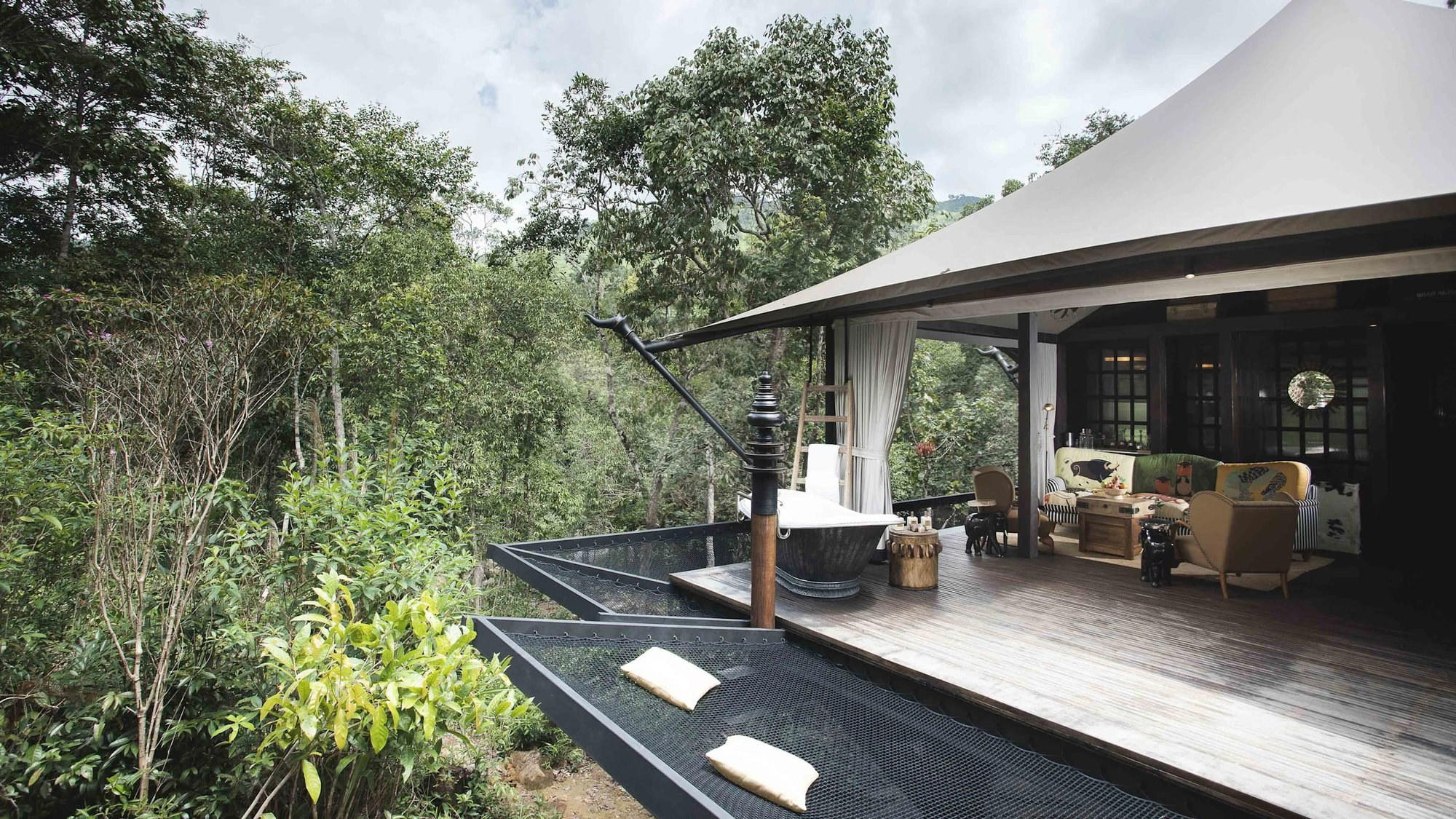
Details
- Romantic
- Scenic
- Intimate
- Elegant
- Whimsical
- Date Night
- Special Occasion
- Celebration
- Waterfront
- Garden
- Open Kitchen
- Private Dining
- Terrace
- Panoramic View
- Design Destination
- Hotel Restaurant
- Craft Cocktails
- Farm To Table
- Local Sourcing
- Organic
- Waterfront
- Garden
- Tasting Menu
- Set Menu
- Craft Cocktails
- Wines
- Vegetarian Friendly
- Vegan Options
- Allergy Accommodating
- Organic Focus
Open-air riverside setting with leather furnishings, acid-bright bamboo accents, monochrome Jackie Kennedy portrait, camo canopy, and candlelit terrace dining under the stars overlooking waterfalls and jungle landscape.