Jaan Bai Restaurant
Our verdict
On Street 2 in Battambang, Jaan Bai operates as one of Cambodia's more deliberate social-enterprise restaurants, channelling proceeds into vocational training programs for at-risk youth. The kitchen draws from the Khmer pantry in a city that sits at the agricultural crossroads of the Tonle Sap basin, making the sourcing argument here easier to believe than in most places. It belongs to a small tier of Cambodian restaurants where the food and the mission reinforce each other.

Pearl is the En Primeur Club membership app, where members save venues, book tables and use the concierge.
The menu
What to order
- Fish Amok
- Tom Kha Gai
- Pad Thai
Battambang's Table and What It Grows
Battambang is Cambodia's second city in agricultural output before it is anything else. The provinces surrounding it produce rice, oranges, and vegetables that supply markets across the country, and the Sangker River corridor has sustained wet-season cultivation for centuries. Restaurants that operate here and source responsibly are not performing a supply-chain exercise, they are drawing from one of the country's most productive larders, and the difference shows in what arrives at the table. This is the context in which Jaan Bai, located on Street 2 in central Battambang, should be understood. See our full Bat Dambang restaurants guide for broader city context.
The restaurant's address places it squarely in the older colonial quarter of the city, a district where French-era shophouses sit alongside Buddhist temple compounds and the slow-moving rhythms of a provincial capital that has resisted the pace of Phnom Penh and Siem Reap. Walking toward Jaan Bai along Street 2, the city gives you its texture before the meal does: dust, frangipani, the occasional tuk-tuk, and the particular quiet of a town that still wakes with agricultural schedules rather than tourist ones.
The Ingredient Argument in a City That Can Make It
Cambodia's restaurant conversation has, in the past decade, concentrated heavily on Phnom Penh and Siem Reap. The former drives international culinary investment; the latter operates on heritage tourism. Battambang sits apart from both poles, which gives its food culture a different quality. The ingredients available in the local markets here, freshwater fish from the Tonle Sap system, palm sugar from the surrounding plains, dry-season vegetables from smallholder farms, represent some of the most geographically authentic inputs the Khmer kitchen can access.
Jaan Bai's kitchen works within this local supply. Social-enterprise restaurants across Southeast Asia often carry a sourcing narrative that outpaces their actual supply-chain rigour, but in Battambang the logistics support the claim. The distance between the farm gate and Street 2 is shorter than almost anywhere else a Cambodian restaurant could operate. Compare this to the sourcing pressures faced by urban addresses: Cuisine Wat Damnak in Siem Reap has built its reputation in part on Cambodian-first sourcing, but Siem Reap's supply chain increasingly competes with resort and hotel demand. Battambang does not have that problem yet.
The Khmer pantry that Jaan Bai draws from is not a simplified version of the cuisine. Prahok, the fermented fish paste that anchors much of traditional Cambodian cooking, comes from precisely the Tonle Sap ecosystem that surrounds this region. Palm sugar production in Battambang province is among the most active in the country. Lemongrass, galangal, and kaffir lime grow in the surrounding countryside with minimal transport to kitchen. The sourcing story here is geographic as much as it is ethical.
Social Enterprise as a Structural Fact, Not a Marketing Position
The social-enterprise model has become a specific dining category across Cambodia and wider Southeast Asia. Restaurants like HAVEN in Sala Kamreuk Sangkat and Bayon Pastry School in Siem Reap operate on similar principles, channelling restaurant revenue into vocational training for youth who have aged out of institutional care or come from disadvantaged backgrounds. What differentiates these addresses from charity dining is that the training is culinary and hospitality-specific, meaning the enterprise creates skilled workers for an industry that can actually absorb them.
Jaan Bai sits in this category. The training mission means the kitchen and front-of-house operate with a dual purpose: producing a credible meal and developing the people delivering it. For the diner, this structure tends to mean service that is attentive rather than seamless, and food that demonstrates technical instruction rather than chef-led invention. That is not a criticism. In a city where the restaurant sector is modest in scale, a kitchen that can deliver consistent Khmer cooking from a training model is making a meaningful contribution to local hospitality standards.
The international comparison points sit at venues like Lum Orng Restaurant in Sla Kram Sangkat, where similar values around local sourcing and social purpose shape the dining proposition. These are not fine-dining operations in the Michelin sense, but they represent a distinct tier of intentional eating that has its own credibility.
Eating Khmer in Battambang
Khmer cuisine at this level means dishes built on the logic of the Tonle Sap basin: freshwater protein, aromatic herb pastes, and the balance of fermented, sweet, sour, and bitter that defines traditional cooking. Amok, the steamed fish curry in banana leaf, originates in exactly this geography. Lok lak, beef stir-fried with lime and pepper sauce, and various preparations of river fish reflect the protein availability of the region. A kitchen sourcing locally in Battambang is, by definition, cooking close to the ingredient origins of these dishes.
For travellers arriving from Siem Reap or Phnom Penh, where Cambodian restaurant addresses tend toward either tourist-facing simplification or high-concept reinterpretation, Jaan Bai represents a middle register: food that is recognisably traditional in its references but prepared with care in a restaurant setting. The contrast with the polished French-influenced kitchen at Le Royal at The Raffles in Phnom Penh is instructive, both operate at different ends of Cambodia's restaurant spectrum, and both are worth understanding as expressions of their respective contexts.
Planning Your Visit
Battambang is reached by road from Phnom Penh (roughly three to four hours) or Siem Reap (two to two and a half hours), and the town's compact colonial centre makes Street 2 easy to reach by tuk-tuk from most guesthouses. Price levels align with Battambang's provincial economy rather than Phnom Penh or Siem Reap, making this one of the more accessible meals in the Cambodian social-enterprise dining category.
Frequently asked questions
Can I bring kids to Jaan Bai Restaurant?
Jaan Bai's social-enterprise model and Khmer kitchen format make it broadly accessible rather than exclusively adult-oriented. The restaurant sits on Street 2 in central Battambang, an area easy to reach on foot or by tuk-tuk, which simplifies logistics for families. Khmer dishes built on rice, fresh herbs, and mild aromatic bases tend to suit younger diners, though the specific menu should be confirmed directly with the venue before visiting.
What's the vibe at Jaan Bai Restaurant?
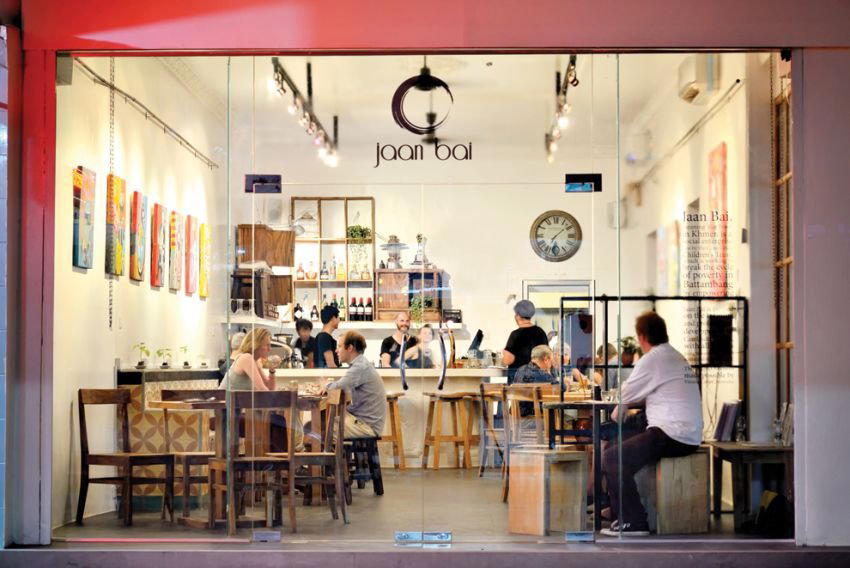
Jaan Bai operates as a social-enterprise restaurant in Battambang, which shapes its atmosphere: purposeful rather than performative, with a tone closer to community dining than fine-dining theatre. The address on Street 2 places it in a part of town known for colonial-era architecture and a relatively relaxed pace. Expect a space that takes its food seriously without demanding formality from its guests.
Is Jaan Bai Restaurant a good option for experiencing Khmer cuisine outside of Phnom Penh and Siem Reap?
Jaan Bai in Battambang sits in one of the strongest ingredient-supply positions in Cambodia, given that Battambang province is the country's leading rice and produce region. The restaurant's social-enterprise structure means it functions as a training kitchen as well as a dining room, a model with documented precedent across Cambodia alongside venues like HAVEN in Siem Reap. For travellers who have eaten Khmer food in the capital or the temple town, Jaan Bai on Street 2 Battambang offers the same culinary tradition grounded in a markedly different, less tourist-dense city.
What do people recommend at Jaan Bai Restaurant?
Jaan Bai draws its menu from Khmer culinary tradition, which means dishes structured around the produce of Battambang province: rice, freshwater protein, aromatic herb pastes, and fermented condiments that define Tonle Sap basin cooking. Specific dish recommendations should be sought from recent visitors or the restaurant directly, as seasonal and market availability shape what's on offer in any given week.
How do I find Jaan Bai Restaurant?
Jaan Bai Restaurant is located at Street 2 Battambang, 02000, Cambodia, Bat Dambang.
How hard is it to get a table at Jaan Bai Restaurant?
Battambang receives a fraction of the tourist traffic that Siem Reap and Phnom Penh handle, which generally keeps demand at Jaan Bai more manageable than at comparable social-enterprise restaurants in those cities. That said, Jaan Bai has a documented reputation among travellers passing through Cambodia's northwest, so arriving without a reservation during peak travel months carries some risk. Contacting the restaurant ahead of your visit is advisable.
What makes Jaan Bai Restaurant worth seeking out?
The case for Jaan Bai rests on two converging facts: Battambang is Cambodia's most productive agricultural province, meaning the ingredient supply for a serious Khmer kitchen is as strong here as anywhere in the country, and Jaan Bai operates on a social-enterprise model that ties the restaurant's function directly to community training and employment. That combination positions it differently from comparable restaurants in Phnom Penh or Siem Reap, where the social-enterprise category is better known but ingredient provenance is more removed. For anyone routing through Battambang, it represents the clearest argument for eating Khmer food outside the two dominant tourist cities.
Comparable Venues
Comparable venues nearby, for context on price, style, and recognition.
| Venue | Cuisine | Price | Notes |
|---|---|---|---|
| Jaan Bai RestaurantThis venue (the venue you are viewing) | Traditional Khmer Fusion | $10–20 | Not listed |
| Bayon Pastry School | French Pastry & Bakery Cafe | $1–10 | Taphul Village |
| Chanrey Tree | Traditional Khmer Cuisine | $10–20 | riverside |
| Wa Gallery | Art Gallery Café | Not listed | Siem Reap |
| Phare, The Cambodian Circus | Traditional Cambodian Street Food & Khmer Cuisine | $10–20 | Ring Road |
| JOMNO | Modern Khmer Cuisine | $20–30 | Sala Kamreuk |
Details
- Cozy
- Elegant
- Modern
- Casual Hangout
- Date Night
- Group Dining
- Open Kitchen
- Historic Building
- Craft Cocktails
- Local Sourcing
- Organic
- Street Scene
- A La Carte
- Small Plates
- Set Menu
- Craft Cocktails
- Vegetarian Friendly
- Vegan Options
Current opening hours
- Monday
- 11 AM–10 PM
- Tuesday
- 11 AM–10 PM
- Wednesday
- 11 AM–10 PM
- Thursday
- 11 AM–10 PM
- Friday
- 11 AM–10 PM
- Saturday
- 11 AM–10 PM
- Sunday
- 11 AM–10 PM
Hours can change for holidays and private events. Hours as of .
Stylish and comfortable with air-conditioned indoor seating and popular curbside platform for sundowners, offering a welcoming atmosphere.