
Tabelog 100 #29
Our verdict
Shinra Kan Meitou honten puts Nagoya yakiniku in a larger-format, family-friendly register rather than the small counter model associated with premium Japanese dining. Its Tabelog 100 Yakiniku EAST 2025 selection, broad drinks offer, private-room structure, and serious capacity make it a useful reference point for how grilled beef culture works outside the city-centre tasting-menu circuit.

Pearl is the En Primeur Club membership app, where members save venues, book tables and use the concierge.
The menu
What to order
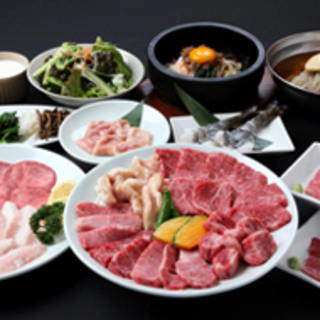
- Wagyu yakiniku platters
- Horumon (offal) selection
Approaching Nagoya, yakiniku shifts character. The drama is not a hushed counter or a chef-led procession; it is the controlled theatre of table grills, group conversation, smoke, and the gradual pacing of grilled meats, offal, rice, soup, and drinks across a longer meal. Shinra Kan Meitou honten belongs to that register: meat-centred, social, and built for diners who want progression without the stiffness of a formal tasting menu.
That matters in Nagoya, where serious eating is not confined to station-side restaurants or compact chef counters. The city’s dining culture often rewards specialization in plain sight: casual specialists, coffee rooms, izakaya, and yakiniku houses that succeed by repetition rather than theatrical reinvention. A Tabelog Hyakumeiten selection in 2025 places this restaurant inside a recognized regional bracket for yakiniku, but the format is more democratic than the accolade might suggest. The meal’s rhythm is decided at the table, not imposed from the pass.
Yakiniku as sequencing, not spectacle
Good yakiniku has a narrative arc, even when no tasting menu is printed. The first order sets the tempo: leaner items, richer items, offal, rice, vegetables, soup, and drinks all change how the grill feels over the course of dinner. In Japan, yakiniku also carries a social code. It is collaborative, technically casual, and quietly revealing. Diners manage heat, timing, sauce, and sharing, so the table becomes part kitchen, part conversation.
The listed categories here, yakiniku, tripe, and izakaya, point to a broader meal than a simple grill showcase. Tripe brings texture and variation; the izakaya frame allows drinking to sit naturally beside the grill rather than after it. That puts the restaurant closer to a full evening format than a quick meat stop. In a city where many premium meals lean toward tightly managed courses, this is a looser kind of progression: appetite-driven, group-friendly, and responsive to the table.
Scale changes the experience. The restaurant sits far from the intimate omakase model that dominates international conversations about Japanese dining. That does not make it less serious; it changes the kind of seriousness on display. The achievement is consistency, a format that can absorb different kinds of diners, and a service style that lets the table pace itself. In that sense, Nagoya yakiniku here reads as infrastructure as much as cuisine.
Where it fits in Nagoya's dining map
Among Nagoya restaurants, Shinra Kan Meitou honten occupies a middle-premium lane, with listed budgets of Dinner: JPY 6,000 - JPY 7,999 and Lunch: JPY 2,000 - JPY 2,999. With, Shisen Sai Hiro, kitchen NOMU, coffee Kajita, and サングリエ each belong to other parts of the city’s dining culture, so the comparison is useful because Nagoya rewards category clarity. A diner choosing yakiniku here is not looking for café minimalism or another dining format; the draw is table grilling as a full social meal.
The Nagoya setting also matters. This is a restaurant to approach with intent rather than as a generic stop between appointments. The practical appeal is the way the yakiniku format can stretch across occasions: a date, a family meal, a table of friends, or a longer dinner built around repeated ordering. The trade-off is a version of yakiniku built for duration rather than speed.
Recognition by Tabelog Hyakumeiten in 2025 provides the clearest public trust signal, especially in a category where local diners often judge by repeat visits and consistency rather than international awards. The Tabelog score of 3.66 also gives a useful Japanese-platform benchmark. In a genre crowded with broad grill claims, category recognition carries more weight than vague language about premium ingredients.
The reader decision: choose it for group-driven grilling
This is a strong fit for diners who want yakiniku to function as the evening’s structure: ordering in waves, calibrating richness, and letting drinks stretch the meal. It is less suited to those seeking a compact counter, a chef biography, or a tightly narrated tasting progression. The chef is not the story here. The story is Nagoya’s ability to support specialized restaurants where families, friends, and couples can use the same grill format for different occasions.
The listed mix of yakiniku, tripe, and izakaya categories broadens the use case, particularly for visitors who want the meal to move beyond a simple single-order stop. The core experience remains the table grill, where the sequencing of grilled items, offal, drinks, and shared sides determines the night. The official phone contact is +81-52-702-2900, which is the practical route for confirming current details before going.
For wider city context, place this meal beside our full Nagoya restaurants guide, then map the rest of the trip through our full Nagoya hotels guide, our full Nagoya bars guide, our full Nagoya wineries guide, and Our full Nagoya experiences guide. Related Nagoya restaurant pages such as With, Shisen Sai Hiro, kitchen NOMU, coffee Kajita, and サングリエ help frame how varied the city’s dining formats can be.
Beyond Nagoya, Japan’s grill and casual-specialist culture has useful echoes in other cities and in other styles of dining. The broader point is not a one-to-one comparison, but a shared appetite for focused, repeatable formats: places where the meal is built less around spectacle than around a clear category, a familiar rhythm, and the satisfaction of returning to the table’s central purpose.
Frequently asked questions
What's the address for Shinra Kan Meitou honten?
Nagoya.
How much does it cost to eat at Shinra Kan Meitou honten?
Pricing at Shinra Kan Meitou honten is listed as Dinner: JPY 6,000 - JPY 7,999; Lunch: JPY 2,000 - JPY 2,999.
What's the best way to book Shinra Kan Meitou honten?
The most direct route is the phone number, +81-52-702-2900, especially if you need to confirm current availability or details before going.
What's Shinra Kan Meitou honten best at?
Its core draw is yakiniku, with listed categories of Yakiniku, Tripe, and Izakaya. Tabelog Hyakumeiten recognized it in 2025, and its listed Tabelog score is 3.66.
What if I have allergies at Shinra Kan Meitou honten?
The practical move is to state the specific ingredient before you go, using the restaurant’s phone number +81-52-702-2900. Its listed menu categories include yakiniku, tripe, and izakaya dishes, so the exact handling will depend on what is ordered.
Would Shinra Kan Meitou honten be comfortable with kids?
The yakiniku format can work well for group dining, but current family-specific details should be confirmed directly with the restaurant at +81-52-702-2900 before visiting.
Fast Comparison
Comparable venues in the metro at similar price points.
| Venue | Cuisine | Price | Awards | Notes |
|---|---|---|---|---|
| Shinra Kan Meitou hontenThis venue (the venue you are viewing) | Wagyu Yakiniku (Japanese BBQ) | $30–50 | Tabelog 100 #29 | Not listed |
| Hikizan Tashizan | Modern Yakitori Counter | $50–100 | Tabelog 100 #40 | Chikusa |
| Kamisono | Japanese Kaiseki Omakase | $50–100 | Tabelog 100 #29 | Higashi |
| Yakiniku & Teuchi Korean Cold Noodles Jiro Yanagibashi ten | A5 Wagyu Yakiniku & Handmade Korean Cold Noodles | $50–100 | Tabelog 100 #26 | Nakamura |
| Shuho | Japanese BBQ (Yakiniku) | $30–50 | Tabelog 100 #79 | Nishi |
| Chisouan Hijiri | Traditional Kyoto-style kaiseki | $50–100 | Tabelog 100 #96 | Higashi |
Recognition history
Dated appearances from independent guides and award organizations, with the underlying list record or original source where available.
Tabelog 100 #29 · No. 29
Tabelog · Tabelog 100 - Yakiniku - EAST - 2025
Continue exploring
More in Nagoya
Restaurants in Nagoya
All restaurants in Nagoya →

Details
- Cozy
- Lively
- Family
- Group Dining
- Casual Hangout
- Celebration
- After Work
- Private Dining
- Standalone
- A La Carte
- Set Menu
- Family Style