
Tabelog 100 #93
Our verdict
A nine-seat counter in Isezakichō places ramen and curry inside Yokohama’s no-frills late-meal culture rather than the reservation-driven dining circuit. Ramen & Curry Senmonten Taigen is listed in Tabelog’s Ramen Kanagawa 100 for 2024 and 2025, with pricing kept in the sub-¥1,000 bracket and a format built around solo, counter-led eating.

Pearl is the En Primeur Club membership app, where members save venues, book tables and use the concierge.
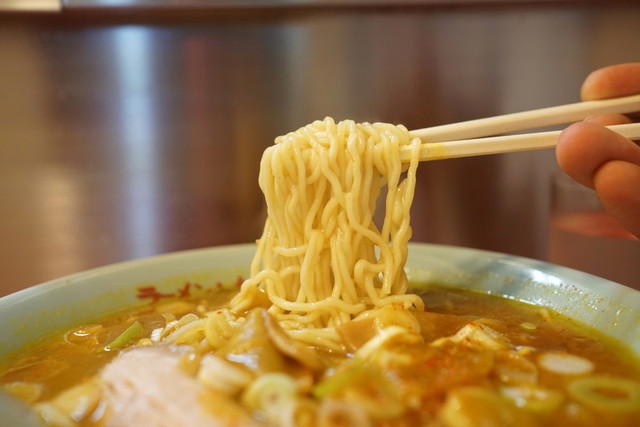
Approaching Yokohama, the city’s restaurant register changes pitch. The scene is less a single polished waterfront dining room than a spread of working restaurants, casual rooms and everyday specialists, the kind of place where a straightforward shop can carry local weight without needing a formal reservations narrative. At Ramen & Curry Senmonten Taigen, the verifiable facts are the point: the identity is split between ramen and curry, the listed budget stays in the low band, and the shop has public recognition through Tabelog Hyakumeiten coverage. That makes the experience closer to Yokohama’s everyday urban food culture than to the ceremony tourists often attach to Japanese dining.
Ramen in Yokohama is not a single style so much as a map of everyday habits. The city’s casual side adds another layer, with practical rooms built for direct meals, simple decisions and efficient schedules. That plain format matters because it narrows the transaction. There is no need to read this through lounge grammar, extended table service or choreographed tasting formats. The diner approaches it as a ramen and curry address: order plainly, focus on the meal and leave space for the next person.
A practical ramen and curry shop in Yokohama
The design language of this kind of meal is not decorative. Everyday ramen culture often compresses the experience into a direct exchange between kitchen and diner. In Japan’s ramen culture, that arrangement is not a compromise; it is one of the familiar architectures of the genre. The format privileges speed, repetition and concentration, and it also explains why ramen shops can build reputations independent of scale. The meal creates its own discipline. Groups become secondary to the rhythm of the room. The experience is plainly calibrated for people who understand that a ramen and curry meal does not need to behave like a long-form restaurant occasion.
The curry side of the name is not incidental in a Yokohama context. Curry-rice has long sat beside ramen and other everyday Japanese restaurant formats, and shops that keep both ramen and curry in frame operate differently from places built around a single fine-dining narrative. The pairing signals utility: a place for a direct meal rather than a category performance. That distinction separates this address from named Yokohama peers such as Ryuho, Arai Ya Honten and Bihotza. It belongs in the same practical urban conversation as ramen shops and curry specialists, where the bill stays low and the room does not need to pretend to be larger than it is.
Recognition gives the shop a sharper editorial position. Selection in Tabelog’s Hyakumeiten coverage for 2025 places it within a public list that rewards sustained attention, not international spectacle. Its Tabelog score of 3.69 is another useful signal in a category where small differences matter. For a ramen and curry shop in this price band, that combination says more than an invented backstory would. The evidence sits in the public reception of a tightly defined format.
Where low-price recognition beats restaurant theatre
Yokohama dining can swing from more formal rooms to casual curry and noodle meals within the same city, but its stronger everyday meals often sit in modest formats. Ramen Jiro Yokohama kannai ten, for instance, belongs to the city’s ramen conversation, while RAMAI Yokohama isezaki mo-ru ten gives curry another point of reference. Ramen & Curry Senmonten Taigen occupies the leaner end of that spectrum: a low-cost ramen and curry address with enough recognition to make it more than a convenience stop. The useful comparison is not with fine dining; it is with the city’s compact specialists, where repetition and local loyalty do the work that tasting menus do elsewhere.
The practical structure reinforces that position. In a casual shop, access is usually governed less by ceremony than by timing, appetite and the rhythm of the room. That is part of the appeal and part of the friction. The reader who wants a controlled evening should look elsewhere; the reader who understands Yokohama through quick meals and everyday restaurant habits will read the format correctly. The price band also keeps the experience in the older everyday-restaurant register. It is a practical detail, but it carries cultural meaning: this is not a frictionless international dining product.
For a broader Yokohama meal plan, the category links around it help map the city’s range. Other compact Japanese formats show how repetition, close cooking and a narrow menu can build authority. Other casual Yokohama dining rooms widen the everyday register, while unnamed local restaurants and small specialists point toward the dining culture that often matters more than polished room design. For the full city edit, use Our full Yokohama restaurants guide, with adjacent planning in Our full Yokohama hotels guide, Our full Yokohama bars guide, Our full Yokohama wineries guide and Our full Yokohama experiences guide.
How to read it against the wider Japan food map
The appeal is not that Yokohama has a monopoly on small specialist rooms. Japan is full of focused formats whose authority comes from clarity: everyday restaurants, noodle shops and curry specialists all show how much can be communicated through scale, service rhythm and menu discipline. Even outside Japan, compact Japanese-leaning formats show how easily a modest room can make its point without importing the language of luxury. Ramen & Curry Senmonten Taigen belongs to that wider grammar, but its relevance here is specifically Yokohama: a low-price ramen and curry address with a clear public signal attached.
What makes this Yokohama address useful for a serious eater is its refusal to inflate the experience. The category is plain, the recognition is specific, and the cost sits in a low band. That combination is increasingly rare in cities where casual food often gets repackaged as lifestyle theatre. Here, the ramen-and-curry frame remains the point. For a practical Yokohama meal, that is often enough.
Frequently asked questions
Where is Ramen & Curry Senmonten Taigen in Yokohama?
Yokohama.
What price level is Ramen & Curry Senmonten Taigen?
Pricing at Ramen & Curry Senmonten Taigen is listed as - JPY 999 - JPY 999.
Is Ramen & Curry Senmonten Taigen open every day?
Specific opening hours are not provided in the verified venue facts.
What makes Ramen & Curry Senmonten Taigen worth seeking out?
The draw is concrete: ramen and curry in Yokohama, pricing listed as - JPY 999 - JPY 999, a Tabelog score of 3.69, and Tabelog Hyakumeiten recognition for 2025.
Comparable Options
Comparable venues by cuisine and category.
| Venue | Cuisine | Price | Awards | Notes |
|---|---|---|---|---|
| Ramen & Curry Senmonten TaigenThis venue (the venue you are viewing) | Ramen & Curry | Not listed | Tabelog 100 #93 | Not listed |
| Ryuho | Traditional Chinese (Yokohama Isezakicho) | $10–20 | Tabelog 100 #63 | JPY 3,000 - JPY 3,999 - JPY 999 |
| Ramen Jiro Yokohama kannai ten | Jiro-style Ramen | $1–10 | Tabelog 100 #24 | JPY 999 - JPY 999 |
| Bihotza | Basque / Spanish dining bar | $30–50 | Tabelog 100 #40 | JPY 5,000 - JPY 5,999 |
| RAMAI Yokohama isezaki mo-ru ten | Hokkaido-style soup curry & Indonesian-inspired curry | $10–20 | Tabelog 100 #87 | JPY 1,000 - JPY 1,999 JPY 1,000 - JPY 1,999 |
| Arai Ya Honten | Traditional Japanese Gyunabe / Sukiyaki | Not listed | Tabelog 100 #31 | JPY 10,000 - JPY 14,999 JPY 3,000 - JPY 3,999 |
Recognition history
Dated appearances from independent guides and award organizations, with the underlying list record or original source where available.
Tabelog 100 #93 · No. 93
Tabelog · Tabelog 100 - Ramen - KANAGAWA - 2025
Continue exploring
More in Yokohama
Restaurants in Yokohama
All restaurants in Yokohama →


Bars in Yokohama
Browse all →


Details
- Classic
- Cozy
- Lively
- Solo
- Family
- Casual Hangout
- Late Night
- Standalone
- Street Scene
- Counter Dining
- A La Carte
Current opening hours
- Monday
- 10:30 AM–1:45 AM
- Tuesday
- Closed
- Wednesday
- 10:30 AM–1:45 AM
- Thursday
- 10:30 AM–1:45 AM
- Friday
- 10:30 AM–1:45 AM
- Saturday
- 10:30 AM–1:45 AM
- Sunday
- 10:30 AM–12:45 AM
Hours can change for holidays and private events. Hours as of .
Compact, no-frills counter dining with a casual late-night atmosphere; reviews and listing details suggest a busy, direct shop rather than a quiet sit-down restaurant.