Shin Jung

Michelin Plate
Our verdict
Established in 1993 and holding a Michelin Plate since 2024, Shin Jung on East Colonial Drive is one of Orlando's most enduring Korean dining rooms. The menu covers the full range of the tradition, banchan made in-house, table grills loaded with beef and pork, and stews that arrive at the table still bubbling.

Pearl is the En Primeur Club membership app, where members save venues, book tables and use the concierge.
The menu
What to order
- Kalbi
- Bulgogi
- Kimchi pancake
- Dolsot bibimbap
East Colonial Drive and the Korean Table
Orlando's East Colonial Drive corridor carries more culinary density per block than most of the city's better-publicised dining districts. Korean restaurants have held a presence there for decades, and Shin Jung, operating since 1993, sits near the longer end of that timeline. A fire forced a rebuild at some point in the restaurant's history, but the address at 1638 E Colonial Dr has remained, and with it a reputation that now carries a Michelin Plate recognition from the 2024 guide. That credential places Shin Jung in a specific tier: not the city's most ambitious or expensive table, but one the guide's inspectors found worth directing readers toward as a reliable address for its cuisine type. For context, compare that positioning to the city's $$$$ counters, such as Sorekara or Kadence, where omakase formats command a very different price and expectation. Shin Jung operates in a more accessible bracket, priced at $$, and its durability at that level across three decades is the real credential.
What the Room Tells You
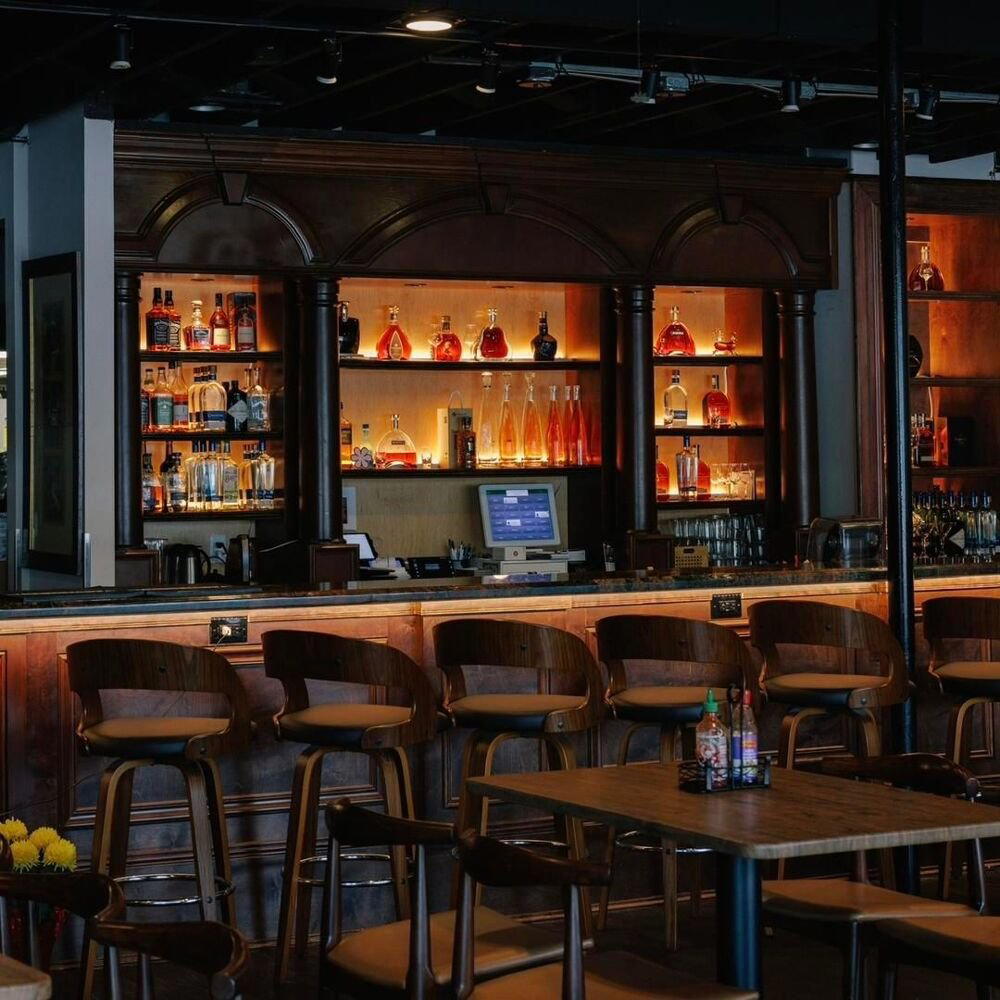
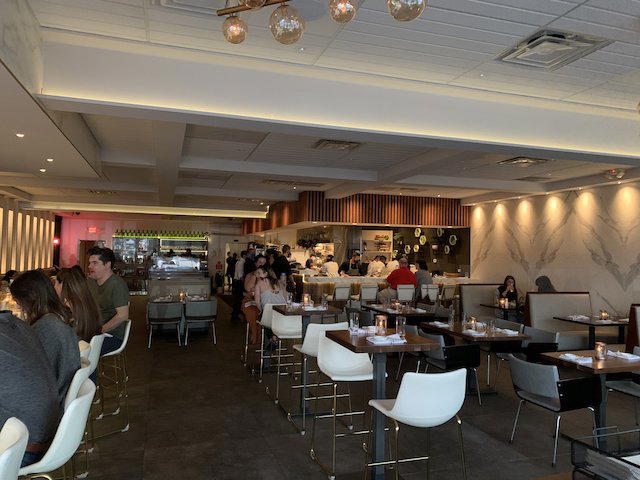
Korean barbecue dining rooms communicate a certain set of intentions through their physical design, and Shin Jung follows the grammar clearly. Dark tile floors, wooden booths, and white walls form the bones of the space. Center-console grills sit at each table, ready for the charcoal-and-smoke portion of a meal. A mounted television broadcasts K-pop videos throughout service, which is less a gimmick than a reflection of how Korean casual dining spaces actually function in Korea, background culture running alongside the food rather than theatrical silence.
The Stew Tradition at the Center
Korean cuisine has always organised much of its emotional register around slow-cooked liquids. Jjigae, the broad category of Korean stews, functions differently from Western soups: the broth is typically shorter, more concentrated, and served still actively boiling in the vessel it was cooked in, so the diner eats across a range of temperatures as the pot settles at the table. This cooking tradition transfers particular meaning to a diaspora context. In a restaurant operating since the early 1990s in central Florida, a kitchen that executes jjigae well is maintaining a technical and cultural practice that takes real commitment, the fermentation timelines for kimchi jjigae, the precision of tofu texture in sundubu-jjigae, the long extraction required for broth depth.
At Shin Jung, the kimchi stew arrives bubbling hard in what the Michelin record describes as a cauldron, packed with soft tofu. That description carries specific information: the tofu texture signals sundubu-style preparation, where silken curds hold their shape just barely, and the bubbling presentation at service confirms the kitchen is sending the dish at the correct internal temperature rather than letting it rest. This is not incidental. Korean stews served at lower-than-boiling temperature have already lost something. The fact that the Michelin inspectors noted the stew's arrival condition suggests it was delivered correctly, a logistical discipline that matters more at a mid-volume casual restaurant than at a tightly controlled tasting-menu counter.
For solo diners, the dolsot bibimbap occupies a related tradition. The stone bowl arrives at high heat, with the rice developing a crust against the vessel's wall throughout the meal. Like the stews, it is a format that rewards patience and engagement rather than passive consumption. These are dishes designed around the idea that the table itself is part of the cooking process.
Banchan, Pancakes, and the Logic of Sharing
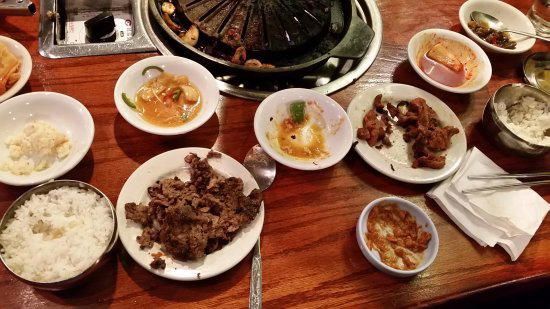
The Korean meal structure differs from most Western restaurant formats in that the table arrives provisioned before any individual order is placed. Banchan, the small shared dishes that precede and accompany the main meal, set the register for everything that follows. At Shin Jung, the banchan are made in-house, which is not universal across Korean restaurants at this price tier. The distinction matters because banchan quality is where a kitchen either demonstrates its commitment to the full tradition or reveals that it is running shortcuts. Fermented and pickled preparations require time and attention; buying them wholesale is a practical choice that many operators make, but it flattens the experience.
The kimchi pancake, or kimchijeon, arrives substantial and crispy. In the Korean pancake tradition, texture is the primary measure of execution: too thick and the interior remains gummy; too thin and the structural integrity collapses under the weight of the filling. A properly crispy kimchijeon with enough mass to share meaningfully is a kitchen demonstrating control of fat temperature, batter consistency, and timing simultaneously.
Barbecue side of the menu, covering beef and pork preparations cooked at the table grill, positions Shin Jung within the Korean barbecue tradition that has expanded significantly in American cities over the past decade. What sets longer-established restaurants apart from newer operations in that expansion is frequently the quality and range of the banchan and soup accompaniments, rather than the grilled proteins themselves, which are easier to replicate across formats. Shin Jung's emphasis on the full table, stews, banchan, pancakes alongside the grill, reflects a kitchen that is running the complete tradition rather than extracting only its most photogenic element.
Seoul Comparisons and Orlando's Position
Korean fine dining has moved considerably in recent years, with restaurants like Mingles and Kwonsooksoo in Seoul placing Korean cuisine firmly inside the global conversation about technique-driven tasting menus. That development has not displaced the importance of the casual Korean table; if anything, the international attention on Korean food culture has increased scrutiny of how the tradition is executed at every level. A restaurant like Shin Jung is not competing with Seoul's starred houses any more than a neighbourhood trattoria in Rome competes with Le Bernardin in New York City or Alinea in Chicago. The comparison set is different, and within its own set, mid-price Korean dining in a mid-sized American city, the Michelin Plate and three decades of operation represent a meaningful position.
Orlando's dining scene has diversified considerably, with Vietnamese addresses like Camille and Japanese counters like Natsu raising expectations across Asian cuisines. That rising baseline makes Shin Jung's continued recognition more, not less, significant. A restaurant that earned its reputation before the city's dining culture matured, and retains that reputation as standards rise around it, has done something that newer openings have not yet been required to do: hold up over time.
Planning a Visit
Shin Jung sits on East Colonial Drive in Orlando, a corridor that is navigable by car and worth planning as a dedicated destination rather than a drive-by stop. The $$ price point makes it among the more accessible Michelin-recognised addresses in the city. Sharing dishes across a group is the format that unlocks the full breadth of the menu, stews, barbecue, pancakes, and banchan are all designed to function together as a composed spread rather than as individual plates. Solo diners are not disadvantaged, given the self-contained options in the dolsot bibimbap and kimchi stew, but the communal format is where the kitchen's full range becomes visible.
For a broader read on Orlando's dining scene, the full Orlando restaurants guide maps the city's options across price tiers and cuisines. The Orlando hotels guide, bars guide, wineries guide, and experiences guide cover the wider picture for those spending more time in the city. Among steakhouse options at the higher end, Capa operates in a different price and format tier but rounds out the city's range for comparison.
Frequently asked questions
Where exactly is Shin Jung?
Shin Jung is located at 1638 E Colonial Dr, Orlando, FL 32803, Orlando.
What should I budget for a meal at Shin Jung?
Pricing at Shin Jung is listed as $$.
Has Shin Jung won any awards?
Shin Jung has received recognition including: Established in 1993 but redone following a fire, this local fixture is beloved for its highly enjoyable Korean dining. The interior is adorned with dark tile floors, wooden booths and white walls. Tables feature a center console for grillin….
What's the must-try dish at Shin Jung?
The kimchi stew arrives at the table still bubbling in its cauldron, loaded with soft tofu, and holds up as the kitchen's most complete statement. The kimchi pancake is also worth ordering: substantial in size and properly crispy rather than the dense, doughy versions common elsewhere. Solo diners tend to anchor on the dolsot bibimbap, which works as a self-contained meal. Shin Jung earned a Michelin Plate in 2024, and the banchan, all made in-house, are part of what distinguishes the experience from less careful Korean kitchens in Orlando.
What should I expect cuisine-wise at Shin Jung?
Cuisine and Awards Snapshot
| Venue | Cuisine | Price | Awards | Notes |
|---|---|---|---|---|
| Shin JungThis venue (the venue you are viewing) | Traditional Korean BBQ | $20–30 | Michelin Plate | Not listed |
| Sorekara | Modern Japanese Omakase | $300–500 | 2 Michelin Stars · La Liste Top Restaurants | Japanese |
| Camille | Modern French-Vietnamese Fine Dining | $150–200 | 1 Michelin Star | Vietnamese |
| Papa Llama | Modern Peruvian | $150–200 | Michelin Plate | Peruvian |
| Capa | Spanish-Influenced Steakhouse | $100–150 | Michelin Plate · Wine Spectator Best of Award of Excellence | Steakhouse |
| Victoria & Albert's | Contemporary American Fine Dining | $200–300 | 1 Michelin Star · La Liste Top Restaurants | New American, Contemporary |
Recognition history
Dated appearances from independent guides and award organizations, with the underlying list record or original source where available.
Michelin Plate
Michelin
Full recognition history (3 entries)
Michelin Plate
Michelin
Michelin Plate
Michelin