Shawarmaji

Esquire Best New Restaurants #10
Our verdict
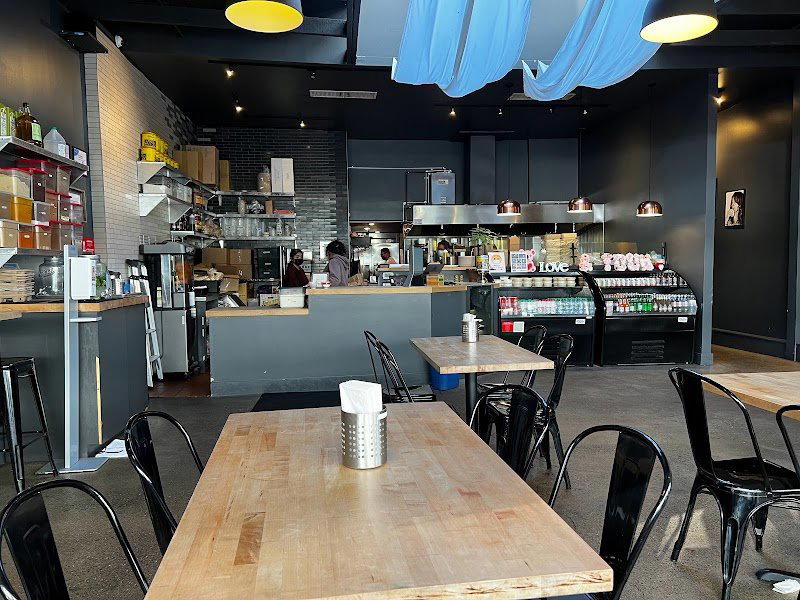
Shawarmaji brought Oakland its most-discussed shawarma counter of the pandemic recovery era, landing on Esquire's Best New Restaurants list at number ten in 2021. The Franklin Street address sits inside a food hall format, making it one of the Bay Area's clearest examples of refined street food operating without the overhead of a full-service room.

Pearl is the En Primeur Club membership app, where members save venues, book tables and use the concierge.
The menu
What to order
- Chicken shawarma wrap
- Beef shawarma fries
What the Line Tells You Before You Order
Walk into a Bay Area food hall on a weekday afternoon and the signals are immediate: which counter has a queue, which has a handwritten menu board, which has the kind of repeat customers who don't look at the menu at all. At the Franklin Street address in Oakland, Shawarmaji earns its queue honestly. You don't accumulate that across hundreds of transactions by accident.
The broader context matters here. Middle Eastern street food in the Bay Area occupies a complicated position: the format is familiar enough to feel approachable, but the execution gap between operators is wide. A shawarma wrap is one of those dishes where sourcing, spice balance, and rotisserie management either hold up under scrutiny or they don't. Shawarmaji landing at number ten on Esquire's Leading New Restaurants list in 2021 put it in a national frame that most street-food counters never reach, and it did so without a fine-dining room, a tasting menu, or a celebrity chef credential attached.
Oakland, Not San Francisco: Why the Address Matters
The Franklin Street location in Oakland is a deliberate placement in a city that has spent a decade building a food identity distinct from its neighbor across the bay. Oakland's dining character runs toward directness: less architectural spectacle, more focus on what's actually in the bowl or on the bread. In that context, a shawarma counter that takes its product seriously without dressing it in fine-dining signifiers fits the local register well.
For visitors crossing from San Francisco, the East Bay food hall circuit offers a different reading of Bay Area dining culture than the Michelin-heavy corridors of SoMa or Hayes Valley. The contrast is instructive. San Francisco's top tier, represented by counters like Benu, Atelier Crenn, Lazy Bear, Quince, and Saison, operates at the $$$$ price tier with advance booking requirements, tasting-menu formats, and Michelin recognition. Shawarmaji operates in an entirely different register, where the transaction is fast, the price point is accessible, and the editorial recognition came from a different kind of authority: a general-audience national magazine naming it one of the ten most interesting new restaurants in the country.
The Booking Experience (Or Lack of One)
There is no reservation system to manage, no tasting menu timeline to plan around, no dress code to think about. The planning burden falls almost entirely on logistics: getting to the Franklin Street address, understanding the food hall context, and arriving at a time that doesn't put you at the back of a long queue.
That accessibility is itself an editorial point. The restaurant categories that dominate Bay Area coverage, and that we cover extensively in our full San Francisco restaurants guide, tend to require significant advance planning. The French Laundry in Napa operates on a booking window that rewards those who plan weeks or months ahead. Single Thread Farm in Healdsburg sits in a similar tier of advance commitment. At the national level, restaurants like Alinea in Chicago, Le Bernardin in New York City, and Atomix in New York City represent formats where the booking process is itself part of the experience. Shawarmaji inverts that entirely. The barrier to entry is physical proximity, not calendar management.
This matters for trip planning. If you're building a Bay Area itinerary around the city's most-discussed restaurants and need to balance structured, advance-booked evenings with flexible daytime options, a counter like this functions as a pressure valve: high editorial credibility, zero friction on the day.
What Esquire's Recognition Actually Measures
The Esquire Leading New Restaurants list operates differently from the Michelin guide or the 50 Best ranking systems. It is explicitly national in scope and generalist in audience, which means it is selecting for restaurants that communicate something clear and compelling about American food culture in a given year, not only for technical precision at the top of a price tier. Landing at number ten in 2021 placed Shawarmaji alongside openings from across the country that year, in a cohort evaluated on cultural relevance, quality of execution, and the kind of dining experience that reads as meaningful to a broad readership.
For Middle Eastern street food, that recognition carries a specific weight. It signals that the execution was considered not just adequate for the format but genuinely significant within the context of American restaurant culture at that moment. The pandemic recovery period reshaped what new restaurant openings looked like nationally, and operators who opened into that environment with a clear, committed format earned their recognition differently than pre-2020 openings. Shawarmaji is a product of that era.
Placing It in the Bay Area Street Food Conversation
The Bay Area's street food and casual-format dining scene has produced nationally recognized operators across multiple cuisines over the past decade. The region's density of food halls, markets, and counter-service formats reflects both real estate economics and a genuine appetite for high-quality casual eating. Within that landscape, Middle Eastern food occupies a growing share of editorial attention nationally, with shawarma specifically moving from background category to foreground subject in food media. Shawarmaji arrived at a moment when that attention was building and positioned itself as a serious entry in the conversation.
Visitors who follow the full Bay Area dining circuit, covered across our San Francisco hotels guide, bars guide, wineries guide, and experiences guide, will find that a meal at Shawarmaji sits in useful contrast to the tasting-menu circuit. It is a different kind of editorial argument: that a single, well-executed dish format, taken seriously and delivered consistently, belongs in the same conversation as the region's more structurally complex restaurants.
For comparison, operators at the national level who have built recognition around focused, non-tasting formats include Emeril's in New Orleans and Providence in Los Angeles, both of which built durable reputations around disciplined format commitment rather than annual menu reinvention. Internationally, 8 1/2 Otto e Mezzo Bombana in Hong Kong demonstrates how a focused format executed at high consistency generates the kind of trust that drives repeat visits. The scale and price point differ entirely from a street-food counter, but the underlying logic, do one thing well and do it reliably, is the same.
Planning Your Visit
| Factor | Shawarmaji | SF Fine Dining (e.g. Benu, Lazy Bear) |
|---|---|---|
| Booking required | No (walk-in) | Yes (weeks to months ahead) |
| Price tier | Casual / accessible | $$$$ |
| Location | Oakland (East Bay) | San Francisco proper |
| National recognition | Esquire Leading New Restaurants #10 (2021) | Michelin stars, 50 Best listings |
| Format | Counter service / food hall | Full-service, tasting menu |
| Varies by venue |
Address: 2100 Franklin St Suite 2190, Oakland, CA 94612.
What Should I Eat at Shawarmaji?
Shawarmaji is built around shawarma as its central format, which is the appropriate place to focus. Middle Eastern street food at this level of national attention is typically anchored by the quality of the meat preparation, the spice profile, and the accompanying sauces and wrapping technique. What the award history confirms is that the format itself is the draw: this is a destination for shawarma specifically, not a generalist Middle Eastern menu where the headline dish is incidental.
Frequently asked questions
What's the cuisine at Shawarmaji?
What's the address for Shawarmaji?
Shawarmaji is located at 2100 Franklin St Suite 2190, Oakland, CA 94612, San Francisco.
Is Shawarmaji award-winning?
Shawarmaji has received recognition including: Esquire Best New Restaurants #10 (2021).
What should I eat at Shawarmaji?
Shawarma is the core of what Shawarmaji does, and the Esquire Best New Restaurants recognition in 2021 was built around that format. Start there rather than working around the menu's edges.
At a Glance
Comparable venues nearby, for context on price, style, and recognition.
| Venue | Cuisine | Price | Awards | Notes |
|---|---|---|---|---|
| ShawarmajiThis venue (the venue you are viewing) | Jordanian Shawarma | $20–30 | Esquire Best New Restaurants #10 | Not listed |
| Arabian Nights | Authentic Lebanese | $30–50 | Not listed | Mission, Authentic Lebanese |
| SaSa Japanese Restaurant | Modern Japanese Sushi | Not listed | Not listed | Japantown, Modern Japanese Sushi |
| Se7enbuds | Afghan & Persian | $20–30 | Not listed | Nob Hill, Afghan & Persian |
| B44 | Not listed | Not listed | Not listed | Financial District/South Beach, Spanish Catalan Tapas & Bistro |
| Equal Parts | Modern California Coastal | $50–100 | Star Wine List | North Beach, Modern California Coastal |
Recognition history
Dated appearances from independent guides and award organizations, with the underlying list record or original source where available.
Esquire Best New Restaurants #10
Esquire