Our verdict
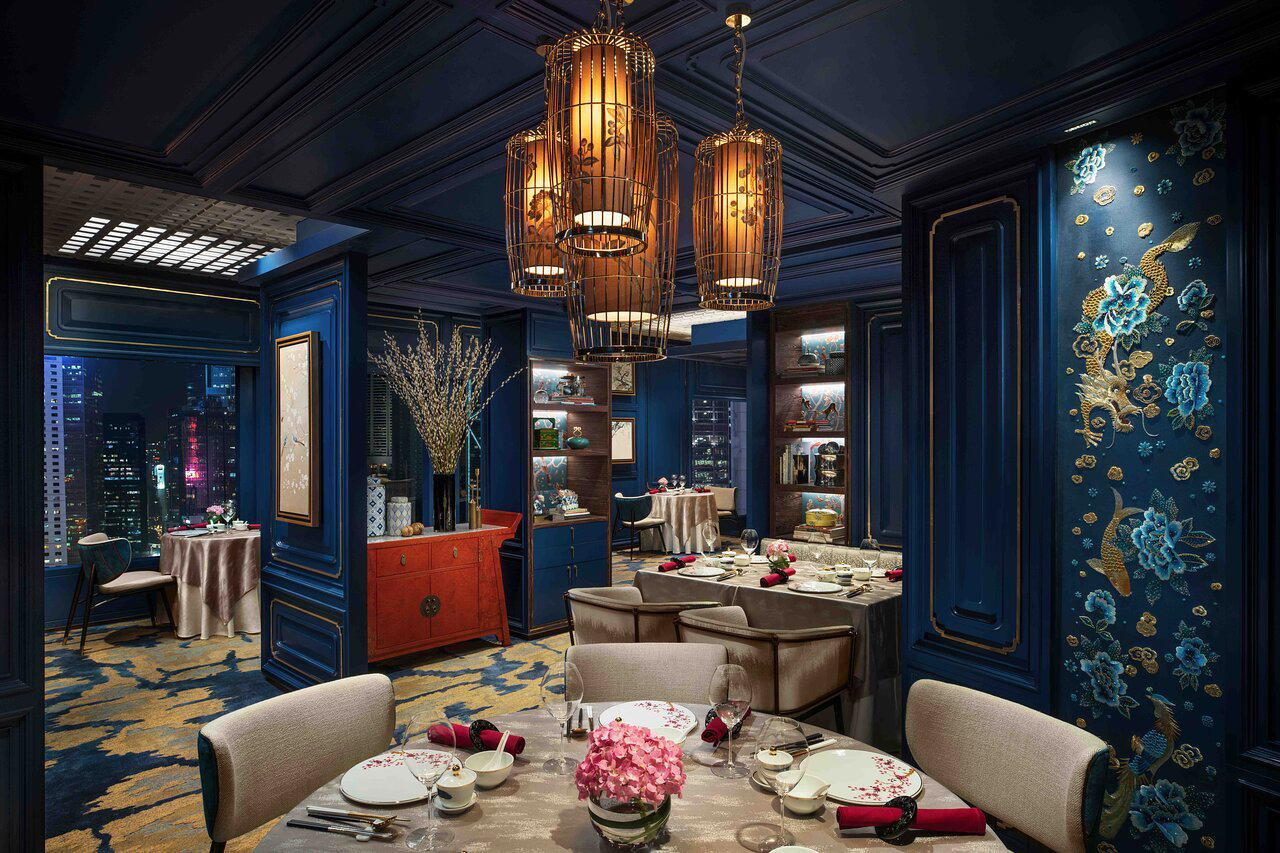
Shanghai Tang occupies a distinct position in Hong Kong's retail and cultural scene, where East-meets-West aesthetics have long defined its identity. The brand has evolved from its flagship Pedder Building origins into a reference point for Shanghainese-inflected design and a particular vision of modern Chinese luxury that sits apart from international fashion houses operating in the same Central addresses.

Pearl is the En Primeur Club membership app, where members save venues, book tables and use the concierge.
The menu
What to order
- Drunken shrimp with yellow wine
- Hongshao rou
- Slow-braised wagyu beef
- Lobster mapo tofu
- Caviar-topped rolls
Central's Shifting Register of Chinese Luxury
Hong Kong's Central district has always run two parallel conversations about what Chinese luxury means. One is the international version, expressed through the global fashion houses lining Landmark and ifc mall. The other is the local articulation, harder to define but unmistakable when you encounter it: an aesthetic that draws from Shanghainese glamour of the 1930s, filters it through a British colonial sensibility, and arrives somewhere that neither Shanghai nor London could have produced alone. Shanghai Tang 上海灘 has spent three decades occupying that second conversation, and the trajectory of the brand tracks almost exactly the broader evolution of how Hong Kong thinks about its own cultural identity.
The brand's original Pedder Street flagship, opened in 1994, was a specific kind of statement. At a moment when luxury retail in Hong Kong meant Cartier and Louis Vuitton, Shanghai Tang proposed that Chinese aesthetics could sit in the same tier, at the same price point, without apology. The mandarin collar, the qipao silhouette, the red-and-green colour palette drawn from Republican-era Shanghai, these were not nostalgic tourism gestures but deliberate repositioning of a visual language that had been treated as secondary. For that reason alone, the brand holds a different kind of relevance than most of the addresses around it in Central and Western district.
The Reinvention Cycle and What It Reveals
Few Hong Kong brands have gone through as many distinct phases as Shanghai Tang, and the pattern of those changes is worth understanding because it mirrors the city's own recalibrations. The first chapter was the flagship era: a destination retail experience built around a coherent design world, where the store itself was as much the product as the garments inside it. The Pedder Building location, with its mahjong tiles embedded in the floor and the double-height café, was one of the first Hong Kong retail environments to be explicitly designed as a cultural experience rather than a transactional space.
The second chapter involved international expansion, with locations appearing in London, Paris, New York, and across Southeast Asia. This is where the brand encountered the tension that nearly every regional luxury concept faces when it crosses borders: how to remain culturally specific while becoming commercially legible to audiences who lack the reference points. The results were mixed, and by the 2010s, the global footprint had contracted significantly.
The current chapter is defined by a return to roots and a narrower, more deliberate proposition. Chinese luxury more broadly has shifted since the mid-2010s, partly because mainland Chinese consumers have become far more sophisticated buyers with their own opinions about authenticity, and partly because the global appetite for what the industry calls «guochao», a Chinese cultural pride movement expressed through design and consumption, has created a new kind of audience. Shanghai Tang sits at an interesting angle to this shift: old enough to predate the trend, distinct enough in its Hong Kong-British inflection to avoid being absorbed into it.
Where It Sits Relative to Central's Food and Culture Addresses
Central and Western district runs a wide spectrum of cultural registers, from the street-level density of the Mid-Levels escalator corridor to the refined quietude of addresses like Amber at The Landmark Mandarin Oriental, and the composed classicism of Caprice at the Four Seasons. The fine dining tier in this neighbourhood, which includes 8 1/2 Otto e Mezzo Bombana and Ta Vie, operates on a logic of depth and precision. AMMO in Central And Western takes a different approach, pitching at a gallery-adjacent creative crowd. Shanghai Tang's retail presence has historically coexisted with this mix by offering something none of these addresses provide: a legible entry point into a Hong Kong-inflected vision of Chinese design culture that is neither a museum piece nor a fashion trend.
Further across the city, the contrasts become starker. The Cantonese tradition that defines Forum in Causeway Bay, the neighbourhood noodle culture around Block 18 Doggie's Noodle in Yau Tsim Mong, and the regional specificity of Chin Sik in Tsuen Wan all point to a Hong Kong that operates simultaneously at multiple cultural altitudes. Shanghai Tang has always occupied one of the upper registers of that stack, though what «upper register» means has been renegotiated several times over the past decade.
The contrast with places like Le Salon de Thé de Joël Robuchon at ifc mall is instructive. Both operate in premium Central retail environments and both carry the legacy of a founding vision that preceded their current form. But where Robuchon's brand equity is rooted in French culinary authority, Shanghai Tang's is rooted in a specific postcolonial cultural moment, which makes it more fragile and, in some ways, more interesting.
Planning a Visit
For visitors to Hong Kong who are building an itinerary around Central, Shanghai Tang is most coherently visited alongside the neighbourhood's other design-conscious addresses rather than treated as an isolated stop. The brand's presence in Central puts it within the same corridor as the gallery-adjacent restaurants and the high-end hotel dining rooms that define the district's premium character. Those combining a visit with a meal in the area would find logical companions in Ta Vie for Japanese-French precision or Amber for French contemporary cooking at Michelin level. For a broader map of what Hong Kong's dining and culture circuit looks like, our full Hong Kong restaurants guide covers the city's main districts in detail.
Visitors interested in the broader arc of Hong Kong's cultural heritage addresses, including the now-closed Former Jumbo Floating Restaurant in Aberdeen, which occupied a similarly specific position in the city's cultural mythology, will find that Shanghai Tang raises comparable questions about what survives reinvention and what gets lost in the process. The brand has proved more durable than many expected, which is itself a form of editorial argument. For those reaching further across the city, addresses like Enchanted Garden Restaurant on the Islands, Hoi Tin Garden in Tuen Mun, and Lei Garden in Sha Tin each represent distinct chapters of Cantonese food culture that sit well outside the Central premium circuit and reward the extra transit time.
Frequently asked questions
Is Shanghai Tang 上海灘 a good representation of Hong Kong's Chinese luxury design scene?
Shanghai Tang is the closest thing Hong Kong has produced to a homegrown Chinese luxury house with international distribution, making it a useful reference point for understanding how the city positions Chinese aesthetics within a global luxury framework. Founded in Hong Kong and long associated with Central, the brand sits at the intersection of local identity and export ambition in a way that few comparable labels from the region have managed. For visitors building an itinerary around Central's cultural and design addresses, it functions as both a retail stop and a case study in how Hong Kong has historically negotiated that conversation.
What do people recommend at Shanghai Tang 上海灘?
Shanghai Tang's reputation is built on its translation of traditional Chinese visual codes into contemporary ready-to-wear and lifestyle goods. Visitors to the Central location tend to focus on the brand's signature colour-saturated pieces and accessories that reference Shanghainese tailoring traditions. As a Hong Kong-founded label, the flagship gives the collection its fullest presentation, making it the logical starting point for understanding the brand's range.
Can I walk in to Shanghai Tang 上海灘?
Shanghai Tang operates as a retail destination rather than a reservation-based experience, so walk-ins are the standard mode of visit. The store sits within a district that rewards a longer half-day circuit, so timing your visit alongside other Central addresses makes practical sense.
What's the standout thing about Shanghai Tang 上海灘?
The clearest distinction is positional: Shanghai Tang is one of the few luxury lifestyle brands with genuine Hong Kong founding credentials, operating within a Central district that otherwise skews heavily toward European houses. That origin gives the brand a contextual specificity that imported competitors cannot replicate on home ground. In Hong Kong, that provenance carries weight that travels poorly to its overseas outposts.
A Lean Comparison
A compact comparison to help you place this venue among nearby peers.
| Venue | Cuisine | Price | Awards | Notes |
|---|---|---|---|---|
| Shanghai Tang 上海灘This venue (the venue you are viewing) | Modern Shanghainese | $50–100 | Not listed | Not listed |
| Ta Vie | Modern French-Japanese Fine Dining | $300–500 | 3 Michelin Stars · World's 50 Best #68 | Japanese - French, Innovative |
| 8 1/2 Otto e Mezzo Bombana (Hong Kong) | 3 Michelin-Star Italian Fine Dining | $200–300 | 3 Michelin Stars · World's 50 Best #94 | Italian |
| Estro | Modern Neapolitan Italian | $150–200 | 1 Michelin Star · World's 50 Best #32 | Wine Bar, Italian |
| Feuille | Modern Vegetable-Forward French | $200–300 | 1 Michelin Star · World's 50 Best #93 | French Contemporary |
| Mono | Modern Latin American Fine Dining | $150–200 | 1 Michelin Star · World's 50 Best #46 | Latin American |