On Hafez Street opposite Jahan Nama Garden, Della Steak House positions itself inside a small but growing tier of Iranian restaurants applying Western steakhouse conventions to locally sourced red meat. In a city better known for its ancient poetry and rose-water traditions than its beef culture, Della represents a pointed shift in Shiraz dining — one worth tracking for anyone moving through Fars Province.
 Discover on Pearl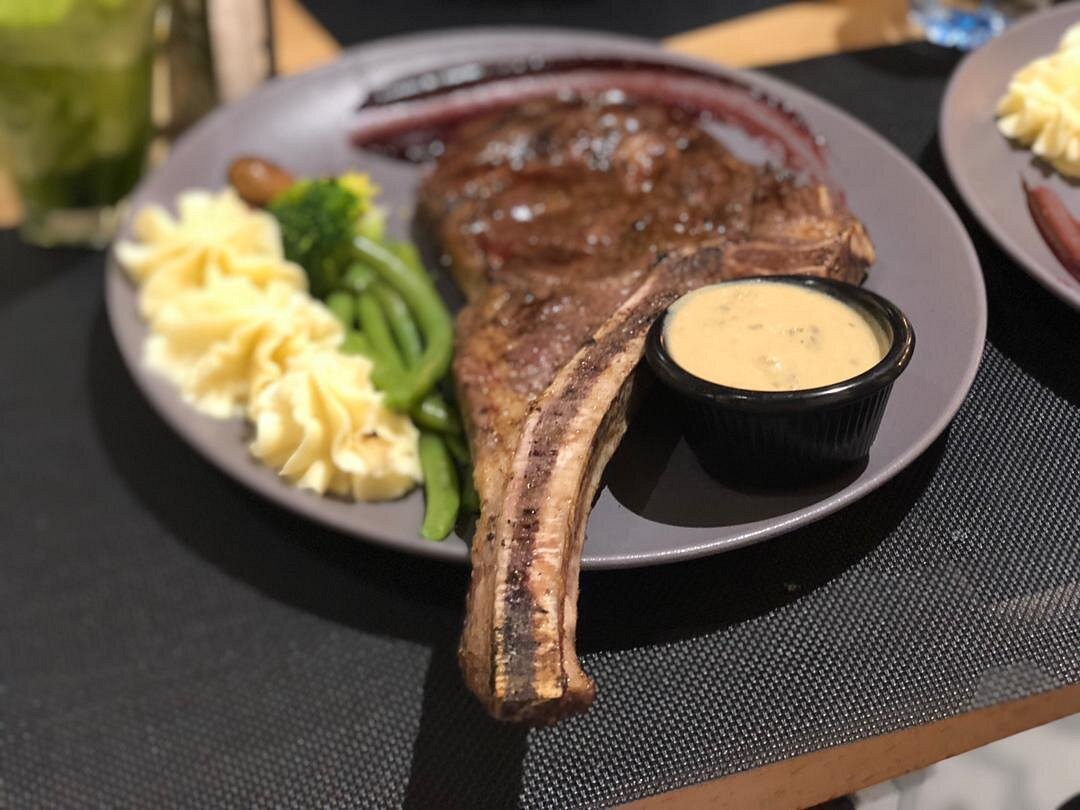
Hafez Street and the Case for Beef in a City of Poets
Shiraz has never been a meat city in the way Tehran or Tabriz might claim that mantle. Its culinary identity leans toward lamb stews slow-cooked with dried limes, rice dishes fragrant with saffron, and the kind of hospitality-driven spreads where protein is almost beside the point. That context matters when situating Della Steak House on Hafez Street, directly opposite Jahan Nama Garden. The address itself carries cultural weight: Hafez Street runs through one of Shiraz's most visited corridors, where heritage and foot traffic intersect. A steakhouse here is not incidental placement. It signals an intent to reach a specific kind of diner — one who is already in the city for its classical depth and is now looking for something that reads differently on the menu.
Across Iran, a pattern has emerged over the past decade in which urban restaurants outside Tehran have begun importing format conventions from Western dining: counter-cut steaks, controlled cooking temperatures, and presentations built around a single, central protein rather than a shared table of dishes. Cities like Isfahan and Yazd have seen versions of this. For broader context on how Iranian restaurants across the country are approaching this format shift, the Our full شیراز restaurants guide maps where Shiraz sits within that national pattern.
The shortlist, unlocked.
Hard-to-book tables, cellar releases, and concierge-planned trips.
Get Exclusive Access →The Ingredient Question: Where Does the Beef Come From?
For any steakhouse operating in Iran, sourcing is the foundational editorial question — and it is one that carries more complexity here than in markets with long-established beef-aging infrastructure. Iran's domestic cattle industry produces beef of variable quality depending on province, breed, and feeding regime, and the gap between commodity-grade and premium cuts is wide. A restaurant identifying itself as a steakhouse makes an implicit promise about where it sits on that spectrum.
The steakhouses that have earned sustained reputation in Iran's larger cities tend to make deliberate choices: sourcing from specific farms or regions with higher-quality Bos taurus stock rather than commodity suppliers, and in some cases importing specific cuts. The editorial interest in Della lies in how it answers that sourcing question for Shiraz, a city whose agricultural surroundings in Fars Province are rich but not historically associated with premium beef production. Fars Province is known for sheep, not cattle, which means a committed steakhouse in Shiraz is almost by definition operating across a supply chain that requires deliberate curation rather than simply drawing on what is local and abundant.
This is the ingredient dynamic that separates steakhouses from other protein-forward restaurants in Iran. A kebab house in Shiraz can draw on deeply local lamb traditions with minimal sourcing complexity. A steakhouse cannot. It must either accept commodity beef and compete on preparation, or invest in sourcing and compete on product quality. The distinction shapes the entire dining proposition. Venues like Soofi Restaurant Complex (مجموعه رستوران های صوفی) in Shiraz offer a useful contrast: their format leans into the broader Iranian dining tradition rather than making a single-protein steakhouse argument, which means they face a different set of sourcing and expectation questions entirely.
The Steakhouse Format in an Iranian City Context
What the steakhouse format does, when it works in a city like Shiraz, is create a particular kind of occasion dining that sits outside both traditional Persian hospitality formats and casual fast-food culture. It occupies a middle register: deliberate, sit-down, protein-centered, and priced at a point that signals the meal is an event rather than sustenance. That middle register is exactly where Iranian urban dining has been expanding, particularly among younger professional diners and travelers staying in the city for more than a night.
For travelers moving through Fars Province, the dining geography extends beyond Shiraz itself. Laneh Tavoos Restaurant (رستوران لانه طاووس) in Marv Dasht and Pasargad Restaurant | رستوران پاسارگاد in مرو دشت serve the Persepolis corridor, which many visitors combine with a Shiraz base. For those covering more of Iran's restaurant scene, Baastan Restaurant | رستوران سنتی باستان in Isfahan and Caesar Italian Restaurant (رستوران ایتالیایی سزار) in یزد offer useful reference points for how historic Iranian cities are handling the tension between traditional formats and imported dining conventions.
Seafood-focused venues across Iran present a different sourcing story. Khorsand Seafood in Bandar Abbas, Mr Fish (آقای ماهی) in بندرعباس, and Hot stone fish at Good fish restaurant in تبریز each approach ingredient sourcing from coastal or inland freshwater contexts where provenance is more immediately legible than it is for beef. The steakhouse category carries a different burden of proof.
Practical Notes for the Visit
Della Steak House sits on Hafez Street opposite Jahan Nama Garden, which is itself a navigable landmark in central Shiraz. The garden is well-signed and the street runs through an area with consistent foot traffic, making the location accessible without requiring detailed navigation. For travelers staying in the historic core of Shiraz, the walk or short taxi ride from most guesthouses and hotels is direct. Contact details and current hours are not confirmed in publicly available records at time of writing, so confirming operating hours before arrival is advisable, particularly for visitors on tight itineraries. Visitors combining Shiraz with regional sites should note that Della's address places it within easy reach of the city center, though coordinating visits to both Jahan Nama Garden and the restaurant in a single trip is a practical option worth considering.
For broader comparisons within Iran's restaurant circuit, Eghbali Restaurant (رستوران اقبالی) in قزوین, Bozorgi Restaurant in قم, and Koohpayeh Restaurant (رستوران کوهپایه) in تهران each represent how different Iranian cities are building out their mid-to-premium dining registers. Anar Caravanserai | کاروانسرای انار in Anar, Polo Restaurant (رستوران پلو) in زنجان, Croll (سی رول) in قشم, and Jijian Classic Kabab in Qeshm round out the picture of how Iran's non-capital cities are approaching dining ambition. For an entirely different point of international reference on what a protein-focused, technique-driven restaurant can achieve at the leading of its category, Le Bernardin in New York City and Atomix in New York City illustrate the upper ceiling of what focused-format restaurants accomplish when sourcing and execution are treated as inseparable.
Frequently Asked Questions
- Is Della Steak House okay for children?
- In a city like Shiraz where family dining is a cultural norm, a steakhouse at this address is likely to be family-tolerant in practice, though the format skews toward adult occasion dining rather than designed child-friendliness.
- Is Della Steak House better for a quiet night or a lively one?
- The steakhouse format, as it has developed in Iranian cities, typically occupies a calm, deliberate register rather than a high-energy social scene. Without confirmed awards or a profile that signals a bar-forward or late-night orientation, Della reads as an occasion-dinner venue rather than a night-out destination , a reasonable fit for a focused meal in Shiraz's more contemplative dining culture.
- What dish is Della Steak House famous for?
- No confirmed signature dish appears in available records. The name and format indicate a beef-centered menu, with steaks as the expected focal point, but specific preparations are not documented at time of writing. The cuisine type and any chef credentials that might anchor a dish reputation are not confirmed in current data.
- How hard is it to get a table at Della Steak House?
- If the venue's price positioning sits in the mid-to-upper range for Shiraz, and if Hafez Street foot traffic is a reliable driver, weekend evenings likely see stronger demand than weekday lunches. Without confirmed booking data or awards that would signal a must-reserve status, walk-in access is plausible for most visit windows, though calling ahead is always sensible given that hours are not publicly confirmed.
- What do critics highlight about Della Steak House?
- No published critical assessments or awards are on record for Della at time of writing. The editorial interest lies in what the format represents for Shiraz's dining development rather than in documented critical consensus. The cuisine category and chef details are not confirmed in available data.
- What makes Della Steak House a relevant choice specifically for visitors to Jahan Nama Garden?
- The address directly opposite Jahan Nama Garden creates a natural pairing for visitors spending time in that part of Hafez Street. The garden, one of Shiraz's historic walled garden complexes, draws visitors who are already oriented toward the cultural core of the city. A sit-down steakhouse at that location fills a gap in the immediate area for a deliberate, protein-centered meal rather than quick street food, making the proximity a practical consideration rather than merely a geographic coincidence.
Side-by-Side Snapshot
A fast peer set for context, pulled from similar venues in our database.
Need a table?
Our members enjoy priority alerts and concierge-led booking support for the world's most difficult tables.
Get Exclusive AccessThe shortlist, unlocked.
Hard-to-book tables, cellar releases, and concierge-planned trips.
Get Exclusive Access →