Kang Tong Degi
Kang Tong Degi occupies a stretch of Telegraph Avenue where Oakland's Temescal district transitions from residential to commercial, drawing a neighborhood crowd that returns with the consistency of regulars rather than the curiosity of first-timers. The address at 37th Street places it within a corridor of independent restaurants that collectively define the area's character, where Korean cooking traditions meet an East Bay audience that rewards honesty over spectacle.
- Address
- 3702 Telegraph Ave (37th St), Oakland, CA 94609
- Directions
- Get directions
Telegraph Avenue at 37th: What the Corner Tells You
Oakland's Temescal district has spent the last decade sorting itself into tiers. The upper stretch of Telegraph Avenue, running through the high-30s and low-40s cross streets, concentrates independent restaurants that survive on neighborhood loyalty rather than destination traffic. This is Oakland at the neighborhood scale, and that distinction matters when reading what Kang Tong Degi represents. The address at 3702 Telegraph Ave, at the intersection with 37th Street, places it squarely in a commercial corridor where Korean cooking has established a foothold alongside Mexican, Ethiopian, and Italian-leaning independents.
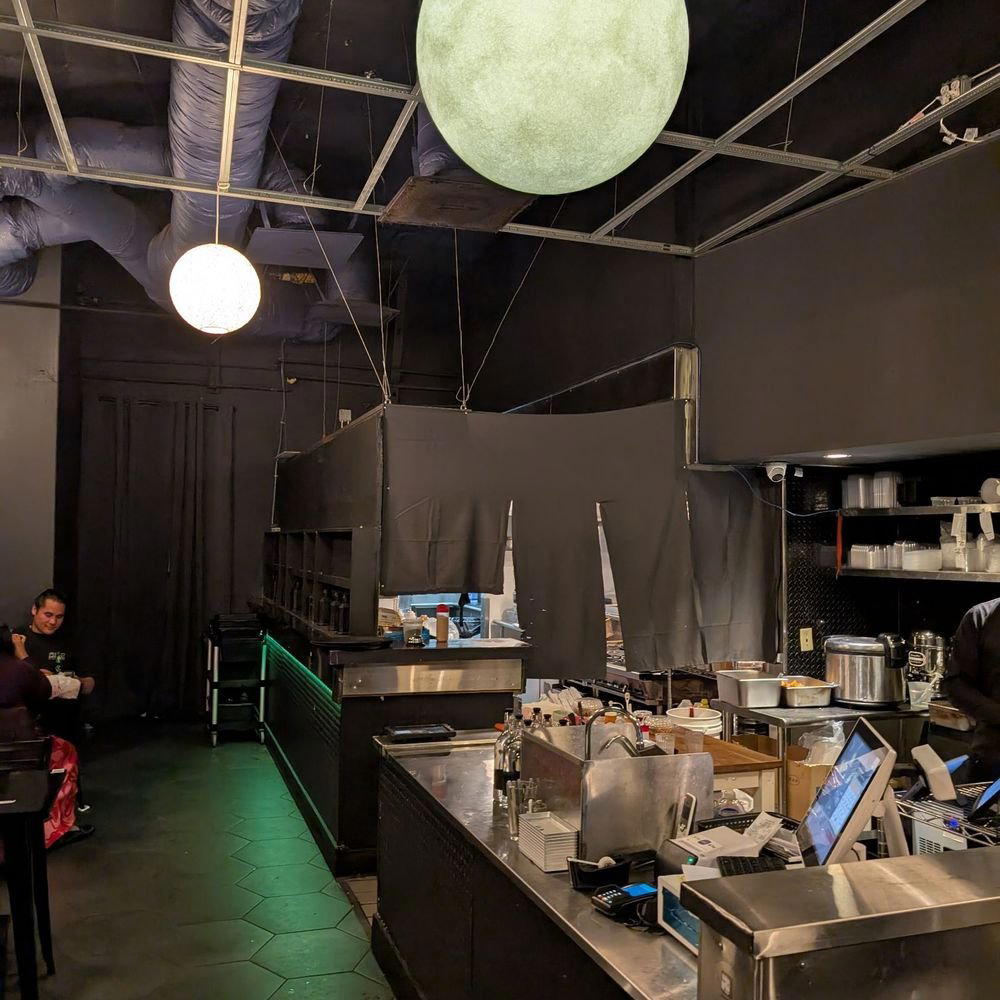
Approaching the space from the street, the visual register is functional rather than designed. Temescal's dining strip has not adopted the reclaimed-wood-and-Edison-bulb uniform that spread through San Francisco's Mission in the early 2010s and eventually colonized every aspirational food neighborhood in the country. That restraint, whether deliberate or simply practical, positions the room differently than nearby spots aiming for a defined aesthetic. What you encounter is closer to the Korean-American neighborhood restaurant model: direct, consistent, and priced for repetition rather than occasion.
The Lunch and Dinner Divide on This Block
The editorial angle that applies most cleanly to Telegraph Avenue's Korean contingent is the gap between daytime and evening service. Across Korean restaurant formats in the United States, lunch and dinner operate as almost separate businesses. Daytime tends toward faster, simpler preparations, often single-protein rice or noodle combinations, priced to attract workers and students who eat here multiple times a week. Evening service shifts the calculus: more table time, larger group configurations, and often a menu that opens toward shared plates and longer cooking formats.
On Temescal's corridor, this divide maps onto how the street itself functions. Lunch on Telegraph in this stretch is a working neighborhood meal. Dinner is when the block absorbs visitors from surrounding Oakland zip codes, and occasionally from across the bay. A restaurant anchored in the Korean tradition of communal, long-simmering preparations occupies an interesting position in that rhythm. The preparations that define Korean cooking at its most characteristic, braised meats, fermented accompaniments, clay pot formats, are not fast-food propositions. They benefit from the pace of an evening sitting in a way that a midday counter service cannot fully replicate.
This is not to diminish lunch as a category. Some of Oakland's strongest independent restaurants do their most efficient, satisfying work between noon and two. 3 Bottled Fish and 8th St Cafe both operate at different points on Oakland's independent dining spectrum, and the daytime-versus-evening question shapes each differently. On Telegraph specifically, the lunch crowd determines whether a restaurant builds regulars, while the dinner crowd determines whether it builds a reputation beyond its immediate block.
Korean Cooking in Oakland's Independent Tier
Korean cuisine has experienced a sustained critical reassessment across American cities over the past decade. At the high end, that reassessment produced restaurants like Atomix in New York City, which brought the kaiseki-influenced precision of Korean fine dining into direct conversation with the Michelin framework. At the opposite pole, Korean cooking has always maintained a neighborhood restaurant tradition that operates with none of that self-consciousness: fermented side dishes served automatically, soups that require hours of preparation and sell for single-digit prices, and a hospitality culture oriented toward feeding people rather than impressing them.
Oakland's Korean restaurant presence sits primarily in that second tradition. The Bay Area's Korean-American population historically concentrated in the South Bay, in Koreatown enclaves around Garden Grove and the broader Los Angeles corridor, but Oakland and Berkeley have supported smaller Korean-focused independent restaurants for decades. The Temescal and Rockridge adjacent sections of Telegraph represent a corridor where Korean cooking shares the block with the kind of Mexican, Ethiopian, and casual American restaurants that Oakland has built a regional reputation around. For comparison on Oakland's Mexican side, Agave Uptown illustrates how tradition-focused cooking finds its footing in this city without requiring a fine-dining frame.
What distinguishes Korean cooking in neighborhood formats from, say, the farm-to-table tasting menu tradition (represented at its most structured by places like Single Thread Farm in Healdsburg or Blue Hill at Stone Barns in Tarrytown) is that the quality signal does not depend on the same markers. There are no tasting menu lengths, no wine pairings, no theatrical service choreography. The quality signal is in the fermentation, the broth clarity, the seasoning calibration. These are craft signals that require significant expertise to read but are invisible to the metrics that govern reservation demand at, for instance, The French Laundry in Napa or Le Bernardin in New York City.
The Neighborhood Context: Who This Block Serves
Temescal's restaurant cluster functions as a transit point between several Oakland neighborhoods. The 37th and Telegraph intersection sits within walking distance of residential blocks that shifted significantly in demographic composition during the 2010s, without fully losing the earlier character that made the area a destination for independent food businesses in the first place. That tension, between an established neighborhood food culture and new arrival expectations, plays out most visibly in what kinds of restaurants survive.
Korean restaurants in this context survive on two bases: regulars from the Korean-American community who require authenticity as a baseline condition, and a broader East Bay audience that has developed literacy in Korean food through exposure. Oakland has built that broader audience through a combination of proximity to Berkeley's university population and a general dining culture that favors the kind of unfussy, flavor-forward eating that Korean cooking delivers at the neighborhood level. The nearby Alem's Coffee and alaMar Dominican Kitchen represent parallel examples of non-European culinary traditions holding steady in Oakland's independent tier without requiring the validation architecture of award programs or press attention.
Planning Your Visit
Kang Tong Degi sits at 3702 Telegraph Ave, Oakland, CA 94609, at the corner of 37th Street. On a block of independents, hours can shift seasonally or week-to-week, and the daytime-to-evening rhythm described above means arrival time affects what the room feels like and what the kitchen is running at full pace.
Cuisine and Recognition
Comparable venues nearby, for context on price, style, and recognition.
| Venue | Cuisine | Price | Notes |
|---|---|---|---|
| Kang Tong DegiThis venue — the venue you are viewing | Korean BBQ Pork Belly | $$ | Not listed |
| Moo Bong Ri | Korean Soondae Specialist | $$ | Temescal |
| Mugunghwa | Authentic Korean | $$ | Temescal |
| FuseBOX | Korean-Japanese Fusion Izakaya | $$ | West Oakland |
| Sahn Maru Korean BBQ | Korean BBQ | $$ | Oakland |
| Ohgane Korean BBQ | Traditional Korean BBQ | $$ | Temescal |
Continue exploring
More in Oakland
Restaurants in Oakland
Browse all →
Bars in Oakland
Browse all →
Hotels in Oakland
Browse all →

At a Glance
- Rustic
- Casual Hangout
- Group Dining
Casual, unpretentious grill-focused atmosphere with a hidden, authentic feel.