Seoul brings Korean culinary tradition to Dakar's Plateau district, occupying a notable position in the city's growing international dining scene at 38 Rue Amadou Assane Ndoye. The restaurant sits at an intersection of West African hospitality culture and East Asian cooking discipline that has few direct parallels in Francophone West Africa. For visitors mapping Dakar's non-Senegalese dining options, it represents a meaningful reference point.
Pearl is the En Primeur Club membership app — saves, bookings, and concierge access live there. Same editors, same standards.
- Address
- 38 Rue Amadou Assane Ndoye, Dakar, Senegal
- Phone
- +221 33 822 90 00
- Directions
- Get directions
 Saves & bookings on Pearl
Korean Cooking in a West African Capital
Dakar's Plateau district moves at a particular rhythm: the Atlantic air carries salt from the Cap-Vert peninsula, the streets around Rue Amadou Assane Ndoye shift between colonial-era architecture and the low hum of commerce, and the dining scene reflects a city that has long processed outside influences through its own confident cultural filter. It is in this context that a Korean restaurant operating in Dakar becomes something more than an anomaly. It becomes a small but readable signal about how the city's international community has expanded and how Dakar's appetite for culinary range has developed alongside it.
Korean cuisine has spread across global cities in a pattern that roughly tracks diaspora concentration, then diplomatic and commercial presence, and finally broader cultural curiosity driven by the international reach of Korean popular culture over the past two decades. In cities like New York, venues such as Atomix in New York City have pushed Korean cooking into fine-dining conversation at the highest level, earning sustained critical recognition for its structured tasting format and fermentation-forward technique. Dakar sits at a very different point on that spectrum, where Korean food remains rare enough that a single address on Rue Amadou Assane Ndoye carries the weight of representing an entire cooking tradition for most of its guests.
The Cultural Architecture of Korean Dining
Understanding what Korean cuisine means as a dining tradition matters here, because the format shapes expectations in ways that differ from French, Senegalese, or Lebanese cooking, all of which have deeper roots in Dakar's restaurant culture. Korean meals are built around shared plates, fermented condiments, and a structural logic where banchan, the small side dishes, frame the proteins rather than support them. The table is populated from the start, dishes arrive in clusters rather than sequences, and the pace belongs to the guests more than the kitchen. This communal architecture has more in common with Senegalese thiéboudienne service, where the central dish is surrounded by accompaniments, than it does with the French progression that dominates much of Dakar's formal dining tier.
This overlap is worth noting because it suggests that Korean food, at its structural core, is not as foreign to West African dining culture as geography might imply. The logic of sharing, of building a meal from many smaller components rather than a single composed plate, is one that Dakar's diners navigate daily. What differs is the flavor register: gochujang-based heat, doenjang depth, the clean acidity of kimchi, and the particular sweetness of Korean sesame oil occupy a sensory vocabulary that arrives without local precedent in Senegal.
Dakar's International Dining Frame
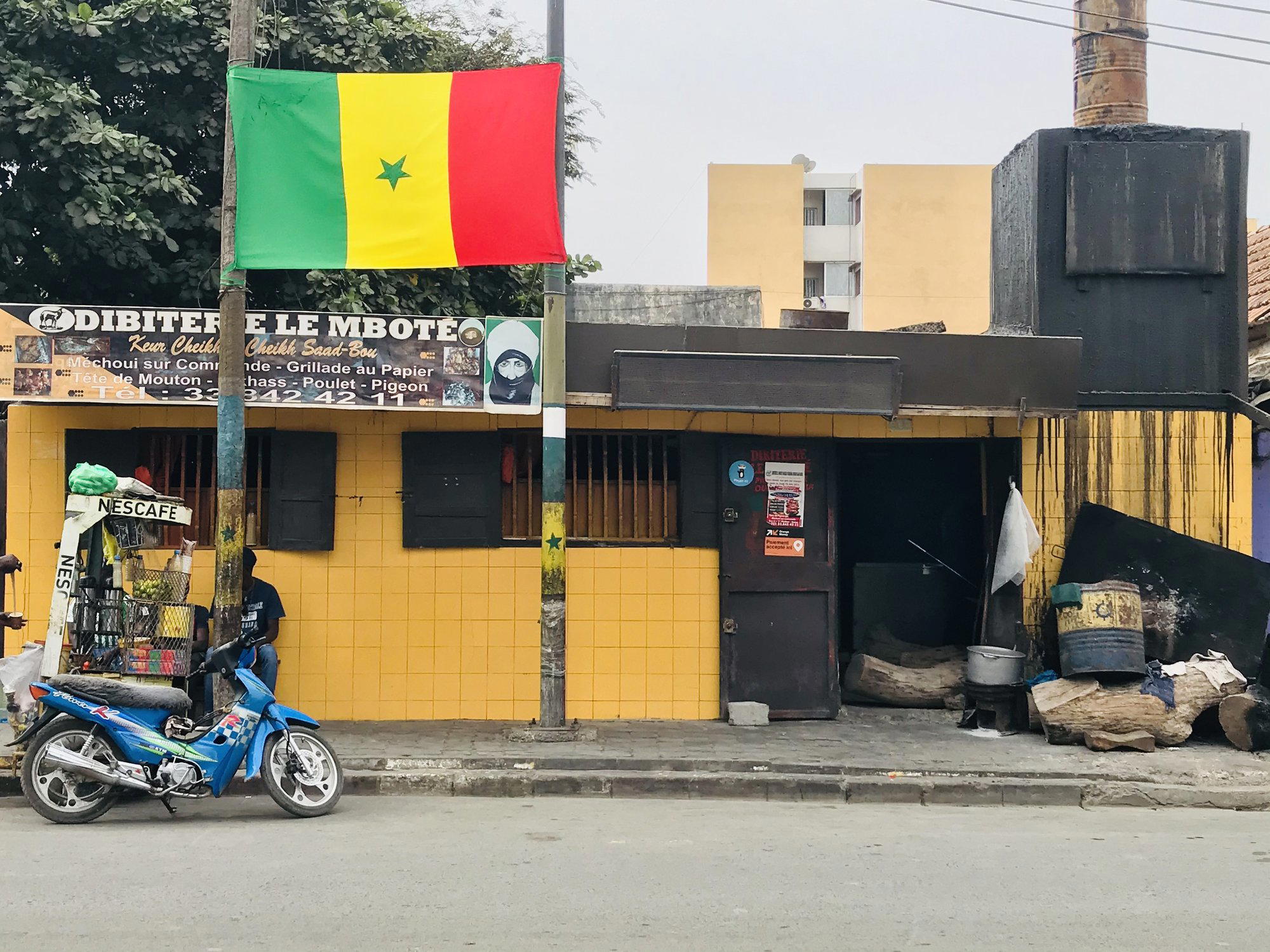
Dakar's restaurant scene is not monolithic. The city supports a serious Senegalese tradition running from the grilled lamb of addresses like Dibiterie Le Mboté 1 to the refined Senegalese cooking at Casa Teranga, alongside a French-inflected mid-market tier and a scattering of international cuisines serving the diplomatic and expat population. Seafood is a consistent thread through Dakar's dining identity, anchored by the city's Atlantic position and visible in venues like Huitres De Sokone, which draws directly on Senegalese coastal sourcing.
Korean cooking occupies a different bracket in this ecosystem: neither embedded in local tradition nor part of the French culinary legacy that shaped Dakar's formal dining conventions. It serves a function closer to that of a specialized international address, drawing guests who are specifically seeking it out rather than stumbling upon it. That dynamic changes the nature of the hospitality calculus. A restaurant in this position earns its place by executing its cooking tradition with fidelity, because there is no local reference point against which guests can calibrate expectations and forgive approximation.
For a broader cross-section of Dakar's dining options, our full Dakar restaurants guide maps the city's scene across cuisines and price tiers, including the garden-setting dining at Le jardin de l'Amitié and the convivial neighborhood format of Chez Kiki.
Locating Seoul in a Global Reference Frame
The broader Korean fine-dining conversation, represented at its outer edges by addresses like Atomix in New York, provides one kind of benchmark. But Dakar's Seoul operates in a context where the comparison set is local rather than global, and where the relevant question is not how it measures against Michelin-recognized Korean cooking but whether it delivers the core experience of the cuisine with integrity and consistency to a guest base that, for most of its members, has limited access to Korean food anywhere in West Africa.
In Dakar, Seoul earns its relevance by occupying a near-singular position in the city's dining geography.
Planning a Visit
The restaurant is located at 38 Rue Amadou Assane Ndoye in the Plateau district, one of Dakar's most accessible central neighborhoods and a reasonable distance from the major hotels and embassies that house much of the city's international population. No verified pricing, booking method, or operating hours are available in EP Club's current data for this address, so contacting the venue directly before arrival is the practical approach, particularly for groups or guests with dietary requirements. Dakar's dining culture is generally more relaxed about advance booking than major international cities, but a Korean restaurant serving an expat-heavy clientele may operate with tighter capacity than the city norm.
Visitors traveling beyond Dakar can consult EP Club's coverage of Senegalese dining more broadly, including La Kassa in Ziguinchor, La Louise, Restaurant Traiteur in Saint Louis, and the coastal option of La Taverne Du Pêcheur in Communaute Rurale De Ngueniene.
At a Glance
- Lively
- Casual Hangout
- Group Dining
- Open Kitchen
Current opening hours
- Monday
- 11:30 AM–3 PM, 6–11 PM
- Tuesday
- 11:30 AM–3 PM, 6–11 PM
- Wednesday
- 11:30 AM–3 PM, 6–11 PM
- Thursday
- 11:30 AM–3 PM, 6–11 PM
- Friday
- 11:30 AM–3 PM, 6–11 PM
- Saturday
- 11:30 AM–3 PM, 6–11 PM
- Sunday
- 11:30 AM–3 PM, 6–11 PM
Hours can change for holidays and private events. Last verified .
Know Before You Go
- Getting there
- 38 Rue Amadou Assane Ndoye, Dakar, Senegal