Tabelog 100 #62
Our verdict
Schomaker belongs to Tokyo’s serious bread circuit, a category where small-format bakeries can matter as much as formal dining rooms. Its Tabelog Bread TOKYO 100 selections in 2020 and 2022, plus a modest sub-¥1,000 spend signal, place it in the city’s everyday craft tier rather than the luxury patisserie lane.

Pearl is the En Primeur Club membership app, where members save venues, book tables and use the concierge.
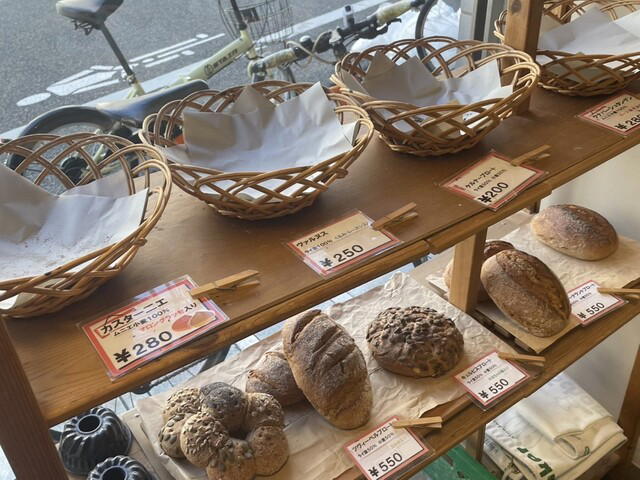
Approaching a Tokyo bakery changes the tempo of eating in the city. The cues are smaller than in the city’s more theatrical dining districts: a short frontage, morning trade, commuters folding bread into the day rather than treating it as ceremony. Schomaker sits in that quieter register, where the bakery counter matters because it serves routine as much as appetite.
Tokyo’s bread culture is often misunderstood from outside Japan. It is not only a story of imported technique or photogenic pastry cases. The city has built a dense bakery map around everyday loaves, prepared breads, lunch bread, and patisserie-adjacent sweets, with neighbourhood shops competing on precision and repeat custom rather than dining-room theatre. Recognition on Tabelog’s Bread TOKYO 100 in 2022 puts Schomaker inside that judged bakery conversation, not as a restaurant with a bread program but as a bread shop assessed on the terms of the category itself.
A bakery menu built for daily use, not ceremony
The useful way to read a Tokyo bread shop is through menu architecture. A serious bakery has to satisfy several clocks at once: breakfast, school-run snacks, office lunches, afternoon sweets, and the home table. That structure is different from a tasting menu, where a chef controls sequence and duration. In a bakery, the customer edits the experience in seconds, so range, replenishment, and clarity do the work.
Schomaker’s category is listed simply as bread, and that simplicity is telling. The listed spend bracket sits at - JPY 999 - JPY 999 View spending breakdown, which places the shop in the everyday bakery economy rather than the destination dessert salon tier. In Tokyo terms, that matters. A low-ticket bakery can be more culturally revealing than a formal counter because it shows how much technique is expected in ordinary purchasing. The city’s benchmark is not merely whether a loaf photographs well, but whether a neighbourhood audience returns without occasion.
Compared with itokito and Himmel, two Tokyo comparison points in a similarly accessible bakery frame, Schomaker occupies the same small-purchase logic: buy selectively, move quickly, and judge by repeatability. Patisserie JUN UJITA sits closer to the sweet craft axis, which helps separate the categories. The bakery question is not dessert finesse alone; it is how savoury, plain, sweet, and portable items form a working menu across the day.
That makes Schomaker a different kind of Tokyo recommendation from full-service meals, specialist counters, or highly styled café stops elsewhere in the city. Those are restaurant decisions; this is a provisions decision. Tokyo rewards both, but the rhythm is different.
Tokyo places it in the city’s lived-in bakery map
Neighbourhood matters here, but the useful location note is simple: Schomaker is in Tokyo. Away from the most obvious tourist restaurant corridors, expectations shift. Central destination venues often trade on planning; residential bakeries are tested by habit. A shop like this has to function for local movement, not only for visitors assembling a food itinerary.
The Tabelog score of 3.74 is a useful signal in Japan, where ratings tend to compress and a score in the high threes can indicate sustained attention. The stronger trust signal, though, is selection for the Tabelog Bread TOKYO 100 list in 2022. For a bread shop, that recognition does more work than a broad restaurant ranking because it places the venue against category peers rather than across unrelated formats.
This is where Tokyo’s breadth becomes instructive. A visitor could build a day around counter dining, izakaya formats, and specialist cafés, but a bakery stop gives the city a different scale. For a more conventional restaurant arc, Washokuya Taichi and L'ALCHIMIA ASTRATTA sit in other dining lanes, alongside other unnamed Tokyo dining rooms. Schomaker belongs to the part of Tokyo where craft is bought by the piece and judged before lunch.
For planning beyond a single bakery, Our full Tokyo restaurants guide gives the city’s dining spread, while Our full Tokyo hotels guide, Our full Tokyo bars guide, Our full Tokyo wineries guide, and Our full Tokyo experiences guide map the wider trip architecture. The bakery category is a useful counterweight to reservation-heavy Tokyo: it shows how the city eats when the meal is not the main event.
How to think about a visit
The case for Schomaker is strongest for travellers who care about Tokyo’s daily food systems, not only its formal restaurants. The confirmed category is bread, and the confirmed listed spend is modest, so the practical reading is simple: treat it as a focused bakery stop rather than a long-form meal.
The broader logistical profile shapes the editorial recommendation. This is not a venue to stretch into a grand itinerary; it is a precise insertion between neighbourhood movement and the next meal. In that sense, the value is less about ceremony and more about how Tokyo’s everyday food culture rewards small, well-chosen purchases.
Japan’s bread culture also travels well across cities, and Schomaker fits into a broader national appetite for compact specialist food stops. Readers comparing formats beyond a single Tokyo bakery can think generically about how casual Japanese food venues operate across the country, and how everyday formats change when they are translated for visitors or for other dining cultures. The useful contrast is between the quick, repeatable local purchase and the destination meal built around advance planning.
The editorial read is clear: Schomaker is for the traveller who wants a Tokyo bread stop with category recognition and neighbourhood scale. Its value lies in what the format reveals: craft made for repeat purchase, a menu that has to work quickly, and a city where an inexpensive bakery can carry serious culinary credibility.
Frequently asked questions
Is Schomaker child-friendly?
It can work for families who want a simple bread stop in Tokyo rather than a full dining room, especially because the format is casual and quick.
What kind of setting is Schomaker?
Schomaker is a bread shop in Tokyo. The setting is practical rather than theatrical, with the emphasis on buying bread rather than settling into a formal restaurant experience.
Is Schomaker more mid-range or high-end?
Pricing at Schomaker is listed as - JPY 999 - JPY 999 View spending breakdown.
Is Schomaker open every day?
Current opening days and hours should be checked directly before visiting, as the provided venue details do not confirm a full weekly schedule.
Where do I go for Schomaker?
Tokyo.
What's Schomaker best at?
Schomaker is strongest as a daily-use bread shop, which is exactly why it was selected for Tabelog Bread TOKYO 2022. The listed price range is - JPY 999 - JPY 999 View spending breakdown, so it suits a casual bread stop rather than a splurge.
Side-by-Side Snapshot
Comparable venues for context, by category and price tier.
| Venue | Cuisine | Price | Awards | Notes |
|---|---|---|---|---|
| SchomakerThis venue (the venue you are viewing) | German Bakery | Not listed | Tabelog 100 #62 | Not listed |
| Mon St. Clair | French‑influenced patisserie and dessert café | $20–30 | Tabelog 100 #24 | Meguro |
| Parlour Laurel | Classic Japanese-French patisserie and café | $10–20 | Tabelog 100 #91 | Setagaya |
| Nicolas | Japanese-style cafe and sweets | $10–20 | Tabelog 100 #70 | Setagaya |
| Paul Bassett Shibuya hikarie ShinQs toyoko norengai ten | Espresso Cafe | $10–20 | Tabelog 100 #99 | Shibuya |
| ando suriranka toukyou | Modern Sri Lankan Curry & Soup Curry | $20–30 | Tabelog 100 #75 | Chiyoda |
Recognition history
Dated appearances from independent guides and award organizations, with the underlying list record or original source where available.
Tabelog 100 #62 · No. 62
Tabelog · Tabelog 100 - Bread - TOKYO - 2022