Tabelog 100 #91
Our verdict
Parlour Laurel belongs to Tokyo’s compact, serious sweets circuit rather than its spectacle-driven café culture. In Okusawa near Kuhombutsu, the 12-seat cake-and-café format, take-out option, Tabelog Sweets TOKYO 100 selections, and modest JPY 1,000–1,999 spend place it in the city’s small-format patisserie tier, where planning matters more than lingering.

Pearl is the En Primeur Club membership app, where members save venues, book tables and use the concierge.
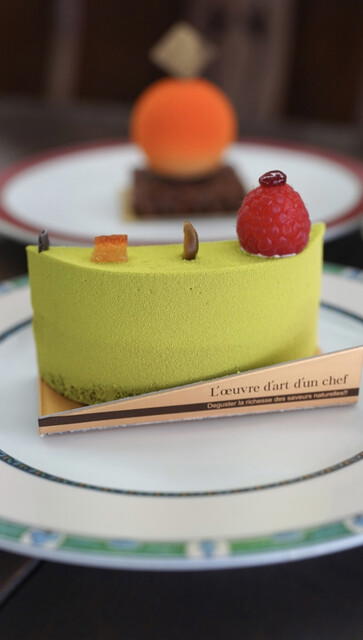
Tokyo’s quieter cake culture often reads differently from its central dessert corridors: residential pace, lower shopfronts, and sweet shops competing less on theatrical queues than repeat local custom. Parlour Laurel fits that modest rhythm: a cake-and-café in Tokyo where room size, counter rhythm, and visit timing shape the experience as much as the pastry case.
Tokyo’s sweets scene has tribes. Department-store counters prize polish and packaging; central cafés chase visual novelty; the city’s more local circuits reward places serving regulars without turning dessert into production. Parlour Laurel occupies that bracket. Its 2023 recognition in Tabelog’s Hyakumeiten sweets selection gives it authority different from social-media café fame: selection in a city where cake shops are judged by people who return, compare, and notice consistency.
A small sweets room in a city that often overbuilds dessert
The format is deliberately modest: cake and café, with a visit that is better understood as a compact sweets stop than a long-form restaurant commitment. That matters. In Tokyo, a small sweet shop is not merely intimate; it changes timing. A long tasting-menu restaurant controls its night through fixed seatings; a café absorbs irregular rhythms of local custom, short-stay dessert visits, and the natural ebb and flow of the day. Access can feel softer but less predictable.
Against category-adjacent peers, the positioning is clear. Comme’N TOKYO Honten, patisserie Paris S’eveille, VENT DE LUDO Oyamadai ten, Oyamadai Yamada, and Au Bon Vieux Temps Oyamadai ten all help frame the wider Tokyo field in which Parlour Laurel sits, but this address is best understood on its own terms. Parlour Laurel belongs with serious sweets addresses rather than destination dining rooms: the question is not whether to commit a full evening, but whether to build a small Tokyo detour around cake, coffee, and limited time.
That distinction helps travellers. Tokyo’s acclaimed dining can require months of planning, hotel concierges, or language support. A recognised sweets address works on a lower-investment, shorter-visit scale, with more spontaneity. Yet a modest café format means timing still matters. Treat this as a planned pause in a Tokyo day, not a casual fallback after crossing the city.
Why the booking question matters here
The booking experience at a small Tokyo café is often misunderstood. A venue can feel informal without being frictionless, and a casual dessert stop can still be sensitive to timing. The room may feel easy on a quiet weekday and tight when regulars and late-afternoon dessert demand converge. Separate desire from logistics: if the visit anchors the day, plan carefully; if it is part of a loose Tokyo wander, arrive with a backup plan and accept the venue’s scale.
The listed score of 3.77 on Tabelog gives another signal. In Tokyo sweets, where high-volume chains and photogenic cafés crowd the field, a rating in that range with Tabelog Hyakumeiten recognition suggests durable specialist appeal rather than short-cycle attention. The 2023 selection is useful evidence: a specific marker of reputation in a competitive category.
There is no need to inflate the category. This is not booking a counter sushi seat or a formal multi-course room. It is closer to how informed travellers use Tokyo’s bakeries, kissaten, and patisseries: as small, precise coordinates structuring a neighbourhood-style day. For a broader scan of the city’s dining range, Our full Tokyo restaurants guide maps the spectrum from casual counters to high-commitment restaurants, while Our full Tokyo hotels guide, Our full Tokyo bars guide, Our full Tokyo wineries guide, and Our full Tokyo experiences guide help place a sweets stop inside a fuller itinerary.
How it fits into a wider Tokyo eating day
The strongest use case is a Tokyo route built around smaller stops rather than a stand-alone pilgrimage from the far side of the city. The city rewards slower movement: bakeries, small cafés, residential shopping streets, and specialist counters appear in clusters, not only in tourist blocks. Parlour Laurel works within that pattern because the visit is compact and the spend sits in the JPY 1,000–1,999 range, leaving room for another meal elsewhere.
That flexibility is valuable in Tokyo, where the day can be built across categories instead of around one grand reservation. A sweets stop can sit before another casual meal, after lunch, or between café visits without overwhelming the schedule. EP Club’s Tokyo listings show how varied that day can become, from small counters and cafés to more formal restaurants. The point is not to chase every address, but to understand how dessert, cafés, and small restaurants function as a citywide network.
For travellers continuing beyond Tokyo, the same logic applies across Japan and further afield: category, scale, and timing shape the experience before any single dish does. Compare casual cafés, regional specialists, focused kitchens, curry counters, minimalist dining rooms, and Japanese-diaspora bars or snack shops outside Japan. A side trip from Tokyo may ask for a different commitment altogether, but the planning principle remains the same: match the venue’s scale to the shape of the day.
The editorial case for Parlour Laurel is restrained but solid. It has the recognition, small-format constraints, and Tokyo context that make planning worthwhile without turning the visit into ceremony. In Tokyo, that is often the more intelligent luxury: knowing which modest addresses deserve deliberate timing.
Frequently asked questions
What's the address for Parlour Laurel?
Tokyo.
What price level is Parlour Laurel?
Pricing at Parlour Laurel is listed as Dinner: JPY 1,000 - JPY 1,999; Lunch: JPY 1,000 - JPY 1,999.
Do they take walk-ins at Parlour Laurel?
Specific walk-in and reservation details are not provided here. Because Parlour Laurel is a cake-and-café in Tokyo, it is best to plan timing with some flexibility.
What is Parlour Laurel known for?
Parlour Laurel is known as a cake-and-café in Tokyo, with a Tabelog score of 3.77 and 2023 Hyakumeiten recognition.
The Quick Read
Comparable venues by category and price.
| Venue | Cuisine | Price | Awards | Notes |
|---|---|---|---|---|
| Parlour LaurelThis venue (the venue you are viewing) | Classic Japanese-French patisserie and café | $10–20 | Tabelog 100 #91 | Not listed |
| Comme’N TOKYO Honten | Japanese Bakery Cafe | $10–20 | Tabelog 100 #59 | JPY 1,000 - JPY 1,999 |
| Oyamadai Yamada | Wood-fired Pizza Kappo Counter | $100–150 | Tabelog 100 #77 | JPY 15,000 - JPY 19,999 JPY 15,000 - JPY 19,999 |
| VENT DE LUDO Oyamadai ten | Not listed | Not listed | Tabelog 100 #9 | JPY 999 - JPY 999 View spending breakdown |
| Au Bon Vieux Temps Oyamadai ten | Traditional French Patisserie & Salon | $20–30 | Tabelog 100 #83 | JPY 1,000 - JPY 1,999 JPY 1,000 - JPY 1,999 |
| patisserie Paris S'eveille | Not listed | $20–30 | Relais Desserts Member Boutique · Tabelog 100 #94 | JPY 1,000 - JPY 1,999 JPY 1,000 - JPY 1,999 |
Recognition history
Dated appearances from independent guides and award organizations, with the underlying list record or original source where available.
Tabelog 100 #91 · No. 91
Tabelog · Tabelog 100 - Sweets - TOKYO - 2023