Sanzaru


Sanzaru brings Nikkei cuisine to one of Brussels' quieter residential communes, operating from a protected 1937 modernist building on Avenue de Tervueren. Chef Nathan Urbanowiez applies the Japanese-Peruvian culinary tradition to produce combinations that sit at the more considered end of Brussels' mid-to-upper dining tier. Michelin Plate recognition in both 2024 and 2025 places it inside a competitive bracket that rewards technique over spectacle.
Pearl is the En Primeur Club membership app — saves, bookings, and concierge access live there. Same editors, same standards.
- Address
- Av. de Tervueren 292, 1150 Woluwe-Saint-Pierre, Belgium
- Phone
- +32 2 773 00 80
- Website
- sanzaru.be
- Directions
- Get directions
 Saves & bookings on Pearl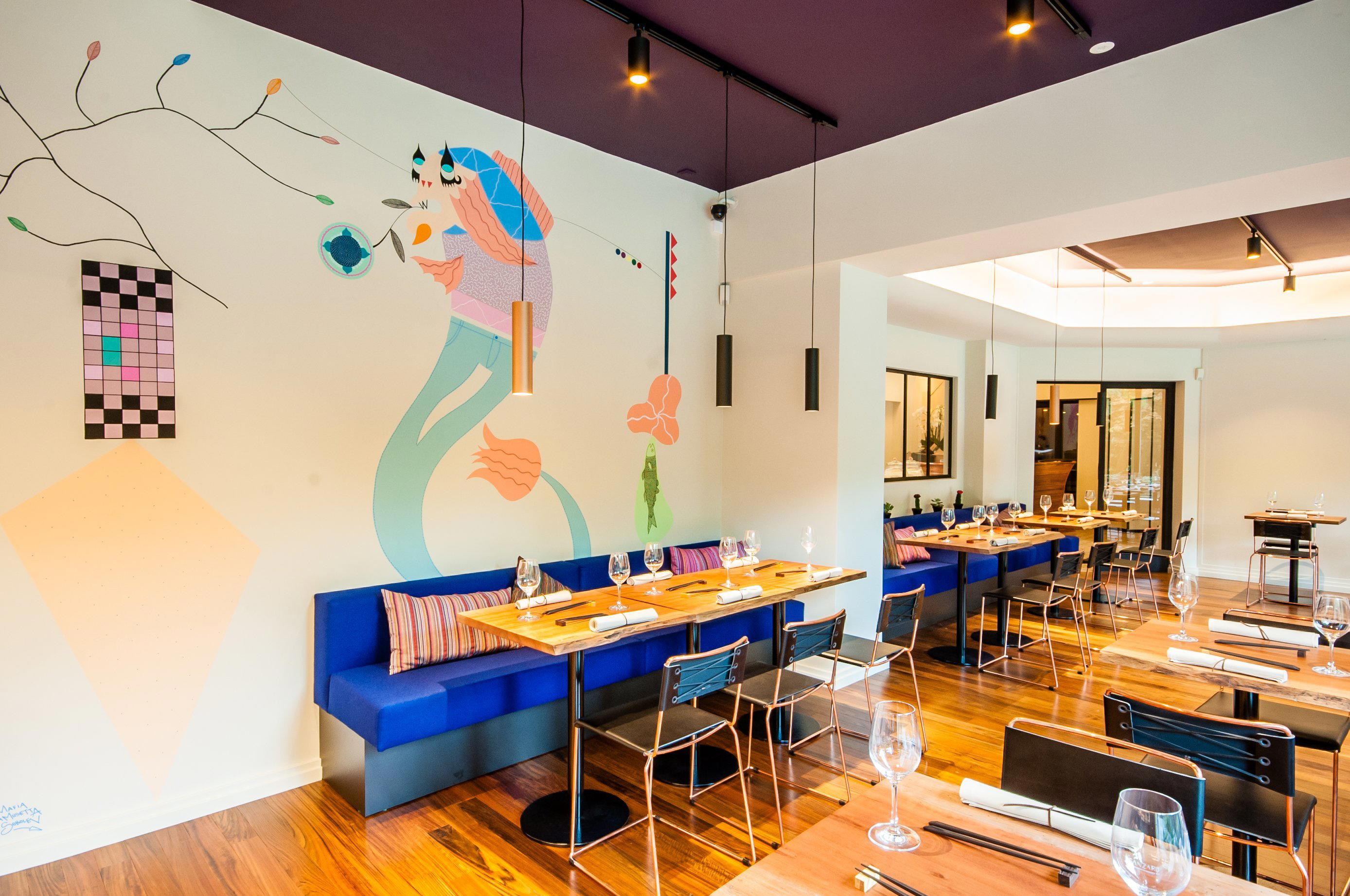
Avenue de Tervueren and the Architecture of Arrival
Sanzaru is a restaurant in Woluwe-Saint-Pierre serving Modern Nikkei (Japanese-Peruvian Fusion) cuisine. Avenue de Tervueren is one of the great axial roads of the Brussels periphery, a broad, tree-lined boulevard that connects the EU quarter to the Royal Museum for Central Africa in Tervueren. The building at number 292 dates to 1937 and carries protected modernist status, which means the clean geometric lines and restrained facade have survived decades of surrounding renovation intact. Arriving here is not like arriving at a restaurant folded into a converted townhouse or a ground-floor retail unit. The architecture announces intent before a menu is consulted.
Woluwe-Saint-Pierre itself occupies a particular position in Brussels' dining geography. It is not the neighbourhood that generates press coverage, that distinction tends to fall to Ixelles, Saint-Gilles, or the centre, but it holds a concentration of mid-to-upper tier restaurants serving a largely residential, well-travelled clientele. Venues here tend to rely less on foot traffic and more on destination visits, which shifts the dynamic between restaurant and guest. Le Mucha to the creative ambition of Menssa. Sanzaru occupies a distinct lane within that set: it is the commune's most visible address for a kitchen tradition that has its roots not in Europe but in the Peruvian coastal cities where Japanese immigrant communities put down roots in the early twentieth century.
What Nikkei Cuisine Actually Means in This Context
Nikkei is a cooking tradition that emerged from the Japanese diaspora in Peru, primarily in Lima and along the Pacific coast. The encounter between Japanese technique, precision knife work, raw fish preparations, restraint in seasoning, and Peruvian ingredients, including aji amarillo, leche de tigre, and ceviche structures, produced something that became a distinct culinary category rather than a simple hybrid. Lima's Nikkei scene, built around restaurants like Maido, has received sustained international recognition over the past decade, which has sharpened the global understanding of what the cuisine can and cannot be.
In Brussels, Nikkei cooking sits in an unusual position. The city has a sophisticated Japanese dining presence and a growing interest in South American food, but venues that operate specifically at the intersection of the two remain rare. Sanzaru, with Nathan Urbanowiez in the kitchen, holds that niche at the €€€ price point.Menssa. Frantzén end of the market, or Dubai's FZN by Björn Frantzén.
The Dishes: Combinations and a Notable Gap
The cooking leans on flavour combinations that surprise through the meeting of Japanese and Peruvian registers. Textures play a central role, which is consistent with Nikkei cooking at its most considered: the tradition draws on both Japanese attention to mouthfeel and Peruvian willingness to layer acid, heat, and freshness within a single preparation. The combination of tiradito-style fish presentations with Japanese marinades, or the application of miso and dashi thinking to Peruvian ingredient bases, tends to produce the kind of dish that reads as more complex than its component count suggests.
Vegetables are used sparingly, which may shape the meal toward a more protein-led focus. This is worth flagging for guests who approach Nikkei cooking through its Peruvian side, where the ingredient palette runs wider and greens and roots appear more prominently. At Sanzaru, protein appears to dominate the plate architecture, which shapes the overall character of a meal here in a specific direction. Whether that reads as a limitation or a deliberate focus depends on what a guest brings to the table in terms of expectation.
Placing Sanzaru Within Belgium's Broader Scene
Belgium's fine dining infrastructure is substantial relative to its size, anchored by addresses like Hof van Cleve in Kruishoutem, Boury in Roeselare, and Zilte in Antwerp. These are addresses built around European classical traditions, often with strong local produce integration and a clear sense of regional identity. Sanzaru operates outside that tradition entirely, which gives it a profile that is less directly comparable to its Belgian peers and more aligned with a global conversation about how non-European culinary traditions translate into northern European restaurant contexts.
The coastal-influence kitchens at addresses like Bartholomeus in Heist and Willem Hiele in Oudenburg work with a rigour that has earned them serious recognition, but their reference points are fundamentally different from a kitchen that draws on Pacific Rim food culture. The more relevant comparison within Brussels itself might be Bozar Restaurant, where the setting also carries architectural significance and the cuisine operates outside narrow national categories. In Wallonia, addresses like d'Eugénie à Emilie in Baudour and L'Eau Vive in Arbre anchor the classic French tradition at a high level, which throws the distinctiveness of Sanzaru's position into sharper relief.
Planning a Visit
Sanzaru sits at the €€€ price point. The Italian end of Woluwe-Saint-Pierre's dining offer, including Bottega Vannini at the more accessible €€ tier, sits close by for those building a wider evening or afternoon around the area.
A Tight Comparison
Comparable venues nearby, for context on price, style, and recognition.
| Venue | Cuisine | Price | Notes |
|---|---|---|---|
| SanzaruThis venue — the venue you are viewing | Modern Cuisine | $$$ | Not listed |
| Le Mucha | Not listed | $$$ | Woluwe-Saint-Pierre, Classic French Bistro with Belgian and Italian Influences |
| Bottega Vannini | Not listed | $$$ | Woluwe-Saint-Pierre, Authentic Italian Trattoria |
| Coquum | Not listed | $$$$ | Woluwe-Saint-Pierre, Nordic-Inspired Fine Dining |
| Menssa | Not listed | $$$$ | Woluwe-Saint-Pierre, Michelin-Starred Franco-Belgian Fine Dining |
| Graspoort | Not listed | $$$ | City Center, Creative Fusion with Asian Influences |
Recognition history
Dated appearances from independent guides and award organizations, with the underlying list record or original source where available.
Michelin Plate
Michelin
Michelin Plate
Michelin
We're Smart World 1 Radish
We're Smart World
Michelin Plate
Michelin
Continue exploring
More in Woluwe-Saint-Pierre
Restaurants in Woluwe-Saint-Pierre
Browse all →
Bars in Woluwe-Saint-Pierre
Browse all →
Hotels in Woluwe-Saint-Pierre
Browse all →
Wineries in Woluwe-Saint-Pierre
Browse all →
At a Glance
- Modern
- Elegant
- Cozy
- Date Night
- Special Occasion
- Open Kitchen
- Terrace
- Craft Cocktails
- Farm To Table
- Garden
Current opening hours
- Monday
- Closed
- Tuesday
- 12–2 PM, 7–10 PM
- Wednesday
- 12–2 PM, 7–10 PM
- Thursday
- 12–2 PM, 7–10 PM
- Friday
- 12–2 PM, 7–10:30 PM
- Saturday
- 7–10:30 PM
- Sunday
- Closed
Hours can change for holidays and private events. Last verified .
Pleasant, airy establishment with colorful murals, warm tones of copper and wood, and light-filled spaces creating a lively yet cozy atmosphere.