Santa Fe
Our verdict
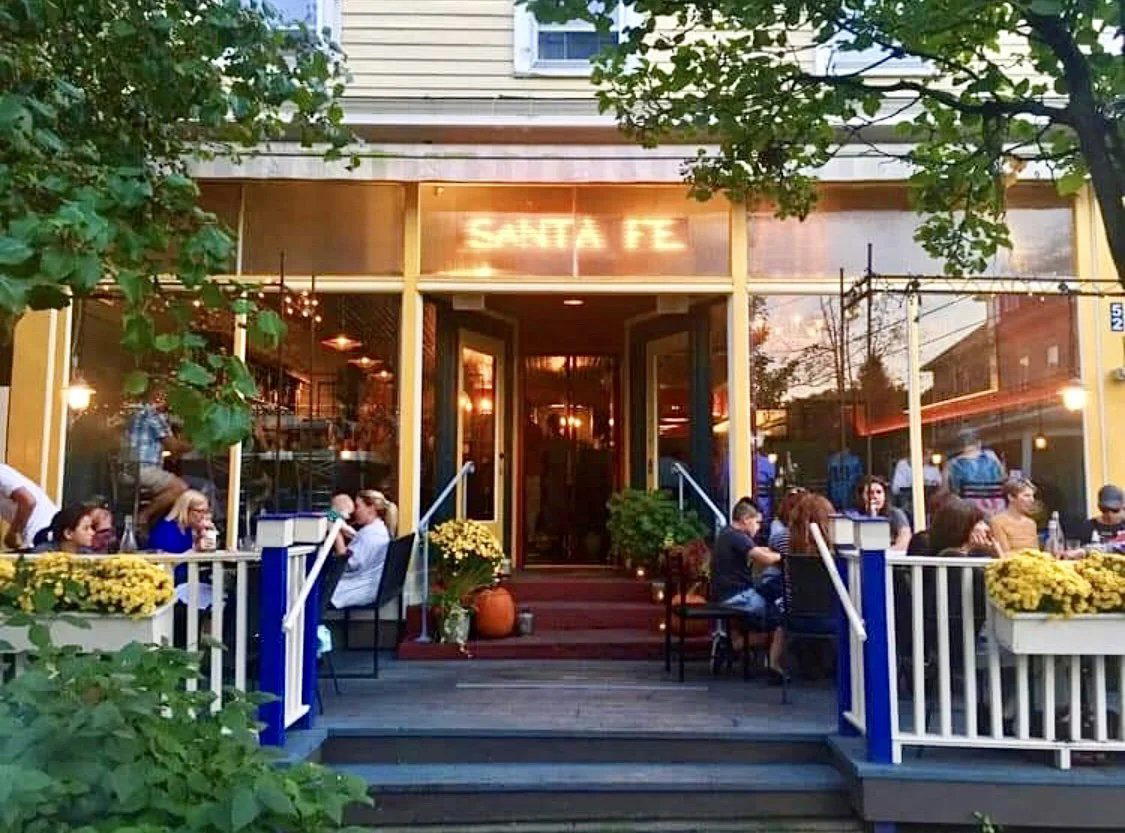
Santa Fe occupies a modest storefront at 52 Broadway in Tivoli, NY, a small Hudson Valley village that punches well above its size for ingredient-driven dining. The restaurant sits in a town increasingly defined by proximity to working farms and the agricultural seriousness that proximity tends to produce. For visitors making the drive north from the city, it represents a specific kind of regional eating that urban restaurants have difficulty replicating at scale.

Pearl is the En Primeur Club membership app — saves, bookings, and concierge access live there. Same editors, same standards.
- Address
- 52 Broadway, Tivoli, NY 12583
- Phone
- (845) 757-4100
- Hours
- Mon–Thu 4–9 PMFri–Sat 4–9:30 PMSun Closed
- Website
- santafetivoli.com
- Directions
- Get directions
- Booking
- Book on the venue's website
The menu
What to order
- Enchiladas Tipico
- Sizzling Skillet Fajitas
- Oaxaca Tacos
- Fish Tacos
Broadway, Tivoli, and the Agricultural Logic Behind the Address
The Hudson Valley has been quietly reordering the assumptions of American regional dining for the better part of two decades. What began as a loose affiliation of farm-to-table rhetoric has matured, in the counties stretching from Dutchess to Columbia, into something more structurally serious: a concentration of working farms, small-batch producers, and foragers whose output has given local restaurants a sourcing foundation that cities like New York can approximate but rarely replicate at the same proximity. Tivoli, a village of under a thousand residents on the Hudson's eastern bank, sits inside that agricultural corridor. Its main street, Broadway, holds a handful of restaurants that draw from this infrastructure, and Santa Fe, at number 52, is among them.
The setting itself signals what kind of eating is on offer. Broadway in Tivoli is not a dining destination in the way that, say, a converted warehouse district announces itself. It is a working village street where the proximity to the river and to the farmland pressing in from the east is more legible in what arrives on the plate than in any designed aesthetic. That grounded, unshowy character is increasingly the identifying mark of the better small-town Hudson Valley restaurants, distinguishing them from properties that perform rurality as a branding exercise. For readers planning a broader day out, our full Tivoli restaurants guide maps the village's dining options against this same sourcing context.
Ingredient Sourcing as the Organizing Principle
Hudson Valley's credibility as an ingredient region rests on a few concrete facts. The valley floor between the Catskills and the Taconics carries some of the most agriculturally productive soil in the Northeast. Farms like those around Red Hook and Germantown, minutes from Tivoli by car, have been supplying regional kitchens with vegetables, heritage grains, and pastured proteins since the 1990s. That supply chain is now dense enough that a restaurant positioned inside it can build a menu around what is available rather than what a standard distributor catalog offers.
This model of sourcing-led menu construction has national analogues at a higher price point. Blue Hill at Stone Barns in Tarrytown made the farm-integrated model central to its identity and its reputation, and Single Thread Farm in Healdsburg takes the logic further still, operating its own farm as the sourcing engine for a tasting menu that changes with genuine agricultural specificity. What distinguishes the Tivoli version of this approach is scale and register: smaller rooms, lower price thresholds, and a less formalized service structure that makes the ingredient quality accessible to a different kind of diner than the $300-per-head tasting menu circuit produces.
The comparison is instructive precisely because it is not invidious. Restaurants like The French Laundry in Napa or Alinea in Chicago operate in a register where sourcing is one element of a larger technical and theatrical proposition. What the Hudson Valley's smaller-town restaurants offer is sourcing as the primary proposition, with technique in service of ingredient rather than the reverse. That inversion matters to a particular kind of eater, and it explains why the villages north of Rhinebeck have developed a gravitational pull on food-literate visitors who are not specifically chasing Michelin recognition.
Tivoli in the Context of Hudson Valley Dining
Placing Tivoli within the broader Hudson Valley dining conversation requires acknowledging that the valley now contains a range of registers. Rhinebeck anchors the southern end of the high-low spectrum, with Belmont Estate representing the more formal, estate-driven end of local hospitality. Hudson, twenty minutes north, has developed a restaurant density unusual for a city of its size, drawing comparisons to the farm-driven urban dining scenes in places like Atlanta or Boulder. Tivoli sits between these poles, retaining a village character that larger towns have largely traded away as restaurant tourism has accelerated.
That positioning is both a practical advantage and a constraint. The advantage is a lower noise floor: fewer tourists, more regulars, a dining room that functions as a neighborhood resource rather than a destination event. The constraint is lower visibility. Restaurants like Le Bernardin in New York City, Atomix in New York City, or Providence in Los Angeles operate with a national critical apparatus tracking their every menu change. A restaurant at 52 Broadway in Tivoli does not, which means the reader arriving with context has a genuine advantage over one arriving cold.
For visitors coming from New York City, Tivoli is roughly two hours by car via the Taconic State Parkway, or accessible by Amtrak to Rhinecliff with a short drive north. The seasonal concentration of Hudson Valley dining runs from late spring through October, when farm output is at its most varied and the drive itself is worth making for the landscape alone. Winter trade is quieter and menus tend to contract around root vegetables, preserved goods, and whatever cold-storage proteins local farms make available.
Where Santa Fe Fits Among Regionally Sourced American Restaurants
The broader category of regionally sourced American restaurants has fragmented over the past decade into several distinct tiers. At the upper end, places like Lazy Bear in San Francisco, Addison in San Diego, or The Inn at Little Washington carry formal recognition and price points to match. At the other end, farm sourcing has become a marketing claim so diffuse as to be almost meaningless. The credible middle tier, where sourcing is verifiable by proximity and the cooking reflects genuine engagement with seasonal availability, is where small Hudson Valley restaurants most naturally operate.
Other regionally rooted programs worth comparing include Brutø in Denver and Causa in Washington, D.C., both of which have built identities around specific ingredient relationships rather than generalized local rhetoric. The difference in the Hudson Valley case is that the sourcing geography is unusually compressed: a cook driving thirty minutes in any direction from Tivoli can visit the farms supplying the kitchen. That compression produces a different quality of ingredient relationship than what is possible in a major city, even one with a serious farmers' market infrastructure.
For readers whose primary reference points are the formal tasting menu circuit, Emeril's in New Orleans or 8½ Otto e Mezzo Bombana in Hong Kong represent how far the sourcing-to-technique ratio can swing in the other direction. Santa Fe in Tivoli sits at the opposite end of that spectrum: a village address, a short menu, and an agricultural calendar that does most of the editorial work.
Planning the Visit
Santa Fe is located at 52 Broadway in Tivoli, NY 12583. The village is small enough that calling ahead or checking current availability through local channels is advisable, particularly for weekend evenings when demand from day-tripping New Yorkers tends to concentrate. Spring and fall visits align with the widest range of Hudson Valley farm output, which is the period when sourcing-led kitchens in this region tend to operate at their most varied.
Frequently asked questions
Can I bring kids to Santa Fe?
Nothing in the confirmed record for Santa Fe at 52 Broadway in Tivoli rules out younger guests, but the restaurant's alignment with Hudson Valley's regionally sourced dining culture suggests a setting oriented toward deliberate, ingredient-focused meals rather than casual family chains. check the venue's official channels before visiting with children to confirm suitability and seating options.
Is Santa Fe formal or casual?
Tivoli's dining character sits closer to relaxed Hudson Valley village than to Rhinebeck's more polished restaurant row, which typically translates to an unpretentious atmosphere at establishments on Broadway. No dress code is documented in the confirmed record for this address, so treat it as you would most considered, independent American restaurants in small upstate towns: neat but not ceremonial.
How does Santa Fe in Tivoli fit into the broader Hudson Valley dining scene?
Tivoli occupies a quieter register within Hudson Valley dining compared to Red Hook or Rhinebeck, where higher-profile regionally sourced American restaurants have attracted national press over the past decade. Santa Fe at 52 Broadway is positioned within that village-scale conversation, drawing on the same agricultural infrastructure that supplies farms between the Catskills and the Taconics. For visitors building a Hudson Valley dining itinerary, Tivoli offers a less-trafficked alternative to the valley's better-documented destinations.
What dish is Santa Fe famous for?
No specific signature dishes are confirmed in the available record for Santa Fe in Tivoli. Given the restaurant's location in a Hudson Valley town with direct access to the valley's produce, dairy, and livestock farms, the menu almost certainly reflects seasonal ingredient availability rather than fixed house specialties. Check current offerings directly with the restaurant at 52 Broadway.
What's Santa Fe's location?
Santa Fe is located at 52 Broadway, Tivoli, NY 12583, Tivoli.
In Context: Similar Options
Comparable venues nearby, for context on price, style, and recognition.
| Venue | Cuisine | Price | Awards | Notes |
|---|---|---|---|---|
| Santa FeThis venue — the venue you are viewing | Traditional Mexican & Southwestern | $30–50 | Not listed | Not listed |
| Santo Taco | Modern Mexican Taqueria | $20–30 | Not listed | Nolita |
| Casa Susanna | Modern Mexican | Not listed | James Beard Award Semi Finalist · Esquire Best New Restaurants #33 | Leeds |
| MEXiCUE | Mexican BBQ Fusion | Not listed | Not listed | Midtown-Times Square |
| Caliente Cab Co. | Classic Mexican Taqueria | $20–30 | Not listed | West Village |
| MAMATACO | Mexican Fusion | $20–30 | Not listed | East Williamsburg |
Continue exploring
More in Tivoli
Restaurants in Tivoli
Browse all →
Bars in Tivoli
Browse all →
Hotels in Tivoli
Browse all →


Details
- Lively
- Rustic
- Energetic
- Group Dining
- Casual Hangout
- Celebration
- Standalone
- Craft Cocktails
- Local Sourcing
- A La Carte
- Family Style
- Margaritas
- Tequila
- Vegetarian Friendly
- Gluten Free Options
Current opening hours
- Monday
- 4–9 PM
- Tuesday
- 4–9 PM
- Wednesday
- 4–9 PM
- Thursday
- 4–9 PM
- Friday
- 4–9:30 PM
- Saturday
- 4–9:30 PM
- Sunday
- Closed
Hours can change for holidays and private events. Last verified .
High ceilings create a sense of space with lively music and upbeat energy from the waitstaff, creating an energetic and welcoming dining environment.