
Sansar Koiwa ten belongs to Tokyo’s practical, neighbourhood-driven South Asian dining culture rather than its tasting-menu economy. Its Indian, Nepalese and Indian curry remit, repeated Tabelog 100 selections, and Koiwa setting make it a useful counterpoint to the city’s more central restaurant circuits.
Pearl is the En Primeur Club membership app — saves, bookings, and concierge access live there. Same editors, same standards.
- Address
- 東京都江戸川区南小岩5-18-16 ニューシャトレー 103
- Phone
- +81356683637
- Website
- san-sar.info
 Saves & bookings on Pearl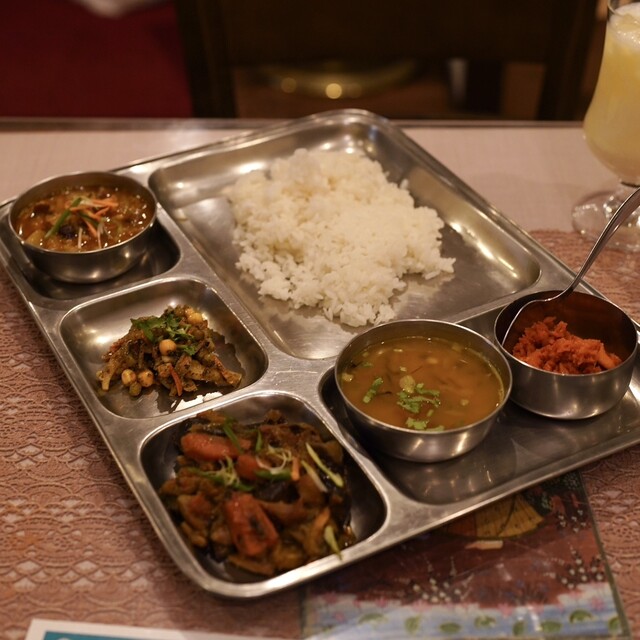
Approaching a small restaurant in Koiwa changes the expectations around Tokyo dining. The city’s luxury narrative usually points west or inward, toward Ginza counters, Aoyama dining rooms and Shinjuku hotel floors. Out in Edogawa, the rhythm is different: shopping streets, local regulars, compact rooms and meals planned around appetite rather than ceremony. Sansar Koiwa ten fits that side of the city, where South Asian cooking is treated as everyday dining with enough depth to reward a specific trip.
Tokyo’s Indian and Nepalese restaurants are often read too quickly by visitors, as if curry were a single category rather than a wide field of regional habits, migrant kitchens and Japanese adaptations. The more interesting addresses resist that flattening. They may look modest, but their value lies in range: curry, bread, rice, pickles, tandoor work, Nepali home-style dishes and the social ease of a room built for repeat use. The useful comparison is not with omakase, but with ramen, tonkatsu or soba: formats where regularity, consistency and local trust matter as much as destination appeal.
Koiwa's South Asian table sits outside Tokyo's central dining script
Koiwa is a useful corrective to the idea that Tokyo’s serious eating happens only in central wards. Edogawa’s restaurant culture is more residential and less performative, with dining rooms that work for weekday meals, groups of friends and repeat neighbourhood custom. That matters for South Asian food in particular. The cuisine benefits from informality: dishes ordered across the table, spice levels adjusted through preference rather than theater, and a menu that can serve both a quick curry meal and a deeper Nepali direction.
The recognition here is not incidental. Selection for Tabelog 100 in Asian and ethnic cuisine for Tokyo in 2024 places the restaurant inside a competitive field where small, category-specific specialists are measured against one another rather than against fine-dining rooms. Earlier Tabelog 100 selections in Asian and ethnic cuisine, as well as curry categories, suggest a longer pattern of local approval. That is a stronger signal than a single burst of attention, especially in a city where diners are unusually disciplined about repeat comparison.
There is also a price-tier point. In Tokyo, South Asian restaurants can sit anywhere from casual lunch counters to polished central-city dining rooms. This address belongs to the affordable neighbourhood bracket, closer in spirit to local everyday specialists such as Eiraku or Menya Ittou than to occasion-led formats. For curry-focused planning within the city, 3 Chome no Curry Ya San offers another Tokyo reference point, while [Curry Senmon Ten] Maruyama Kyoju. in Sapporo shows how Japan’s curry culture changes once the geography shifts.
The appeal is range, not ceremony
The restaurant’s categories, Indian, Nepalese and Indian curry, are doing more work than a casual scan suggests. Tokyo has many curry houses built around Japanese expectations of speed and portioning, but Nepali cooking adds a different grammar: more emphasis on sets, lentils, vegetable preparations, pickles and the domestic logic of a complete meal. The owner and head chef, Urmila, is linked to Kathmandu and Patan in public restaurant materials, a credential that matters only because it explains why the Nepali side of the menu should not be treated as an appendix to the curry list.
That distinction affects how to order. A first-timer chasing only the familiar curry-and-naan template may miss the restaurant’s broader purpose. The better approach is to read the room as a local South Asian table with Japanese regulars: choose across categories, allow the Nepali section to shape the meal, and treat take-out as a convenience rather than the defining format. This is not a restaurant that needs elaborate choreography. Its strength is that it can be used casually while carrying enough culinary specificity to justify planning around it.
For visitors assembling a Tokyo itinerary, the choice is partly logistical and partly philosophical. Central Tokyo will always be easier to combine with bars, hotels and late-night plans, but Koiwa rewards diners willing to leave the familiar restaurant map. For a broader view of the city’s dining range, start with Our full Tokyo restaurants guide, then compare category shifts through . 鮪と炭火焼き うお炭 秋葉原店, 12/10 Shinjuku ten, 124. KAGURAZAKA (Yakitori) and 2D Cafe. The point is not to rank them together, but to see how Tokyo moves between seafood, yakitori, café culture and immigrant kitchens without needing a single dining identity.
Plan it as a neighbourhood meal, then build the rest of the day around Tokyo
The booking experience should be treated with common Tokyo discipline: confirm current operations, avoid assuming English-language friction will solve itself at the door, and plan enough time for an east-side detour. This is not a central hotel-dining decision where a concierge desk absorbs the practical work. It is the sort of meal that benefits from a little preparation, especially for groups, dietary requests or travelers on a tight schedule.
The restaurant’s appeal also sits in contrast to Tokyo’s broader premium ecosystem. A traveler could spend the same day moving from a neighbourhood South Asian lunch to a serious cocktail program, a hotel bar, or a private cultural format. For that wider planning frame, keep Our full Tokyo hotels guide, Our full Tokyo bars guide, Our full Tokyo wineries guide and Our full Tokyo experiences guide close. Beyond Tokyo, EP Club’s Japan coverage stretches from -Grilled beef Sukiyaki- KAMAKURA TANUKIAN 鎌倉 たぬき庵 in Kamakura to.cafe in Osaka.know in Kumamoto, (Shoku) Vietnam in Kawasaki and [ki:] in Kyoto; for a transpacific contrast in Japanese-influenced casual dining, see Jōdo Saké Bar in Los Angeles and Onigiri Time in Pasadena.
Sansar Koiwa ten is strongest when understood as part of Tokyo’s less centralized food intelligence: a modest-format, award-recognized South Asian restaurant whose credibility comes from category depth rather than spectacle. The reward is not novelty. It is a clearer reading of how Tokyo actually eats beyond the prestige corridors.
- Dal Bhat
- Tandoori Chicken
- Momo
- Chatamari (Chata Mori)
- Special Omelette
- Aloo Chap (Alko Chapp)
Cuisine and Recognition
Side-by-side context: comparable cuisine and price.
| Venue | Cuisine | Price | Notes |
|---|---|---|---|
| Sansar Koiwa tenThis venue — the venue you are viewing | Traditional Nepalese Home-Style Cuisine | $$ | Not listed |
| Indian Street Food & Bar GOND | Indian Street Food & Curry | $$ | Chiyoda |
| Yappari India | Indian Curry House | $$ | Toshima |
| MAROLOGA Bhavan | Indian Curry House with Spice-Driven Drinks | $$ | Nakano |
| Curry no Mise Pusan | Casual Indian‑style Curry House | $$ | Musashi-Koganei |
| Halima kebab biryani | Halal Indian–Pakistani curry and biryani | $$ | Taitō |
Recognition history
Dated appearances from independent guides and award organizations, with the underlying list record or original source where available.
Tabelog 100 #86 · No. 86
Tabelog · Tabelog 100 - Asian cuisine / Ethnic cuisine - TOKYO - 2024







At a Glance
- Cozy
- Classic
- Lively
- Family
- Casual Hangout
- Group Dining
- Solo
- After Work
- Standalone
- Beer Program
- Local Sourcing
A small, homey dining room with a relaxed, family-run feel, simple decor, and a warm, welcoming atmosphere that highlights everyday Nepalese home cooking rather than formality.