Google: 4.5 · 1,169 reviews
San Huberto
.png)
A Michelin Plate-awarded asador on Calle de Montiel, San Huberto represents the wood-fired cooking tradition of Castilla-La Mancha with particular seriousness. Baby lamb and Castilian-style suckling pig anchor a menu that extends to Cantabrian hake and red tuna tataki, served in a dining room where a glass-fronted bodega and fresh seafood display counter set the tone before you sit down. Priced at the mid-range €€ level for Ciudad Real.
 Discover on Pearl
Pearl is the En Primeur Club membership app — saves, bookings, and concierge access live there. Same editors, same standards.
Wood Fire and Tradition in Castilla-La Mancha
The wood-fired asador is one of the oldest and most uncompromising formats in Spanish regional cooking. No technique obscures the product; everything depends on the quality of the animal, the heat of the oven, and the patience of the cook. In the meseta towns of Castilla-La Mancha, this format has never required reinvention, because it never fell out of use. San Huberto, on Calle de Montiel in Ciudad Real, sits squarely in that tradition, earning consecutive Michelin Plate recognition in 2024 and 2025 as evidence that the format, executed with care, still registers at a national level.
Ciudad Real is not a city that generates much dining column space, squeezed as it is between the Michelin-dense corridors of Madrid to the north and Andalucía to the south. Spain's three-star restaurants, from DiverXO in Madrid to El Celler de Can Roca in Girona and Arzak in San Sebastián, draw international attention to a handful of marquee cities. Progressive operators like Disfrutar in Barcelona, Mugaritz in Errenteria, Martin Berasategui in Lasarte-Oria, Quique Dacosta in Dénia, Azurmendi in Larrabetzu, Ricard Camarena in València, and Aponiente in El Puerto de Santa María have pushed the conversation toward technique and concept. San Huberto operates in a different register entirely: regional tradition rendered with enough discipline to earn sustained Michelin notice in a province few guides linger over.
The Room Before the Meal
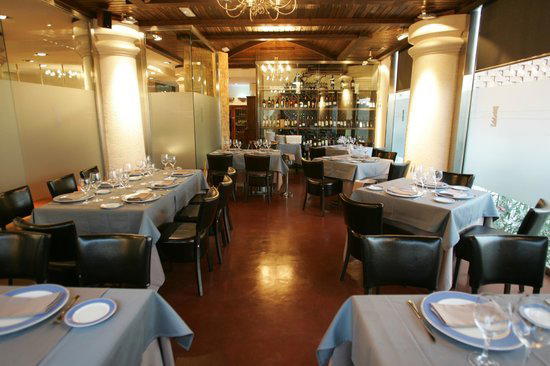
Walking into San Huberto, the physical arrangement communicates priorities before a dish arrives. A glass-fronted bodega lines part of the space, wine visible and present rather than hidden in a cellar or listed abstractly on a card. A fresh fish and seafood display counter sits in plain sight, the day's supply legible rather than described by a server. These are not decorative flourishes; they are a form of transparency common to serious traditional Spanish restaurants, where the product is the argument and keeping it visible is a point of professional pride.
The dining room proper carries what the Michelin assessment describes as a classic feel, matched by a summer terrace and a bar area that functions as a social space in the Spanish style. At the €€ price range, San Huberto occupies a tier accessible to local regulars and visiting professionals alike, well below the tasting-menu overhead of Spain's destination restaurants but positioned above the casual tapas bar. A Google rating of 4.5 from over 1,100 reviews points to consistent execution rather than occasional brilliance, which is exactly what a traditional asador format requires.
What the Menu Argues
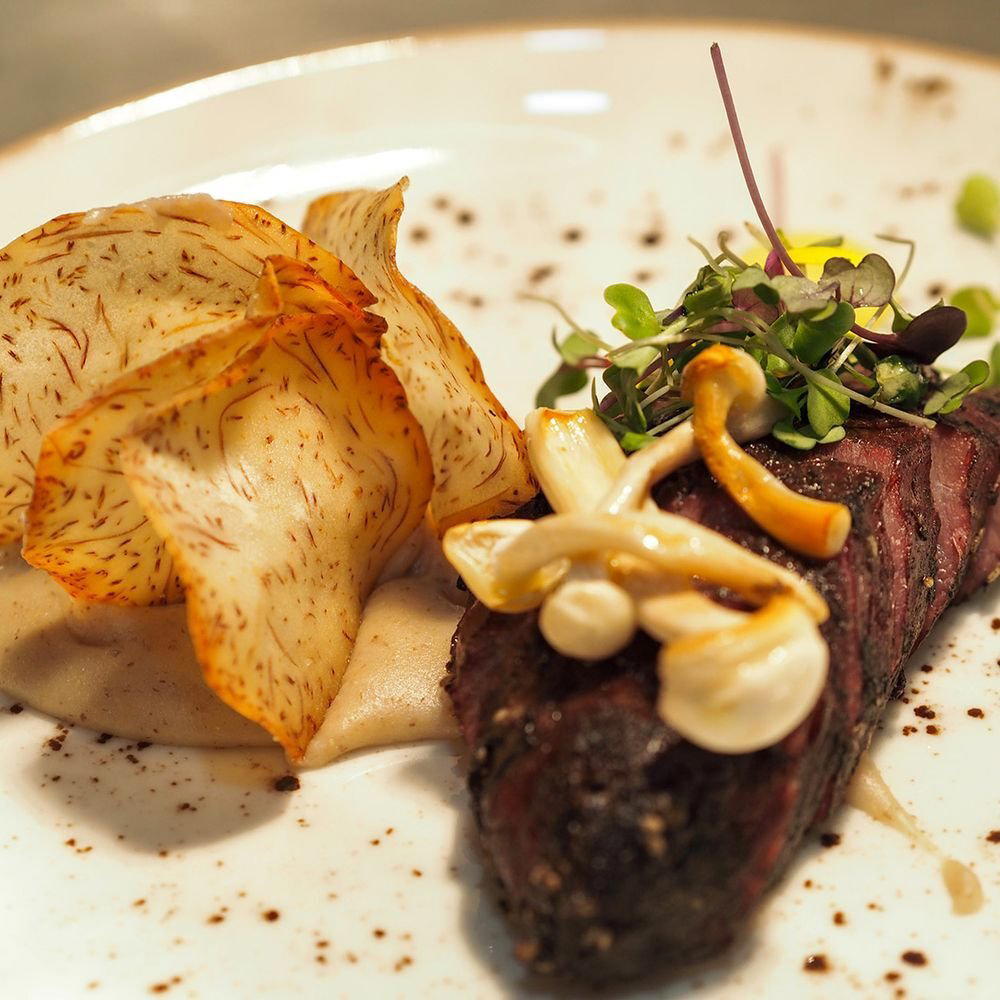
The à la carte at San Huberto is structured around the wood-fired oven as its central statement. Baby lamb and Castilian-style suckling pig are the reference points, dishes with deep roots in the cooking of the meseta, where long, low heat transforms young animals into something with crisp skin and yielding interior. These are preparations that reward patience and punish shortcuts, and they carry cultural weight across Castilla-La Mancha and Castilla y León alike.
But the menu does not stop there, and that breadth is worth noting. The fish and seafood selection pulls from further afield: Cantabrian hake, a northern Spanish product with a specific, prized texture; estuary sea bass; and red tuna tataki, which signals a kitchen comfortable working outside its regional boundaries when the product justifies it. The inclusion of stews alongside these options completes a picture of traditional Castilian cooking in a reasonably full expression, from slow-cooked legume-based dishes to prime seafood with the geographic reach to source it correctly. Starters described as enticing in the Michelin summary round out a menu that earns its Plate recognition through breadth as much as depth.
For useful comparison within the traditional-cuisine category, Auberge Grand'Maison in Mûr-de-Bretagne and Auga in Gijón offer points of reference for how traditional formats earn sustained recognition across European regional cooking contexts.
Context Within Ciudad Real's Dining Scene
San Huberto holds a specific position in Ciudad Real's restaurant offering. It is the kind of address that anchors a city's mid-to-upper dining tier without requiring the pilgrim logic of a destination restaurant. Mesón Octavio represents another point on the local map, and together they reflect a provincial dining scene that functions on regional integrity rather than trend-following.
The Michelin Plate, held for at least two consecutive years, signals a kitchen that meets the guide's standard for quality cooking without reaching for the star-level elaboration that would change the format entirely. That is not a consolation. In Spain's traditional asador category, Plate-level Michelin recognition is a genuine credential, applied to kitchens where the cooking is correct, the sourcing is taken seriously, and the format has not been diluted for a wider audience.
For those building a broader Ciudad Real itinerary, the city's wider food, drink, and accommodation options are covered in our full Ciudad Real restaurants guide, with additional resources in our full Ciudad Real hotels guide, our full Ciudad Real bars guide, our full Ciudad Real wineries guide, and our full Ciudad Real experiences guide.
Planning Your Visit
San Huberto is located on Calle de Montiel in Ciudad Real, a manageable address within the city. The €€ pricing means a full meal with wine sits comfortably below what comparable-quality asador cooking costs in Madrid or Toledo. Given the 1,110-review volume and 4.5 Google average, this is a restaurant with a sustained local following, which suggests booking ahead for weekend lunch, the peak slot for asador dining in Spanish provincial cities, is advisable. Specific hours and booking details are not confirmed in our records, so direct contact with the restaurant is the practical first step.
Pricing, Compared
A fast peer set for context, pulled from similar venues in our database.
| Venue | Price | Awards | Notes |
|---|---|---|---|
| San Huberto | €€ | A restaurant-asador with a classic feel where you can enjoy meticulously prepare… | This venue |
| Aponiente | €€€€ | Michelin 3 Star | Progressive - Seafood, Creative, €€€€ |
| Arzak | €€€€ | Michelin 3 Star | Modern Basque, Creative, €€€€ |
| DiverXO | €€€€ | Michelin 3 Star | Progressive - Asian, Creative, €€€€ |
| El Celler de Can Roca | €€€€ | Michelin 3 Star | Progressive Spanish, Creative, €€€€ |
| Quique Dacosta | €€€€ | Michelin 3 Star | Creative, €€€€ |
Continue exploring
More in Ciudad Real
Restaurants in Ciudad Real
Browse all →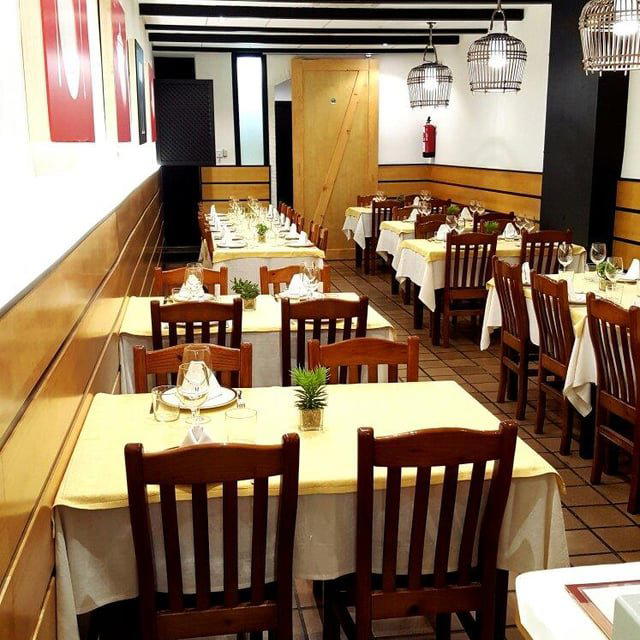
At a Glance
- Cozy
- Classic
- Rustic
- Date Night
- Celebration
- Family
- Business Dinner
- Open Kitchen
- Terrace
- Private Dining
- Extensive Wine List
- Farm To Table
Cozy, tranquil, well-climatized interior with a pleasant summer terrace, clean and welcoming atmosphere.