Salumeria Biellese
One of Manhattan's oldest Italian charcuterie shops, Salumeria Biellese on 8th Avenue has been curing meats in the northern Italian tradition since the early twentieth century. The shop occupies a specific niche in New York's deli landscape: a working production salumeria, not a retail concept dressed up to look like one. For visitors who follow cured meats seriously, it functions as a reference point rather than a novelty stop.
Pearl is the En Primeur Club membership app — saves, bookings, and concierge access live there. Same editors, same standards.
- Address
- 378 8th Ave, New York, NY 10001
- Phone
- +12127367376
- Website
- salumeriadeli.com
- Directions
- Get directions
 Saves & bookings on Pearl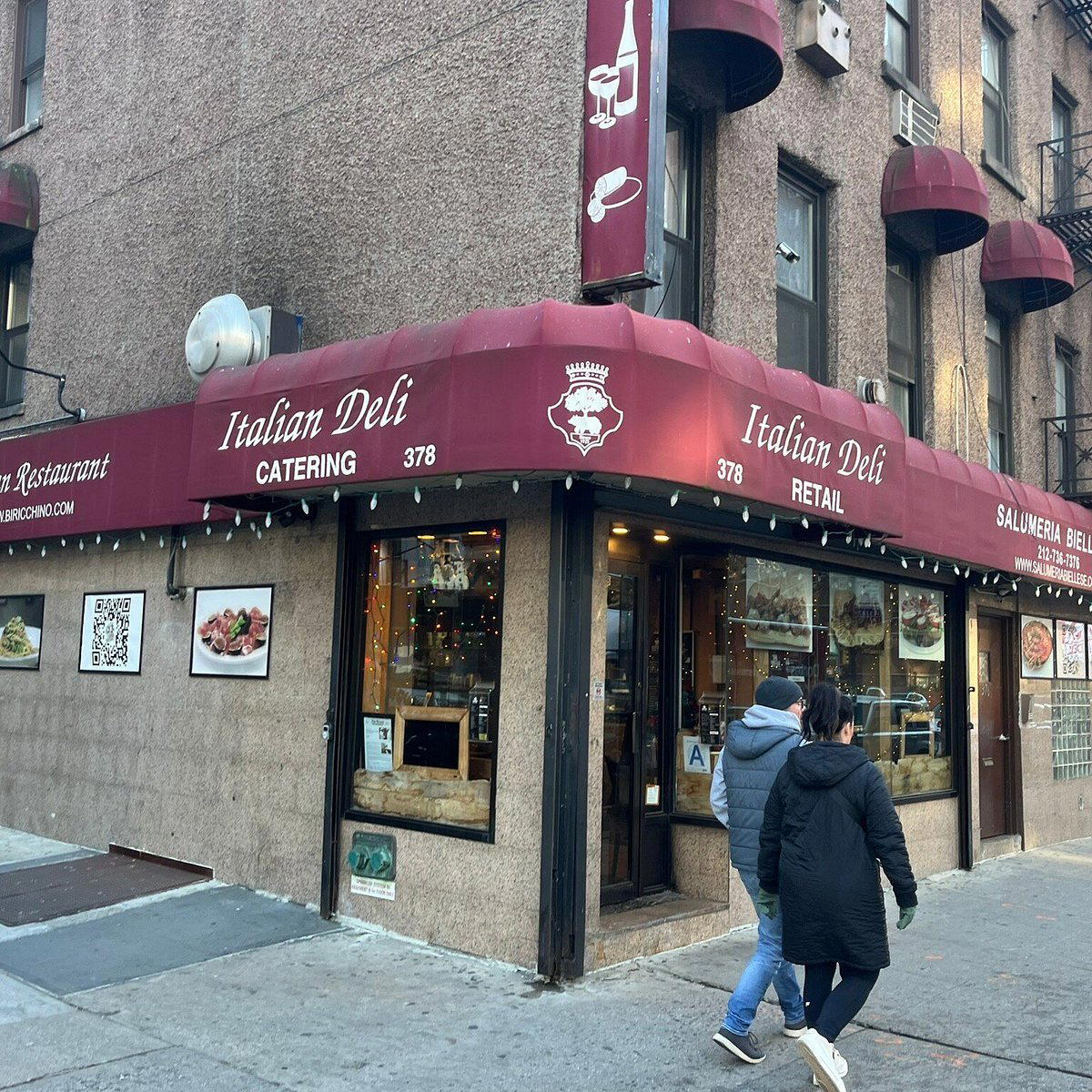
A Working Salumeria in a City of Concepts
In New York's current food moment, the word "salumeria" gets applied loosely to anything with a charcuterie board and reclaimed wood shelving. Salumeria Biellese, at 378 8th Avenue in Chelsea, is the counterargument to that trend. The shop traces its roots to the early twentieth century and the Biella region of Piedmont, a northern Italian province with a distinct tradition of cured meats that differs meaningfully from the Emilia-Romagna products that dominate American Italian delis. Walking into the space, the first thing that registers is that this is a production environment adapted for retail, not the reverse. The refrigerated cases, the smell of curing salt and fat, the lack of interior styling decisions: all of it signals that the meat is the point, not the atmosphere around it.
That positioning matters in 2024 New York, where the premium end of the dining spectrum has stratified sharply. Tasting-menu destinations like Le Bernardin, Masa, and Per Se occupy one tier; casual counter shops rooted in European immigrant trade traditions occupy another, entirely different one. Salumeria Biellese belongs to the latter, and the distinction is worth holding onto before you visit: this is not a restaurant, and arriving with restaurant expectations will produce confusion on both sides of the counter.
The Northern Italian Curing Tradition
Piedmontese charcuterie sits somewhat apart from the products most Americans encounter first. The region's cured meats tend toward leaner profiles and more restrained seasoning than, say, the lardo or mortadella traditions of central Italy. Salame della duja, preserved under fat in terracotta, and various air-dried preparations tied to Alpine climate conditions are part of the Biellese heritage. The shop's lineage connects to that specific regional practice, which gives it a different reference point than a generalist Italian-American deli operating from a broader, more blended tradition.
For context: the northern Italian salumeria format in New York has always been a minority presence. The dominant Italian-American deli tradition in the city draws heavily from southern Italian and Sicilian immigrant communities, whose preserved meat and cheese culture reflects different climates and ingredients. A shop rooted in Piedmontese methods occupies a narrower, more specialized position in that larger story, one that has historically been underdocumented relative to its significance.
What to Know Before You Go
Planning a visit to Salumeria Biellese is direct. Walk-in is the practical approach for most visitors. The address, 378 8th Avenue, places the shop in Chelsea, a neighborhood with good subway access via the A, C, and E lines at 34th Street-Penn Station. The shop operates as a retail counter, not a reservable dining experience.
That said, arriving with some preparation produces a better outcome than arriving cold. Knowing the regional tradition in advance means you can ask more specific questions at the counter and get more specific answers. Shops of this type often have products that are not displayed or labeled in ways that make them immediately legible to unfamiliar visitors. The counter staff, at a place with this kind of institutional continuity, are typically the leading navigation tool available. This is a format where the conversation at the point of purchase is part of the experience, not an obstacle to it.
Hours follow a simple daytime schedule, with Sunday closed. Chelsea has enough options in the surrounding blocks that building the salumeria into a broader afternoon makes more practical sense than treating it as a standalone destination requiring a separate trip.
How It Fits Into New York's Broader Food Picture
New York has a long tradition of specialist food shops that function as preservation sites for immigrant culinary knowledge: the kind of place that survives not because it adapts to trend cycles but because a specific, loyal clientele keeps returning for something that cannot be replicated by a larger commercial operation. The restaurant fits that description. It does not compete with the city's high-concept Italian restaurants or with the new wave of European-import charcuterie programs appearing on tasting menus. It competes, if that word even applies, with institutional memory.
For visitors building a New York food itinerary around diverse price points and experiences, the salumeria represents a different kind of stop than the reservation-required destinations that anchor most premium itineraries. The restaurant sits at one end of that spectrum, alongside the kind of specialist retail that serious food travelers typically rate as highly as any starred restaurant, because the knowledge embedded in it is not easily found elsewhere.
The comparison extends beyond New York. Specialist food production shops with long institutional histories appear in most major American food cities: Emeril's in New Orleans operates in a different register entirely, but the principle of a specific culinary tradition taking physical form in a specific address applies across contexts. Internationally, the format finds parallels in places like the charcuterie counters adjacent to restaurants such as Alain Ducasse at Louis XV in Monte Carlo, where the sourcing relationship with producers of this type is understood as foundational rather than decorative. What the restaurant provides, at its price tier and in its format, is the upstream version of that relationship made directly accessible.
For itinerary builders who are also covering farm-to-table tasting experiences like Blue Hill at Stone Barns or production-focused destinations like Single Thread Farm in Healdsburg, the restaurant offers a useful urban counterpart: a place where the production process is the visible subject, not the finished plate.
A Quick Peer Check
Comparable venues nearby, for context on price, style, and recognition.
| Venue | Cuisine | Price | Notes |
|---|---|---|---|
| Salumeria BielleseThis venue — the venue you are viewing | Traditional Italian Deli | $$ | Not listed |
| Pasta Lovers | Casual Italian Trattoria | $$ | Midtown-Times Square |
| John's of 12th Street | Old-School Red-Sauce Italian | $$ | East Village |
| Arturo's | Classic Italian Coal-Oven Pizza | $$ | Greenwich Village |
| San Matteo Pizzeria e Cucina | Neapolitan Pizzeria e Cucina | $$ | Upper East Side-Yorkville |
| Altamirano's Italian Ristorante | Italian Trattoria | $$ | Upper East Side-Yorkville |
Continue exploring
More in New York City
Restaurants in New York City
Browse all →
Bars in New York City
Browse all →
Hotels in New York City
Browse all →





At a Glance
- Classic
- Rustic
- Casual Hangout
- Historic Building
- Local Sourcing
Current opening hours
- Monday
- 10 AM–5 PM
- Tuesday
- 10 AM–5 PM
- Wednesday
- 10 AM–5 PM
- Thursday
- 10 AM–5 PM
- Friday
- 10 AM–5 PM
- Saturday
- 10 AM–5 PM
- Sunday
- Closed
Hours can change for holidays and private events. Last verified .
Casual, no-frills deli atmosphere with functional seating, red and white checkered tablecloths, and a focus on quality food over decor.