Our verdict
SALT has carved out a position in Dubai's casual dining scene by anchoring its identity around ingredient quality and sourcing transparency at a time when the city's food culture tilts heavily toward spectacle and formal fine dining. The format is approachable, the crowds are loyal, and the reputation rests on what goes into the food rather than the setting around it.

Pearl is the En Primeur Club membership app, where members save venues, book tables and use the concierge.
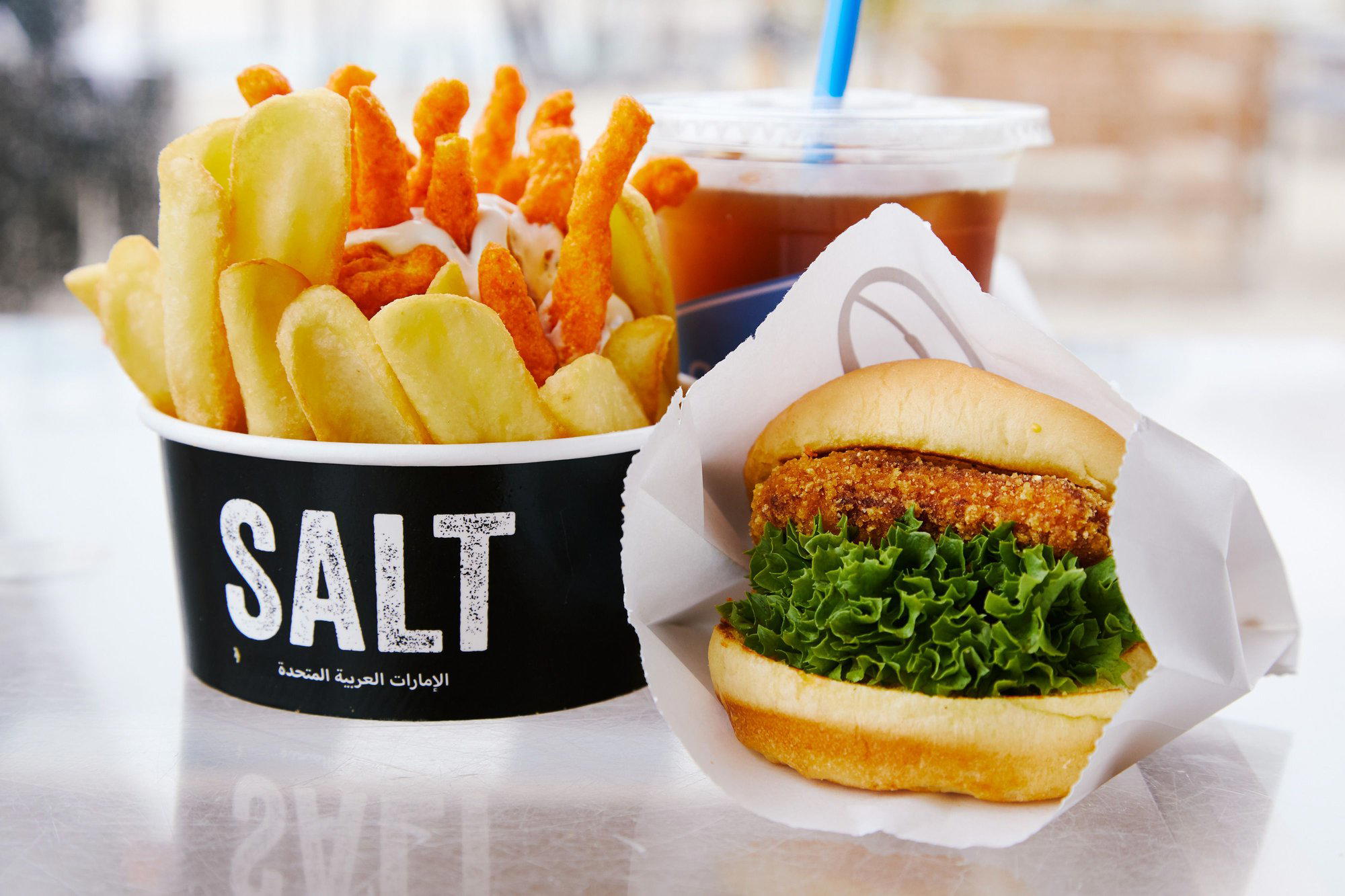
The menu
What to order
- Wagyu beef burger
Where Dubai's Ingredient Conversation Gets Casual
Dubai's restaurant culture has long been weighted toward the theatrical end of the spectrum: panoramic tower views, imported celebrity chefs, and tasting menus priced to signal occasion. The city has genuine fine dining worth seeking out, from the precision Indian cooking at Trèsind Studio to the woodfire-led modern cuisine at 11 Woodfire. What has been comparatively harder to find is a place where sourcing rigour and product quality drive the proposition at a casual price point. SALT occupies that gap, and its following in Dubai suggests the gap was real.
The physical approach tells you something before you eat. SALT built its early reputation through a format that stripped away the ambient theatre common in this city: no skyline as backdrop, no uniformed welcome sequence. The experience was designed to centre attention on what arrived at the counter rather than what surrounded it. In a dining market where Row on 45 competes partly on altitude and FZN by Björn Frantzén trades on an internationally recognised name, that restraint read as a deliberate editorial statement about where the value sits.
The Sourcing Argument Behind the Menu
The ingredient-first framing that SALT built its reputation on connects to a broader shift visible in progressive dining cities. At the formal end of that spectrum, restaurants like Aponiente in El Puerto de Santa María or Amber in Hong Kong make provenance the intellectual architecture of entire tasting menus. The argument SALT makes is that the same discipline around sourcing can function at a casual register, where the food comes faster and costs less but the underlying question about where ingredients originate remains the same.
That argument has resonance in the Gulf context specifically. The UAE imports a significant share of its food supply, which makes sourcing decisions more visible and more deliberate than in regions where local supply chains are assumed. A restaurant that takes a clear position on what it sources and from where is making a more pointed statement here than it might in, say, a Northern California context where farm-to-table supply chains have been normalised for decades. Venues like Lazy Bear in San Francisco or Emeril's in New Orleans developed their sourcing identities within established regional food cultures; SALT developed its in a city still actively constructing one.
How SALT Sits in Dubai's Casual Tier
Dubai's mid-market dining has matured considerably in the past five years, moving beyond the period when the city's food conversation was almost exclusively about formal fine dining and hotel restaurants. SALT belongs to a cohort of Dubai venues that treat the casual format as a serious proposition rather than a scaled-down version of something grander.
That positioning has implications for who books and how. The audience skewing toward SALT is not the same audience planning a formal occasion at moonrise or comparing tasting menu formats across the city's creative dining options. It is closer to the audience that might visit Erth in Abu Dhabi, a venue that similarly frames its identity through heritage and ingredient provenance rather than technique as spectacle. Across the wider UAE, that constituency has grown, and venues that identified it early have benefited from accumulated loyalty rather than chasing the next international opening.
The Regional Comparison
Ingredient-led casual dining looks different depending on the city. In New York, Atomix has pushed sourcing transparency into the fine dining register with elaborate course notations and producer credits. At the other end of the formality scale, venues in cities like Sharjah, such as AL NAWAB RESTAURANT LLC, anchor their identity in regional culinary tradition rather than explicit sourcing language. SALT sits between those poles: casual in format, but self-conscious about product in a way that aligns it more with the former than the latter.
That self-consciousness matters in Dubai because the city's dining press tends to track it. Recognition in Dubai's food media has increasingly extended to venues that articulate a clear point of view about their ingredients, not just their setting or their chef's international biography. The venues that have earned sustained coverage, as opposed to a single opening-week splash, tend to be those with a repeatable and legible identity. SALT's sourcing-first frame provides that legibility.
Planning a Visit
SALT operates across multiple locations in Dubai, which affects logistics depending on which part of the city you are based in or travelling through. The casual format means walk-ins are generally viable, though peak hours on weekends see queues that reward arriving early or outside the main lunch and dinner rushes. For visitors combining a SALT visit with broader Dubai dining, the full context of where it fits among the city's restaurants is mapped in our full Dubai restaurants guide. Those planning a wider UAE trip might also consider pairing it with a visit to Abu Dhabi, where Erth offers a complementary angle on provenance-driven dining at a higher formality level.
For comparison with how sourcing-led identities function at the formal end of the global dining spectrum, the work at Le Bernardin in New York City or the structured precision of Alain Ducasse at Louis XV in Monte Carlo illustrates how ingredient provenance gets communicated at price points several tiers above SALT. The contrast clarifies what is genuinely distinctive about making that argument at the casual register: the discipline required is the same, the margin for error is smaller, and the audience is harder to impress with credential alone.
Frequently asked questions
How does SALT compare to other casual dining options in Dubai?
Dubai's mid-market dining tier has grown considerably in the past five years, but SALT remains one of the few casual venues in the city where ingredient provenance is treated as a primary selling point rather than a footnote. That puts it in a different conversation from the city's fast-casual chains while sitting well below the price register of Dubai's fine dining circuit. For visitors based in different parts of the city, the multiple SALT locations across Dubai make it a practical as well as a culinary consideration.
What should I order at SALT?
SALT's reputation in Dubai was built around its burgers, which remain the anchor of the menu and the reason most visitors make the trip. The ingredient-first framing the venue is known for runs through the sourcing behind those core items rather than through a rotating tasting format. Checking the current menu at whichever Dubai location you plan to visit is the most reliable way to confirm what is available on the day.
Do they take walk-ins at SALT?
SALT operates across multiple locations in Dubai, and the format has historically leaned toward a casual, counter-service model that accommodates walk-in traffic rather than requiring advance reservations. That said, wait times vary by location and time of day, particularly at high-footfall spots on weekends. Confirming the policy with the specific location you plan to visit is advisable.
What has SALT built its reputation on?
SALT established itself in Dubai by centering the conversation on sourcing and ingredients at a price point and format that the city's dining scene rarely addressed, most of the attention went to celebrity-chef tower restaurants and formal tasting menus. That ingredient-first positioning, applied to casual formats like burgers, gave SALT a distinct identity in a market that had little equivalent in the mid-market tier. The multi-location expansion across Dubai reflects how that positioning resonated with the city's dining public.
Peers in This Market
Comparable venues nearby, for context on price, style, and recognition.
| Venue | Cuisine | Price | Awards | Notes |
|---|---|---|---|---|
| SALTThis venue (the venue you are viewing) | Beach Burgers | $20–30 | Not listed | Not listed |
| The MAINE Land Brasserie Restaurant, Business Bay Dubai | North American Brasserie Steakhouse | $50–100 | Gault & Millau UAE Selected Restaurant | Bussiness Bay |
| SALT Kite Beach | American Beach Burgers and Sliders | $20–30 | Not listed | Umm Suqeim |
| Arabian Tea House Restaurant & Cafe - Al Fahidi, Dubai | Authentic Emirati | $10–20 | Not listed | Al Souq Al Kabeer |
| Moon Slice Pizza | Modern Neapolitan Pizza | $30–50 | Not listed | Jumeira |
| Somewhere | Modern Middle Eastern Fusion | Not listed | Not listed | Downtown Dubai |