moonrise







1 Michelin Star · World's 50 Best #10 · Star Wine List
Our verdict
Twelve seats, twice nightly, in a converted Al Satwa address that holds a Michelin star and a top-ten MENA ranking from the World's 50 Best. Chef Solemann Haddad's 12-course creative menu is plated at the counter in full view of every diner. The format is closer to a private kitchen than a conventional restaurant, and the reservation list reflects that scarcity.

Pearl is the En Primeur Club membership app, where members save venues, book tables and use the concierge.
The menu
What to order
- Pani Puri Explosion
- Grilled Cheese
- Sarookh Scallop
- Alfredo Ravioli
A Counter in Al Satwa That Changed the Conversation
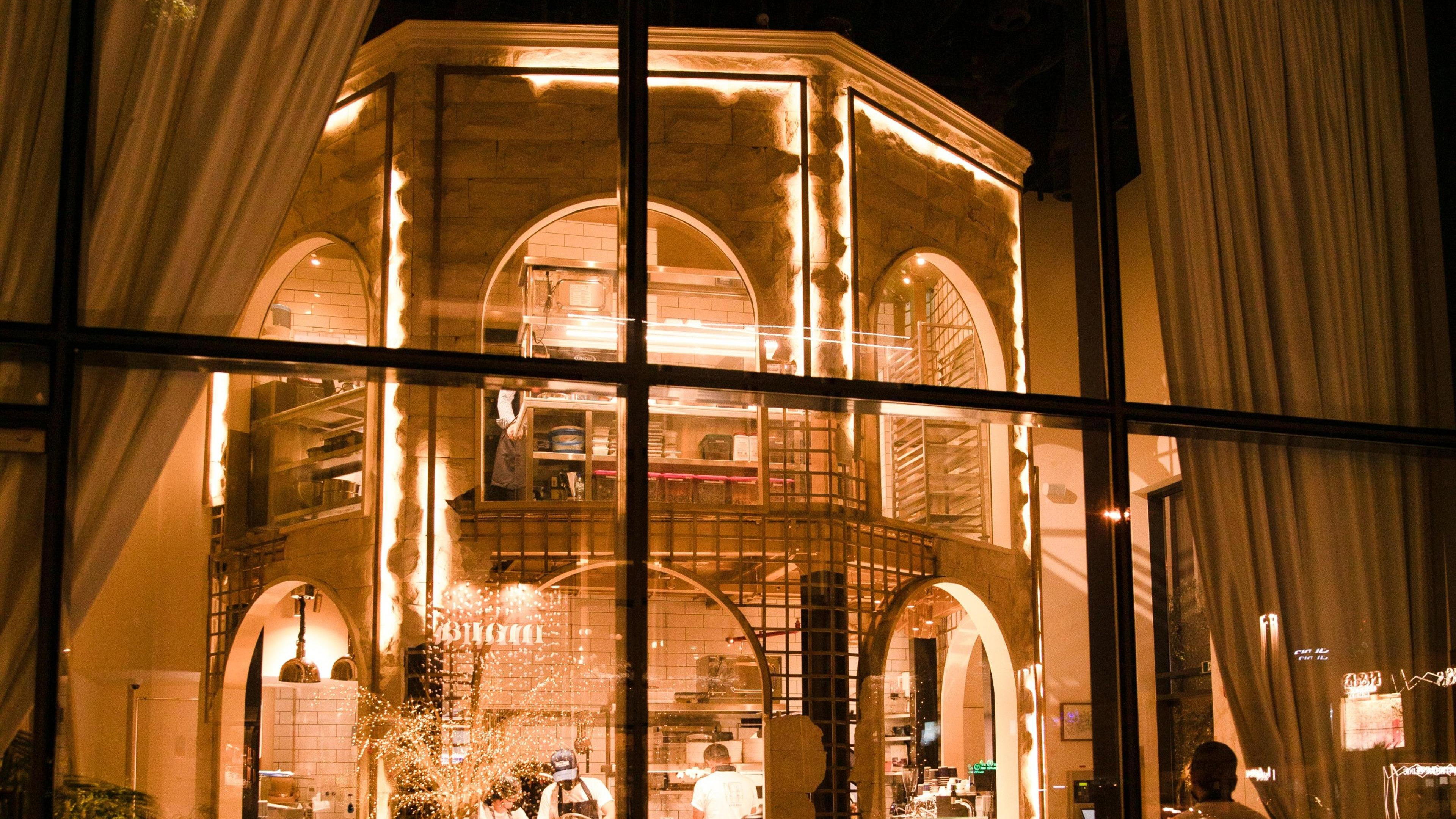
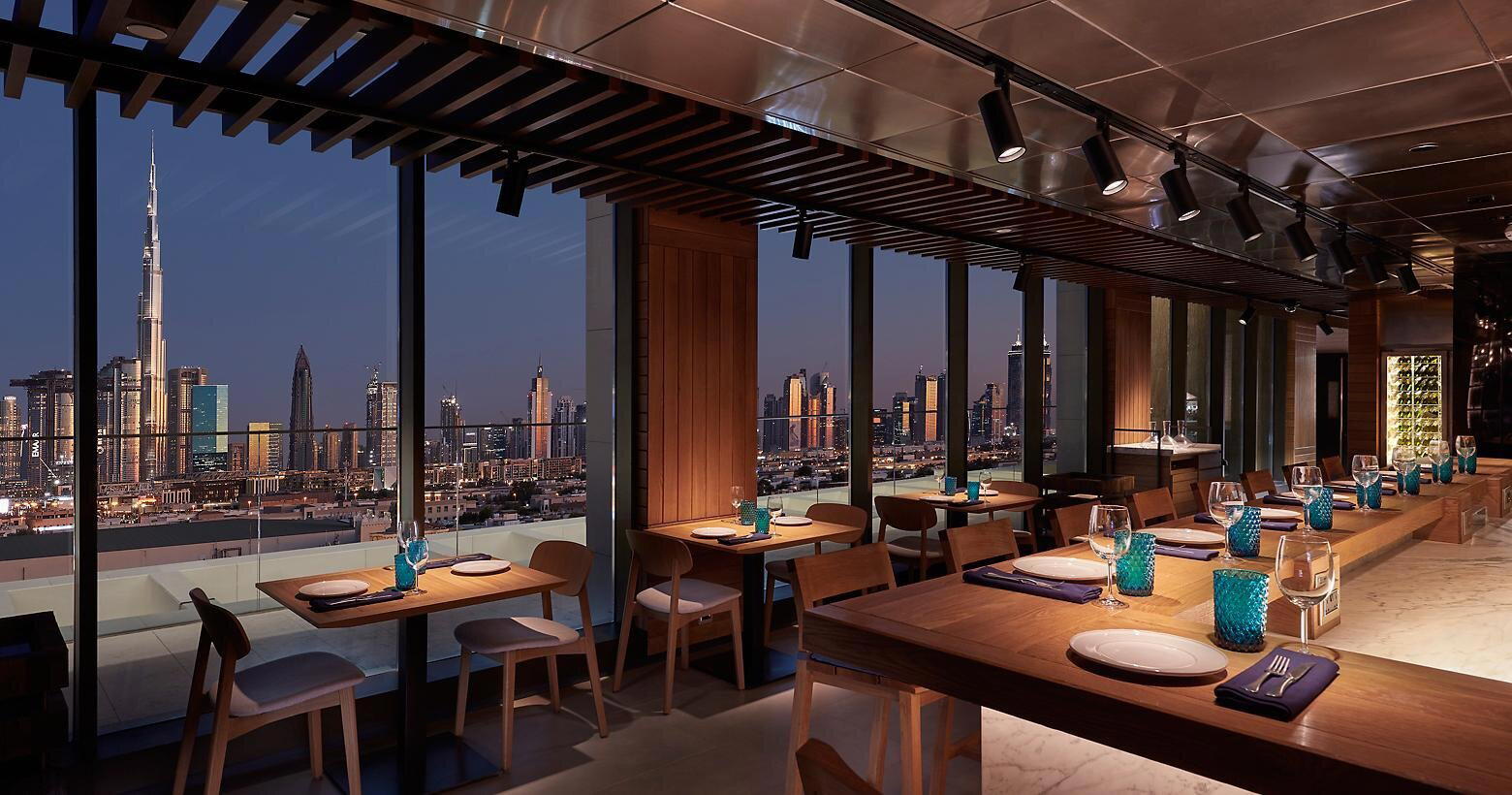
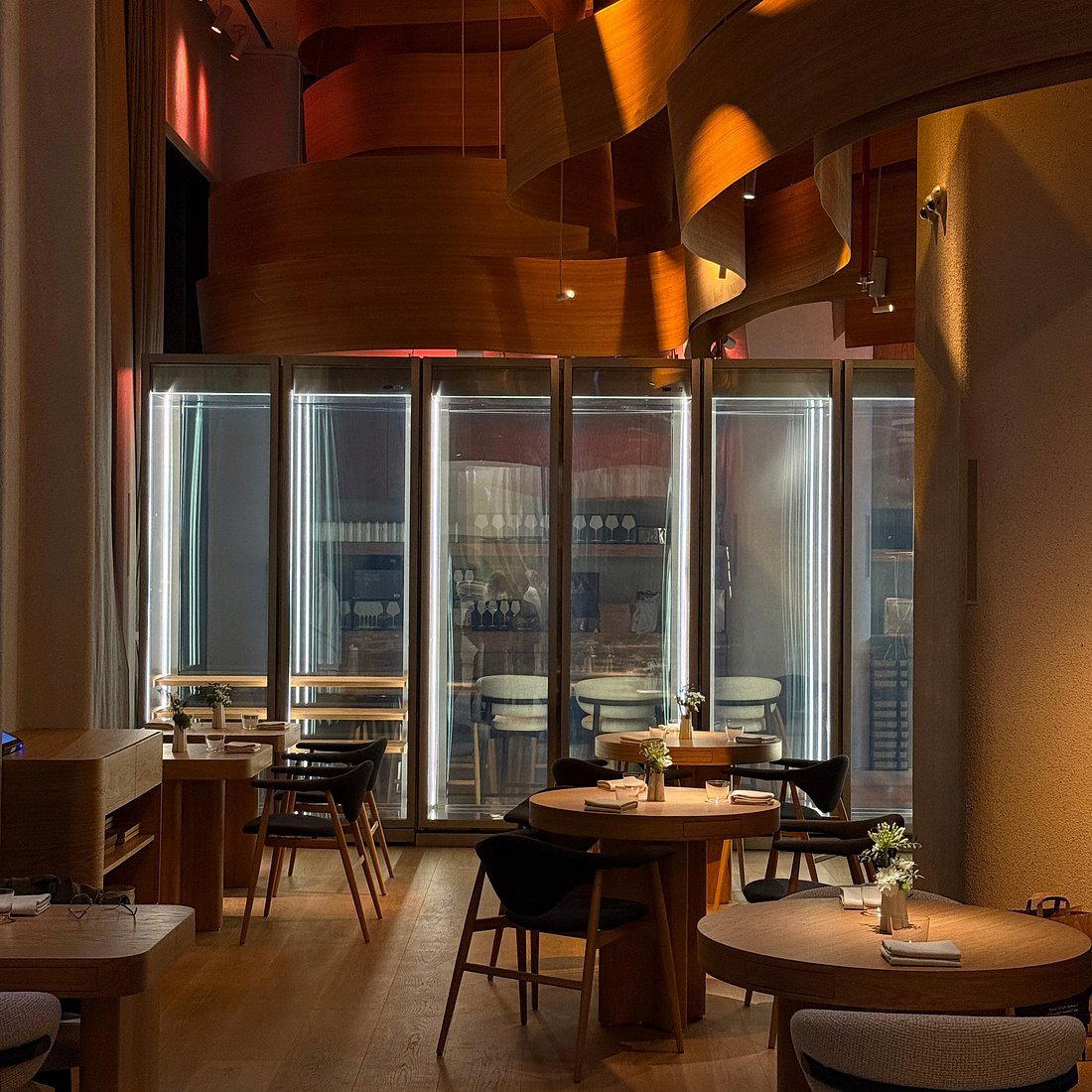
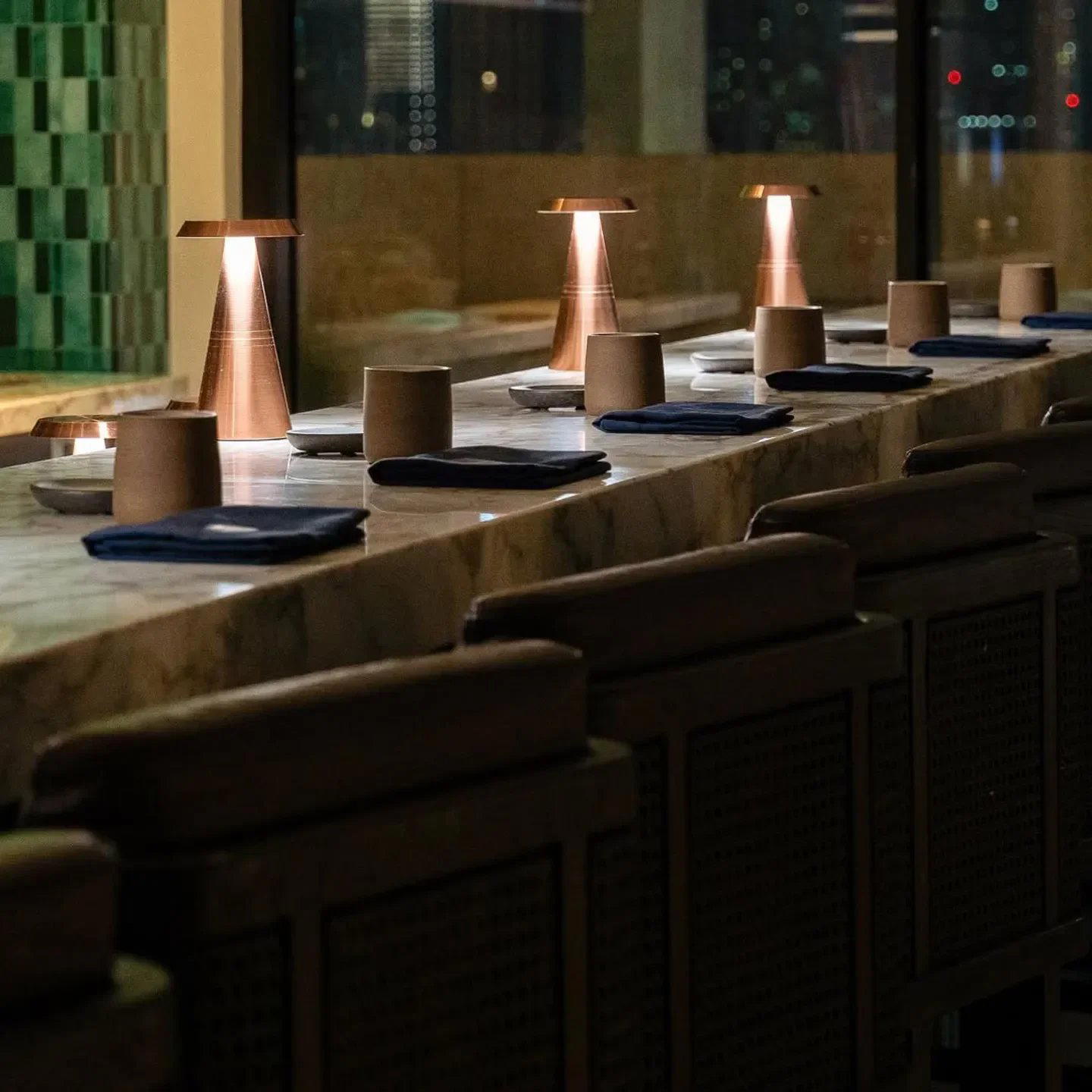
Dubai's fine-dining circuit has long oriented itself around hotel towers, waterfront addresses, and global brand extensions. Moonrise sits at a deliberate remove from all of that. Its home is Eden House in Al Satwa, a neighbourhood that sits between the hypergloss of Downtown and the older, denser residential streets of the city's middle belt. The physical approach does not signal grand arrival. What you find inside is a counter format stripped to its essentials: twelve seats arranged so that every diner faces the kitchen, every dish is plated in direct line of sight, and the distance between cook and guest collapses entirely.
That compression of space is not decorative. In a city where spectacle is the default register, the deliberate smallness of Moonrise reads as a position statement about what fine dining can be when scale is removed from the equation. The format has direct precedent in the omakase counters of Tokyo and the chef's-table experiments that European kitchens ran in the 2010s, but in the Dubai context it remains rare. A 12-seat capacity across two nightly sittings means the kitchen serves at most 24 covers a night.
Creative Cuisine and Its Cultural Coordinates
The cuisine category listed for Moonrise is Creative, a classification that in practice spans an enormous range. At its strongest, it describes kitchens that have absorbed a cultural tradition deeply enough to interrogate and reimagine it. The latter reading applies here. Chef Solemann Haddad grew up in Dubai, and the menu's creative architecture is shaped by that specificity rather than by a generic international idiom.
This matters because the creative fine-dining category in the MENA region is in the process of separating into two distinct streams. One stream imports European tasting-menu formats wholesale and applies them to local ingredients as garnish. The other works from the inside out, treating regional flavour memory and ingredient logic as the generative material, then building technical precision around that foundation. Moonrise belongs to the second stream, which is also where Erth in Abu Dhabi has staked its position, drawing on Emirati culinary tradition as primary source rather than as decorative reference.
Globally, this approach has strong precedent. The creative restaurants that have generated the most durable critical attention over the past two decades, from Quique Dacosta in Dénia to The Fat Duck in Bray to Cocina Hermanos Torres in Barcelona, tend to be rooted in a specific place and culinary inheritance rather than free-floating between influences. The creative category only works when there is something particular being interpreted. Moonrise's critical traction suggests the kitchen has found its particular thing.
The recognition record for Moonrise is compressed and dense. Michelin awarded a star in 2024 and retained it in 2025, which in a young restaurant represents confirmation rather than a courtesy nod. The World's 50 Best Restaurants MENA ranking placed it at number ten in 2024. Opinionated About Dining, which weights its rankings heavily toward peer and industry feedback, ranked it 319th among leading restaurants in Asia in its 2025 list. Star Wine List awarded it a White Star in 2024, a signal about the beverage program's seriousness that sits alongside the culinary recognition.
Taken together, these rankings place Moonrise in a small peer group within Dubai's fine-dining tier. Trèsind Studio occupies a comparable award-weighted position through its progressive Indian tasting menu. Ossiano holds Michelin recognition in the seafood-led creative format. Row on 45 operates in the higher-altitude luxury bracket. What distinguishes Moonrise within this set is not the awards in isolation but the combination of awards with a capacity model that would be unusual in any city. Most Michelin-starred restaurants in Dubai operate at a scale that allows for commercial sustainability through volume. Moonrise has made the opposite bet: that twelve seats twice nightly, priced at the top of the market, can sustain a kitchen operating at the level these recognitions require.
For comparison, consider where the creative format sits in other cities. Alléno Paris au Pavillon Ledoyen and Enrico Bartolini in Milan operate in the creative category at significant scale, with institutional infrastructure behind them. JAN in Munich and Steirereck im Stadtpark in Vienna show how the creative category can be sustained through a distinct local identity without defaulting to European fine-dining conventions. Moonrise is solving a version of the same problem in a market that has historically rewarded scale and spectacle over restraint and specificity.
The Scarcity Economy of a 12-Seat Counter
Dubai has no shortage of difficult reservations. TERO by Reif Othman operates on a similarly intimate format. Late Eatery has built a reputation at the other end of the night. But Moonrise's particular scarcity, twelve seats across two sittings, means availability is structurally constrained in a way that larger venues cannot replicate regardless of demand.
The 12-course tasting menu format, served twice nightly, also creates a rhythm that differs from à la carte service. The kitchen runs the same sequence to both sittings, which allows a level of refinement and consistency that free-flowing service cannot guarantee. For diners, the implication is that timing matters: both sittings exist, which gives some flexibility, but the format is fixed and the pace is set by the kitchen rather than the guest. This is not a venue for a meal that might extend into an open-ended evening. It is a venue for a meal that proceeds with precision and concludes on the kitchen's terms.
Planning Your Visit
Moonrise is located at Eden House in Al Satwa, Dubai. The price tier is at the top of the market ($$$$), consistent with the Michelin-starred tasting menu format and the capacity constraints.
| Venue | Format | Capacity | Price Tier | Awards |
|---|---|---|---|---|
| Moonrise | 12-course counter tasting menu, 2 sittings | 12 seats | $$$$ | Michelin 1 Star (2024, 2025), 50 Best MENA #10 |
| Trèsind Studio | Progressive Indian tasting menu | Small format | $$$$ | Michelin 1 Star |
| Ossiano | Seafood-led tasting menu | Mid-size | $$$$ | Michelin 1 Star |
| Row on 45 | Fine dining, refined format | Mid-size | $$$$ | Michelin recognition |
For broader planning across the city, see our full Dubai restaurants guide, our full Dubai hotels guide, our full Dubai bars guide, our full Dubai wineries guide, and our full Dubai experiences guide.
Frequently asked questions
What's moonrise's location?
moonrise is located at Eden House - Al Satwa - Dubai - United Arab Emirates, Dubai.
What does dinner at moonrise typically cost?
Pricing at moonrise is listed as $$$$.
What distinctions does moonrise have?
moonrise has received recognition including: Moonrise is a restaurant in Dubai, United Arab Emirates. It was published on Star Wine List on November 13, 2024 and is a White Star.; Moonrise is arguably the hottest reservation ticket in a city replete with exciting new restaurants The b….
What dish is moonrise famous for?
Moonrise does not publicise a signature dish, which aligns with the logic of its 12-course counter format: the sequence is the point, not any single plate. Each course is plated at the counter in front of the 12 seated diners, making the full progression inseparable from the experience. The Michelin jury awarded a star in both 2024 and 2025, suggesting the kitchen's consistency runs across the menu rather than resting on one showpiece.
Is moonrise focused on a specific cuisine style?
Reputation First
| Venue | Cuisine | Price | Awards | Notes |
|---|---|---|---|---|
| moonriseThis venue (the venue you are viewing) | Modern Dubai-Inspired Fine Dining | $500+ | 1 Michelin Star · World's 50 Best #10 | Not listed |
| 11 Woodfire | Modern Woodfire Grill | $150–200 | 1 Michelin Star · World's 50 Best #14 | Modern Cuisine |
| Avatara Restaurant | Modern Vegetarian Indian Fine Dining | Not listed | 1 Michelin Star · Gault & Millau UAE Selected Restaurant | Indian |
| Al Mahara | Modern Italian Seafood | $300–500 | Michelin Plate · World's 50 Best #31 | Seafood |
| Zuma | Modern Japanese Izakaya | $150–200 | Michelin Plate · World's 50 Best #34 | Japanese - Asian, Japanese, Japanese Contemporary |
| City Social | Modern European with Japanese influences | $150–200 | Michelin Plate · Star Wine List | Modern British, Modern Cuisine |
Recognition history
Dated appearances from independent guides and award organizations, with the underlying list record or original source where available.
Michelin 1 Star
Michelin
World's 50 Best MENA's Best Restaurants #10
World's 50 Best
Star Wine List
Star Wine List
Gault & Millau UAE Selected Restaurant
Gault & Millau · Gault & Millau UAE 2026 - Selected Restaurant
Opinionated About Dining Top Restaurants in Asia Recommended
Opinionated About Dining
Full recognition history (11 entries)
Opinionated About Dining Top Restaurants in Asia Ranked #319
Opinionated About Dining
The Best Chef One Knife
The Best Chef
World's 50 Best MENA's Best Restaurants #10
World's 50 Best
World's Best Wine Lists Awards WBWL 2-Star
World's Best Wine Lists Awards
World's Best Wine Lists Awards WBWL Category Winner
World's Best Wine Lists Awards
Michelin 1 Star
Michelin