




Michelin Plate · World's 50 Best #34 · Star Wine List
Our verdict
Zuma sits in DIFC's Gate Village as the Dubai outpost of a global Japanese contemporary group, holding a Michelin Plate (2025) and ranked 19th in the World's 50 Best Restaurants MENA list for 2024. The shared-format menu draws from robata, sushi, and izakaya traditions, while the bar programme, sake, shochu, and Japanese whisky, is woven into the meal rather than treated as an afterthought. Weekend DJs, a large terrace, and an island bar make this one of DIFC's more animated dining rooms.

Pearl is the En Primeur Club membership app, where members save venues, book tables and use the concierge.
The menu
What to order
- Spicy beef tenderloin
- Black cod miso
- Wagyu beef
- Rock shrimp
- Crab salad
Where Japanese Technique Meets Gulf Appetite
Contemporary Japanese dining in the Gulf has always had an unusual relationship with restraint. The izakaya tradition, convivial, drink-forward, built around shared small plates, translates well to a region where group dining is the default and long tables are preferred over counter seats. What does not always survive the translation is the discipline of the beverage programme. At many addresses across Dubai, sake arrives as an afterthought on a drinks list otherwise dominated by Champagne and cocktails. The stronger efforts treat sake and shochu as structural elements, paired deliberately against the food rather than listed for completeness.
Zuma, operating from Podium Level of Gate Village Building 3 in DIFC, belongs to the latter category. The international group built its Dubai presence on the same premise that made its London original influential: that Japanese cooking could be framed with generosity and volume without abandoning technique. The Dubai edition holds a Michelin Plate for 2025, ranks 19th in the World's 50 Best Restaurants MENA list for 2024, and appears in Opinionated About Dining's Leading Restaurants in Asia rankings, sitting at 324 in 2025 after reaching 287 in 2024.
The Sake Programme as Structural Argument
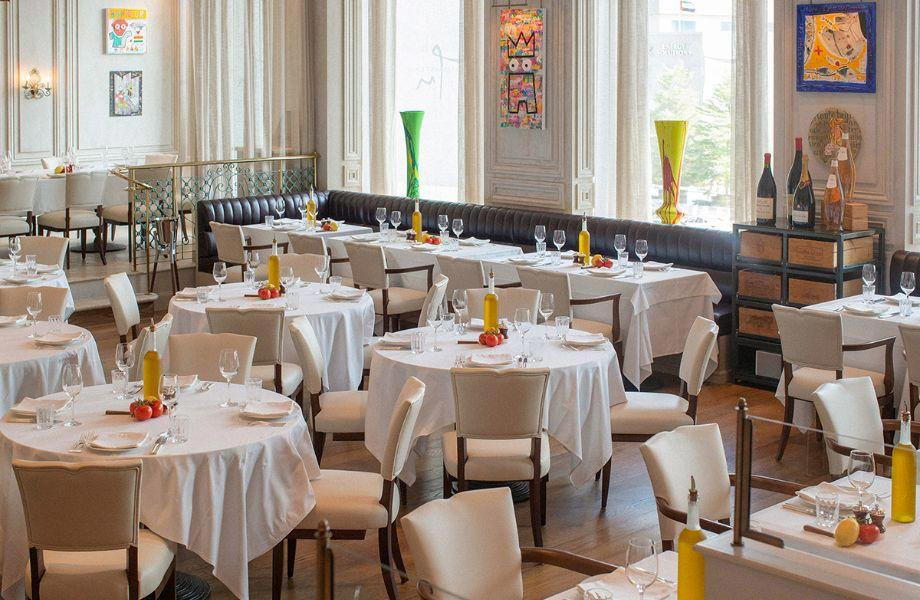
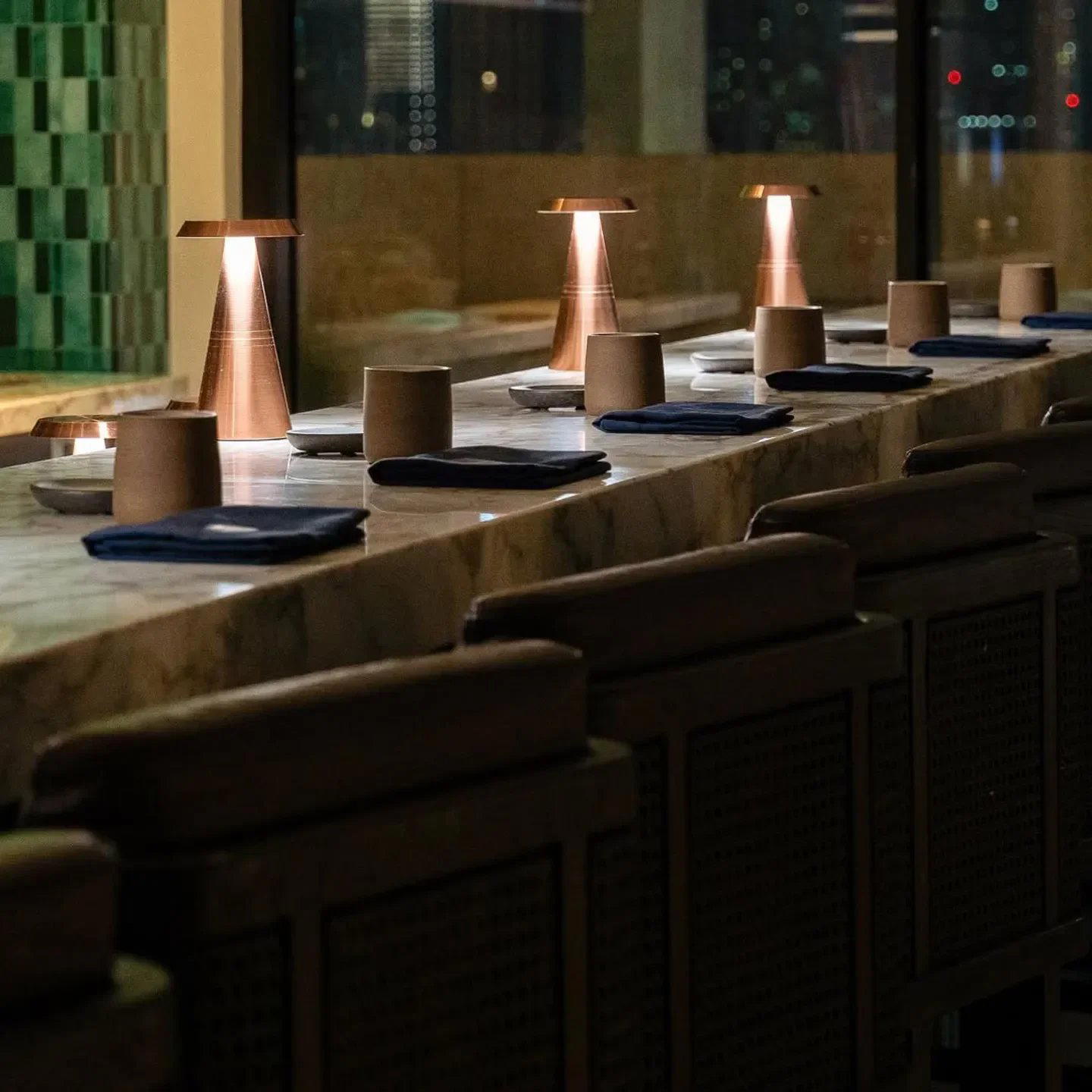
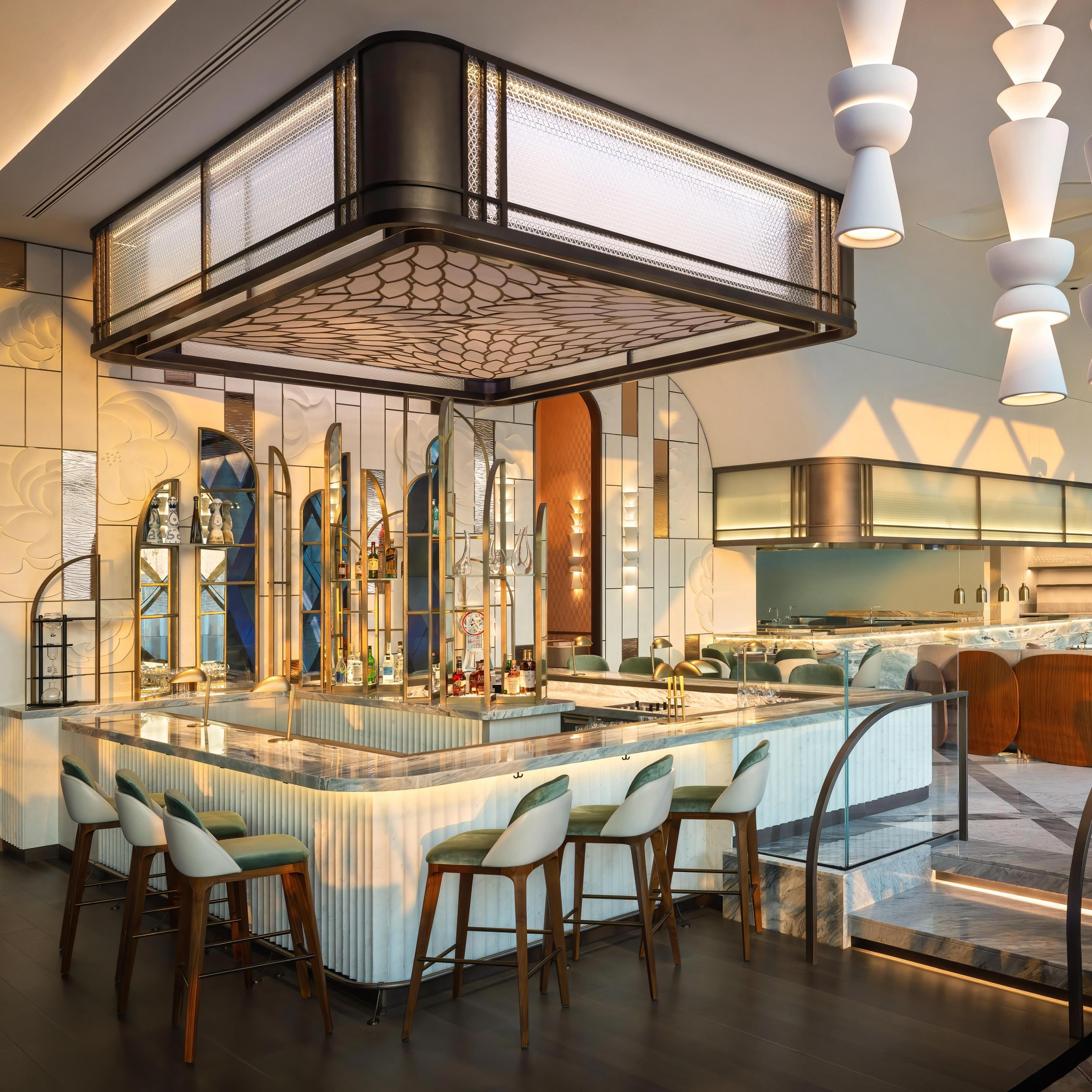
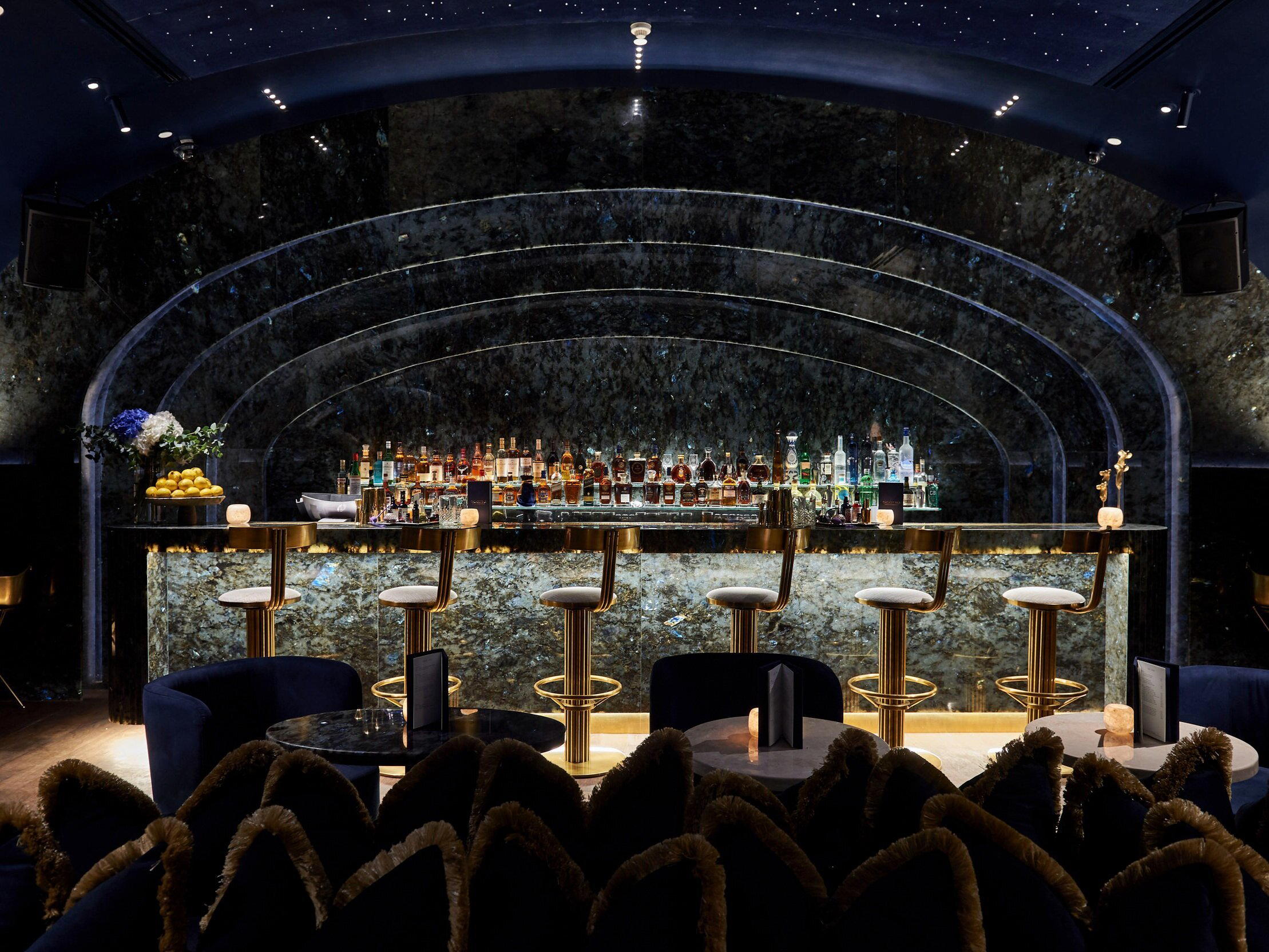
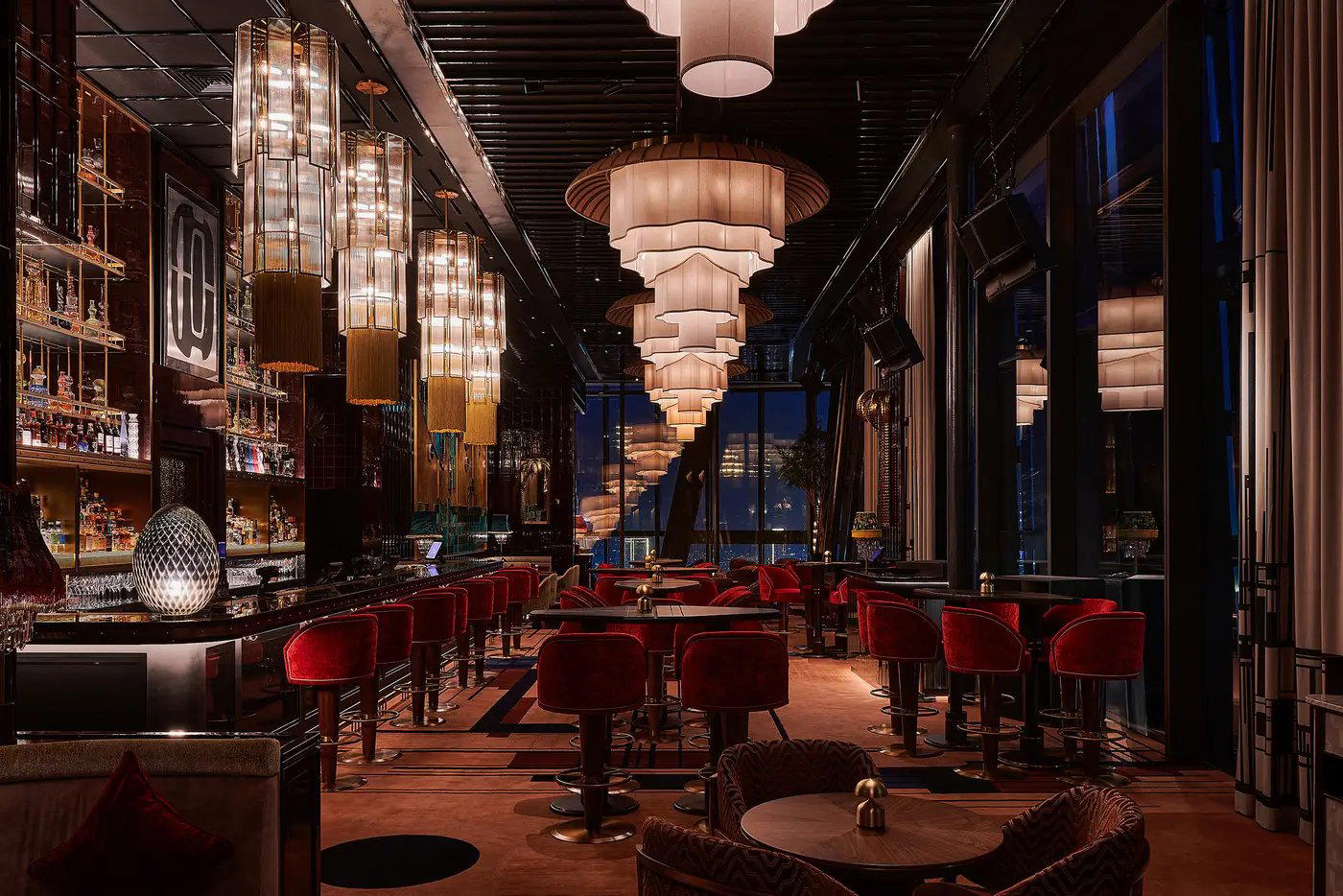
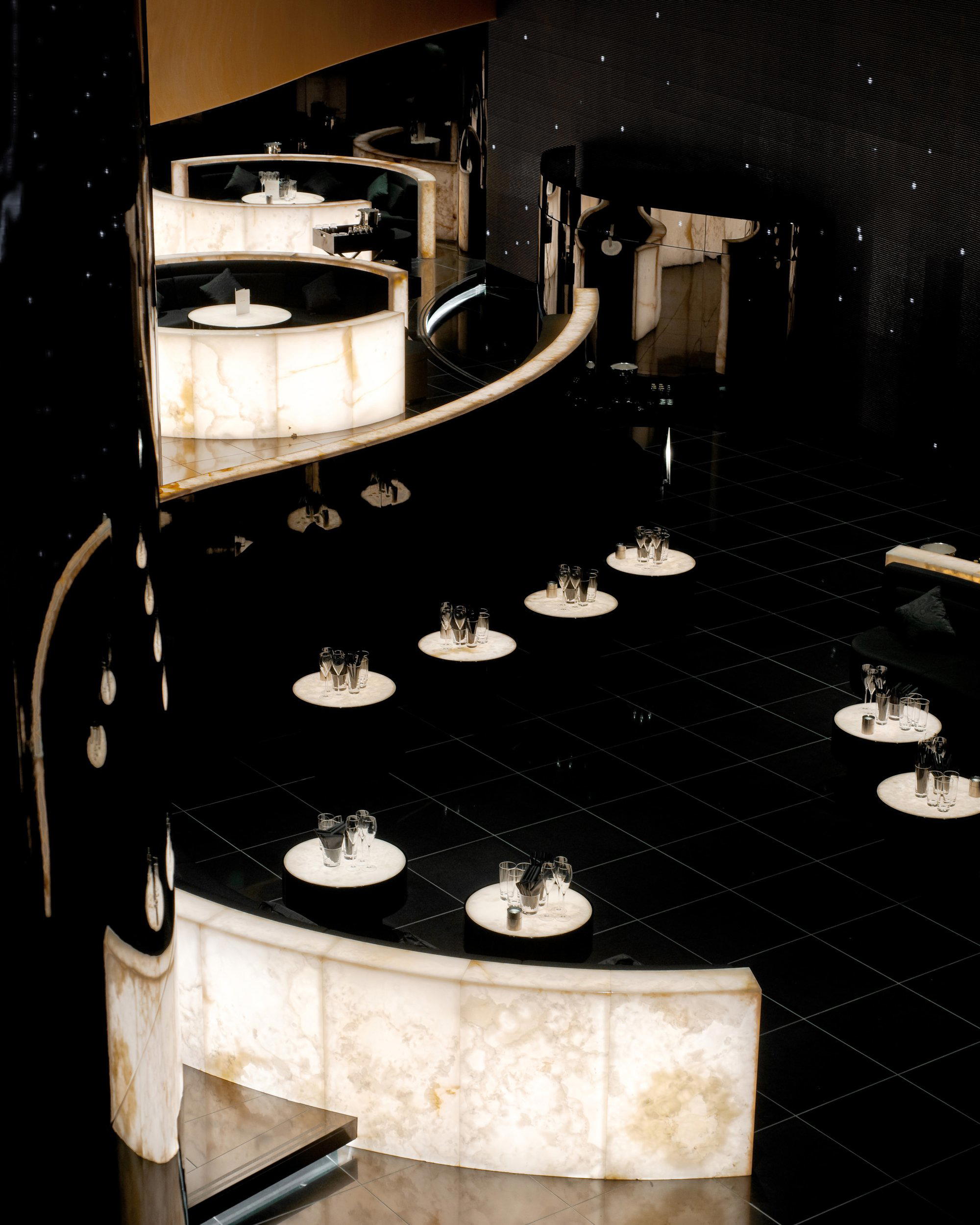
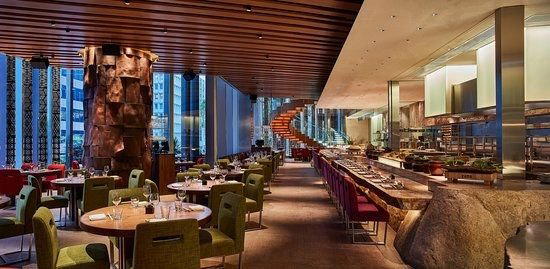
Izakaya dining, in its Japanese form, is organised around drink. The food exists to extend the session, to complement the sake or shochu rather than compete with it. That logic inverts in most Western interpretations, where the kitchen becomes primary and the bar secondary. Zuma's positioning, deliberately drink-integrated, with a bar island visible from most of the dining room, tilts back toward the original model. The island bar and on-view kitchen are not decorative features; they signal a philosophy about how food and drink should coexist in the same space.
Sake's pairing logic differs meaningfully from wine. Where wine acidity cuts through fat and tannin frames protein, sake works through umami alignment: the amino acids in a well-made junmai or ginjo mirror the glutamates in aged fish, grilled meat, and fermented sauces. A programme that acknowledges this and structures its selections accordingly gives diners a reason to order beyond the familiar Champagne aperitif. Whether Zuma's current list exploits that range fully is something leading verified at the table; what the venue's track record and format suggest is that the infrastructure exists to do it properly.
Shochu warrants separate attention. While sake dominates the premium pairing conversation, shochu, distilled rather than brewed, ranging from delicate rice expressions to punchy barley or sweet potato styles, offers more flexibility across a wider temperature range and a broader food profile. At the robata, where smoke and char are primary flavours, a mugi (barley) shochu served with ice can do what sake cannot. The distinction matters when ordering, and venues that list both give diners a more complete set of options.
The Menu's Shared Architecture
The format at Zuma is designed for groups. Dishes arrive across categories, sashimi, maki, robata, hot kitchen, and are shared rather than assigned. This structure, standard in izakaya dining, creates a natural pacing problem if the table orders without a plan: too many light dishes early, too much protein arriving simultaneously. The practical solution is to sequence in rounds, treating the meal the way a Japanese kitchen would: raw and delicate first, grilled and substantial in the middle, rice and broth to close.
From the robata, marinated lamb chops and salmon teriyaki appear in the venue's own award notes as representative dishes. The robata grill, which uses binchotan charcoal to generate high, clean heat with minimal smoke, is one of the formats where Japanese technique most visibly distinguishes itself from other open-flame cooking traditions. The char is drier, the crust more precise, and the interior temperature more controlled than conventional grilling allows. It is also the format that pairs most directly with the earthier end of the sake and shochu selection.
The broader menu is described as an extensive selection of contemporary Japanese dishes. At the price point, $$$, consistent with DIFC's upper tier, the expectation is that execution and sourcing are held to a standard that justifies the spend. For context, comparable DIFC addresses like 11 Woodfire operate at the same price tier with similar commitments to technique and ingredients. The Dubai dining market at this level is competitive enough that coasting on brand recognition alone tends to produce declining review scores; Zuma's trajectory in the OAD rankings, recommended in 2023, 287 in 2024, 324 in 2025, is worth noting, though a single year's movement in a crowded global ranking does not by itself indicate a direction.
DIFC as Context
Gate Village, where Zuma occupies its podium-level space, sits within the Dubai International Financial Centre, the district that has become Dubai's most concentrated address for premium dining. The cluster includes Zuma's Japanese contemporary peers but also some of the city's stronger efforts in other cuisines, among them Trèsind Studio for progressive Indian cooking and moonrise for creative formats. DIFC dining operates at a different pace and scale than the broader city. The audience skews toward finance and international business, which drives consistent mid-week lunch covers and makes the Thursday-to-Saturday evening window the most competitive booking period across the district.
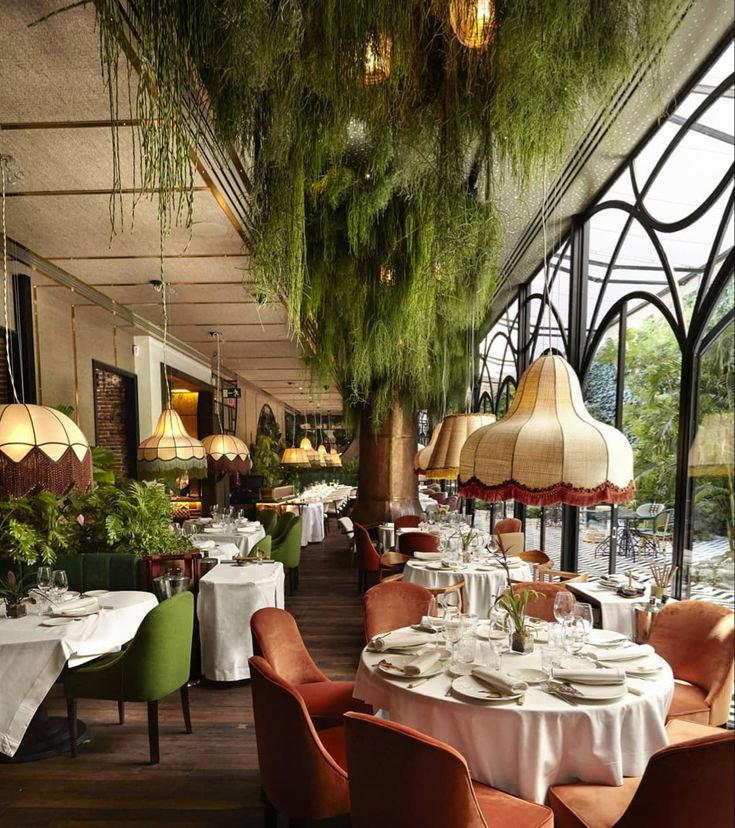
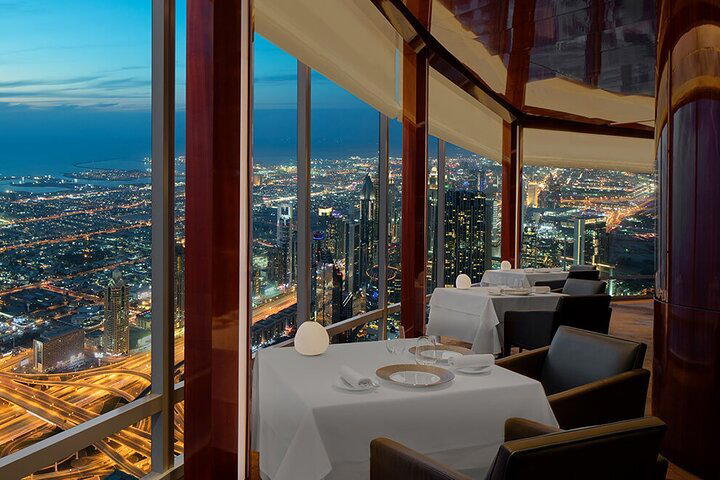
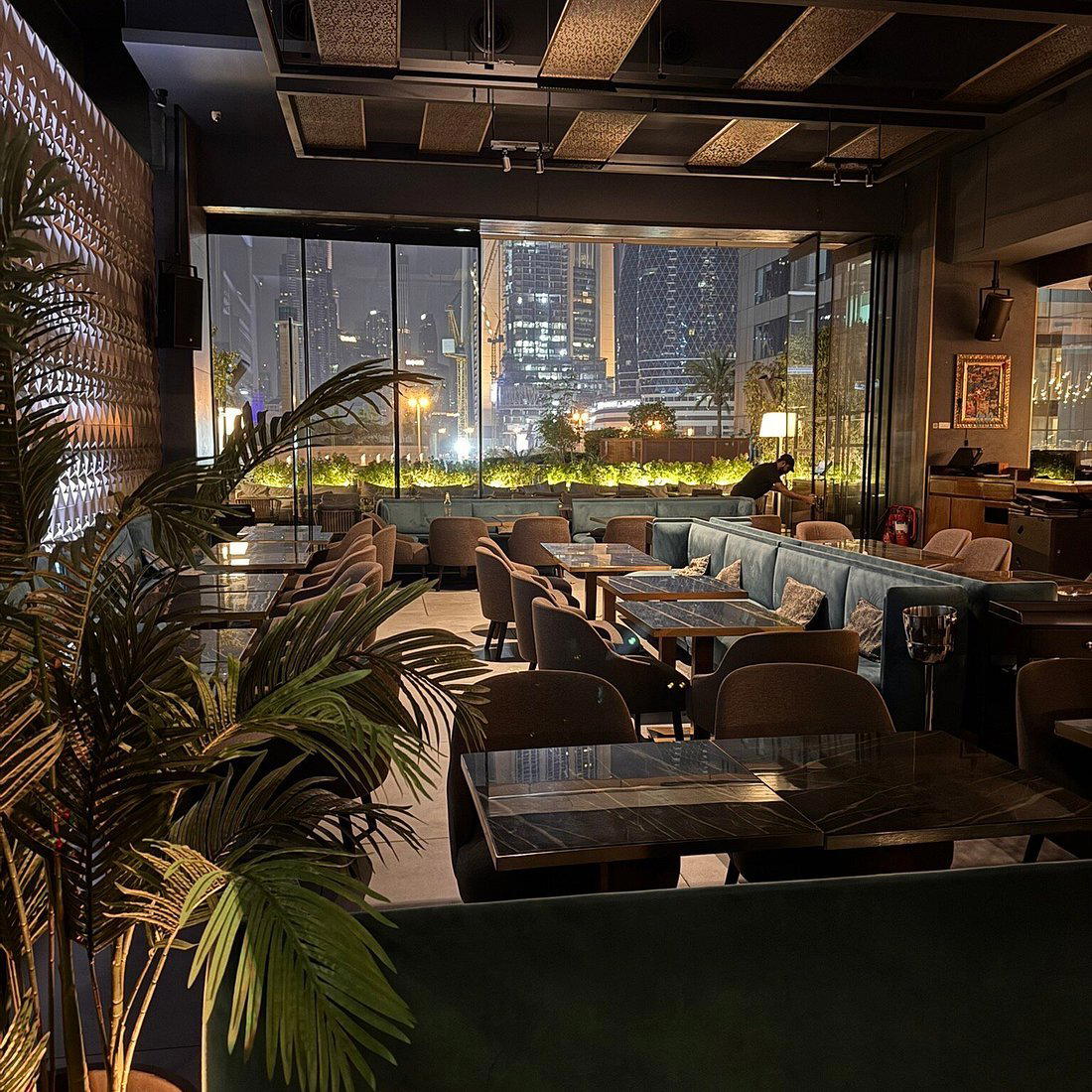
Zuma's terrace, available during cooler months, is one of the more usable outdoor spaces in Gate Village. Dubai's outdoor dining season runs roughly from October through April; outside that window, the internal space, including the island bar, absorbs the volume. The venue's weekend DJ programming and capacity for large groups give it a social function that more austere Japanese addresses do not attempt. This is not a criticism: the izakaya tradition has always encompassed noise and movement, and a dining room that can sustain both a serious sake conversation and a large group celebration is doing something the format was designed to support.
For comparison across the region, Erth in Abu Dhabi represents a different mode of UAE dining, quieter, more focused on local culinary identity, while globally, Zuma's approach to Japanese-influenced group dining finds partial parallels in how 8½ Otto e Mezzo Bombana in Hong Kong manages a multi-regional clientele at a high price point. The common thread is that at this tier, the room itself carries as much weight as the kitchen.
Those planning wider Dubai dining itineraries can reference our full Dubai restaurants guide, along with guides covering hotels, bars, wineries, and experiences across the city. Internationally, the group dining format Zuma operates finds interesting counterpoints at Le Bernardin in New York, Atomix in New York, Lazy Bear in San Francisco, Emeril's in New Orleans, Alain Ducasse at Louis XV in Monte Carlo, and Alléno Paris au Pavillon Ledoyen.
Know Before You Go
- Address: Podium Level, Gate Village Building 3, Al Mustaqbal Street, DIFC, Dubai
- Hours: Monday to Wednesday: 12–3:30 pm, 7 pm–midnight. Thursday and Friday: 12–3:30 pm, 7 pm–1 am. Saturday: 1:30–4 pm, 7 pm–1 am. Sunday: 12–4 pm, 7 pm–midnight
- Price range: $$$
- Awards: Michelin Plate 2025; World's 50 Best Restaurants MENA 2024 Rank #19; Opinionated About Dining Leading Restaurants in Asia 2025 (#324) and 2024 (#287)
- Format: Shared plates across robata, sushi, sashimi, and hot kitchen categories
- Leading timing: Terrace season runs October to April. Thursday and Friday evenings are the highest-volume periods; mid-week lunch is quieter
- Groups: The format and room size accommodate large groups; the weekend DJ programme makes Friday and Saturday evenings livelier than mid-week
What Should I Order at Zuma?
The robata is the starting point for any serious order at Zuma. The grill format, binchotan charcoal, high and clean heat, produces results that the rest of the menu builds around, and dishes like the marinated lamb chops and salmon teriyaki appear in the venue's own award documentation as representative of the kitchen's output. Order robata dishes in the middle of the meal rather than at the end, when appetite and attention are still engaged. From the drinks list, the case for sake or shochu alongside the robata is stronger than it might seem: the umami alignment between a junmai-style sake and charred, marinated protein is one of the more reliable pairings in Japanese drinking culture, and it is the angle most worth pursuing on a first visit. Sashimi and lighter preparations belong earlier in the sequence, before the smoke and weight of the grill arrives. The menu's shared format rewards deliberate ordering over simultaneous arrival of multiple categories, pace it in rounds and the kitchen's logic becomes clearer.
Frequently asked questions
Where exactly is Zuma?
Zuma is located at Podium Level, Gate Village, Building 3 - 06 Al Mustaqbal St - Zaa'beel Second - DIFC - Dubai - United Arab Emirates, Dubai.
What's Zuma known for in terms of accolades?
Zuma has received recognition including: Where Japanese cuisine typically shows restraint Zuma offers excess The restaurant essentially takes the technique and study associated with Japanese food and adds a serious dose of glitz Where Japanese cuisine typically shows restraint, Zu….
What should I order at Zuma?
The robata grill is the structural centrepiece of any order at Zuma. Binchotan charcoal cooking produces a clean, high-heat result that the kitchen categories build around, and dishes like the marinated lamb chops and salmon teriyaki from the grill represent the format at its most direct. The menu is designed for sharing across categories, sashimi, maki, hot kitchen, robata, so ordering across all four sections gives the fullest picture of what Zuma, ranked #19 in the World's 50 Best MENA 2024, is doing with contemporary Japanese technique at this scale.
What's the cuisine at Zuma?
Quick Comparison
| Venue | Cuisine | Price | Awards | Notes |
|---|---|---|---|---|
| ZumaThis venue (the venue you are viewing) | Modern Japanese Izakaya | $150–200 | Michelin Plate · World's 50 Best #34 | Not listed |
| 11 Woodfire | Modern Woodfire Grill | $150–200 | 1 Michelin Star · World's 50 Best #14 | Modern Cuisine |
| Avatara Restaurant | Modern Vegetarian Indian Fine Dining | Not listed | 1 Michelin Star · Gault & Millau UAE Selected Restaurant | Indian |
| Al Mahara | Modern Italian Seafood | $300–500 | Michelin Plate · World's 50 Best #31 | Seafood |
| City Social | Modern European with Japanese influences | $150–200 | Michelin Plate · Star Wine List | Not listed |
| Coya | Contemporary Peruvian & Nikkei Fusion | $150–200 | Michelin Plate · Star Wine List | Not listed |
Recognition history
Dated appearances from independent guides and award organizations, with the underlying list record or original source where available.
Michelin Plate
Michelin
World's 50 Best MENA's Best Restaurants #34
World's 50 Best
Star Wine List
Star Wine List
Gault & Millau UAE Selected Restaurant
Gault & Millau · Gault & Millau UAE 2026 - Selected Restaurant
Opinionated About Dining Top Restaurants in Asia Recommended
Opinionated About Dining
Full recognition history (20 entries)
Opinionated About Dining Top Restaurants in Asia Ranked #324
Opinionated About Dining
Star Wine List
Star Wine List
Top 500 Bars Best Bars #432
Top 500 Bars
World's 50 Best MENA's Best Restaurants #19
World's 50 Best
Michelin Plate
Michelin
Opinionated About Dining Top Restaurants in Asia Ranked #287
Opinionated About Dining
Star Wine List
Star Wine List
Opinionated About Dining Top Restaurants in Asia Recommended
Opinionated About Dining
World's 50 Best Bars #17
World's 50 Best
World's 50 Best Bars #23
World's 50 Best
World's 50 Best Asia's Best Bars #18
World's 50 Best
World's 50 Best Asia's Best Bars #24
World's 50 Best
World's 50 Best Asia's Best Bars #39
World's 50 Best
World's 50 Best Bars #44
World's 50 Best
World's 50 Best Bars #49
World's 50 Best