Sakura-Ya
Our verdict
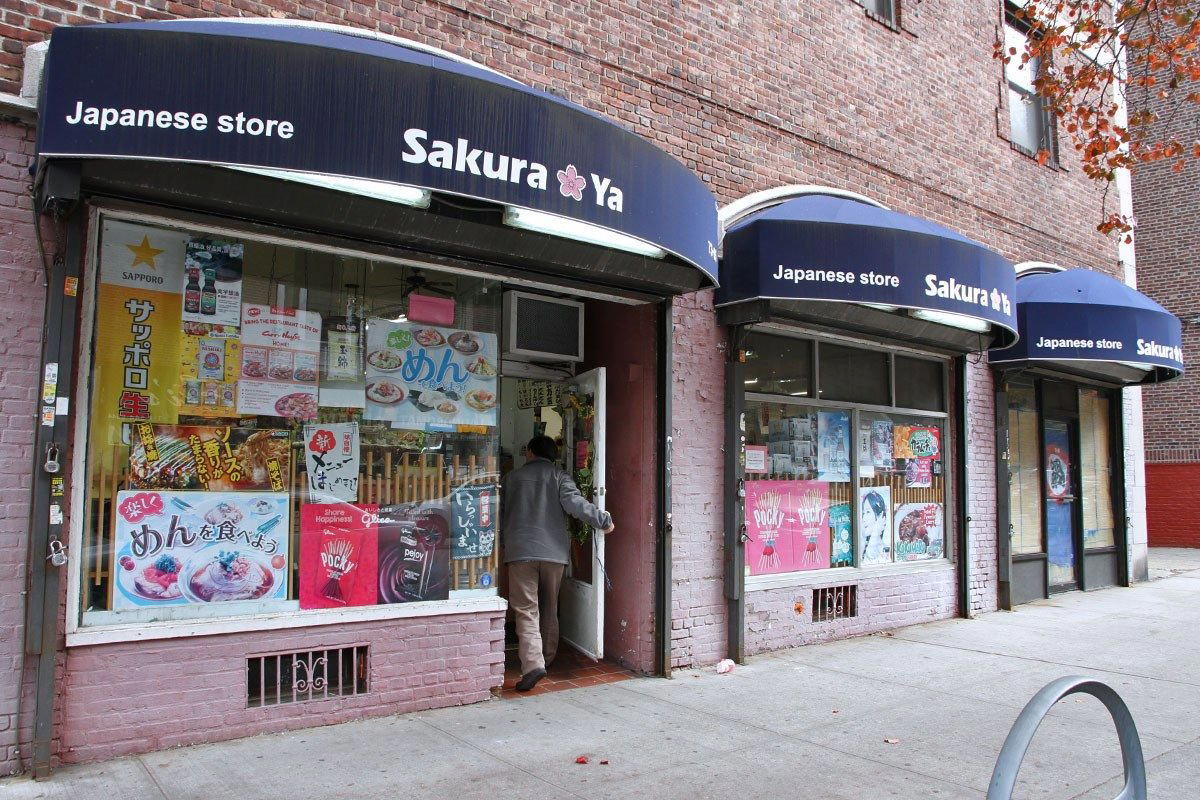
Sakura-Ya in Forest Hills, Queens occupies a quieter corner of New York's Japanese dining scene, drawing a loyal neighbourhood following that returns not for spectacle but for consistency. Situated on Austin Street in a residential pocket well removed from Manhattan's high-profile sushi counters, the restaurant represents the kind of sustained local presence that rarely generates press but rarely needs to.

Pearl is the En Primeur Club membership app — saves, bookings, and concierge access live there. Same editors, same standards.
- Address
- 72-50 Austin St, Forest Hills, NY 11375
- Phone
- (718) 268-7220
- Hours
- Mon–Sat 10 AM–9 PMSun 10 AM–8 PM
- Website
- sakura-yajapanesemart.com
- Directions
- Get directions
The menu
What to order
- Sushi
- Sashimi
- Bento boxes
- Onigiri
The Neighbourhood Counter That Outlasts the Hype
New York's Japanese dining conversation tends to compress around a handful of well-documented Manhattan addresses: the omakase counters where a meal at Masa sets the price ceiling for the entire category, or the Michelin-tracked rooms like Atomix and Le Bernardin that define what editorial recognition looks like in this city. What that conversation consistently undervalues is the dense middle tier: the neighbourhood Japanese restaurants in Queens, Brooklyn, and the outer boroughs that operate outside press cycles and sustain themselves on repeat clientele rather than reservation-system drama. Sakura-Ya, on Austin Street in Forest Hills, belongs to that tier.
Forest Hills is not a dining destination in the way the West Village or the Upper West Side attract out-of-neighbourhood traffic. It is a residential Queens pocket with a strong local identity, and the restaurants that last there do so because residents return to them regularly, not because tourists mark them on itineraries. That dynamic shapes everything about how a place like Sakura-Ya operates: the priorities are consistency, familiarity, and the kind of quiet reliability that keeps a regular coming back on a Tuesday night without a special occasion to justify it.
What Keeps Regulars Returning
Neighbourhood Japanese restaurants in New York occupy a specific and underappreciated role. Unlike the omakase format that structures meals at the upper end of the market, where the chef's sequence dictates every decision, the typical neighbourhood Japanese room puts choice back in the diner's hands. The regulars who anchor these places tend to know their order before they sit down. They have a preferred section of the menu, a preferred server, and a preference for the time of week when the room is quieter. The restaurant earns that loyalty not through novelty but through execution that holds over time.
This contrasts with how high-profile tasting-menu rooms build their audiences. Eleven Madison Park and Per Se attract guests who are, in many cases, visiting once or twice in a lifetime. The neighbourhood Japanese counter attracts guests who ate there last week and will return the week after. That distinction is not a diminishment. It is a different success metric, and it is arguably harder to sustain over years than the acclaim cycle that drives destination dining.
The unwritten menu at places like this is made up of the things regulars know without being told: which dishes translate better in a given season, when to arrive to avoid a wait, which combination of dishes makes the leading use of a Tuesday evening. That accumulated knowledge, held by the loyal clientele rather than published anywhere, is the most durable form of editorial endorsement a neighbourhood restaurant can earn.
Forest Hills and the Outer Borough Japanese Scene
Queens has the densest concentration of Japanese residents in New York City outside of Manhattan, and that demographic reality has shaped a restaurant ecosystem that is far more varied and technically grounded than its press coverage suggests. Flushing and Astoria tend to absorb the food-media attention directed at Queens, but Forest Hills and adjacent neighbourhoods maintain a quieter layer of Japanese dining that serves primarily local populations. Austin Street itself functions as Forest Hills' commercial main artery, drawing foot traffic from the surrounding residential blocks and the Forest Hills Gardens neighbourhood to the south.
The outer borough positioning matters for practical reasons as well. Restaurants in this part of Queens operate under different cost structures than Manhattan, which historically allows for more generous portion sizes, lower price points, or both, relative to comparable cuisine in Midtown or the West Village. Diners who make the trip from Manhattan, a direct subway ride on the E or F line to Forest Hills-71 Avenue, tend to be motivated by either a specific recommendation or a deliberate interest in eating outside the Manhattan dining circuit. Both are good reasons.
For context on what the outer-borough Japanese dining scene sits alongside geographically and culinarily, it is useful to look at how destination-driven Japanese dining has evolved across American cities. Lazy Bear in San Francisco and Providence in Los Angeles both illustrate how fine dining with strong Japanese influence can build sustained followings outside New York's particular ecosystem. Single Thread Farm in Healdsburg demonstrates what Japanese culinary philosophy looks like when applied at the farm-to-table end of the American luxury spectrum. These are reference points for the broader category, not direct comparisons to a neighbourhood counter in Queens.
Planning a Visit
Austin Street in Forest Hills is accessible from Manhattan via the E and F subway lines, with Forest Hills-71 Avenue station placing diners within a short walk of the restaurant's address at 72-50 Austin Street. The neighbourhood functions as a genuine residential community rather than a dining district, so arriving with a specific destination in mind rather than browsing is the more practical approach. Walk-in availability at neighbourhood Japanese restaurants in New York varies considerably by day of week and time of evening, with weekday evenings generally offering more flexibility than weekend service.
For readers building a broader New York dining itinerary, our full New York City restaurants guide maps the city's dining scene across neighbourhoods and price tiers. Further afield, Blue Hill at Stone Barns in Tarrytown and The Inn at Little Washington represent the kind of destination-driven dining that requires more deliberate planning. Smyth in Chicago, Addison in San Diego, Emeril's in New Orleans, Frasca Food and Wine in Boulder, The French Laundry in Napa, Atelier Moessmer Norbert Niederkofler in Brunico, and Dal Pescatore in Runate round out the comparative picture of what sustained dining excellence looks like across very different formats and geographies.
Frequently asked questions
What's the address for Sakura-Ya?
Sakura-Ya is located at 72-50 Austin St, Forest Hills, NY 11375, New York City.
Is Sakura-Ya in Forest Hills worth the trip from Manhattan?
Sakura-Ya sits at 72-50 Austin St in Forest Hills, Queens, reachable from Midtown Manhattan via the E or F train in roughly 30–35 minutes. Queens holds the densest concentration of Japanese residents in New York City outside Manhattan, which has produced a restaurant ecosystem built around regular local trade rather than tourist footfall — a different register from the omakase counters that dominate Manhattan's Japanese dining conversation.
What's the best thing to order at Sakura-Ya?
For neighbourhood Japanese restaurants in Queens, regulars typically gravitate toward daily specials that reflect whatever is moving through the kitchen that week — worth asking the staff directly on arrival.
Do they take walk-ins at Sakura-Ya?
Austin Street in Forest Hills is a residential corridor rather than a high-traffic destination strip, which historically means neighbourhood spots here operate with more flexibility than Manhattan counters — but calling ahead is advisable given the absence of a confirmed booking policy.
Similar Picks
| Venue | Cuisine | Price | Awards | Notes |
|---|---|---|---|---|
| Sakura-YaThis venue — the venue you are viewing | Japanese Grocery Takeaway | $10–20 | Not listed | Not listed |
| Le Bernardin | French Seafood Fine Dining | $300–500 | 3 Michelin Stars · World's 50 Best #13 | French, Seafood |
| Atomix | Modern Korean Tasting Menu | $300–500 | 2 Michelin Stars · World's 50 Best #7 | Modern Korean, Korean |
| Per Se | French Fine Dining Tasting Menu | $300–500 | 3 Michelin Stars · World's 50 Best #40 | French, Contemporary |
| Masa | Traditional Japanese Omakase | $500+ | 2 Michelin Stars · World's 50 Best #27 | Sushi, Japanese |
| Eleven Madison Park | Contemporary Plant-Based Fine Dining | $300–500 | 3 Michelin Stars · World's 50 Best #4 | French, Vegan |
Continue exploring
More in New York City
Restaurants in New York City
Browse all →
Bars in New York City
Browse all →
Hotels in New York City
Browse all →
Details
- Lively
- Casual Hangout
- A La Carte
Current opening hours
- Monday
- 10 AM–9 PM
- Tuesday
- 10 AM–9 PM
- Wednesday
- 10 AM–9 PM
- Thursday
- 10 AM–9 PM
- Friday
- 10 AM–9 PM
- Saturday
- 10 AM–9 PM
- Sunday
- 10 AM–8 PM
Hours can change for holidays and private events. Last verified .