
Star Wine List
Our verdict
Sakura is a French restaurant managed by The New Otani hotel group, positioned directly alongside Osaka Castle Park in Chuo Ward. The setting places classic French cooking against one of Japan's most recognizable castle silhouettes, situating Sakura within Osaka's broader tradition of high-end French dining that stretches back decades and remains one of the city's defining culinary characteristics.

Pearl is the En Primeur Club membership app, where members save venues, book tables and use the concierge.
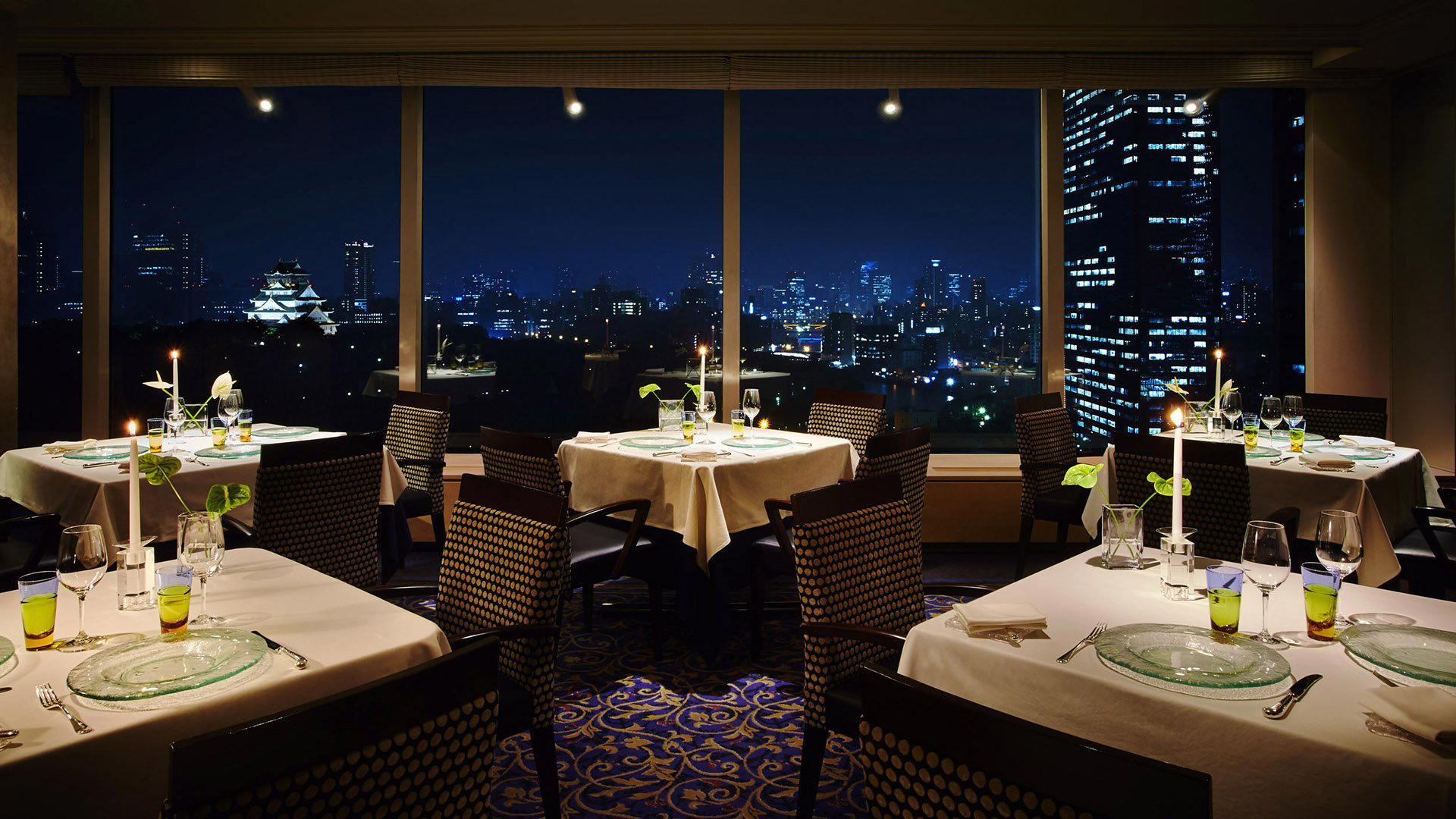
Castle Views and Classic French: What Sakura Represents in Osaka's Dining Story
Approaching the Osaka Castle quarter on foot, the keep's white-walled tenshu rises above the moat tree line with a clarity that few urban landmarks in Japan manage. The dining room at Sakura, positioned inside The New Otani Osaka at 1 Chome-4-1 Shiromi in Chuo Ward, is oriented to take full advantage of that sightline. Few restaurant settings in the city frame the castle this directly, and the visual context matters: Osaka Castle has anchored this district since the sixteenth century, and the area around it has accumulated civic and cultural weight that no amount of interior design can manufacture. Sakura benefits from that weight as a background condition, not a gimmick.
French Cooking in Osaka: A Longer Tradition Than Most Cities Acknowledge
Japan's relationship with classical French cuisine runs deeper than its current Michelin density might suggest. From the early postwar decades, French technique entered Japanese professional kitchens through formal apprenticeships in France, returning chefs, and the deliberate European programming of major hotel groups. The New Otani, one of Japan's most established hotel brands, was part of that early infrastructure. Hotel French restaurants in Japan were not budget compromises; they were, for much of the late twentieth century, the primary delivery mechanism for serious French cooking in cities outside Tokyo.
That history shapes how Sakura sits in Osaka's current French dining scene. The city now hosts multiple independent French addresses that compete at the highest international tier: HAJIME, which applies a French and innovative format at the ¥¥¥¥ price point, and La Cime, another French specialist at the same bracket.
The Cuisine Frame: What Classical French Means Here
French cuisine in the classical mode, the tradition that Japan absorbed most thoroughly during the postwar decades, is built around technique discipline, sauce construction, and the management of texture and temperature across a multi-course format. It is a cuisine that rewards consistency and penalizes improvisation, which is part of why hotel kitchens, with their brigade structures and procurement stability, were well-suited to delivering it. At Sakura, those structural conditions remain in place. The New Otani's management of the restaurant provides the kind of operational continuity that independent restaurants of equivalent ambition often struggle to sustain.
Osaka's Japanese fine dining operates along a different axis. Kashiwaya Osaka Senriyama and Taian, both kaiseki and Japanese specialists at the ¥¥¥ level, approach seasonality and ingredient sourcing through a fundamentally different philosophical frame, one rooted in Japanese aesthetics of restraint, seasonal deference, and the primacy of dashi and raw ingredient quality. The French tradition at Sakura works from a different hierarchy of values, where transformation, reduction, and sauce complexity are the primary signals of skill. Neither is superior; they are different grammars of cooking. Understanding that distinction helps place Sakura accurately rather than comparing it to venues it was never designed to resemble.
For visitors also exploring innovative formats, Fujiya 1935 operates in the innovative category at ¥¥¥¥ and represents the generation of Osaka cooking that synthesizes French technique with Japanese ingredient sensibility. It is a useful point of comparison for understanding how the city has moved beyond strict category boundaries, even as addresses like Sakura maintain the classical line.
The Castle Setting as Editorial Context
Hotel restaurants in Japan that rely on location often do so because the kitchen cannot carry the room on its own. The better cases invert that logic: the setting amplifies a dining experience that would be credible without it. Sakura's position near Osaka Castle Park belongs to the second category. The castle, rebuilt in its current ferro-concrete form in 1931 on foundations that date to Toyotomi Hideyoshi's original fortification, is not a decorative backdrop in any casual sense. It is the defining monument of Osaka's civic identity, and the park surrounding it draws a distinct cross-section of the city at every hour of the day. Dining with that view is a specific kind of experience, one that situates the meal in the broader life of the city rather than removing guests from it into a hermetically sealed high-end environment.
For visitors building an Osaka itinerary, the Chuo Ward location provides proximity to the castle district without requiring a full day of negotiation with the city's geography. Those planning wider Osaka dining programs should consult our full Osaka restaurants guide for coverage across cuisine types and price tiers. The city's accommodation and bar options are mapped in our full Osaka hotels guide and our full Osaka bars guide respectively. For those extending travel through Kansai and beyond, Gion Sasaki in Kyoto and akordu in Nara provide regional French and fine dining reference points within manageable distance.
Placing Sakura in a Wider Japan French Dining Frame
French cooking in Japan extends well beyond the major urban centers. Bleston Court Yukawatan in Nagano represents the resort-French variant, where seasonal mountain ingredients meet classical technique in a deliberately remote setting. Harutaka in Tokyo anchors the Tokyo fine dining scene at the opposite pole of cuisine type. Goh in Fukuoka and giueme in Akita extend the picture into regional Japan, where fine dining often draws on local ingredient specificity that the major cities cannot replicate. Internationally, the comparison set for classical hotel-adjacent French extends to addresses like Le Bernardin in New York City and Emeril's in New Orleans, both of which demonstrate how French-rooted cooking adapts to specific civic and hospitality contexts without losing technical seriousness.
Planning Your Visit
Sakura is managed by The New Otani Osaka and is located at 1 Chome-4-1 Shiromi, Chuo Ward, Osaka 540-0001. The hotel-group management structure means reservation and contact logistics are leading handled through The New Otani Osaka's main channels directly, as specific phone and website details for the restaurant are not separately listed. Given the setting and format, advance booking is advisable for dinner, particularly at weekends when the castle-view tables are in highest demand. Those planning Osaka wine or experience programs can find additional context in our full Osaka wineries guide and our full Osaka experiences guide.
Frequently asked questions
What's Sakura known for in terms of accolades?
Sakura has received recognition including: Sakura is a French restaurant located close to Osaka Castle Park, managed by well-known Japanese hotel group The New Otani. Here you'll get a perfect view of the Osaka Castle, as well as classic Frenc....
Where is Sakura located?
Sakura is located at 1 Chome-4-1 Shiromi, Chuo Ward, Osaka, 540-0001, Japan, Osaka.
What do people recommend at Sakura?
The castle view is consistently cited as the anchor of a meal at Sakura, particularly at dinner when the keep is illuminated. On the culinary side, the kitchen works within the classical French tradition that Japan absorbed most thoroughly during the postwar decades, built around technique-driven courses rather than a single signature dish.
Do I need a reservation for Sakura?
Reservations are advisable. Sakura sits within The New Otani Osaka, a managed hotel-group property at 1 Chome-4-1 Shiromi, Chuo Ward, and castle-view tables in particular are finite. Booking through the hotel's concierge or reservations desk is the most reliable route, especially for evening seatings.
What is Sakura known for?
Sakura is known for pairing classical French cuisine with a direct view of Osaka Castle, operating within The New Otani hotel group's Osaka property in Chuo Ward. The combination of a managed hotel-group kitchen and a landmark setting is the defining formula here: the castle's tenshu is visible from the dining room, making the view an integral part of the experience rather than incidental to it.
What if I have allergies at Sakura?
Classical French menus of this style routinely involve dairy, gluten, shellfish, and nut components across multiple courses. Communicate dietary restrictions in advance when making your reservation through The New Otani Osaka, giving the kitchen sufficient notice to adjust where the menu allows.
Budget and Context
Comparable venues nearby, for context on price, style, and recognition.
| Venue | Cuisine | Price | Awards | Notes |
|---|---|---|---|---|
| SakuraThis venue (the venue you are viewing) | French Fine Dining with Japanese Influences | $50–100 | Star Wine List | Not listed |
| Imparfait | Innovative French-Japanese Counter Dining | $50–100 | Tabelog 100 #43 | Nishi, Innovative French-Japanese Counter Dining |
| LA PATISSERIE KATSURA | Kita, French Patisserie | $1–10 | Tabelog 100 #66 | Not listed |
| Daman Lumiere Takashimaya oosaka ten | French-influenced tea salon & café | $20–30 | Tabelog 100 #46 | Chūō, French-influenced tea salon & café |
| Wagyu no Kiraku | Traditional Wagyu Yakiniku & Yaki-shabu | $50–100 | Tabelog 100 #15 | Kita, Traditional Wagyu Yakiniku & Yaki-shabu |
| Ichioka 45 | Farm-to-table chicken and sake counter | $50–100 | Tabelog 100 #25 | Kita, Farm-to-table chicken and sake counter |
Recognition history
Dated appearances from independent guides and award organizations, with the underlying list record or original source where available.
Star Wine List
Star Wine List
Continue exploring
More in Osaka
Restaurants in Osaka
All restaurants in Osaka →



Bars in Osaka
All bars in Osaka →


Hotels in Osaka
All hotels in Osaka →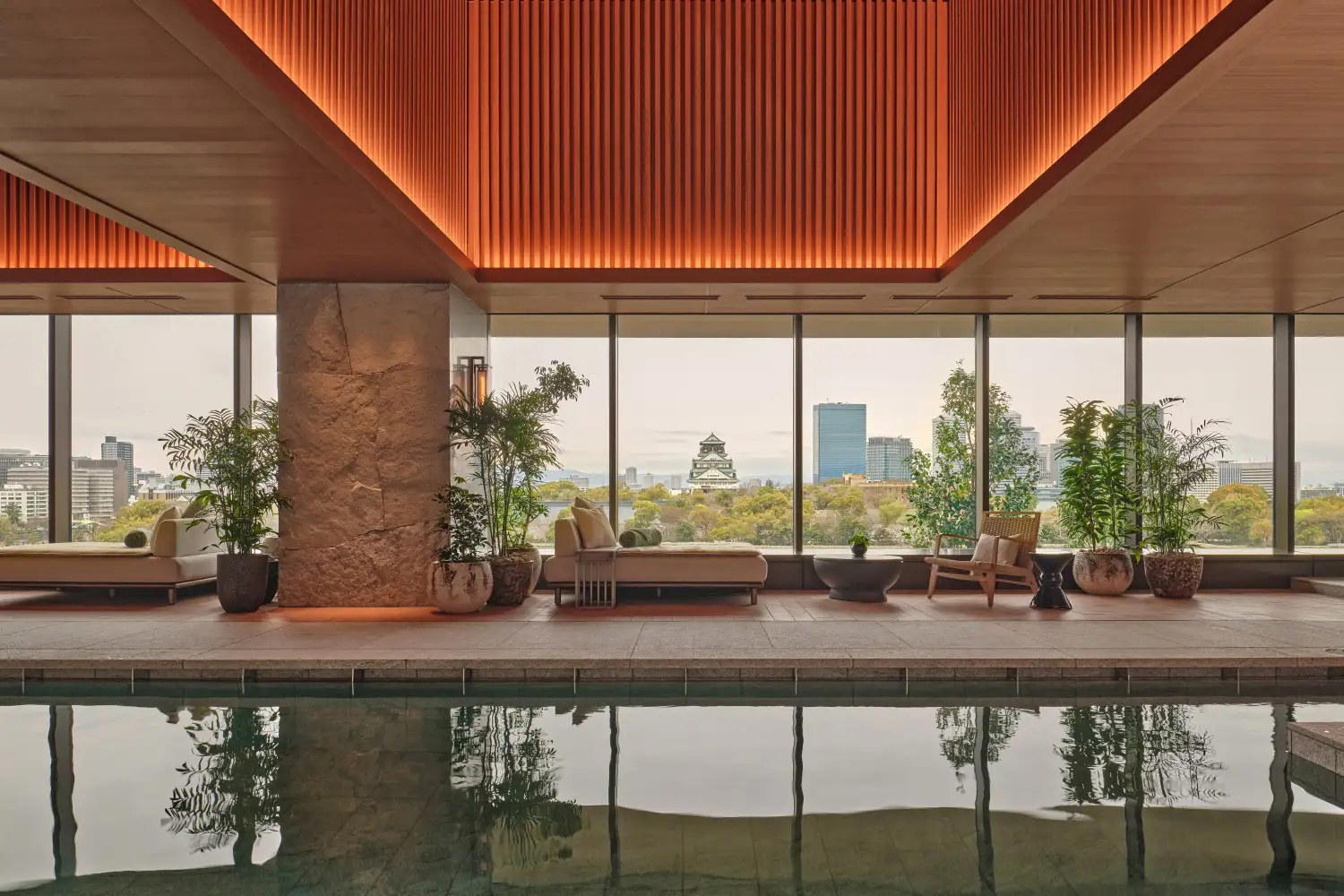


Wineries in Osaka
Browse all →
Details
- Elegant
- Sophisticated
- Business Dinner
- Special Occasion
- Date Night
- Hotel Restaurant
- Panoramic View
- Extensive Wine List
- Sake Program
- Skyline
- A La Carte
- Prix Fixe
- Wine
- Cocktails
Current opening hours
- Monday
- 11:30 AM–2:30 PM
- Tuesday
- 11:30 AM–2:30 PM
- Wednesday
- 11:30 AM–2:30 PM
- Thursday
- 11:30 AM–2:30 PM
- Friday
- 11:30 AM–2:30 PM
- Saturday
- 11:30 AM–2:30 PM
- Sunday
- 11:30 AM–2:30 PM
Hours can change for holidays and private events. Hours as of .
Elegant hotel restaurant atmosphere with large windows offering panoramic castle views and relaxing lighting.