Tabelog 100 #64
Our verdict
Sakitori Ya puts Osaka’s chicken-dining ritual in a Kyushu register: grilled thigh, fried chicken, regional cooking, shochu, sake, and a room built for groups as much as counter eating. Its 2025 Tabelog 100 selection for chicken cuisine gives it a clear quality signal in a city where casual formats often carry serious technique.

Pearl is the En Primeur Club membership app, where members save venues, book tables and use the concierge.
The menu
What to order
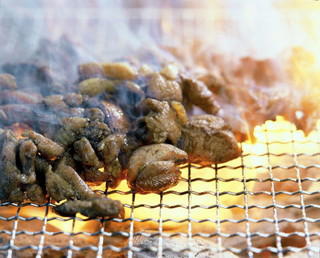
- Grilled bone-in parent chicken thigh
- Nichinan fried chicken
- Chicken sashimi
- Charcoal-grilled chicken
- Parent thigh sukiyaki (winter-only)
Approach Osaka beyond its busiest visitor circuits and the city’s shopping-and-snacking theatre gives way to a more workday, local mood. Offices, side streets, apartment blocks, and after-hours restaurants set the rhythm. Here, chicken cuisine feels less like spectacle than ritual: drinking pace, shared plates, and the small choreography of ordering another round before the table empties.
Visitors often reduce Osaka to quick snacks and famous casual staples, but its everyday dining culture is wider and more exacting. Chicken restaurants reveal that range. They are casual enough for friends after work, yet focused enough that cut selection, seasoning, pacing, and drink pairing decide whether the meal feels routine or serious. Sakitori Ya sits in that second category, with selection for Tabelog 100 Chicken Cuisine in 2025 and a Tabelog score of 3.62. That matters because Tabelog’s category lists tend to reward narrow specialists over broad-menu crowd pleasers.
Regional chicken customs, translated for an Osaka after-work table
The restaurant’s identity is tied to chicken dishes and regional cuisine. That framing suggests a meal built around texture as much as flavour: different cuts can bring different levels of chew, richer plates play one role, and simpler shared dishes play another. The point is not a single chef’s flourish, but the grammar of chicken eating, where cuts and methods extend the evening rather than rush it.
That pacing is central. Osaka’s serious casual restaurants often work as social machines: food arrives in waves, drinks do real work, and the table sets the tempo. In a chicken-focused room, the drink order is not decorative; it is part of the format, especially with richer, hotter, or more deeply seasoned dishes that suit a longer sit. This also explains why the restaurant reads well for friends rather than only formal celebration. It is not fine dining in miniature, but a drinking table with better-than-usual discipline around chicken.
The room’s appeal comes from that middle register. Smaller parties can order with focus, while groups can lean into shared plates and a longer evening. Osaka excels at this kind of meal: serious food without ceremonial stiffness, regional specificity without a tasting-menu frame, and a price level that keeps the experience grounded in everyday dining rather than special-occasion theatre.
Where Osaka's quieter dining scene helps the format
Osaka has dining areas that pull visitors immediately, but its less showy restaurant culture can be just as rewarding. Away from the most obvious tourist rhythms, restaurants need not perform the city for first-timers every night. The strength is a local cadence, especially on weekday evenings, when office workers and neighbourhood regulars shape demand. That makes a chicken specialist feel properly placed: central enough to fold into a wider itinerary, removed enough from the loudest checklist version of Osaka to keep its own pace.
Price positioning matters, though the better reading is category discipline rather than cheapness. Compared with low-cost daytime specialists such as Boulangerie & cafe gout, Patisserie La Plage, Yatagarasu Udon, and Udama Tanimachi base, this is an evening chicken format, not a quick bakery, pastry, or udon stop. The competitive set is not simply “Osaka casual.” It is the subset where the bill reflects a longer sit, multiple dishes, and a meal structure built around staying at the table.
That distinction helps travellers build a food day in Osaka. A morning or midday route might run through bakeries, udon, or takeaway staples, while dinner asks for a different tempo. Nearby city coverage can separate those roles: other Osaka dining rooms each sit in different dining lanes. For a wider scan, use Our full Osaka restaurants guide, then pair dinner planning with Our full Osaka bars guide if the night continues beyond the table.
The reader decision: go for regional chicken, not a general Osaka checklist
Sakitori Ya is strongest for diners who know Osaka’s appeal is not confined to famous snacks. The draw is narrower and more adult: regional chicken cookery, a drinking-led rhythm, and enough recognition to stand apart from a standard neighbourhood stop. The 2025 Tabelog 100 Chicken Cuisine selection is the clear trust signal; the deeper reason to care is the format. Chicken dishes bring texture, seasoning, variety, and steady pacing into one meal.
It is also a counterweight to the city’s louder dining zones. Travellers staying in Osaka can build a broader itinerary around category rather than only chasing famous districts. For lodging context, see Our full Osaka hotels guide; for broader cultural planning, Our full Osaka experiences guide is the better companion than a food-only map. Our full Osaka wineries guide is useful for readers treating the city as part of a larger drinks itinerary, although Osaka’s strongest dining identity remains restaurant-led rather than vineyard-led.
Across Japan, the same lesson applies: category specialists often say more about local dining culture than grand multi-course rooms. A focused meal built around one ingredient or method can reveal more than a generic “Japanese dinner” brief. The same applies beyond Japan, where compact specialists and single-format counters often give travellers a clearer sense of place than broader, all-purpose menus. The sharper question is not where to eat in Osaka, but which ritual the evening should follow. Here, the answer is chicken, regional cooking, and time at the table.
Frequently asked questions
What's Sakitori Ya's location?
Osaka.
What's the price range at Sakitori Ya?
Pricing at Sakitori Ya is listed as JPY 3,000 - JPY 3,999.
Should I book Sakitori Ya in advance?
Reserving ahead is sensible for an evening meal in Osaka, especially for diners who want to plan around a focused chicken and regional-cuisine stop.
What is Sakitori Ya known for?
Sakitori Ya is known for chicken dishes and regional cuisine in Osaka, with selection for Tabelog 100 Chicken Cuisine in 2025.
The Minimal Set
Side-by-side context: comparable cuisine and price.
| Venue | Cuisine | Price | Awards | Notes |
|---|---|---|---|---|
| Sakitori YaThis venue (the venue you are viewing) | Kyushu-style Chicken & Regional Japanese Cuisine | $30–50 | Tabelog 100 #64 | Not listed |
| Boulangerie & cafe gout | Not listed | $10–20 | Tabelog 100 #5 | JPY 1,000 - JPY 1,999 - JPY 999 View spending breakdown |
| Patisserie La Plage | Not listed | $1–10 | Tabelog 100 #54 | JPY 999 - JPY 999 View spending breakdown |
| オノウエ | Classical French | Not listed | Tabelog 100 #39 | Not listed |
| Yatagarasu Udon | Osaka Udon Shop | $10–20 | Tabelog 100 #35 | JPY 1,000 - JPY 1,999 |
| Udama Tanimachi base | Not listed | Not listed | Tabelog 100 #43 | JPY 1,000 - JPY 1,999 |
Recognition history
Dated appearances from independent guides and award organizations, with the underlying list record or original source where available.
Tabelog 100 #64 · No. 64
Tabelog · Tabelog 100 - Chicken cuisine - 2025