Sakedokoro Makoto
On a quiet stretch of MacArthur Boulevard in Washington's Palisades neighbourhood, Sakedokoro Makoto occupies a niche that few American cities sustain: a dedicated sake-focused Japanese dining room where the beverage program shapes the menu rather than supplements it. For those tracking D.C.'s serious Japanese dining options, it sits apart from the broader omakase expansion happening closer to downtown.
- Address
- 4822 MacArthur Blvd NW, Washington, DC 20007
- Phone
- +1 202 298 6866
- Website
- kappodc.com
- Directions
- Get directions
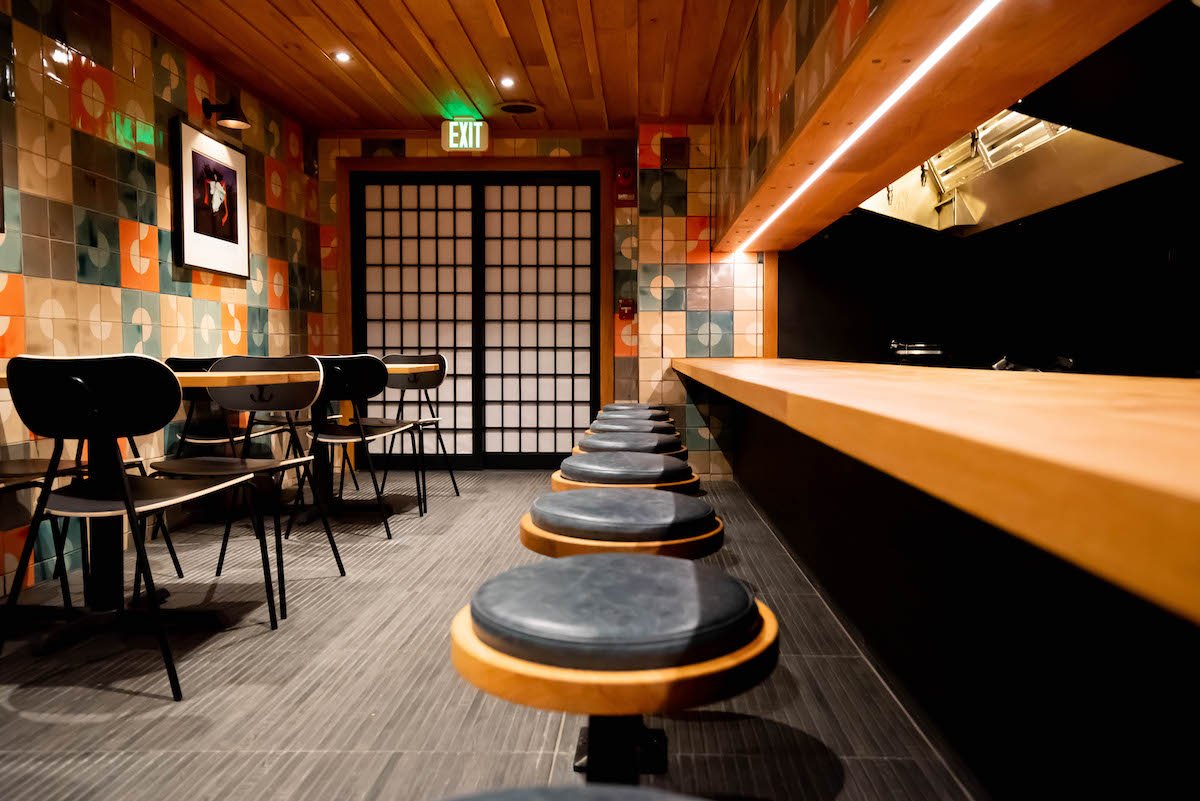
A Different Frequency on MacArthur Boulevard
Washington's serious dining conversation tends to orbit Penn Quarter, Shaw, and the 14th Street corridor. MacArthur Boulevard in the Palisades operates on a slower register: residential, low-signage, the kind of street where a restaurant survives on repeat neighbourhood custom and deliberate word-of-mouth rather than foot traffic or social media churn. Sakedokoro Makoto fits that pattern. The address, 4822 MacArthur Blvd NW, sits well northwest of the downtown dining cluster, and that distance is not incidental. It signals a room designed for guests who arrive knowing exactly why they came.
A sakedokoro is a Japanese sake-focused dining establishment, a format with deep roots in the izakaya and kaiseki traditions of Japan but still relatively rare in the American market. Where most Japanese restaurants in the United States treat sake as a beverage list appended to a food menu, the sakedokoro inverts that relationship: the sake selection anchors the experience, and the food is composed to move alongside it. That structural inversion places Sakedokoro Makoto in a different competitive set than, say, a conventional omakase counter or a Japanese-inflected contemporary tasting menu. The format is closer to a specialist wine-focused dining room, with the sake program shaping the meal rather than sitting beside it.
The Sensory Architecture of a Sake-Forward Room
What defines the atmosphere of a sakedokoro is the absence of the noise signatures that mark louder urban dining. There is no open wood-fire, no rotisserie perfume bleeding into the street, no cocktail shaker percussion. The sensory register is quieter and more mineral: the clean, faintly rice-sweet air of a room where cold sake is being poured frequently, where ceramic matters as much as glassware, and where conversation at a low volume is understood as part of the format. That restraint is a deliberate choice, not a limitation, and it locates the room in a tradition of Japanese dining culture where subtlety functions as a form of hospitality rather than an absence of it.
Within D.C.'s broader Japanese dining scene, this positioning is distinct. The city's fine-dining Japanese options have expanded in recent years, with omakase formats appearing in neighborhoods from Georgetown to Dupont Circle, many of them priced at the upper end of the D.C. market and competing for the same reservation window as tasting menus at places like Jônt or the extended-format experiences at minibar. Sakedokoro Makoto does not compete in that bracket in the same way. Its draw is category-specific: guests who want to drink well across multiple sake expressions and eat food calibrated to those pours, rather than guests who want a tasting menu that happens to offer sake as an option.
Where It Sits in D.C.'s Dining Geography
D.C.'s dining identity has diversified considerably over the past decade. The city now sustains serious examples across Middle Eastern cooking at Albi, Peruvian-influenced tasting menus at Causa, and produce-driven American cooking at Oyster Oyster. What that diversity has not yet produced in abundance is a deep bench of Japanese specialist formats beyond the standard sushi counter. The restaurant fills a gap in that map, and the Palisades location reinforces rather than undermines that positioning: the neighbourhood has the demographic density of regular fine-dining customers without the competitive noise of a downtown dining district.
For comparison, sake-focused dining in other American cities tends to cluster around neighbourhoods with established Japanese-American communities or high concentrations of Japanese visitors. D.C.'s version is more assimilated into the broader fine-dining fabric of the city, which means a customer base that includes regular international diners, embassy and diplomatic world guests, and serious food-and-drink enthusiasts who have encountered the format in Japan or through cities like New York and San Francisco. That audience rewards depth in the sake program and penalizes superficiality in the food. The format only works if both halves are serious.
Venues like Lazy Bear in San Francisco, Smyth in Chicago, and Blue Hill at Stone Barns in Tarrytown have each built menus around a specific sourcing or beverage logic that defines the entire dining architecture. The sakedokoro format is the Japanese equivalent of that structural commitment: a decision to let one category of beverage shape everything else on the table. Internationally, the discipline connects to a broader tradition of ingredient-led tasting formats seen at venues like Atelier Moessmer Norbert Niederkofler in Brunico, where the beverage and the sourcing logic are inseparable from the menu's identity.
Planning a Visit
The MacArthur Boulevard address means driving or rideshare is the practical choice for most visitors coming from central D.C.; the Palisades is walkable from Georgetown under the right circumstances but not from most hotel or transit hubs. Given the specialist nature of the format and the neighbourhood's low foot-traffic character, advance reservation is the working assumption for any visit, though specific booking methods and availability windows are best confirmed directly with the restaurant.
Credentials Lens
Comparable venues nearby, for context on price, style, and recognition.
| Venue | Cuisine | Price | Notes |
|---|---|---|---|
| Sakedokoro MakotoThis venue — the venue you are viewing | Tokyo-Style Kappo | $$$$ | Not listed |
| Omakase @ Barracks Row | Modern Japanese Sushi Omakase | $$$$ | Barracks Row |
| Two Nine | Kaiseki-Inspired Japanese Omakase | $$$$ | East Village Georgetown |
| Sushi Taro | Traditional Japanese Omakase | $$$$ | Dupont Circle |
| Zeppelin | Edomae-Style Sushi & Yakitori | $$$ | Shaw |
| Love, Makoto | Modern Japanese Food Hall | $$$$ | Mount Vernon Triangle |
Continue exploring
More in Washington DC
Restaurants in Washington DC
Browse all →
Bars in Washington DC
Browse all →
Hotels in Washington DC
Browse all →
At a Glance
- Elegant
- Intimate
- Sophisticated
- Special Occasion
- Date Night
- Sake Program
Authentic Japanese atmosphere requiring guests to remove shoes and wear slippers, creating an intimate and traditional setting focused on the chef's creations.