Sakagura

Our verdict
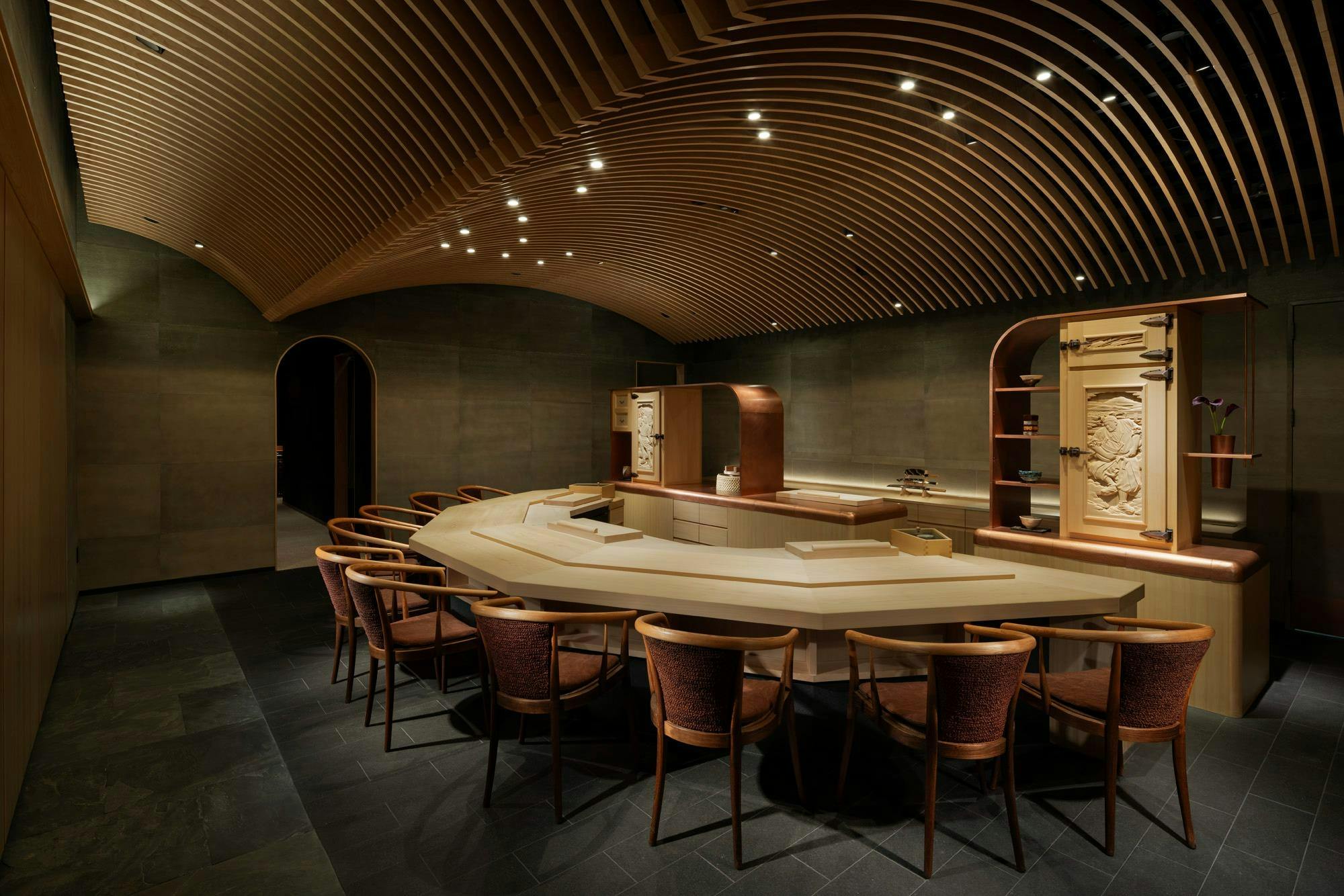
Sakagura has operated from its below-street basement on East 43rd Street since the 1990s, holding a position in the Midtown izakaya format that few casual Japanese venues in New York have matched. Ranked #247 in Opinionated About Dining's Casual North America list for 2025 and carrying, it remains a reliable address for sake-driven Japanese small plates in a neighbourhood dominated by expense-account dining.

Pearl is the En Primeur Club membership app, where members save venues, book tables and use the concierge.
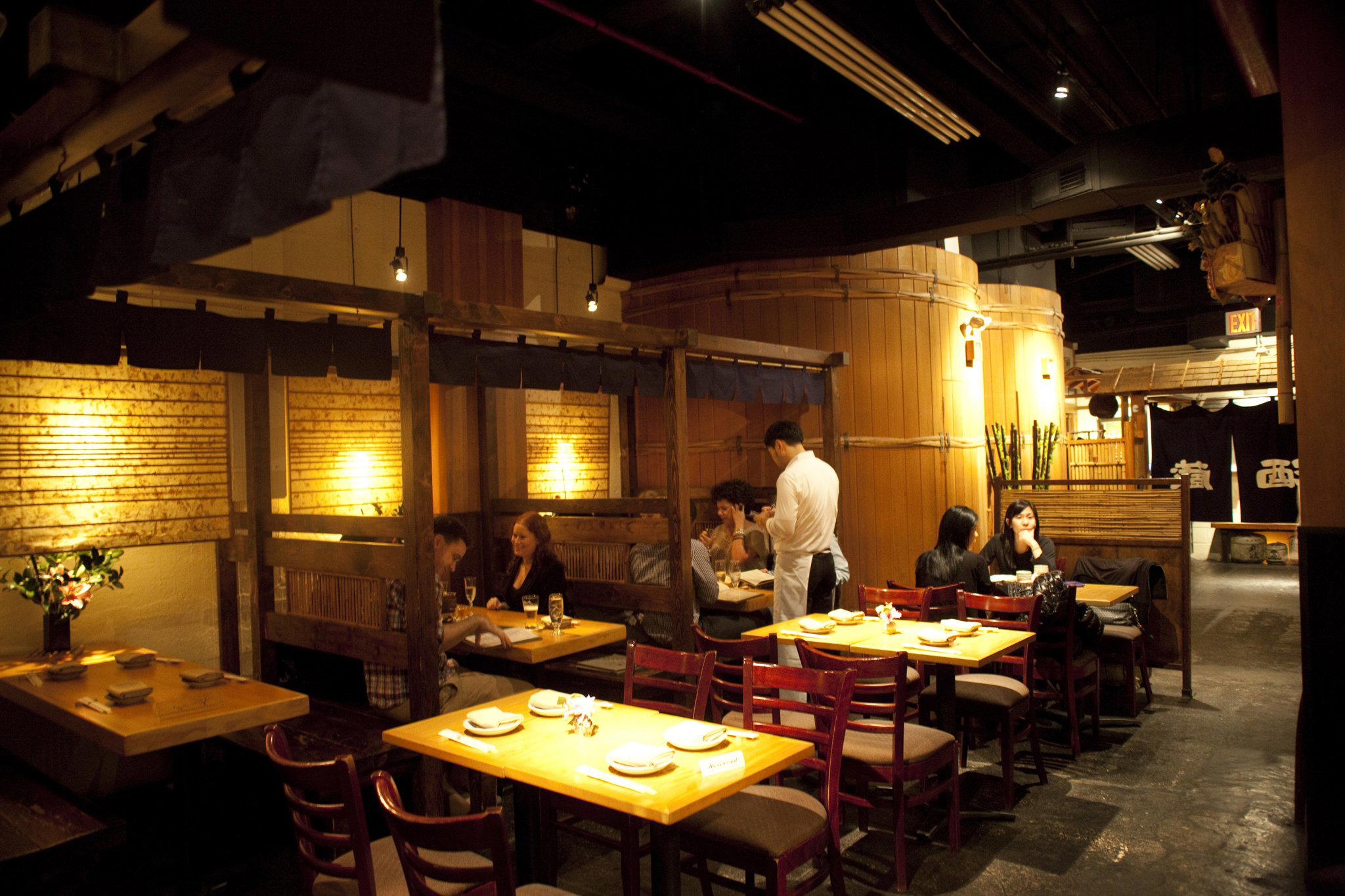
A Basement Address That Predates the Izakaya Trend
When Sakagura opened on the basement level of an office building on East 43rd Street, the izakaya format was not yet a category that New York food media tracked with any seriousness. The word itself required explanation on menus. Two decades later, izakaya has become a recognisable dining genre across the city, with versions ranging from quick ramen-adjacent counters to full sake-library formats. Sakagura sits at the more serious end of that spectrum, and its longevity in Midtown, a neighbourhood that tends to reward volume and convenience over depth, is its own form of critical endorsement.
The izakaya structure, as it exists in cities like Osaka and Kyoto, is built around the logic of drinking: food arrives in small portions designed to extend the evening rather than conclude it. The menu is wide, the pacing is unhurried, and the beverage program carries equal weight to the kitchen. Benikurage in Osaka and Berangkat in Kyoto demonstrate what that format looks like at its most considered in Japan. Sakagura has carried a version of that logic into Midtown for longer than most of its New York peers have existed.
How the Menu Is Built, and What That Signals
The menu architecture at Sakagura follows the izakaya principle of horizontal abundance rather than vertical tasting progression. There is no single narrative dish that the kitchen builds toward. Instead, the structure distributes attention across cold preparations, grilled items, steamed and simmered dishes, and fried bites, a format that rewards sharing across a table rather than individual plating. This is not the omakase model of Manhattan's high-end Japanese tier, where a chef controls sequence and pacing entirely. It is the opposite: a framework that returns those decisions to the diner.
That menu width is also a signal about the beverage program. A sake list of meaningful depth requires a kitchen that can run across flavour registers, something fatty and charred for aged junmai, something delicate and acidic for daiginjo. The izakaya format's breadth is not incidental to the drink program; it is structural support for it. This is one of the key distinctions between Sakagura and the broader category of Japanese restaurants in New York, where the kitchen often dominates and the drink list follows. Here, the relationship is more reciprocal.
For a point of contrast, consider where Sakagura sits relative to the high-end Japanese tier in the same city. Masa operates at the extreme of chef-controlled sequence and price. Sakagura operates at the other architectural extreme, the diner assembles the meal, and the kitchen supports that assembly across a wide range of techniques and temperatures. Neither is a lesser version of the other; they are different formats with different ambitions.
East 43rd Street puts Sakagura inside the Grand Central corridor, a zone of Midtown Manhattan where the dining default is either fast-casual lunch or high-budget expense-account dinner. The dominant comparison set in this neighbourhood includes French-leaning rooms like Le Bernardin and tasting-menu formats like Eleven Madison Park and Atomix. These are not Sakagura's competitors in format or price, but they define the neighbourhood's gravity.
The comparison that matters more within the Japanese casual category is Yopparai, another New York izakaya that has carved out recognition in the city's Japanese dining scene. Both venues operate in the space between quick-service ramen and omakase ceremony, but they serve different neighbourhoods and different rhythms. Sakagura's Midtown location makes it a lunch destination during the working week in a way that Lower East Side alternatives are not.
The OAD Recognition and What It Measures
Opinionated About Dining's Casual North America list is a critic-weighted guide that specifically tracks restaurants outside the fine-dining tier. Sakagura's progression from Recommended status in 2023 to #323 in 2024 and #247 in 2025 is a meaningful upward trajectory in a list that covers the entire continent. Being ranked #247 in a guide that ranges that widely across formats and cities is not a casual achievement for a basement izakaya in Midtown.
OAD's methodology favours repeat visits and critic-weighted scoring over volume-based public reviews, which makes the ranking more useful than raw star counts for assessing a venue's consistency.
Planning Your Visit
Sakagura operates a split-shift schedule from Monday through Friday, with lunch service from 11:30am to 2pm and dinner from 5:30pm to 10:30pm. Saturday runs dinner only, from 5:30pm. The restaurant is closed Sundays. The split schedule reflects the Midtown office context: this is a venue built for both the working lunch and the post-office evening, not a weekend-brunch destination.
The basement address at 211 E 43rd Street places it within walking distance of Grand Central Terminal. For those coming from elsewhere in the city, Grand Central provides direct Lexington Avenue subway access as well as Metro-North connections. The location makes it accessible from most Manhattan neighbourhoods without a taxi or ride-share.
| Venue | Format | Price Tier | Lunch Service | OAD Recognition |
|---|---|---|---|---|
| Sakagura | Izakaya | Casual | Mon–Fri | #247 (2025) |
| Yopparai | Izakaya | Casual | Varies | Listed |
| Masa | Omakase | $$$$ | No | Michelin-starred |
For further exploration of New York City's dining, drinking, and hospitality options, see our full New York City restaurants guide, our full New York City bars guide, our full New York City hotels guide, our full New York City wineries guide, and our full New York City experiences guide.
Frequently asked questions
Is there a head chef associated with Sakagura?
The chef associated with Sakagura is Yuval Litmanovich.
How do I find Sakagura?
Sakagura is located at 211 E 43rd St B1, New York, NY 10017, New York City.
What's the best thing to order at Sakagura?
Sakagura follows the izakaya model of distributed ordering, so the approach that works here is building a table of small plates rather than anchoring to one dish. The OAD Casual North America recognition (ranked #247 in 2025) reflects consistent execution across the menu rather than a single signature. Ask the floor staff which sections are strongest on the night you visit, the selection tends to shift with season and supply.
How would you describe the cuisine at Sakagura?
What are Sakagura's hours?
Hours at Sakagura: Hours: Monday 11:30 am–2 pm, 5:30–10:30 pm Tuesday 11:30 am–2 pm, 5:30–10:30 pm Wednesday 11:30 am–2 pm, 5:30–10:30 pm Thursday 11:30 am–2 pm, 5:30–10:30 pm Friday 11:30 am–2 pm, 5:30–10:30 pm Saturday 5:30–10:30 pm Sunday Closed.
Peers in This Market
| Venue | Cuisine | Price | Awards | Notes |
|---|---|---|---|---|
| SakaguraThis venue (the venue you are viewing) | Traditional Japanese Izakaya | $50–100 | Not listed | Not listed |
| Le Bernardin | French Seafood Fine Dining | $300–500 | 3 Michelin Stars · World's 50 Best #13 | French, Seafood |
| Atomix | Modern Korean Tasting Menu | $300–500 | 2 Michelin Stars · World's 50 Best #7 | Modern Korean, Korean |
| Masa | Seasonal Hokkaido Tempura Omakase | $150–200 | Tabelog 100 #34 | Sushi, Japanese |
| Per Se | French Fine Dining Tasting Menu | $300–500 | 3 Michelin Stars · World's 50 Best #40 | French, Contemporary |
| Eleven Madison Park | Contemporary Plant-Based Fine Dining | $300–500 | 3 Michelin Stars · World's 50 Best #4 | French, Vegan |
Recognition history
Dated appearances from independent guides and award organizations, with the underlying list record or original source where available.
Opinionated About Dining Casual in North America Recommended
Opinionated About Dining
Full recognition history (4 entries)
Opinionated About Dining Casual in North America Ranked #247
Opinionated About Dining
Opinionated About Dining Casual in North America Ranked #323
Opinionated About Dining
Opinionated About Dining Casual in North America Recommended
Opinionated About Dining