Saint Urban


Star Wine List · Wine Spectator Best of Award of Excellence
Our verdict
The address places it in a part of Manhattan where mid-tier and fine-dining restaurants compete closely, making its recognitions a meaningful differentiator. For wine-forward diners in New York, it merits a close look.

Pearl is the En Primeur Club membership app, where members save venues, book tables and use the concierge.
What the Awards Signal About Saint Urban's Position
Neither is a headline Michelin badge, but together they point toward something specific. The White Star, awarded by Star Wine List, identifies restaurants with wine programs worth seeking out on their own terms, independent of kitchen reputation. Saint Urban, at 43 East 20th Street in the Flatiron District, carries both, which is a combination more commonly seen at restaurants operating with deliberate parity between the cellar and the pass.
That combination matters editorially because it shapes how the menu should be read. At restaurants where the wine program is recognised separately from the food, the kitchen tends to build dishes with pairing architecture in mind, textures and acid structures that work across a range of glasses rather than dishes engineered for a single signature pour.
Flatiron as a Competitive Context
East 20th Street sits in a section of Manhattan where the restaurant density runs high and the competitive pressure is constant. The Flatiron and Gramercy corridor has historically supported a different kind of dining ambition than Midtown's formal bastions or the West Village's neighbourhood canon. The restaurants here tend to operate at mid-to-upper price points without the explicit ceremony of, say, Per Se or Masa, and without the tasting-menu maximalism of Eleven Madison Park or Atomix. The neighbourhood rewards restaurants that earn regulars rather than one-time occasion diners, which puts consistent wine and menu execution at a premium.
Within that context, Saint Urban's wine recognition places it in a narrow peer group. Le Bernardin has long demonstrated that a precise, technically rigorous wine program can anchor a restaurant's identity as firmly as the kitchen does. Saint Urban operates at a different scale and in a different neighbourhood register, but the Star Wine List recognition suggests a similar underlying priority: that the wine list is a considered editorial statement, not a support document for the food.
Reading the Menu Through Its Architecture
The editorial angle most useful for understanding Saint Urban is not the individual dish or the chef's biography but the structural logic of how the menu is assembled. In New York's current dining moment, menus at wine-forward restaurants tend to fall into one of two patterns. The first is a tasting-menu format with wine pairings locked in, where the guest surrenders sequencing to the kitchen. The second is a more open à la carte or sectioned format that rewards guests who build their own progression, moving through smaller courses with the wine list as a parallel menu rather than an afterthought.
The Star Wine List White Star designation is more commonly awarded to restaurants in the second category, where the list has enough depth and internal coherence to drive guest decisions independently. This is the model seen at wine-serious restaurants across the United States, from Single Thread Farm in Healdsburg to Lazy Bear in San Francisco, where the wine program functions as a co-equal narrative. Nationally, Providence in Los Angeles and Alinea in Chicago demonstrate how different structural approaches, à la carte versus tasting menu, produce fundamentally different relationships between kitchen and cellar. Internationally, the standard is set by restaurants like Alain Ducasse at Louis XV in Monte Carlo and 8½ Otto e Mezzo Bombana in Hong Kong, where cellar depth is treated as a defining feature of the restaurant's identity.
What the awards record does confirm is that the restaurant has been evaluated and recognised by two independent bodies in the same calendar year, which for a Flatiron address in a crowded market is a meaningful signal of operational consistency.
Why the Wine Recognition Changes the Calculus
For a diner deciding between several strong options in the same neighbourhood, a Star Wine List White Star shifts the decision in a specific way. It is a specialist credential: the evaluation process focuses on list construction, depth across regions, and the coherence of the selection rather than ambient factors like room design or service theatre. At the $$$$ end of New York dining, strong wine programs are the norm at reference addresses like The French Laundry or Emeril's in New Orleans. At the mid-to-upper range where Saint Urban likely operates, that level of wine seriousness is less automatic, and the White Star identifies it as an outlier in the right direction.
Pearl's recommendations are grounded in overall dining quality rather than single-category excellence, so a restaurant holding both credentials has cleared two separate evaluation thresholds in the same year. That is a pairing more informative than either award alone.
Planning Your Visit
Saint Urban is located at 43 East 20th Street, accessible from the 23rd Street station on the N, R, and W lines, or the 23rd Street stop on the 6 train. Both are within a short walk. The Flatiron neighbourhood has reliable after-dinner options for those who want to extend the evening, with bar and lounge options documented in our full New York City bars guide.
For the broader neighbourhood context, our full New York City restaurants guide maps the competitive set in detail. Those planning a longer stay can cross-reference our full New York City hotels guide, our full New York City wineries guide, and our full New York City experiences guide for a complete picture.
| Venue | Cuisine | Price Tier | Key Recognition |
|---|---|---|---|
| Saint Urban | Not specified | Not confirmed | |
| Le Bernardin | French, Seafood | $$$$ | Michelin three-star |
| Atomix | Modern Korean | $$$$ | Michelin two-star |
| Eleven Madison Park | French, Vegan | $$$$ | Michelin three-star; World's 50 Best |
| Per Se | French, Contemporary | $$$$ | Michelin three-star |
| Masa | Sushi, Japanese | $$$$ | Michelin three-star |
Frequently asked questions
What kind of recognition has Saint Urban received?
Saint Urban has received recognition including: Saint Urban is a restaurant in New York City, USA.
Where is Saint Urban in New York City?
Saint Urban is located at 43 E 20th St, New York, NY 10003, New York City.
What's the best thing to order at Saint Urban?
The wine list, specifically flagged by Star Wine List, is a concrete starting point for building your meal.
Do I need a reservation for Saint Urban?
Securing a reservation in advance is the practical approach for East 20th Street restaurants at this recognition tier, particularly on weekends.
What's the standout thing about Saint Urban?
The Star Wine List credential in particular signals a programme that goes beyond a serviceable by-the-glass selection.
Standing Among Peers
Comparable options at a glance, pulled from our tracked venues.
| Venue | Cuisine | Price | Awards | Notes |
|---|---|---|---|---|
| Saint UrbanThis venue (the venue you are viewing) | Modern French Fine Dining | Not listed | Star Wine List · Wine Spectator Best of Award of Excellence | Not listed |
| Le Bernardin | French Seafood Fine Dining | $300–500 | 3 Michelin Stars · World's 50 Best #13 | French, Seafood |
| Atomix | Modern Korean Tasting Menu | $300–500 | 2 Michelin Stars · World's 50 Best #7 | Modern Korean, Korean |
| Masa | Seasonal Hokkaido Tempura Omakase | $150–200 | Tabelog 100 #34 | Sushi, Japanese |
| Per Se | French Fine Dining Tasting Menu | $300–500 | 3 Michelin Stars · World's 50 Best #40 | French, Contemporary |
| Eleven Madison Park | Contemporary Plant-Based Fine Dining | $300–500 | 3 Michelin Stars · World's 50 Best #4 | French, Vegan |
Recognition history
Dated appearances from independent guides and award organizations, with the underlying list record or original source where available.
Star Wine List
Star Wine List
Wine Spectator Best of Award of Excellence
Wine Spectator
Continue exploring
More in New York City
Restaurants in New York City
All restaurants in New York City →
Bars in New York City
All bars in New York City →




Saint Urban
The wine
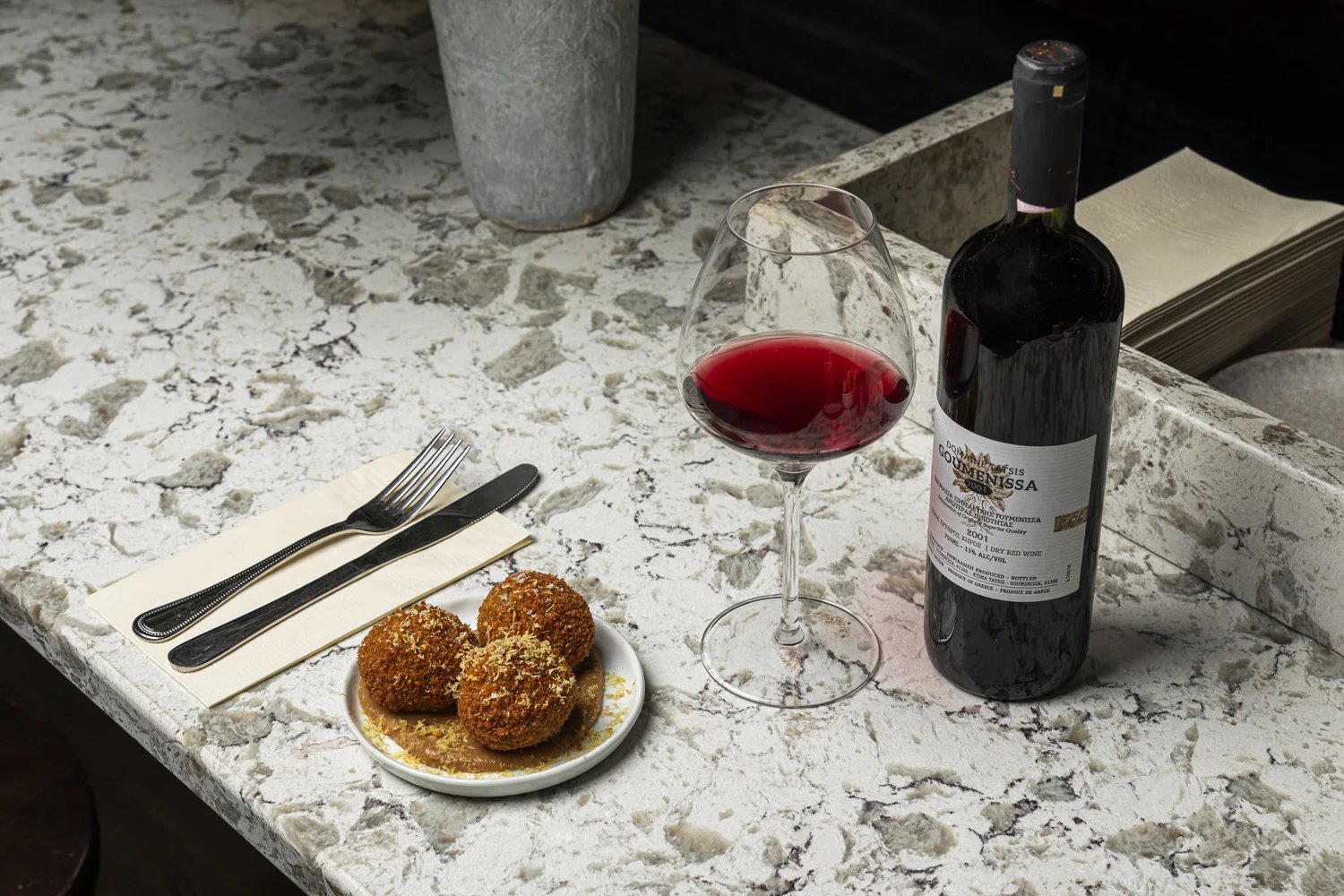
Saint Urban holds the Wine Spectator Best of Award of Excellence, which Wine Spectator gives to lists of usually 350 or more selections.
- Wine program
- Deep wine list
- Wine Spectator
- Wine Spectator Best of Award of Excellence
- Extensive wine list
Details
- Elegant
- Sophisticated
- Date Night
- Special Occasion
- Wine Cellar
- Extensive Wine List
Current opening hours
- Monday
- Closed
- Tuesday
- 5:30–11 PM
- Wednesday
- 5:30–11 PM
- Thursday
- 5:30–11 PM
- Friday
- 5:30–11 PM
- Saturday
- 5:30–11 PM
- Sunday
- Closed
Hours can change for holidays and private events. Hours as of .
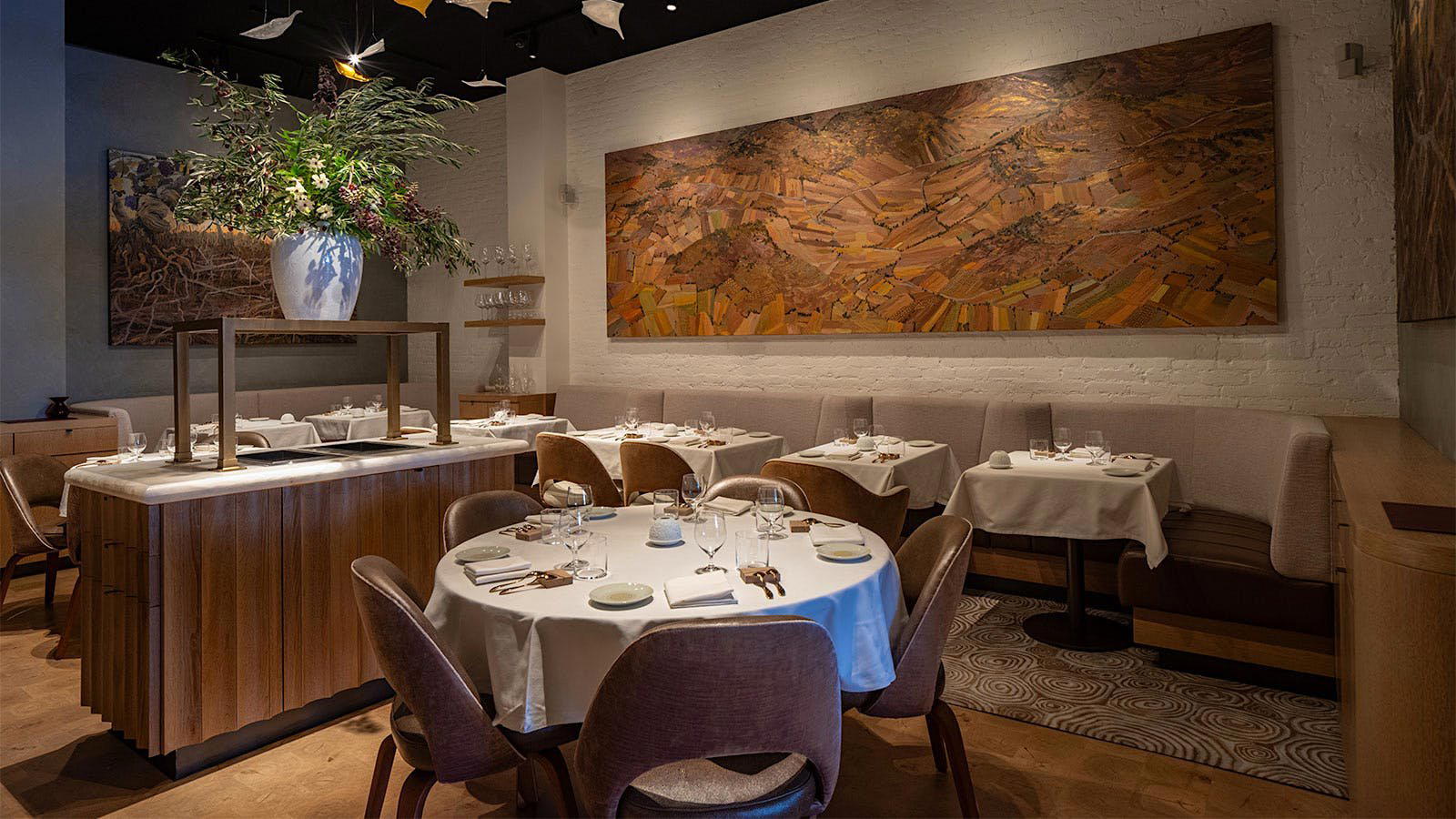
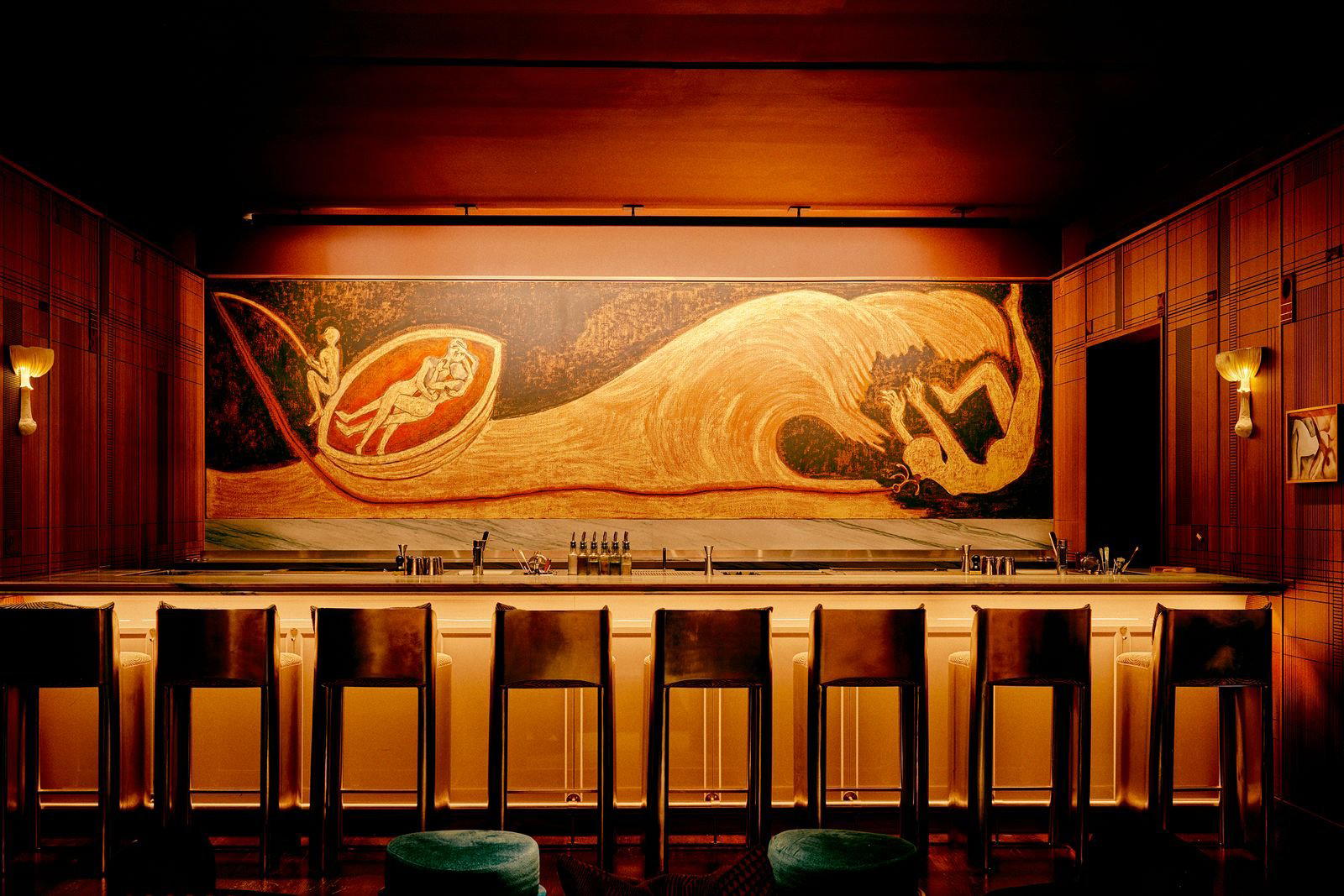
Elegant beige dining room with finished oak, muted green and brown glass tones evoking wine bottles, abstract terroir landscapes, and floating glass leaf structures.