Saffron South
Our verdict
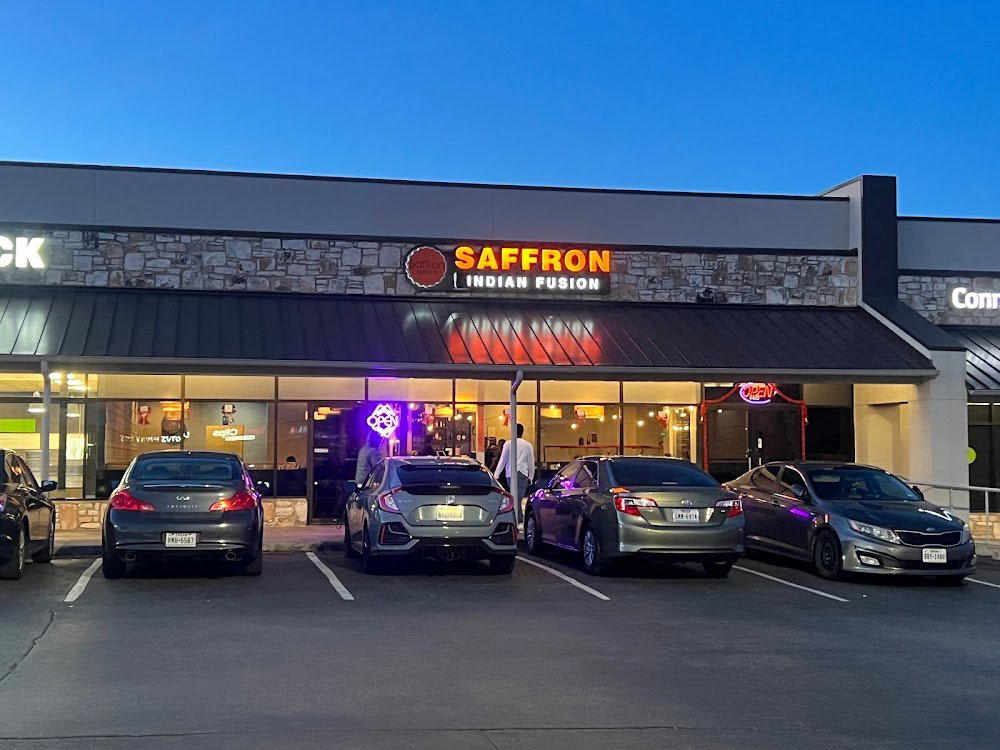
Saffron South occupies a suite at 3201 Bee Caves Road in Austin's Westlake corridor, a part of the city where South Asian dining has quietly deepened its foothold among a neighbourhood that skews residential and affluent. The address places it outside the downtown dining circuit, making it a deliberate destination rather than a walk-in option for visitors working through central Austin's restaurant scene.

Pearl is the En Primeur Club membership app — saves, bookings, and concierge access live there. Same editors, same standards.
- Address
- 3201 Bee Caves Rd #148, Austin, TX 78746
- Phone
- (512) 329-0234
- Hours
- Daily 11:30 AM–2:30 PM, 5–9 PM
- Website
- saffronsouth.com
- Directions
- Get directions
- Booking
- Book on OpenTable
Westlake's Dining Geography and Where Indian Food Fits
Austin's South Asian restaurant scene has long concentrated along North Lamar and the Research Boulevard corridor, where high-traffic strip centres and large South Asian residential communities created reliable demand. The Westlake pocket, anchored by the Bee Caves Road commercial stretch west of MoPac, operates on different logic. The neighbourhood is predominantly residential and wealthy, the retail is lifestyle-oriented, and the dining options tend toward approachability over ambition. Saffron South sits at 3201 Bee Caves Road, Suite 148, inside a mixed-use development that draws from the surrounding zip codes rather than the broader city. That placement shapes everything about the experience before a dish arrives.
In cities where South Asian cuisine has reached critical mass, a split tends to emerge: high-volume, delivery-optimised operations cluster near transit and student populations, while smaller, neighbourhood-integrated restaurants serve a more local, repeat clientele with less price sensitivity. Westlake represents the second scenario almost textbook-clean. Diners arriving here are not passing through; they are either residents or people who made a conscious decision to cross the lake. That dynamic rewards a restaurant willing to prioritise consistency and service depth over throughput.
The South Indian Tradition and Its Austin Moment
South Indian cuisine, which draws on the traditions of Tamil Nadu, Kerala, Andhra Pradesh, Karnataka, and Telangana, has historically been underrepresented in American cities relative to North Indian and Mughal-derived menus. The dominance of the latter, with butter chicken and naan as the popular shorthand for Indian food in the United States, meant that dosai, appam, rasam, and Chettinad preparations remained relatively unfamiliar outside of concentrated South Asian communities in cities like Houston, the Bay Area, and parts of New Jersey.
Austin's tech-sector growth over the last decade has changed the composition of its South Asian population meaningfully. A larger proportion of recent arrivals trace roots to South India, particularly to Tamil Nadu and Telangana, which has created both the demand and the culinary reference point for South Indian restaurants to operate with more specificity. A restaurant named Saffron South signals a positioning in this tradition, and the Westlake address suggests a target audience that includes professionals familiar with the cuisine rather than requiring a gateway translation of it. That is a different operating premise than what most Indian restaurants in Austin have historically worked from.
Saffron operates in a city where the dining conversation is dominated by live-fire American cooking and barbecue. Hestia and the broader New American tier represented by Barley Swine define the upper bracket of Austin's restaurant recognition. Barbecue institutions like la Barbecue and InterStellar BBQ anchor the city's national identity. South Asian dining sits largely outside the award infrastructure that recognises those categories, which means restaurants in this space build reputations through community word-of-mouth and repeat business rather than critical attention. That dynamic is consistent with how South Asian restaurants operate in most American cities, and it is part of why the cuisine remains one of the more underrecognised traditions in American dining at the award level, relative to its technical depth and regional diversity.
The Bee Caves Road Context
The 3201 Bee Caves Road address places Saffron South in a retail cluster that serves the Westlake Hills and Rollingwood neighbourhoods. The surrounding suite mix is typical of affluent suburban commercial corridors: health-oriented food options, boutique fitness, professional services. For a South Indian restaurant, this is not the obvious location choice, which makes it either a calibrated bet on underserved neighbourhood demand or a function of available real estate at a moment when Austin's retail market tightened considerably post-2020.
Either way, the location means Saffron South is not competing for foot traffic with the central Austin dining cluster where Craft Omakase and the denser restaurant scene operate. It is instead drawing from a specific radius of residents who have fewer options for this cuisine category within their immediate area. That geographic concentration tends to produce a loyal, repeat-customer base, which historically stabilises smaller independent restaurants better than high-traffic tourist-facing positions.
Reading the Reservation Window
In Austin's upper tier, where restaurants like Hestia operate with weeks-long waits and Craft Omakase requires advance planning typical of the omakase format, Saffron South occupies a different category. Neighbourhood South Indian restaurants at a suburban strip-centre address generally operate with shorter or no advance booking requirements, serving a community that includes regulars who arrive on habit. That accessibility is a feature of the format, not a signal of quality one direction or another. Some of the most technically precise South Indian cooking in American cities happens in exactly this kind of setting, where the margin pressure from rent and the clientele pressure from regulars produces discipline in the kitchen.
For visitors making their way through Austin's broader restaurant range, the Westlake location requires deliberate planning. The area is not walkable from downtown and sits well outside the immediate core where most out-of-town visitors concentrate their time. Arriving by car is the practical assumption, and the suite parking situation at 3201 Bee Caves Road is consistent with the suburban retail format.
Visitors who want to anchor the trip within a wider view of American fine dining can use Austin as a node in a broader circuit. The country's most decorated kitchens, from The French Laundry in Napa to Alinea in Chicago, Le Bernardin in New York City, Providence in Los Angeles, Blue Hill at Stone Barns in Tarrytown, Addison in San Diego, Lazy Bear in San Francisco, Single Thread Farm in Healdsburg, Atomix in New York City, The Inn at Little Washington, Emeril's in New Orleans, and 8½ Otto e Mezzo Bombana in Hong Kong, operate in a separate category of formal dining. Saffron South belongs to the neighbourhood-specialist tier that serves a different function entirely: access to a specific cuisine tradition within the daily rhythms of a residential area. Both have a place in a complete picture of how cities eat.
For a fuller view of Austin's dining range across price points and formats, see our full Austin restaurants guide.
Know Before You Go
- Address: 3201 Bee Caves Rd, Suite 148, Austin, TX 78746
- Neighbourhood: Westlake Hills corridor, west of MoPac
- Getting there: Car is the practical option; the address is a suburban retail suite with parking on site
- Allergy enquiries: Raise dietary requirements directly with the restaurant; South Indian menus frequently include dairy, legume, and nut-based preparations that vary by dish
- Timing: Weekday lunch may offer a quieter experience than weekend dinner service in a neighbourhood-facing format like this
Frequently asked questions
Where do I go for Saffron South?
Saffron South is located at 3201 Bee Caves Rd #148, Austin, TX 78746, Austin.
Is Saffron South a good option for South Indian vegetarian food in Austin's Westlake area?
South Indian cuisine draws heavily on vegetarian traditions from Tamil Nadu, Karnataka, and Kerala, making restaurants in this category a natural fit for plant-based diners. Saffron South at 3201 Bee Caves Rd is one of the few Austin restaurants in this regional style operating southwest of the city center, where vegetarian-focused South Indian options are otherwise scarce. Confirming the current vegetarian menu directly with the restaurant is the most reliable step before making the trip.
How far ahead should I plan for Saffron South?
Saffron South operates in a Westlake strip-centre at 3201 Bee Caves Rd, serving a residential neighbourhood rather than Austin's downtown special-occasion circuit. That format typically means walk-in availability is more realistic than at destination restaurants like Hestia or Craft Omakase, where waits run weeks. Calling ahead for weekend evenings is still advisable, since South Indian restaurants with a committed local following can fill quickly on those nights.
What makes Saffron South worth seeking out?
The case is primarily geographic and categorical. Austin's South Asian dining has historically concentrated along North Lamar and the Research Boulevard corridor, leaving the Westlake Hills and Rollingwood area with almost no South Indian representation.
How does Saffron South handle allergies?
South Indian cooking does involve preparations that are naturally gluten-free and many that are vegan, but dishes vary, and cross-contact risk depends on kitchen practices. Anyone managing a serious allergy should speak directly with staff at the 3201 Bee Caves Rd #148 location before ordering.
Peers Worth Knowing
Comparable venues nearby, for context on price, style, and recognition.
| Venue | Cuisine | Price | Notes |
|---|---|---|---|
| Saffron SouthThis venue — the venue you are viewing | Nepalese-Indian Fusion | $20–30 | Not listed |
| Thai Fresh | Authentic Thai with Local Texas Ingredients | $20–30 | South Austin |
| Bull & Bowl | American Bistro | Not listed | Warehouse District |
| 5th Street Diner | Classic American Diner | $10–20 | Congress Ave District |
| Tapville Social - Austin | American Gastropub with Self-Pour Taps | Not listed | University |
| Picnik Burnet Road | Healthy Modern American | $20–30 | Rosedale |