Tabelog 100 #49
Our verdict
Sabouru 2 sits in Jimbocho’s old bookshop district, where Tokyo kissaten culture overlaps with yoshoku, coffee-shop meals, and low-cost everyday dining. Its Tabelog 100 Kissaten selections in 2021 and 2022 place it among Japan’s recognized classic café addresses, while the sub-¥1,000 listed budget keeps the experience grounded in the neighbourhood rather than luxury dining.

Pearl is the En Primeur Club membership app, where members save venues, book tables and use the concierge.
The menu
What to order
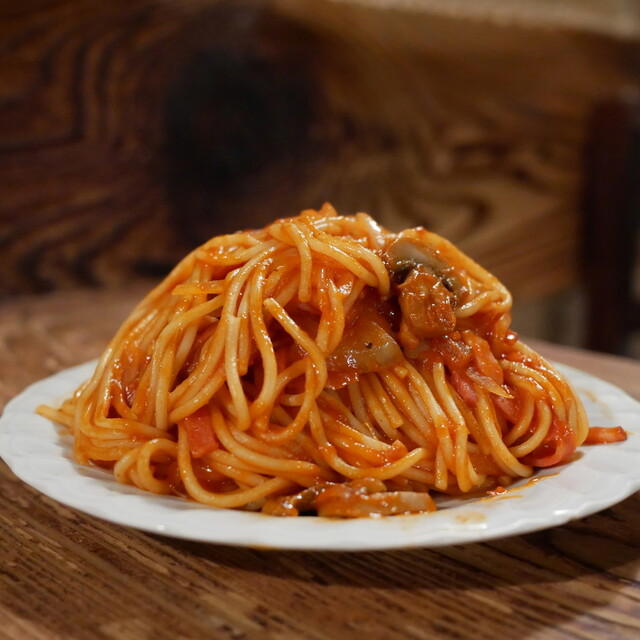
- Napolitan spaghetti (mountain size)
- Showa-style Napolitan spaghetti
- Curry rice
- Ginger pork set
Tokyo announces this kind of place through everyday rhythms before spectacle: regular foot traffic, compact staircases, and cafés that feel built for long pauses between errands. In that setting, the kissaten is not nostalgia staged for visitors; it is a working urban format. Sabouru 2 belongs to that tradition, with yoshoku, coffee-shop service, and bar-adjacent drinks gathered under one roof in Tokyo.
Tokyo’s contemporary dining conversation often tilts toward reservation counters, chef-led tasting menus, and exportable luxury. The city’s café culture runs on a different clock. The old kissaten model values repetition, affordability, and a room that can absorb solo readers, students, office workers, and small groups without turning every meal into an occasion. Recognition from Tabelog 100 Kissaten in 2022 matters because it identifies the category on its own terms, not as a lesser version of restaurant dining.
Tokyo kissaten culture, served through yoshoku rather than ceremony
Kissaten in Japan occupy a space between café, diner, and social room. They are places for coffee, light meals, quiet conversation, and sometimes a late-day drink; the format predates the current specialty-coffee language that dominates newer Tokyo cafés. Sabouru 2’s listed categories, yoshoku, kissa, and bar, capture that hybrid identity. Yoshoku itself is a Japanese reading of Western dishes, shaped over time into a domestic comfort-food language rather than an imported cuisine.
That cultural position explains the appeal. The point is not technical spectacle, nor the chef-as-author model that drives many premium Tokyo tables. It is the persistence of a democratic dining form in a city where people still browse, study, meet, and linger. The listed budget, under JPY 999 for lunch and dinner, puts Sabouru 2 in a price band closer to everyday Tokyo than to destination dining. Among comparison venues, Kanda Brazil, Kamezawa Do, Trois Bagues, Ishigama Bake Bread Sabo Tamutamu, and Gavial help frame the wider café and casual-dining landscape without turning the visit into a luxury benchmark. Sabouru 2 therefore reads as part of Tokyo’s lower-cost kissaten core rather than a high-spend restaurant occasion.
The Tabelog score of 3.49 reinforces that this is a recognized local category specialist rather than a luxury outlier. Tabelog ratings in Japan tend to move conservatively, and café categories rarely behave like high-end dining rooms in score inflation. Selection for the Tabelog 100 Kissaten list is the cleaner signal: the venue has been placed inside a broader conversation about enduring coffee-shop culture.
The room works like a Tokyo institution, not a tasting-menu stage
The practical identity of the place tells its own story. Sabouru 2 is best understood through its categories rather than through the language of counter seats, private rooms, or elaborate service choreography. Yoshoku, kissa, and bar place it in a flexible Tokyo format where coffee, comfort food, and a casual drink can all belong to the same visit.
For travellers, the Tokyo location sharpens the case. This is not a venue to treat only as a quick pause between luxury appointments; it rewards time built around books, coffee, casual meals, and small-format dining elsewhere in the city. Sabouru 2 makes sense within that rhythm. It is a better fit before or after a slow urban wander than as a standalone evening built around rare ingredients or a long beverage pairing.
That distinction matters because Tokyo’s café field is broad. A stylized visual café serves a different appetite, while single-category comfort addresses answer another one. Tokyo’s strength is the way these formats overlap: café, yoshoku, casual meals, and bar habits coexisting across the city rather than separating into neat genres.
How to place it in a Tokyo itinerary
The smartest use of Sabouru 2 is as a cultural meal, not a trophy booking. It gives context to a side of Tokyo that can be missed when the itinerary is built only around omakase counters and hotel dining rooms. Visitors using the city through everyday formats should pair it with other Tokyo dining and reserve the higher-cost meals for another part of the day.
For a broader Tokyo food map, compare it with other seafood, grill, yakitori, and casual dining formats across the city. The contrast is useful: Tokyo is not one dining culture but a stack of price tiers, room types, and local rituals. Sabouru 2 belongs to the café-and-yoshoku layer, where value, recognizability, and local rhythm matter more than culinary theatre.
Travellers extending the comparison beyond Tokyo can look at the way casual Japanese formats travel and mutate across other cities in Japan and overseas. The same question of format translation appears whenever a familiar casual model is adapted to a new dining context, whether the focus is coffee, snacks, comfort food, or a compact bar-like setting.
For planning across the city, use our broader Tokyo restaurant, hotel, bar, winery, and experience guides. The verdict is simple: choose Sabouru 2 when the aim is to understand Tokyo’s everyday café culture through a recognized kissaten, not when the night calls for a chef-counter performance.
Frequently asked questions
Where is Sabouru 2 in Tokyo?
Tokyo.
What's the pricing like at Sabouru 2?
Pricing at Sabouru 2 is listed as - JPY 999 - JPY 999.
How far ahead should I plan for Sabouru 2?
Plan it as an everyday Tokyo kissaten rather than a formal destination meal. The listed budget is under JPY 999 for both lunch and dinner, so timing matters more for fitting it into the flow of the day than for treating it like a luxury booking.
What is Sabouru 2 known for?
Sabouru 2 was selected for Tabelog 100 in the Kissaten category in 2022, and its profile places it at the junction of yoshoku, kissa, and bar service.
Do they accommodate allergies at Sabouru 2?
No specific allergy policy is provided in the available venue facts.
Similar Picks
Comparable venues by price and recognition.
| Venue | Cuisine | Price | Awards | Notes |
|---|---|---|---|---|
| Sabouru 2This venue (the venue you are viewing) | Yoshoku & Napolitan Pasta Kissaten | $10–20 | Tabelog 100 #49 | Not listed |
| Ishigama Bake Bread Sabo Tamutamu | Japanese Bakery Cafe | $10–20 | Tabelog 100 #75 | JPY 1,000 - JPY 1,999 JPY 1,000 - JPY 1,999 |
| Gavial | European-style Japanese curry | $10–20 | Tabelog 100 #49 | JPY 1,000 - JPY 1,999 JPY 1,000 - JPY 1,999 |
| Kamezawa Do | Japanese Confectionery (Wagashi) | Not listed | Tabelog 100 #20 | JPY 999 |
| Trois Bagues | Traditional Japanese kissaten café | $10–20 | Tabelog 100 | JPY 999 |
| Kanda Brazil | Retro Japanese kissaten & coffee shop | $10–20 | Tabelog 100 | JPY 999 - JPY 999 |
Recognition history
Dated appearances from independent guides and award organizations, with the underlying list record or original source where available.
Tabelog 100 #49 · No. 49
Tabelog · Tabelog 100 - Kissaten - 2022