Tabelog 100
Our verdict
Trois Bagues sits in Jimbocho’s old-school kissaten culture, where coffee shops function as reading rooms, neighborhood salons, and low-cost pauses between the area’s bookshops. Its Tabelog 100 Kissaten selections in 2021 and 2022 place it in a recognized tier of Tokyo cafés, with a sub-¥1,000 price band that keeps the experience grounded rather than ceremonial.

Pearl is the En Primeur Club membership app — saves, bookings, and concierge access live there. Same editors, same standards.
The menu
What to order
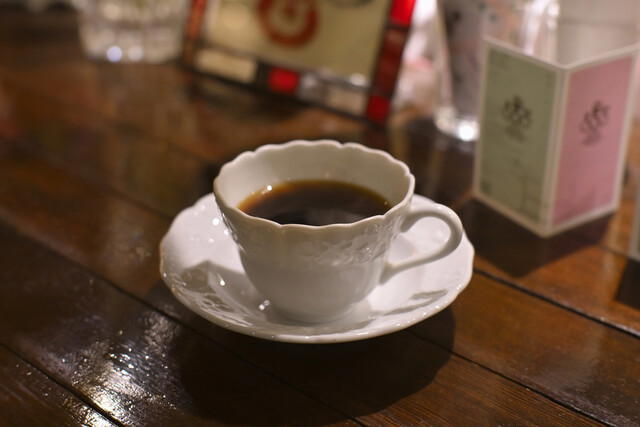
- Trois Blend aged coffee
- High Blend aged coffee
- Gratin toast
- Parfait
- Coffee jelly
- Chiffon cake
Tokyo rewards slow arrivals: bookshop signs, basement staircases, steady foot traffic, and coffee rooms built for lingering, not turnover. Here, the kissaten is not retro affectation but part of the city’s operating system: a place for reading, quiet conversation, serious coffee, and a modestly priced pause.
Trois Bagues belongs to that culture more than Tokyo’s newer specialty-café circuit. Its place in Tokyo’s café landscape reflects the kind of coffee shop culture that has long supported substance over spectacle. Recognition through Tabelog Hyakumeiten for Kissaten in 2022 signals that this is not just a convenient café, but a shop Japanese diners place within the country’s established kissaten conversation.
Tokyo's kissaten tradition, judged by reputation rather than novelty
Tokyo café culture splits into several tribes: minimalist pour-over counters, dessert-led social-media rooms, polished lounges with service charges, and old kissaten whose value lies in continuity. The last works differently, concerned less with novelty than rhythm: coffee, café staples, long-established spatial memory, and a clientele using tables as temporary desks.
Within that frame, awards matter because the format can look deceptively ordinary from outside. A Tabelog Hyakumeiten Kissaten selection is a useful filter in a city of hundreds of cafés, many trading on nostalgia alone. Trois Bagues carries that recognition with a Tabelog score of 3.73, signaling sustained approval in a category where diners often judge small details closely: comfort, coffee, price, and whether the room suits the unhurried pace people seek from a kissaten.
Tokyo comparisons clarify the value proposition. Kamezawa Do and Sabouru sit in a similarly accessible café conversation, while Gavial and Ishigama Bake Bread Sabo Tamutamu offer different casual stops for visitors mapping the city. Kissaten dining often means choosing between a quick inexpensive stop and a slightly more meal-oriented café visit. Trois Bagues is listed in the - JPY 999 price band, making its awards recognition more meaningful: reputation is not tied to luxury pricing.
For readers mapping the area, this differs from seeking a high-ticket counter or chef-led tasting menu. Tokyo dining can move quickly from casual cafés to more formal specialist restaurants. A Tokyo kissaten stop plays another role: a low-pressure anchor between browsing, transit, and later reservations.
A compact café format with more structure than the price suggests
The practical signals point to a classic Tokyo format. Trois Bagues is listed in the Kissa, or Japanese coffee shop, and Cafe categories, placing it firmly within a format built around coffee, conversation, and an easy pause rather than a formal restaurant sequence.
The category listing is Kissa (Japanese coffee shop) and Cafe, which helps set expectations. That does not make it a bar or a destination restaurant, but it suggests a broader café register, useful where afternoons can stretch without a formal restaurant booking.
That café identity is relevant. Tokyo’s older coffee rooms can carry strong assumptions, and the best way to approach Trois Bagues is as a recognized kissaten rather than a trend-led café or tasting-menu venue. The appeal is in the familiar structure: an accessible room, a modest price band, and a rhythm that suits short stops as well as slower breaks.
The strongest editorial case is not that Trois Bagues reinvents the form. It does not need to. It represents a recognized, affordable version of a Tokyo tradition in the city where that tradition makes cultural sense. Tabelog Hyakumeiten recognition for Kissaten in 2022 gives it standing; the - JPY 999 price band keeps it accessible; the category keeps expectations clear. In a city where café hype often outruns substance, that combination deserves attention.
How to place it in a Tokyo itinerary
Tokyo works well as a walking city when planned in small clusters, not as a single destination. Use Trois Bagues before or after browsing, an appointment, or a transfer across the city, especially when the day needs a quieter café pause rather than another full meal.
Because detailed operating information can change, check current opening hours and reservation guidance before going. The format remains café rather than occasion restaurant, so it is best used as a flexible stop within a broader Tokyo day rather than the sole anchor of an itinerary.
Payment, parking, and access details should also be confirmed through current venue channels before visiting. The essential point is simpler: Trois Bagues is a Tokyo kissaten and café with Tabelog recognition, a modest listed price band, and a role that fits dense urban days better than car-led planning.
Café comparisons can be framed more broadly as the choice between classic coffee-shop rhythm and more visual contemporary formats.
Travelers extending the same low-to-mid-spend lens across Japan will find many regional contrasts in casual cafés, coffee shops, and everyday dining rooms. Outside Japan, Japanese casual formats take on different shapes abroad, though Tokyo’s kissaten culture remains rooted in the city’s reading-and-coffee habits.
Frequently asked questions
Is Trois Bagues more mid-range or high-end?
Pricing at Trois Bagues is listed as - JPY 999.
Is Trois Bagues open every day?
Check the venue’s current channels before visiting.
What's the defining dish or idea at Trois Bagues?
The defining idea is kissaten service in a café setting, backed by Tabelog’s 2022 Hyakumeiten selection for Kissaten. The listing categories are Kissa (Japanese coffee shop) and Cafe, so expect a café format rather than a chef-led tasting experience.
Is Trois Bagues allergy-friendly?
For specific allergens, call +81-3-3294-8597 before ordering.
Cuisine-First Comparison
Comparable venues for orientation by cuisine and category.
| Venue | Cuisine | Price | Awards | Notes |
|---|---|---|---|---|
| Trois BaguesThis venue (the venue you are viewing) | Traditional Japanese kissaten café | $10–20 | Tabelog 100 | Not listed |
| Cafe Casa | European-inspired cafe with coffee, desserts, and comfort food | $10–20 | Tabelog 100 | Shibuya |
| GAZTA | Basque cheesecake specialty shop | $10–20 | Tabelog 100 #60 | Minato |
| Patisserie JUN UJITA | French-style Patisserie | $10–20 | Tabelog 100 #41 | Meguro |
| Cafe Enseigne Dangle Jiyuugaoka ten | Traditional Japanese kissaten-style café with coffee and cakes | $10–20 | Tabelog 100 | Meguro |
| Jikaseibaisen Coffee Mijinko | Specialty coffee café with hotcakes and pudding | $20–30 | Tabelog 100 #65 | Bunkyō |
Recognition history
Dated appearances from independent guides and award organizations, with the underlying list record or original source where available.
Tabelog 100
Tabelog · Tabelog 100 - Kissaten - 2026
Full recognition history (2 entries)
Tabelog 100 #1 · No. 1
Tabelog · Tabelog 100 - Kissaten - 2022