Rosina's Italian Restaurant
Our verdict
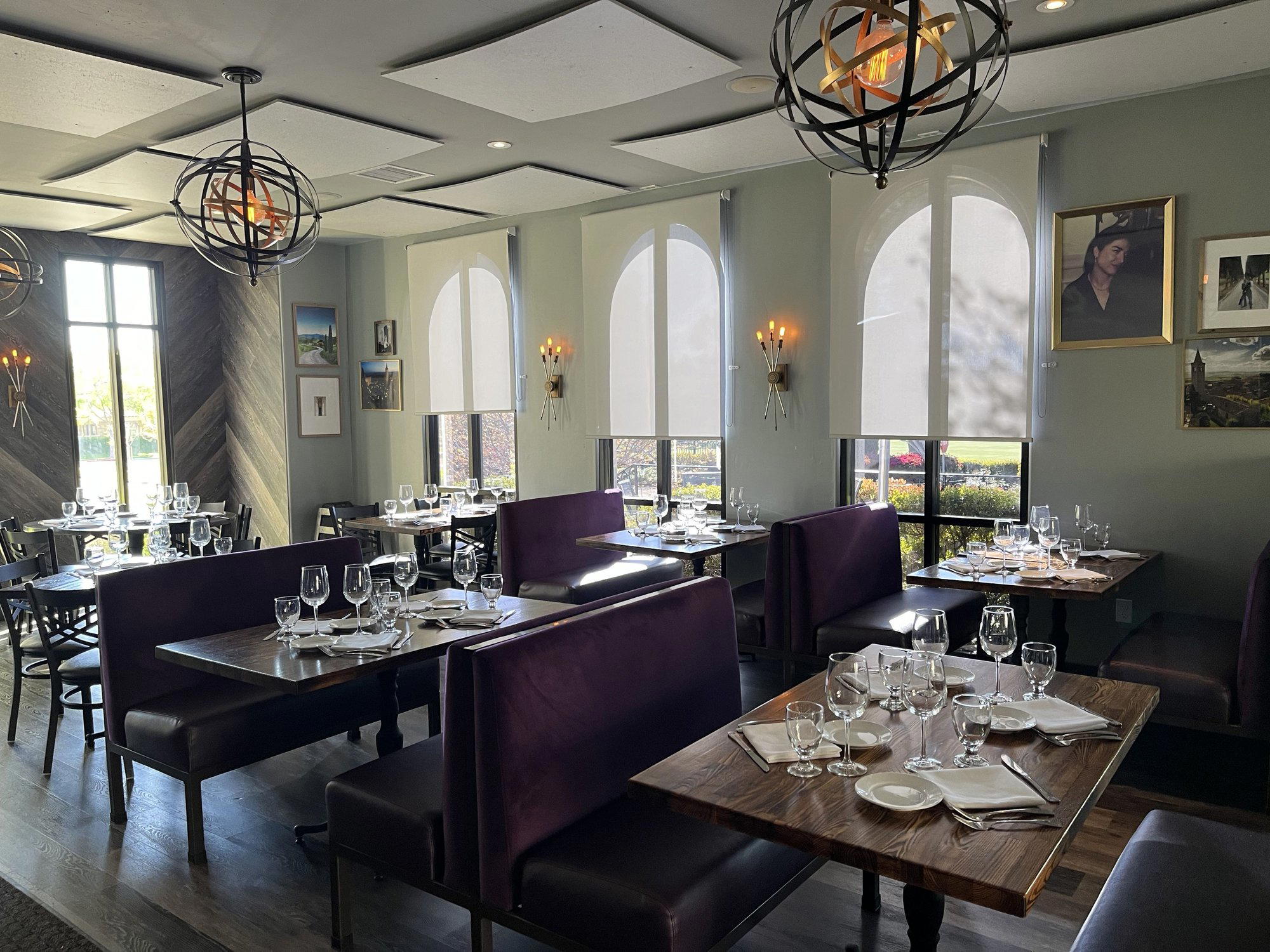
Rosina's Italian Restaurant occupies a quieter corner of San Diego's Rancho Bernardo corridor at 14701 Via Bettona, positioning itself within a suburban dining tier that rewards those willing to look beyond the downtown circuit. The kitchen draws on Italian tradition in a neighbourhood where Italian cooking tends to mean either fast-casual pizza chains or white-tablecloth approximations, Rosina's sits somewhere between those poles, offering a more considered alternative for the area's residents and visitors.

Pearl is the En Primeur Club membership app, where members save venues, book tables and use the concierge.
The menu
What to order
- Pasta Vongole
- Veal Piccata
- Homemade Lasagna
- Pollo alla Parmigiana
- Cioppino
Where the Suburbs Hold Their Ground: Italian Dining in San Diego's North City Corridor
San Diego's dining conversation tends to concentrate along a coastal arc from Little Italy through Hillcrest and into North Park, leaving the city's inland suburban strips to fend for themselves. That geography matters when you're considering Rosina's Italian Restaurant, which operates out of 14701 Via Bettona in the 92127 zip code, a Rancho Bernardo address that places it firmly in the north city corridor rather than the downtown dining cluster. In most American cities, that kind of suburban positioning signals a trade-off: convenience over ambition, neighbourhood loyalty over culinary credibility. The more interesting question is whether that trade-off holds here.
The 92127 corridor is not without precedent for serious dining. San Diego's suburban sprawl has, over the past decade, pushed a subset of independent operators away from the high-rent coastal zones and into areas where rents are lower, parking is easier, and the immediate residential population skews toward households with disposable income and an appetite for something beyond chain casual. Rosina's occupies that positioning, drawing a repeat clientele from the surrounding communities of Rancho Bernardo, Carmel Valley, and the broader 4S Ranch area, demographics that have helped sustain independent Italian operations in similar suburban corridors across California.
Reading the Meal: A Course-by-Course Framework for Italian Tradition
Italian restaurant meals in the American context almost always compress what in Italy would be a longer, more deliberate progression, antipasto, primo, secondo, contorno, dolce, into a format that suits the rhythm of a two-hour dinner reservation. The better independent Italian kitchens in cities like San Diego, Los Angeles, and San Francisco have spent the last several years reconsidering that compression, either by offering tasting formats or by building menus that make the case for ordering across multiple courses rather than defaulting to a single pasta and a shared appetizer.
The tasting progression model has become a useful lens for evaluating Italian restaurants across tiers. At the higher end of the American Italian spectrum, venues like 8 1/2 Otto e Mezzo Bombana (Hong Kong) in Hong Kong demonstrate how Italian fine dining can sustain a full multi-course arc without collapsing into French haute cuisine mimicry. Closer to home, the progression model shows up in different forms: the farm-anchored tasting formats at Blue Hill at Stone Barns in Tarrytown or the ingredient-driven sequencing at Single Thread Farm in Healdsburg both illustrate how American kitchens have absorbed European course logic and adapted it to local produce rhythms.
At the neighbourhood Italian level, which is where Rosina's operates, the progression question becomes more practical: does the kitchen build a menu that rewards ordering through it, or does it function primarily as a pasta delivery vehicle with a few token starters? The answer to that question tends to separate the restaurants worth returning to from those that serve a single visit and exhaust themselves.
San Diego's Italian Tier: Context Before Judgement
Italian cuisine in San Diego exists across a wide range of formats and ambitions. At the top of the city's dining hierarchy, venues like Addison represent the French-contemporary fine dining standard, a reference point for what four-star ambition looks like in this city. Japanese precision sits at a different pole, with Soichi representing the kind of counter-format omakase that has defined San Diego's prestige dining conversation in recent years. Italian in San Diego operates in a different register entirely: warmer, more convivial, less structurally rigid, and evaluated on different terms.
Nationally, the American Italian restaurant has been through several phases of reinvention. The red-sauce tradition that defined Italian-American dining through the mid-twentieth century gave way to a lighter, more regionally specific approach in the 1990s and 2000s. More recently, a counter-movement has partly rehabilitated the red-sauce canon, finding culinary legitimacy in dishes that were once dismissed as immigrant-approximation cooking. Whether a kitchen is working from the new-regional Italian playbook or drawing on the older Italian-American tradition matters enormously for how a meal reads, and for how a diner should approach the menu.
For broader context on where Italian and other independent operators fit within San Diego's dining geography, the full San Diego restaurants guide maps the city's dining tiers with more granularity. Other venues worth knowing in the city's mid-tier include 1450 El Prado, which operates in a different neighbourhood context but similarly draws on a repeat local clientele, and 94th Aero Squadron, which represents the city's experience-dining segment. See also the 94th Aero Squadron San Diego listing for additional detail.
Placing Rosina's Against a Wider Reference Set
The American dining scene has produced a substantial body of reference points for evaluating what ambition looks like at different price tiers. At the upper end of the national register, venues like Le Bernardin in New York City, Alinea in Chicago, The French Laundry in Napa, and Atomix in New York City define the ceiling of the tasting-menu format in their respective traditions. Below that tier, the question becomes what the middle ground looks like, and whether a neighbourhood Italian restaurant in suburban San Diego is playing the right game for its position.
The more relevant comparisons for Rosina's are drawn from a different set: independent Italian operators in similar suburban California markets, where the competitive pressure comes not from Michelin-tracked venues but from casual chains, regional pizza concepts, and the occasional independent operator who punches above their zip code. Venues like Providence in Los Angeles, Lazy Bear in San Francisco, Emeril's in New Orleans, Bacchanalia in Atlanta, and The Inn at Little Washington in Washington represent the American dining establishments where regional identity and independent ownership have combined to produce something worth travelling toward. Rosina's operates at a different scale, serving a local rather than destination audience, which is a legitimate and often undervalued position in any city's dining ecology.
Know Before You Go
Address: 14701 Via Bettona, San Diego, CA 92127
Neighbourhood: Rancho Bernardo / North City corridor
Cuisine: Italian
Phone: Not publicly listed, check current listings directly
Hours: Confirm directly with the restaurant before visiting
Booking: Reservations; contact the venue to verify availability
Price range:, budget accordingly for a full multi-course Italian dinner
Parking: Suburban location typically offers street or lot parking; confirm on arrival
Frequently asked questions
What is the recommended dish at Rosina's Italian Restaurant?
For a kitchen operating in the Italian tradition, the pasta course is typically the most reliable indicator of a kitchen's technical range, it is worth asking your server what the kitchen makes in-house when you visit. Italian restaurants in this tier across California have increasingly differentiated on the quality of their hand-made pasta and housemade sauces, which tend to reflect the most direct expression of the kitchen's approach. Cross-referencing with recent guest reviews on current platforms will give the most accurate picture of what the kitchen is currently sending out.
How far ahead should I plan for Rosina's Italian Restaurant?
Suburban Italian restaurants in San Diego's north city corridor generally do not carry the same lead-time pressure as downtown venues in high-demand categories like omakase or tasting-menu formats, venues such as Soichi in San Diego's Japanese fine dining tier, for example, require significantly more advance planning than a neighbourhood Italian operator. A same-week or week-ahead approach is reasonable for most suburban Italian restaurants in this city and price tier, though weekend evenings may warrant earlier contact. Confirm directly with the restaurant for current availability.
What makes Rosina's Italian Restaurant worth seeking out?
The case for Rosina's rests primarily on its position within San Diego's suburban dining tier, where independent Italian operators occupy a niche between fast-casual chains and the downtown restaurant circuit. In a city whose dining conversation tends to concentrate along the coast and in inner neighbourhoods, a neighbourhood Italian kitchen in the Rancho Bernardo corridor offers proximity and accessibility for north city residents that downtown alternatives cannot. The Italian cuisine tradition itself, built on ingredient quality, course progression, and the kind of cooking that rewards repeat visits, translates well to a neighbourhood format when executed with care. For the broader San Diego picture, the full San Diego restaurants guide provides additional context on how independent operators sit within the city's wider dining map.
What if I have allergies at Rosina's Italian Restaurant?
Italian restaurant menus typically include common allergens across multiple dishes, gluten in fresh pasta, dairy in sauces, shellfish in seafood preparations. The San Diego dining scene, broadly speaking, has adopted more explicit allergen communication over the past several years in line with California restaurant standards, and most independent operators at this tier are able to accommodate common dietary requirements with advance notice. Reaching out before your visit rather than on arrival will give the kitchen time to prepare appropriately.
Does Rosina's Italian Restaurant serve a full multi-course Italian menu, or is it primarily a pasta-focused kitchen?
The Italian restaurant tradition in the United States covers a wide spectrum, from single-focus pasta bars to full-service kitchens offering antipasto, primo, secondo, and dolce across a complete progression. Italian restaurants of this type in suburban San Diego markets have generally trended toward full-service menus that allow diners to order across multiple courses, reflecting the neighbourhood dining format where the meal itself is the occasion. Checking the restaurant's current menu directly will clarify the range on offer and whether the kitchen supports a longer, multi-course approach.
Same-City Peers
Comparable venues nearby, for context on price, style, and recognition.
| Venue | Cuisine | Price | Notes |
|---|---|---|---|
| Rosina's Italian RestaurantThis venue (the venue you are viewing) | Traditional Southern Italian Trattoria | $30–50 | Not listed |
| Baci Coffee | Authentic Italian Coffee and Pastries | $10–20 | Mission Valley |
| Nonna | Sicilian Italian Comfort Food | $20–30 | Downtown |
| Petrini's | Classic Italian Trattoria | $20–30 | Downtown |
| Mattarello Cooking | Handmade Italian Pasta | $30–50 | Uptown |
| Operacaffe | Authentic Italian Trattoria | $30–50 | Downtown |